Categories
Media Publications

The Conversation: The world’s top predators are in decline, and it’s hurting us too

Without tigers, our ecosystems will suffer. Image by Sascha Kohlmann [CC-BY-SA 2.0] via Flickr
Without tigers, our ecosystems will suffer. Image credit: Sascha Kohlmann via Flickr
Humans have an innate fear of large predators, and with good reason. Nobody wants to be a shark or a lion’s next meal.

But new research in the journal Science shows that our inability to live with these animals is putting their survival in great danger, and doing untold damage to the environment.

Through modifying the habitats of large predators or killing predators more directly, we are greatly compromising the ecosystems that they help to keep in balance — free of charge. In turn this environmental degradation creates many problems that have severe consequences for humans.

We ain’t lion, this predator stuff is a big deal. Image by Derek Keats via Flickr [CC BY 2.0] via Flickr
We ain’t lion, this predator stuff is a big deal. Image credit: Derek Keats via Flickr

Top dogs (and cats) under threat

For the first time, a team of researchers from the United States, Australia, Italy, and Sweden, and led by Professor Bill Ripple at Oregon State University, have analysed the effects of threats such as habitat loss, human persecution and reduced prey on the world’s 31 largest mammalian carnivores.

The species studied include lions, tigers, African wild dogs, leopards, cheetahs, wolves, lynx, otters, bears, hyenas and dingoes. Together they span all continents except Antarctica.

Alarmingly, more than three quarters of the 31 large carnivores are in decline, and 17 species occupy less than half of their historical distributions. The Red Wolf in the southeastern United States is now found in less than 1% of its historical range, and the Ethiopian Wolf in just 2%.

Hotspots of carnivore decline are southeast Asia, southern and East Africa, and the Amazon, where several large carnivores are declining. And in the developed world there are now few places where large carnivores remain.

In Australia, dingoes help keep introduced predators at bay. Image credit: Ars Electronica [CC BY-NC-ND 2.0] via Flickr
In Australia, dingoes help keep introduced predators at bay. Image credit: Ars Electronica via Flickr
Aside from the intrinsic tragedy of losing any species, what should perhaps concern us even more is that we are only just beginning to understand and appreciate just how important large predators are to maintaining healthy ecosystems, and our dependence on the ecosystem services they deliver.

Ripple effect

Seven carnivore species in particular have been shown to have profound effects on the environment and cause what is known as “trophic cascades”. A trophic cascade is a ripple effect, where one species’ influence spreads through multiple levels of a food web.

Species for which this effect is most well-known are African lions, leopards, Eurasian lynx, cougars, gray wolves, sea otters and dingoes.

It’s hard being a VIP (very important predator). Image credit: Mike Baird [CC BY 2.0] via Flickr
It’s hard being a VIP (very important predator). Image credit: Mike Baird via Flickr
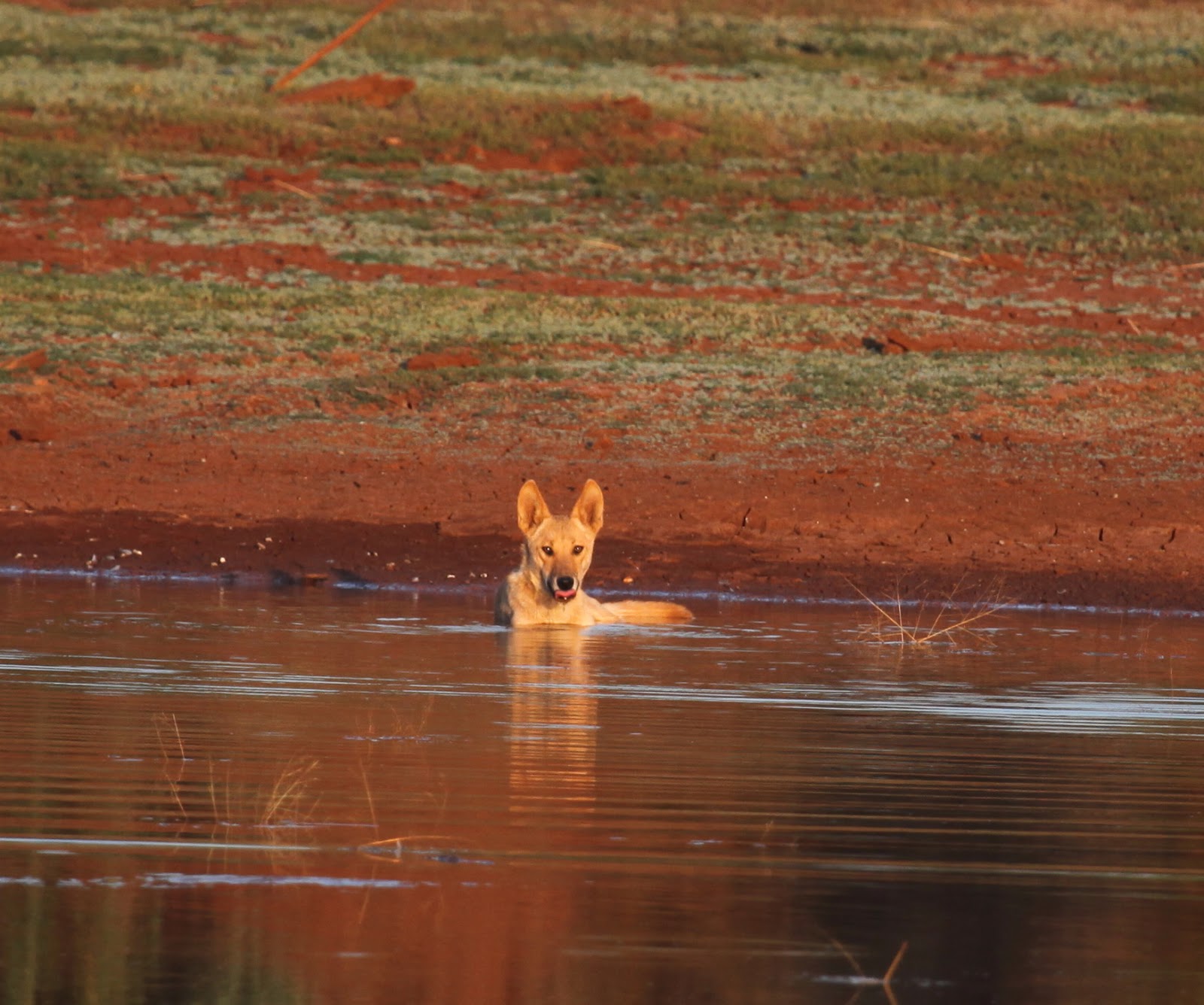
In Australia dingoes greatly reduce kangaroo and red fox numbers, which in turn reduces grazing of vegetation and predation of native animals, helping to conserve and protect biodiversity.

In coastal North America, sea otters keep sea urchin numbers in check, which helps maintain kelp forests and benefits other marine species dependent on this habitat. But in this case otters might also offer a defence against climate change, as healthy kelp forests can grow rapidly and store large amounts of carbon.

And in Africa, a decrease in lions and leopards has coincided with a dramatic increase in Olive Baboons, which threaten farm crops and livestock, and spread intestinal worms. Baboons even impact education, as children have to stay home to defend their farms from raids.

Without lions and leopards, there’s no telling what baboons will do. Image credit: Justin Jensen [CC BY 2.0] via Flickr
Without lions and leopards, there’s no telling what baboons will do. Image credit: Justin Jensen via Flickr
Clearly predators have far-reaching ecological, economic and social benefits that are grossly underappreciated. There is no doubt predators pose challenges too, such as wolves attacking livestock. But education and new management practices offer ways forward. For instance, we could use guardian animals to protect livestock from predators.

Together we call on governments to end policies and management practices that are responsible for the ongoing persecution and loss of predators from our planet. Western Australia’s new shark plan is an example of management that fails to account for the science of big predators. Instead we need an international initiative that aims to conserve large predators and promote their coexistence with people.

This article was originally published at The Conversation. Read the original article.

The Conversation

Categories
Publications Research

Published: Status and ecological effects of the world’s largest carnivores

Authors: William J Ripple, James A Estes, Robert L Beschta, Christopher C Wilmers, Euan G Ritchie, Mark Hebblewhite, Joel Berger, Bodil Elmhagen, Mike Letnic, Michael P Nelson, Oswald J Schmitz, Douglas W Smith, Arian D Wallach and Aaron J Wirsing

Abstract

Large carnivores face serious threats and are experiencing massive declines in their populations and geographic ranges around the world.

We highlight how these threats have affected the conservation status and ecological functioning of the 31 largest mammalian carnivores on Earth.

Consistent with theory, empirical studies increasingly show that large carnivores have substantial effects on the structure and function of diverse ecosystems.

Significant cascading trophic interactions, mediated by their prey or sympatric mesopredators, arise when some of these carnivores are extirpated from or repatriated to ecosystems.

Unexpected effects of trophic cascades on various taxa and processes include changes to bird, mammal, invertebrate, and herpetofauna abundance or richness; subsidies to scavengers; altered disease dynamics; carbon sequestration; modified stream morphology; and crop damage.

Promoting tolerance and coexistence with large carnivores is a crucial societal challenge that will ultimately determine the fate of Earth’s largest carnivores and all that depends upon them, including humans.

Ripple WJ, Estes JA, Beschta RL, Wilmers CC, Ritchie EG, Hebblewhite M, Berger J, Elmhagen B, Letnic M, Nelson MP, Schmitz OJ, Smith DW, Wallach AD, Wirsing AJ (2014) Status and ecological effects of the world’s largest carnivores, Science, 343(6167) DOI

Categories
Q&A with an ecologist

Q&A with an ecologist: Professor Joern Fischer

Ecologists are an interesting bunch, and with that in mind I’d like to start a regular series of posts that reveal a little more about some of them. In the coming months you’ll hear from a variety of people, please note the list is certainly not intended to be exhaustive nor random in any way, but rather the one thing in common is that they are people who for whatever reason inspire me. Be it a personal connection, perhaps we’ve shared a beer or three and good conversation at a conference, or maybe I’ve admired their work from afar, they may be a mentor and close friend, or perhaps they’re just downright entertaining! There are many reasons.

So without further ado here is the first cab off the rank in Q&A with an ecologist, Professor Joern Fischer from Leuphana University, Lueneburg, Germany.

More about Joern and his team’s terrific research can be found at Ideas 4 Sustainability.

1. What got you in to ecology?
Quite simply, I like animals … and knowing that we’re losing species faster than at most other times in the history of our planet made me want to engage with this issue, and see if there is anything I can do about it.

2. Why are you still in ecology?
For the exact same reasons as above! However, I started to branch out quite a lot. If you are interested in conservation, you need to look beyond reserves. If you look beyond reserves, you can’t get around people. So, a lot of my interests today are about the interactions between people and nature. Without understanding social issues, conservation won’t work.

3. What’s the best mistake you’ve ever made?
Well, hmmmm let’s just say I ended up in Australia by serendipity. Wasn’t exactly planned like that, but turned out well in the end!

4. What’s your favourite organism and ecosystem?
I’m not sure I have a favourite — I like systems more than specific organisms. My current study system in Central Romania is certainly fascinating, both socially and ecologically. And we see all kinds of rare species quite regularly, from (signs of) bears to yellow-bellied toads to a huge variety of butterflies.

5. What result has surprised you most in ecology?
Probably that carnivores can persist in densely populated areas — people and carnivores can co-exist quite peacefully, even if they inhabit the same area.

6. What do you see as the next ‘big thing’ in ecology?
We have to do better in making our work useful to the real world. I think we need landscape-level work, which links with both stakeholders and other disciplines; and preferably is integrated across landscapes in the end. Such work is now being promoted by the Programme on Ecosystem Change and Society (PECS).

7. What advice would you give to someone starting out in an ecology-based career?
Make sure you stay grounded in real-world systems. Too much modelling, too soon in your career, probably means you’re going to end up talking nonsense …

8. If you had 10 minutes with a decision maker what key message would you give them?
GDP is a meaningless indicator of social well-being, and other alternatives should be used immediately.

9. What’s your favourite field food?
Ciorbe de legume… Romanian vegetable soup!

10. What’s the best popular book you’ve read?
The Art of Loving, by Erich Fromm (bit on the intellectual side, but hey ….)

11. What’s the most important scientific paper you’ve read?
Probably Dreborg 1996, The Essence of Backcasting DOI

12. What’s the best piece of advice you’ve been given?
Say “no” whenever you can or you’ll be overcommitted even faster.

13. What’s your most interesting/funny field story?
Hmmmm don’t know …. being zapped by an electric fence, nearly bitten by a snake, growled at by a bear? Those were three of the less elegant moments of my field life.

14. If you weren’t an ecologist what would you be doing?
Probably psychology, and quite possibly environmental psychology.

15. Who will win this year’s AFL grand final?
What’s AFL? 🙂

Categories
Media Research

The Conversation: Hunting tree kangaroos in the mountains of Papua New Guinea

The jungles of Papua New Guinea: exotic, remote, and full of frogs.

This article was originally published at The Conversation. Read the original article.

I have just returned from the jungles of Papua New Guinea, where for two weeks a team of us have set camera traps that will collect vital information about the biodiversity of this remote region. It’s all in the name of protecting some of the world’s rarest animals, including the Weimang and Tenkile tree kangaroos. But what’s it like working in the PNG jungles?

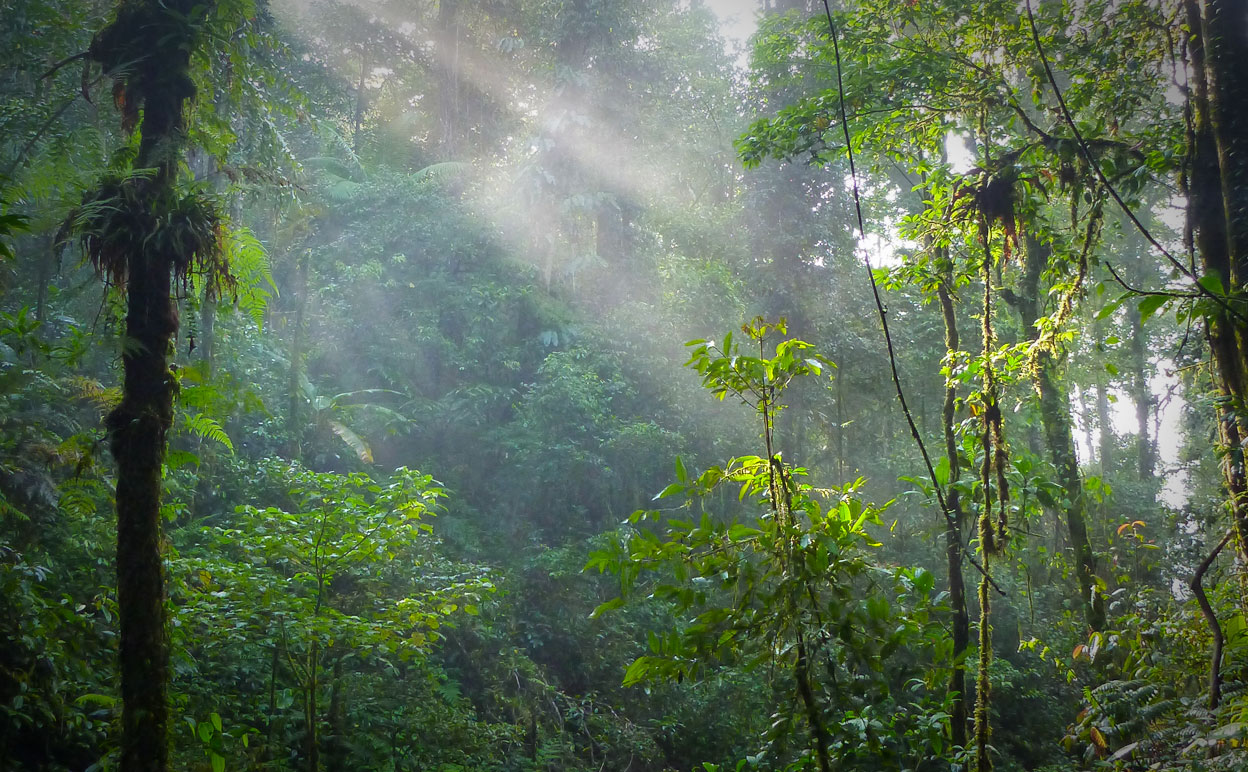
Morning in the rainforest.

We were working in a remote region of PNG known as Yauoru. I knew the place was remote — most of PNG is — but I hadn’t appreciated just how remote.

Beginning our five day walk from the Tenkile Conservation Alliance (TCA) turned to one of our support staff and asked if any white people had been here. The answer was no, never. Being allowed to visit such a special area was an immense privilege. That five day walk was undoubtedly the hardest walk I’ve done, a genuine test of endurance. The first day we walked from Ningal to Uwei (villages close to Yauoru), where Samuel Kabau, a local Uwei villager and Tenkile Conservation Alliance staff member lives. Along the way we passed through cocoa plantations, lowland rainforest and made our first of many river crossings. This took a little over six hours. But that was just day one.

Yauoru is remote. Really remote.

After leaving Uwei we began a long, long walk up the river Obin, crossing raging rapids, leaping over boulders and navigating narrow canyons. I gained an appreciation for the strength of local Papuans as compared to myself. While I plodded with waterlogged boots, drenched to the bone by tropical rains, the locals carried heavy gear and pulled me through rapids so I wasn’t swept away, all in bare feet. And all the time chewing betel nut and smoking cigarettes.

It’s beautiful to look at, not so beautiful to walk through.

After five hours I got my hopes up that we were close to base camp, but I was sadly wrong. After leaving the river we walked and crawled up the side of a mountain at an angle exceeding 45 degrees. Again my local friends — weighing 50–55 kg — stepped in to help lift and shove my 75 kg frame up the slope.

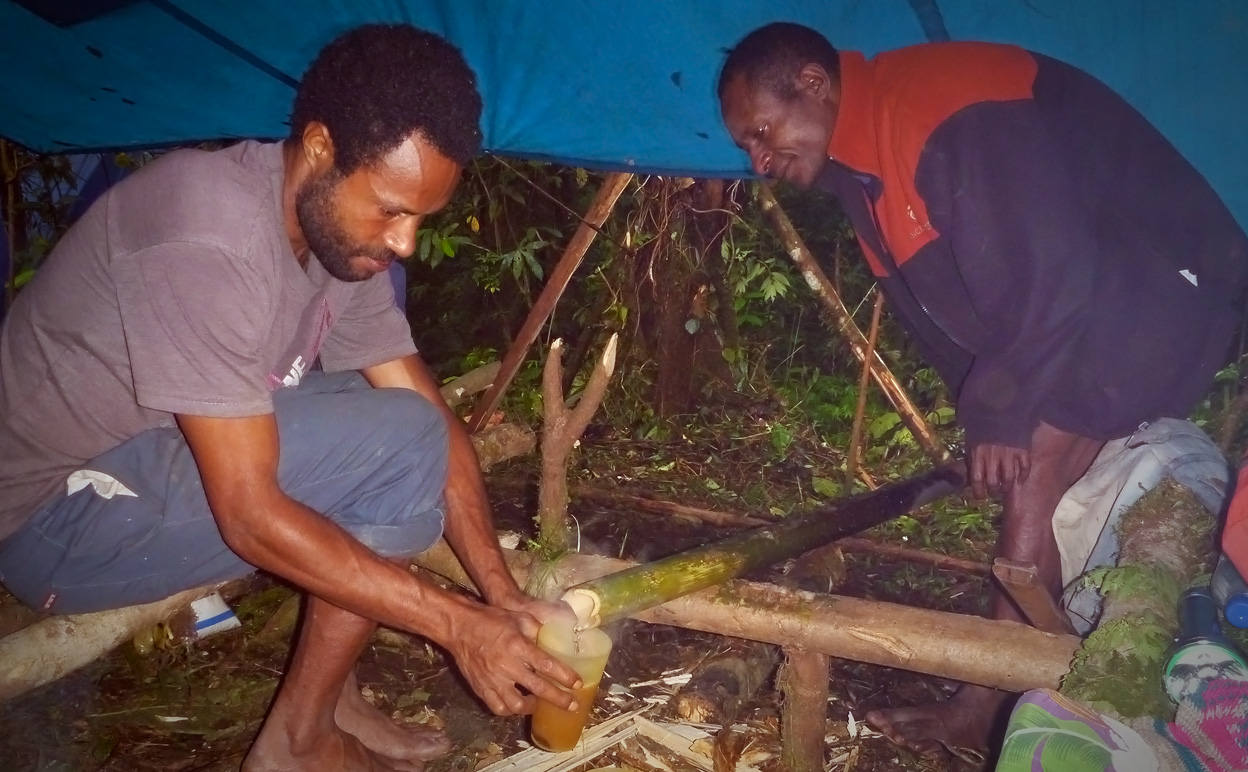
We arrived at base camp where some of our team had gone ahead and built a hut and boiled a billy — which in this case was a bamboo stem. Eat your heart out coffee snobs, I’ve had coffee from a bamboo stem on top of a remote PNG mountain.

Who says Melbourne has the best coffee? Here’s mine being prepared from a bamboo shoot and by my new friends Clancy (L) and James (R).

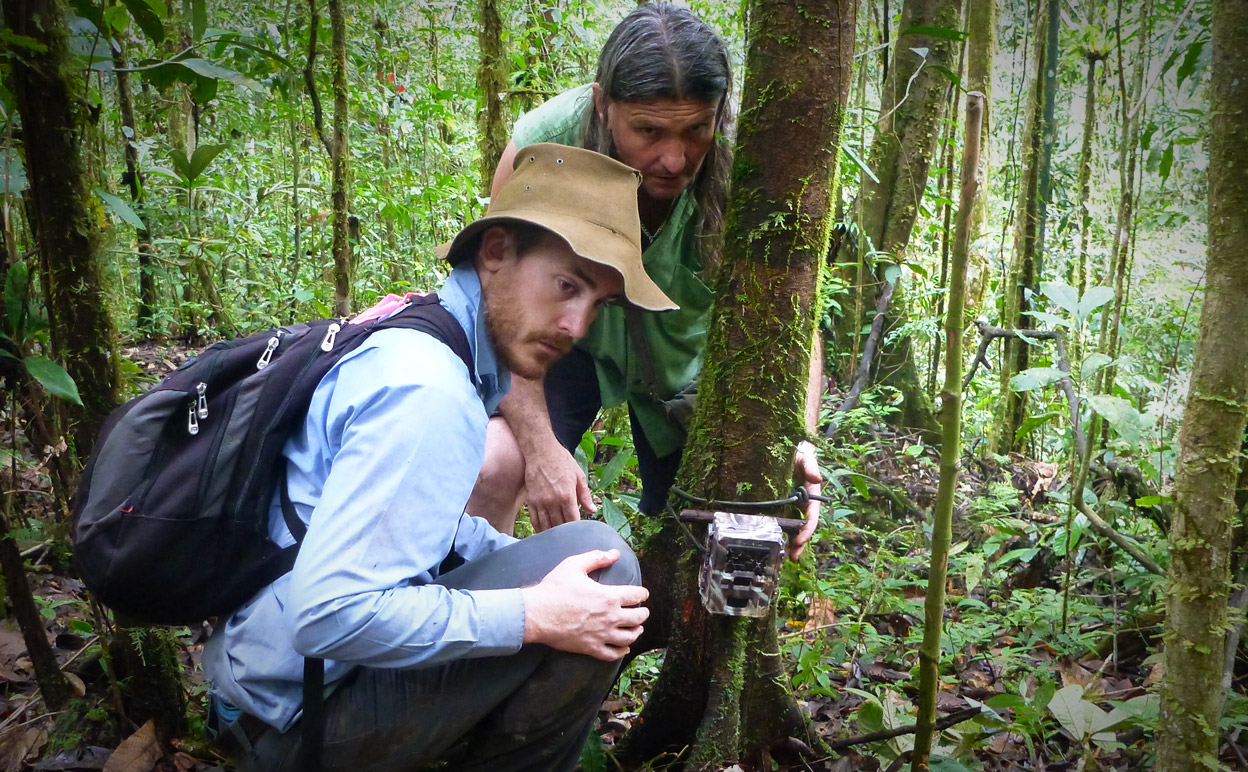
On day three Jim and I trekked to the top of the mountain to place cameras (the exact location is a secret). We put out 26 cameras, ranging from 1100 m to around 1400 m above sea level.

We’d planned for 36 and at a greater range of elevations, but technical issues (more commonly known as Murphy’s Law), prevented us. Below 1100 m the mountain was too steep to stay upright!

Some of the cameras were baited with peanut butter, honey, and vanilla essence for animals who have a sweet tooth; that’s tree kangaroos. Others we baited with tuna oil for predators such as Salvadori’s Monitor, which reportedly can grow to greater than four metres. The locals describe it as a crocodile that climbs trees. Fortunately I didn’t encounter the monitor at night, but I hope our cameras do.

Jim Thomas and I checking everything is just right. What will these cameras discover? We’ll know in February 2014.

Now the waiting game begins. Our cameras are set to be retrieved in February next year. Animals are most likely walking past our cameras right this moment, but we’ll have to wait several months to find out just which ones. While helping to conserve endangered tree kangaroos, hopefully the project will show the positive effects of work by the Tenkile Conservation Alliance and the hunting-free zone the organisation has established in the Torricelli Mountains. It also demonstrates how vital local communities are for conservation. Without them, our expedition would have failed.

Read more about my Papua New Guinea expedition here, and stay tuned for more next year.

The Conversation
Categories
Publications

Published: Continental-scale governance failure will hasten loss of Australia’s biodiversity

Authors: Euan G Ritchie, Corey JA Bradshaw, Chris R Dickman, Richard Hobbs, Christopher N Johnson, Emma L Johnston, William F Laurence, David Lindenmayer, Michael A McCarthy, Dale G Nimmo, Hugh H Possingham, Robert L Pressey, David M Watson and John Woinarski

Abstract

Conserving biodiversity against a global backdrop of rapid environmental change poses one of the biggest and most important challenges to society. For this reason, systems of nature reserves have never been more important.

Protected areas are under threat in many parts of the world (Mascia and Pailler 2011), but the weakening of protected areas in a rich, developed country with a global reputation for conservation leadership (Harrison 2006) is particularly alarming (Ritchie 2013). Consequently, we are concerned about the recent spate of substantial policy, legislative and management changes being made by three of six Australian state governments for exploitative uses of national parks — actions that could affect much of Australia and have significant negative effects on biodiversity.

In recent decades, the Australian state and federal governments have collectively built a system of terrestrial and marine conservation reserves that aspires to be comprehensive and adequate, and to form the cornerstone of biodiversity conservation. The resulting national reserve system is imperfect, but goes some way toward protecting Australia’s unique species and ecosystems (Taylor et al. 2011). That system is now being systematically undermined, even while continental-scale biodiversity losses are underway.

Ritchie EG, Bradshaw CJA, Dickman CR, Hobbs R, Johnson CN, Johnston EL, Laurence WF, Lindenmayer D, McCarthy MA, Nimmo DG, Possingham HH, Pressey RL, Watson DM, Woinarski J (2013) Continental-scale governance failure will hasten loss of Australia’s biodiversity, Conservation Biology, 27(6) 1133–1135 PDF DOI

Categories
Media Publications

The Conversation: Science needs to be more dangerous

Few would argue the world isn’t facing enormous challenges: human population growth and the associated demand for resources, mass extinctions or – perhaps the biggest of all – global climate change.

We often look to science to help provide solutions. But if science is to succeed in doing so, society may need scientists to take more risks, think outside the box and, dare we say it, think “dangerously”.

Without taking risks, science won’t solve big problems. Image by Andrew "FastLizard4" Adams via [CC BY-SA 2.0]Flickr
Without taking risks, science won’t solve big problems. Image by Andrew “FastLizard4” Adams via [CC BY-SA 2.0] via Flickr
We live in a world that is increasingly risk averse, obsessed with risk management and harm minimisation. This results in bizarre decisions such as children not being able to play tag for fear of injuries. Some think that such risk management creates conservatism in funding bodies that are more likely to fund safe research with assured outcomes rather than high-risk projects.

But what exactly do we mean by thinking dangerously? In short, scientists need room to propose ideas that could seem too far-fetched or controversial at first glance, such as introducing elephants to Australia to manage weeds.

What use are such dangerous ideas?

Oscar Wilde perhaps put it best: An idea that is not dangerous is unworthy of being called an idea at all.

Dangerous ideas always stimulate fresh thinking, sometimes with profound outcomes.

To illustrate we only need look at perhaps the most dangerous idea of all time, evolution via natural selection, simultaneously proposed by Charles Darwin and the oft forgotten and desperately unfortunate Alfred Russel Wallace. Their idea changed the very course of human history, in how we view the relationships between Earth’s many millions of different inhabitants, and our own place within it.

The most famous example of dangerous science being punished could be heliocentrism, originally proposed by Galileo. Galileo paid a high price for his theory about how Earth and other planets move in relation to a largely stationary sun. Tried by the Inquisition, he was found guilty of being suspected of heresy and spent his remaining days under arrest.

Fortunately we’ve moved on from then but dangerous thinking in science is still attacked. One must only look at the way the science of climate change, and indeed climate change scientists, are often attacked.

Or consider the response to Mark Davis’ recent dangerous idea that species should be judged more by their function than their origin because some alien species have positive ecosystem impacts. More than 140 scientists replied in outrage at the suggestion that we should in any way relax efforts to control alien species, which have been devastating to so much wildlife around the world.

Not dead yet

Thankfully, despite the rise of occupational health and safety, the dangerous idea is not quite dead yet. A recent symposium run by the Royal Zoological Society of NSW set out to propose dangerous zoological ideas. They wanted ideas that could turn out to be right, wrong or irreverent, but most certainly not boring, safe and uninventive.

A full list of the ideas proposed is here and a flavour of the meeting and discussion here. But some of the most stirring presentations were as follows:

  • Corey Bradshaw and Barry Brook suggested if we want to maintain our energy demands and lifestyles, but still also conserve biodiversity, we must have nuclear power in Australia’s energy mix. Did you know that a person’s entire lifetime’s worth of energy consumption is contained in one golf ball-sized piece of uranium and this has zero emissions? The same amount of energy in coal would be equivalent to the weight of 800 elephants worth and 3,000 elephants worth of emissions! That’s some telling maths, even for the most ardent critic of nuclear power.
  • Ian Wallis told everyone, most notably Mike Archer, that vegetarians certainly do not have more blood on their hands than omnivores. Why? Because two of the main and increasing sources of protein consumed by humans, pork and chicken, require crops to be produced for their production. So even before you’ve tucked into a drumstick or piece of bacon, you’ve indirectly consumed significant amounts of vegetable matter. Vegetarians by comparison just go straight to the source.
  • Euan Ritchie (along with Corey Bradshaw again, clearly a very “dangerous” man) proposed we tear down the dingo barrier fence and implement different approaches for predator management and pest control, including the use of guardian animals. Fences, poison and bullets will not solve our pest management issues and conserve biodiversity long-term; in fact it could make things worse. What many people still fail to realise or acknowledge is that species don’t operate in isolation from others within ecosystems. So why do we continue to manage species as if they do? We need to try other approaches, such as rewilding and reintroductions to restore broken ecosystems.
  • Peter Banks critiqued de-extinction and argued that without extinction there’s no basis to conservation. In another presentation on the same theme, Thom van Dooren discussed how humans mourn the extinct, and that this mourning is vital to conservation action. If humans think endangered species can be brought back by science and a techno-fix approach, what motivation is there to conserve anything? Banks’ dangerous idea is that iconic extinct species such as Thylacines must remain extinct. They do more for conservation dead than they would if they lived again.

Desperate times need bold ideas and bold measures, even potentially “dangerous” ones. There are risks involved, but there are risks also in not being bold and willing to try different things too, especially when the payoffs may be huge. Science is about discovery. If we want to realise its full potential we must start being more adventurous.

The ConversationThis article was originally published at The Conversation. Read the original article.
The Conversation

Categories
Media Research

The Conversation: Into the jungles of Papua New Guinea – a personal journey

Much of my time as an ecology lecturer has been spent teaching students about the wonders of this planet’s biodiversity, but also regrettably, how much of this biodiversity is under severe threat. Hundreds, if not thousands, of species become extinct each year.

With such a disastrous outlook for the species with which we share Earth, it’s easy to get disheartened about where we’re headed. More personally, I often question whether my own fields of science (ecology and conservation biology) are really enough to help stem the extinction tide.

But this week I’m embarking on a journey to Papua New Guinea’s remote Torricelli Mountains. It’s part of a crowd-funded project, Discovering Papua New Guinea’s Mountain Mammals that is a partnership between myself at Deakin University and Jim and Jean Thomas of the Tenkile Conservation Alliance. Together we will count and identify mammals as part of conservation efforts in the region, including some very special species of tree kangaroo.

Just how many Tenkile tree kangaroos are left and where are they found? Our cameras will provide these answers Tenkile Conservation Alliance
Just how many Tenkile tree kangaroos are left and where are they found? Our cameras will provide these answers Image credit: Tenkile Conservation Alliance

Who or what is a Tenkile?

The Tenkile (pronounced ten-kee-lay) is one of 14 tree kangaroo species found in the tropical rainforests of New Guinea and Australia.

In 2001 there were only 100 Tenkile left in the Torricelli Mountains of PNG. To put that in perspective, there are thought to be around 1600 Giant Pandas in the world today. That made the Tenkile one of the world’s most endangered animals. The reason they’re still with us today is largely thanks to the work of the Tenkile Conservation Alliance.

The conservation alliance sets itself apart from many others by focusing on causes rather than symptoms of extinction. The Tenkile had become endangered due to over-hunting, so rather than ignore the needs of local people, the alliance places a strong emphasis on these communities who share the region with the Tenkile.

The reason for the bounce back of Tenkiles is a switch from hunting to more sustainable and reliable sources of protein, including farmed rabbits and chickens. Along with improved education about the local community’s wildlife, and health and living conditions, there has been a real reversal in the once dire trajectory of the region’s wildlife. Thanks to these actions there are now more than double the number of Tenkile there were in 2001.

Professor Tim Flannery, himself no stranger to the wilds of PNG, wrote:

A decade on, the Tenkile Conservation Alliance is the most successful conservation organisation in Melanesia … and no other organisation I know of in a developing country has had anything like this degree of success.

What do we hope to achieve in PNG this time?

Our upcoming trip will take us to the northwestern Torricelli Mountains near the Waliapilik area in Sanduan Province. Over two weeks we’ll place 35 remote, motion-sensing cameras out along lines and an elevation gradient ranging from 500 to 1500 m above sea level. These will help us determine a number of things, including:

  • Are tree kangaroo species (including the Weimang, Tenkile and Yongi) found within the region?
  • If present, how many individuals of each species are there?
  • What habitats are most important for each species?
  • Are species only found at specific elevations and in particular climates, and hence how susceptible could species be to the impacts of global climate change?

To say this trip is full of anticipation is putting it lightly. Along with the critical information we aim to collect on tree kangaroos, we also suspect new species are to be found in the area, including miniature wallabies and echidnas.

When we retrieve our cameras in a few months time it’s going to be exciting to see what we find, and it’s almost guaranteed that there will be many firsts for science. Because camera traps detect and record anything that moves past them, we’ll collect valuable data on a large range of species.

Thanks to all who have helped get us this far. This is just the beginning, and if you’d like to contribute or stay in touch please contact me here.

This article was originally published at The Conversation. Read the original article.

The Conversation

Categories
Publications

The Conversation: Should we move Tasmanian Devils back to the mainland?

This Tasmanian Devil needs a holiday. How about the mainland? Flickr/sillypucci
This Tasmanian Devil needs a holiday. How about the mainland? Image by sillypucci [CC BY-NC 3.0] via Flickr
In almost all parts of the world our environment is under siege and we are losing the battle to save many species from extinction. The most common threats behind this unfolding catastrophe are habitat loss and modification, invasive species, and climate change. What can we do?

Usually we focus on treating the symptoms — planting trees or shooting pest animals — but these treatments often fail. Perhaps we need radical new solutions for fixing broken ecosystems.

One such solution could be introducing (or reintroducing) species to ecosystems. There is now a serious and broad-based proposal to release Tasmanian Devils into the wild at Wilsons Promontory in Victoria, saving devils from extinction in Tasmania, and restoring damaged ecosystems on the mainland.

What is rewilding?

We can look at the Tasmanian Devil proposal in terms of an ecological concept known as rewilding. In essence, rewilding seeks to restore ecological function to habitats by introducing or reintroducing species that could perform vital roles.

Perhaps the best example comes from Yellowstone National Park in the US, where wolves were returned after a 70-year absence. Wolves are crucial to Yellowstone’s ecosystems. Without them herbivores like deer and moose flourish, and prevent trees from producing saplings (see video below).

In Australia, the Tasmanian Devil is an ideal candidate for reintroduction to the mainland.

Saving devils

Tasmanian Devils used to inhabit mainland Australia. When exactly they went extinct on the mainland is uncertain, with dates ranging from 5,000 to as recent as 500 years ago. But in 1881 Frederick McCoy, the first director of the National Museum, noted that Tasmanian Devils (or perhaps that should be “mainland” devils) are very common in the most recent cave deposits in Victoria. These fossils are identical to living devils in Tasmania.

Why they became extinct is more mysterious. Various theories have attributed blame to climate change, over-hunting by Aboriginal Australians, and dingoes.

But whatever the cause, current conditions at Wilson’s Promontory closely resemble those in Tasmania, and have likely remained unchanged for thousands of years, with no dingoes and plenty of prey. So we can be sure that the devils would fit in.

But why move them now?

One excellent reason is that there is a genuine risk that devils could become extinct in the wild by 2025, as a result of devil facial tumour disease (DFTD). A mainland population would act as a large, wild insurance population, outside of Tasmania where DFTD is present.

How would the mainland benefit?

So we know Tasmanian Devils have been on the mainland before, and that moving them might help save the species from extinction. But what could devils offer the mainland?

One of the biggest benefits devils could offer is in the control of the red foxes, feral cats and overabundant herbivores (such as wombats, rabbits and wallabies). Evidence for this comes from Tasmania. Following the decline of devils due to DFTD, species such as the feral cat have been increasing. This in turn is associated with a halving in population size of a smaller, native predator, the Eastern Quoll (once present, but now extinct in Victoria).

Some have also suggested that the reason foxes have only recently established themselves in Tasmania is not solely due to humans introducing them, but because devils declined around the same time. Prior to DFTD, devils may have been acting as a first line of defence against foxes by killing their cubs.

Currently we spend a lot of money managing foxes on mainland Australia through baiting programs. But are we going to do this forever? Devils may provide a 24-7 predator control service, free of charge.

Focusing on foxes also ignores the fact that there is no effective control of probably Australia’s most damaging feral animal, cats. As noted above, devils are capable of limiting cats too.

Another issue at Wilson’s promontory is an over-abundance of herbivores including wombats, swamp wallabies, rabbits, kangaroos and hog deer. All of these increased rapidly following the removal of dingoes in the 1940s.

In high numbers these herbivores can radically alter habitats, making them unsuitable for other species. We can shoot herbivores to keep them down, or we could introduce a natural predator such as Tasmanian Devils.

What’s next?

Parks Victoria and an ambitious multi-institutional research hub, the Wildlife Biodiversity Co-operative Research Centre are behind the new proposal to move devils to Wilson’s Promontory. Planning is underway for a comprehensive proposal to the Victorian and Tasmanian governments, and thorough consultation with the public.

With this in mind I urge our leaders to be bold and act now. There are always risks with moving species, but not taking calculated risks to conserve our wildlife is perhaps even worse. A devil reintroduction should be viewed as a positive and strategic national decision, and one for which future generations will thank us.

It is not often we can achieve win-wins in conservation, but helping prevent the extinction of the Tasmanian devil by re-establishing a mainland population, and restoring desperately needed ecosystem function to habitats, may just be the best conservation win-win waiting to happen.

This article was originally published at The Conversation. Read the original article.

The Conversation

Categories
Uncategorized

Preparing for PNG (and other news)

I’ve been a bit quiet of late on account of preparations for my upcoming trip to Papua New Guinea (PNG). So it’s high time for an update on what’s been going on. My journey to PNG is the result of my first foray into crowd-funding, and I’m really looking forward to putting everyone’s generous support into action. Thank you again everyone, the response was overwhelming!

Torricelli Mountain Range
I’m packing for Papua New Guinea! Image credit: Into The Jungle.

The project is a collaboration with the Tenkile Conservation Alliance. To find out more about the TCA’s amazing work, please visit their website . You won’t be disappointed, this is what grass roots conservation should look like and, more importantly, achieve. So back to the trip, what are we doing anyway? We will place 36 cameras out along an elevation gradient from 500 to 1500 metres above sea level, in order to survey for some of the world’s rarest, most endangered, but little-studied mammal species. In particular we’re targeting Tenkile, Weimang and Yongi (Grizzled) tree kangaroos. It’s a trip full of excitement that will generate substantial new data on the biodiversity of the region, and we even expect to find a new species or two! We’ll retrieve our cameras in a few months time, at which point we’ll get the images back and the secrets of the Torricelli Mountain’s forests will begin to be revealed. It’s worse than waiting for Christmas, believe me! Anyway, you’ll also be able to follow our exploits on The Conversation.

In news of the canid variety, a new book (which I contributed to) on the ecology of dogs and wildlife conservation has just been published. This is an important text, given the ubiquitous distribution of dogs around the world and the renewed interest in the ecological roles of predators. Despite dogs being the world’s most abundant carnivore (an estimated 700 million to 1 billion worldwide), we know surprisingly little about them, so this book is timely.

And what am I doing this very minute? Well, I’m on a plane headed back home to Melbourne from Sydney, after being at the Royal Zoological Society of NSW’s Dangerous Ideas in Zoology forum. It was a great day with lots of thought provoking ideas being proposed by some of Australia’s most prominent ecologists and in some cases, finest exponents of science communication. Many scientists could do a much better job on that latter point though! So what were some of the juicier, more interesting points being made? Well, you can get a pretty good idea by jumping on Twitter and searching for #zoodanger.

But here are a few of my highlights:

  • Corey Bradshaw and Barry Brook suggested if we want to maintain our energy demands and lifestyles, but still also conserve biodiversity, we must have nuclear power in Australia’s energy mix. Did you know a smart phone has the same energy budget as a fridge? I didn’t. And, a golf ball-sized chunk of uranium will power a person’s lifetime energy requirements, but for coal, they’d need the equivalent of 800 elephant’s worth! Staggering and hard to argue with when put like that.
  • Ian Wallis showed everyone, most notably Mike Archer, that vegetarians certainly do not have more blood on their hands than omnivores. But, the type of meat omnivores consume is most important, not just the amount. Increased pork and chicken consumption are most to blame for impacts on the environment, as the production of these animals requires large inputs in the form of crops for feed. Take home message: if you want to eat meat, eat grass-fed (e.g. beef, or even better, roo) but limit your overall meat consumption too.
  • Yours truly (along with Corey Bradshaw) proposed we tear down the dingo barrier fence and implement different approaches for predator management and pest control, including the use of guardian animals. Why? Well, many of our reasons are stated here, but mostly because more fences, poison and bullets will not solve our pest management issues and conserve biodiversity long-term, in fact it could make things worse. What many people still fail to realise or acknowledge is that species don’t operate in isolation from others within ecosystems. So why do we continue to manage species as if they do? Related with this theme, that of species and the importance of their interactions, there’s some very exciting news coming out in this Tuesday’s The Conversation. Can’t say anymore at this stage 😉

Oh and I nearly forgot to mention that there was a talk that featured bunyips (including an ‘actual’ skull that looked remarkably like a wombat’s), black panthers and other mythical creatures. I’m not joking!

Last but not least, along with Zoos Victoria, I will be hosting the 2014 Australian Mammal Society meeting, 7–10 July 2014, at the Melbourne Zoo. Put it in your diaries now! Tim Flannery and John Woinarski are already confirmed as plenaries, and there will be a lot more to come yet…

That’s all for now until I return from PNG in a couple of weeks.

All the best, Euan.

Categories
Media Research

Catalyst: conservation hunting (video)

Can recreational hunters control feral animals? Is there a role for so-called “conservation hunters”? And is their claim backed by science?

What about the introduction of native predators, such as dingos, or companion animals such as alpacas?

These questions are explored by Anja Taylor on the ABC’s popular science program, Catalyst.

The video and a transcipt is available from the Catalyst archive.

Categories
Link Media

Loose laws threaten Australia’s wildlife

Kookaburras, koalas and kangaroos — Australia is well known for its charismatic animals and vast, seemingly untamable, wild spaces. But throughout the country, the national parks and reserves that protect these unique animals and ecosystems have come under increasing threat. New rules and relaxed regulations, which bolster immediate economic growth, are putting pressure on Australia’s already-threatened biodiversity.

Read more at Mongabay.com

Categories
Media Research

The dingo: from sinner to saviour — NSW Office of Environment and Heritage Eureka Prize for Environmental Research

I’m extremely excited, proud and humbled to announce that I am part of a collaborative research team awarded this year’s NSW Office of Environment and Heritage Eureka Prize for Environmental Research.

It's a big night for 'Team Dingo' at the Eureka Prizes
It’s a big night for ‘Team Dingo’ at the Eureka Prizes.

Our research centres on the much-maligned and often polarising predator: the dingo.

Though sometimes miscast as vermin, our research shows that dingoes are key elements in the struggle to reduce damage caused by foxes, feral cats and even kanagroos; and that ecosystems with dingoes have better vegetation and more diverse and abundant populations of small native mammals. In fact, a good dose of our native dog can sustain biodiversity and help land managers control invasive species.

Part cultural icon, part livestock pest, Australia’s largest terrestrial predator is also an important component of healthy ecosystems and a useful contributor to environmental recovery and the protection of threatened species.

‘Team Dingo’ is:

  • Professor Chris Johnson, University of Tasmania
  • Dr Michael Letnic, University of New South Wales
  • Dr Euan Ritchie, Deakin University
  • Dr Arian Wallach, James Cook University
  • Adam O’Neill, Evelyn Downs Station.

'Team Dingo' celebrate at the Eureka Prizes
‘Team Dingo’ celebrate at the Eureka Prizes. Left to right: Dr Euan Ritchie, Dr Arian Wallach, Prof Chris Johnson, Dr Mike Letnic. Image: Australia Museum and Daniel O’Doherty.

On behalf of the team, I would also like to congratulate our fellow Eureka finalists: Dr David Post, Dr Francis Chiew (CSIRO), Dr Bertrand Timbal and Dr Harry Hendon (Bureau of Meteorology) for their work on the causes and predictability of climate variability and its impacts on water availability; and Dr Jason Sharples (University of New South Wales) and Richard McRae (ACT Emergency Services Agency) for their research on the causes and effects of catastrophic firestorms.

Presented annually by the Australian Museum, the Eureka Prizes reward excellence in the fields of research and innovation, leadership and commercialisation, school science and science journalism and communication.

Categories
Media

Science Alert: Who’s afraid of the big bad wolf?

Another attack on Fraser Island — the flashpoint for dingo management issues — has highlighted our complex relationship with Australia’s largest terrestrial predator.

The Fraser Island Dingo is in the news for all the wrong reasons. Image by Glen Fergus [CC-BY-SA-2.5], via Wikimedia Commons
When wolves were reintroduced into Yellowstone National Park in 1995 park after a near 90-year absence, the balance of an entire ecosystem shifted. Grazing by overabundant elk dropped leading to recovery of native aspen, willow and cottonwood trees. Beavers returned, small predators and scavengers increased and coyote numbers dropped, indirectly benefiting the threatened pronghorn antelope.

Recent research from around the globe is demonstrating that large predators, like wolves and dingoes, play a critical role in maintaining healthy ecosystems.

Read more at Science Alert

Categories
Media

The Australian: MPs’ ignorance puts parks in peril

Last week the world was appalled when Ecuador decided to open up one of its iconic national parks for petroleum development. Yet the world should be even more disappointed in Australia, a far wealthier nation whose parks could be facing even worse threats.

Why is Australia going down this reckless path? It’s all down to the state governments.

Read more about the threats facing Australia’s national parks: grazing, logging, clearing, development and worst of all: the erosion of vital government protections.

Categories
Research Student news

Honours projects for 2014 (closed)

NOTE: these places have now been filled.

See: Honours projects for 2015

Looking for an exciting honours project in ecology? I have three openings from mid-2014.

I also welcome other project ideas from students if they fit with my expertise and research priorities.

To find out more, please refer to the Deakin University School of Life and Environmental Sciences Honours 2014 Information Booklet, or contact me.

The distribution, abundance and habitat preferences of mammals in Wilsons Promontory National Park (two projects)

Wilsons Prom is home to native mammals such as the Swamp Wallaby, Wallabia bicolor. Image by Toby Hudson [CC-BY-SA-3.0], via Wikimedia Commons
Supervisors: Dr Euan Ritchie and Dr Dale Nimmo

Start date: July 2014

Fire and predation are key processes that shape the structure and function of ecological communities. Despite their importance, few studies have examined how they may interact to affect the distribution, abundance and habitat preferences of species across different habitats.

Two separate but related honours projects will examine the effects of fire and predation on mammals in Wilsons Promontory National Park. This work will be supported by Parks Victoria. Experience with using GIS will be an advantage for these projects.

Where and when did Tasmanian devils last occur in Victoria? (one  project)

 Tasmanian Devils, Sarcophilus harrisii, were once abundant on the Australian mainland. Image by JJ Harrison[CC-BY-SA-3.0], via Wikimedia Commons
Tasmanian Devils, Sarcophilus harrisii, were once abundant on the Australian mainland. Image by JJ Harrison[CC-BY-SA-3.0], via Wikimedia Commons
Supervisors: Dr Euan Ritchie and Dr Erich Fitzgerald

Start date: July 2014

This project seeks to establish the prehistoric geographic distribution and habitats of devils across Victoria using the Palaeontology Collection at Museum Victoria and established proxies for palaeoenvironmental reconstruction. It will also use Carbon dating of fossil and subfossil devil specimens in the Palaeontology Collection to estimate when devils existed across Victoria and refine the timing of their extinction on mainland Australia.

More information

Categories
Publications

Published: The dingo and biodiversity conservation — response to Fleming et al.

Authors: Chris N Johnson and Euan G Ritchie

Abstract

Several authors have recently argued that dingoes could be used to help conserve biodiversity in Australia. Fleming et al. (2012) [Australian Mammalogy 34, 119–131] offer the alternative view that restoration of dingo predation is unlikely to help native species, and is more likely to do harm. We think many of the arguments used by Fleming et al. to reach that conclusion are either unsound or beside the point, and we explain why.

Dingo Christopher Watson Wikimedia Commons 1248 x 772
The dingo is Australia’s largest terrestrial predator. But what does that mean for smaller predators, prey and the interactions between them? Image by By Christopher Watson [CC-BY-SA-3.0] via Wikimedia Commons.

Johnson CN, Ritchie EG (2013) The dingo and biodiversity conservation: response to Fleming et al. Australian Mammalogy, 2013, 35, 8–14 DOI PDF

Categories
Research

Australian Museum Eureka Prizes (video)

Chris Johnson, Mike Letnic, Arian Wallach, Adam O’Neill and I are finalists in this year’s Australian Museum Eureka Prizes.

We have been nominated for the NSW Office of Environment and Heritage Eureka Prize for Environmental Research for our work in showing how dingoes help sustain biodiversity in Australia’s ecosystems.

Check out the short nomination video, featuring UNSW’s Dr Mike Letnic.

Categories
Publications Research

Published: A cost-effective and informative method of GPS tracking wildlife

Authors: Blake M Allan, John PY Arnould, Jennifer K Martin and Euan G Ritchie

Abstract

In wildlife research, our ability to GPS track sufficient numbers of individuals is always limited by cost, which restricts inference of species–habitat relationships.

Here, we describe the modification and use of a relatively new and inexpensive off-the-shelf GPS device, to provide detailed and accurate information on the movement patterns of individuals (mountain brushtail possums, Trichosurus cunninghami), including how movement varies through time, and how individuals interact with each other.

Our results demonstrated that this technology has enormous potential to contribute to an improved understanding of the movement patterns and habitat preferences of wildlife at a fraction of the cost of traditional GPS technology.

Allan BM, Arnould JPY, Martin JK, Ritchie EG (2013) A cost-effective and informative method of GPS tracking wildlife, Wildlife Research, 40, 345–348 DOI PDF

Categories
Publications Research

Published: Refuges for fauna in fire-prone landscapes — their ecological function and importance

Authors: Robinson NM, Leonard SWJ, Ritchie EG, Bassett M, Chia EK, Buckingham S, Gibb H, Bennett AF and Clarke MF

Summary

Rapid environmental change is placing increasing pressure on the survival of many species globally. Ecological refuges can mitigate the impacts of change by facilitating the survival or persistence of organisms in the face of disturbance events that would otherwise lead to their mortality, displacement or extinction. Refuges may have a critical influence on the succes- sional trajectory and resilience of ecosystems, yet their function remains poorly understood.

We review and describe the role of refuges in faunal conservation in the context of fire, a globally important disturbance process.

Refuges have three main functions in relation to fire: they enhance immediate survival during a fire event, facilitate the persistence of individuals and populations after fire and assist in the re-establishment of populations in the longer term. Refuges may be of natural or anthropogenic origin, and in each case, their creation can arise from deterministic or stochas- tic processes. The specific attributes of refuges that determine their value are poorly known, but include within-patch attributes relating to vegetation composition and structure; patch- scale attributes associated with their size and shape; and the landscape context and spatial arrangement of the refuge in relation to fire patterns and land uses.

Synthesis and applications: Refuges are potentially of great importance in buffering the effects of wildfire on fauna. There is an urgent need for empirical data from a range of eco- systems to better understand what constitutes a refuge for different taxa, the spatial and tem- poral dynamics of species’ use of refuges and the attributes that most influence their value to fauna. Complementary research is also required to evaluate threats to naturally occurring ref- uges and the potential for management actions to protect, create and enhance refuges. Knowledge of the spatial arrangement of refuges that enhance the persistence of fire-sensitive species will aid in making decisions concerning land and fire management in conservation reserves and large natural areas. Global change in the magnitude and extent of fire regimes means that refuges are likely to be increasingly important for the conservation of biodiversity in fire-prone environments.

Robinson NM, Leonard SWJ, Ritchie EG, Bassett M, Chia EK, Buckingham S, Gibb H, Bennett AF, Clarke MF (2013) Refuges for fauna in fire-prone landscapes: their ecological function and importance. Journal of Applied Ecology DOI PDF

Categories
Research

Big Desert update 2

I’ve just returned from a glorious two-week family holiday in sunny north Queensland. How I’ve missed the place, so much cool wildlife everywhere! Among the highlights were spotting a male cassowary with three chicks (my son is currently obsessed with these oversized birds), watching platypus swim from our front veranda on the Atherton Tablelands — if you’re looking for a biologist’s paradise you can’t go wrong here — and taking the kids spotlighting for NQ’s arboreal mammals. We missed out on tree kangaroos, alas, but we did see green ringtail, lemuroid, and Herbert River ringtail possums, coppery brushtail possums and long-nosed bandicoots. And at age five, Rohan seems to be well on his way to a successful career in field ecology, spotting the eye-shine of many possums himself.

But enough on holidays; what I’d like to update everyone on is the first results to roll in from our Big Desert work. As I’ve written previously, this is an incredibly remote and largely unstudied region, so there’s much to be discovered and learned. What have we found so far? Well, I’ll let the video, below, do most of the talking, but what’s most exciting is that we’ve confirmed there is a dog population in the park, and some individuals appear to look very much like dingoes. We always suspected this, but it’s nice to have positive confirmation. Another interesting result is that goats were not recorded on any of the cameras so far, as compared to the Murray Sunset National Park, to the north, where goats are very abundant, but dogs/dingoes are absent. It’s early days, the habitats of Murray Sunset and the Big Desert / Wyperfeld region are somewhat different, and I’m sure we’ll find some goats in the region soon enough, as they’ve been recorded there. But, it does suggest dingoes may be playing a role in keeping goat numbers down, as we know they do from other studies conducted in other parts of Australia .

Some may remember the Victorian Government recently reviewed the evidence for the existence of big cats; the legendary Black Panther. Well, we may just have found it ourselves! (second-last clip in the video). On a serious note though, cats appear to be relatively common, and great variation exists in their morphology (as seen on the videos). Cats are known to be a major factor behind the extinction of many native species, and new research also shows how they have large impacts on wildlife through the spread of toxoplasmosis. We’re keen to understand more about the role of foxes and dingoes in suppressing cats and therefore disease transmission, but more on that later…

No rest for the wicked. I’m off to Belfast next week to attend the 11th International Mammalogical Congress. I’ll be speaking about the dingo barrier fence and co-chairing a symposium on trophic cascades, ecological restoration and conservation of mammals. I’m really looking forward to a week of listening to mammal research from around the world, and perhaps just a wee Guinness or two as well.