Authors: Thomas M Newsome, Guy-Anthony Ballard, Mathew S Crowther, Justin A Dellinger, Peter J S Fleming, Alistair S Glen, Aaron C Greenville, Chris N Johnson, Mike Letnic, Katherine E Moseby, Dale G Nimmo, Michael Paul Nelson, John L Read, William J Ripple, Euan G Ritchie, Carolyn R Shores, Arian D Wallach, Aaron J Wirsing and Christopher R Dickman.
Abstract
There is global interest in restoring populations of apex predators, both to conserve them and to harness their ecological services.
In Australia, reintroduction of dingoes (Canis dingo) has been proposed to help restore degraded rangelands. This proposal is based on theories and the results of studies suggesting that dingoes can suppress populations of prey (especially medium- and large-sized herbivores) and invasive predators such as red foxes (Vulpes vulpes) and feral cats (Felis catus) that prey on threatened native species. However, the idea of dingo reintroduction has met opposition, especially from scientists who query the dingo’s positive effects for some species or in some environments.
Here, we ask ‘what is a feasible experimental design for assessing the role of dingoes in ecological restoration?’ We outline and propose a dingo reintroduction experiment — one that draws upon the existing dingo-proof fence—and identify an area suitable for this (Sturt National Park, western New South Wales).
Although challenging, this initiative would test whether dingoes can help restore Australia’s rangeland biodiversity, and potentially provide proof-of-concept for apex predator reintroductions globally.
Newsome TM, Ballard G, Crowther MS, Glen AS, Dellinger JA, Fleming PJS, Greenville AC, Johnson CN, Letnic M, Moseby KE, Nimmo DG, Nelson MP, Read JL, Ripple WJ, Ritchie EG, Shores CR, Wallach AD, Wirsing AJ, Dickman CR (2015) Resolving the value of the dingo in ecological restoration, Restoration EcologyPDFDOI
The south-west of WA is a global biodiversity hotspot. The state barrier fence has had a questionable impact on controlling pest species and extending it would likely cause more harm than good.
“There was a plague of them and one night I got approximately 300 which had been poisoned in the garden during night. This went on for two or three years.”
Take a second and have a guess what animal species this quote might be referring to. Here’s a hint, the quote is from western Victoria, Australia, during the 1800s.
What did you guess? A house mouse, or another introduced species like a rabbit?
Australia has the worst rate of mammal extinctions in the world. More than a third have become extinct since European settlement, or are currently threatened with extinction. But what about the survivors? And what can we do to prevent further losses?
A lost world
Few Australians would appreciate just how much our native mammal communities have changed since European arrival more than 200 years ago. Early quotes from books and newspaper articles like the one above, painstakingly collated by researchers, offer some insight.
Early explorers made similar notes about abundant mammals because their dogs were “completely distracted by the numbers of wallabies, paddymelons and kangaroo rats that bounded off on all sides”.
Their poor horses would struggle through the sandy soils that were “full of Wallabi holes”.
Such quotes describe an Australian landscape rich in native wildlife. A landscape that, owing to the decline and extinction of so many mammal species, has radically changed.
The abundant mammals that distracted the dog and made life difficult for the horse probably refer to species long gone. According to researchers, the burrowing bettong, which is now extinct on mainland Australia, was probably the “kangaroo rat” responsible for those pesky holes.
The “paddymelons” and wallabies are probably the eastern hare and/or bridled nailtail wallabies; the former now extinct, the latter now restricted to a few pockets across eastern Australia.
On the bright side
Even with the sad loss of so many native mammals, Australia retains a suite of truly fascinating species, many of which occur right among us.
In Melbourne’s suburb of Cranbourne, populations of southern brown bandicoots persist, fossicking in people’s gardens and dining from dog’s bowls by night.
Species of flying fox survive in our inner cities and darken the dusk sky as they leave their colony for their nightly foraging.
In most major capitals, some possum species are so common as to be an annoyance to many as they bound over roofs and devour prized roses.
A diverse array of kangaroo species still bound through rural landscapes, sharing paddocks with wombats, echidnas, dingoes and koalas. Platypuses fish for yabbies in farm dams nearby.
Australia is still blessed with spectacular and globally unique mammals. But we can do better.
Australia’s native mammals will undoubtedly be a focus of the hub, as many species are on the brink of extinction.
However, one thing our history of mammal extinctions has taught us is that complacency is our worst enemy. Common species go extinct, and can do so rapidly.
On the other hand, species that are regionally extinct should not be forgotten when assessing how our conservation dollar is best spent. This is particularly true for species that perform important functional roles that benefit other species (or entire ecosystems), such as native predators. Just as complacency is to be avoided, an aversion to taking calculated risks and trying new approaches in conservation also jeopardises our species’ chances of survival. We urgently need to go further and be bold if our landscapes are to be restored.
The revival of apex predators across Europe, species such as wolves, bears and lynx, demonstrates that biodiversity change is not a one way street. Indeed, few would have predicted a predator renaissance in Europe 50 years ago. Yet, European society has deemed that predators are important to conserve and they are actively restoring them.
There are emerging signs that Australians are up to the task too.
The western quoll, a species that once occurred in every mainland state (now restricted to southwestern Western Australia), has been reintroduced to the Flinders Ranges, and is reproducing.
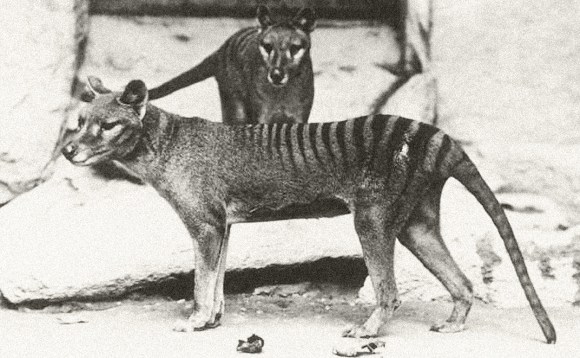
There is growing support for ambitious projects such as the reintroduction of Tasmanian Devils onto mainland Australia, both for their own conservation and to help control invasive predators, such as red foxes and feral cats. The eastern quoll also persists in Tasmania and so their reintroduction to mainland Australia remains a possibility.
Organisations are being assembled to specifically promote and support the recovery of many of our iconic apex predators.
It is time for the public, governments and non-government organisations to capitalise on this momentum and support audacious projects that seek to rewild Australia and restore its natural glory.
Let us hope that a future not so far away will see our landscapes reinvigorated by a resurgent mammal fauna.
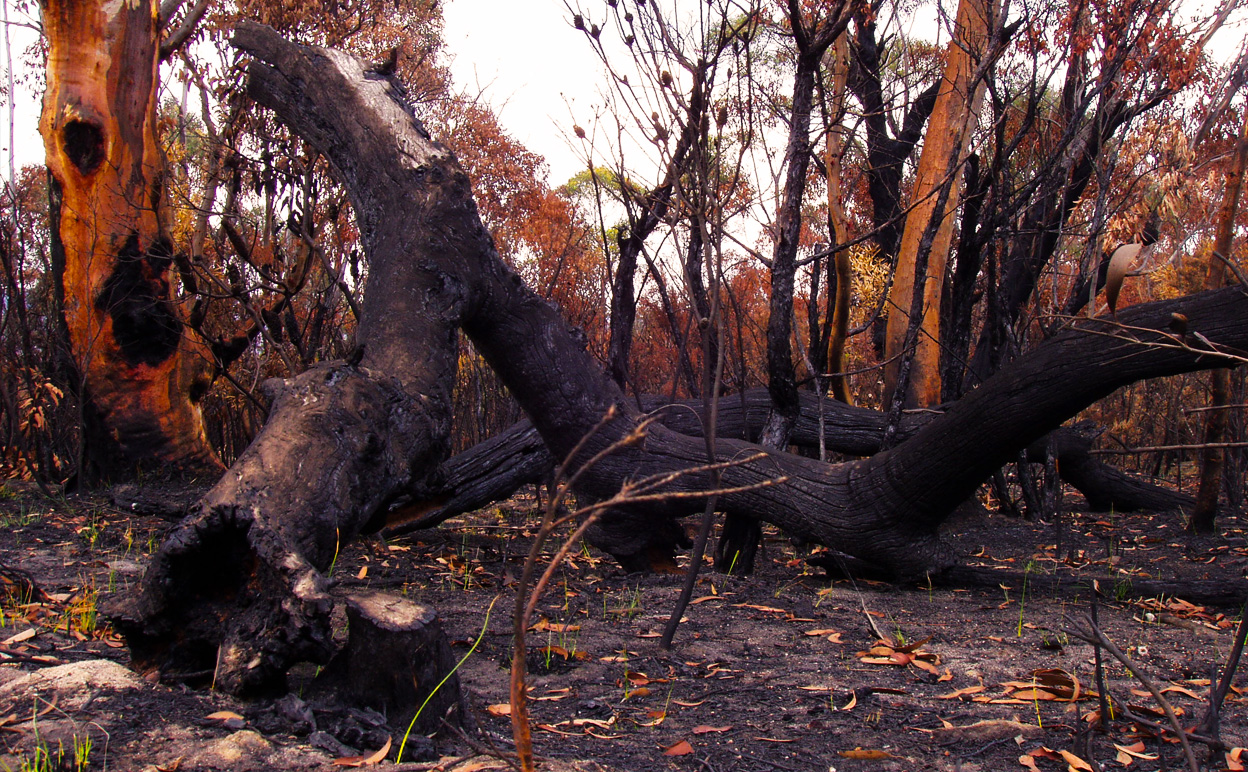
Fire shapes the composition of ecosystems through its effects on vegetation structure. Fire is integral to the dynamics of coarse woody debris — logs and dead trees — as it both consumes existing debris and generates new material through its influence on tree death and collapse. Image credit: Edgar Vonk via Flickr
Authors: Michelle Bassett, Evelyn K Chia, Steve W J Leonard, Dale G Nimmo Greg J Holland, Euan G Ritchie, Michael F Clarke and Andrew F Bennett
Published in:Forest Ecology and Management, volume 340 (March 2015)
Abstract
Coarse woody debris (CWD) is a common structural component of terrestrial ecosystems, and provides important habitat for biota.
Fires modify the distribution of CWD, both spatially and temporally. Changes in fire regimes, such as those arising from prescribed burning and changing climatic conditions, make it critical to understand the response of this resource to fire.
We created a conceptual model of the effects of fire on logs and dead trees in topographically diverse forests in which trees often survive severe fire. We then surveyed paired sites, in a damp gully and adjacent drier slope, ~3.5 years after a large wildfire in south-eastern Australia.
Sites were stratified by fire severity (unburnt, understorey burnt and severely burnt), and fire history (burnt ≤3 years or ≥20 years prior to the wildfire).
Both components of the fire regime influenced CWD availability in gullies. Severe wildfire and fire history ≤3 years reduced the volume of small logs (10–30 cm diameter) in gullies, while severe wildfire increased the number of large dead trees in gullies. CWD on slopes was not affected by fire severity or history at ~3.5 years post-fire.
Log volumes on slopes may recover more quickly after wildfire through rapid collapse of branches and trees. Gullies generally supported more logs than slopes, but longer inter-fire intervals in gullies may allow fuel loads to accumulate and lead to comparatively larger fire impacts.
Given that fire severity and fire interval are predicted to change in many fire-prone ecosystems in coming decades, this study highlights the importance of understanding the interacting effects of multiple components of the fire regime with landscape structure. In particular, variation in fire interval and fire severity in relation to topographic position will influence the pattern of accumulation of coarse woody debris across the landscape, and therefore the structure and quality of habitats for biota.
Bassett M, Chia EK, Leonard SWJ, Nimmo DG, Holland GJ, Ritchie EG, Clarke MF, Bennett AF (2015) The effects of topographic variation and the fire regime on coarse woody debris: Insights from a large wildfire, Forest Ecology and Management, 340, 126–134 PDFDOI
Authors: David Forsyth, Andrew Woolnough, Dale Nimmo, Euan Ritchie, Malcolm Kennedy, Anthony Pople and Ian Watson
Published in: Australian Veterinary Journal, volume 92, number 12 (December 2014)
Allen and West recently proposed that dingoes (Canis dingo, including hybrids with feral dogs C. lupus familiaris) are a critical causal factor in the decline of Australia’s sheep (Ovis aries) flock and implied that dingoes would cause the rangeland sheep industry to disappear within 30−40 years.
We agree that dingo predation can reduce the profitability of affected sheep properties and has important negative social effect on rural communities, and that exclusion fences and a range of lethal control methods are options for reducing those negative effects.
However, we argue that the importance of dingoes as a cause of the decline in Australia’s sheep flock has been overstated.
Forsyth D, Woolnough AP, Nimmo D, Ritchie EG, Kennedy M, Pople A, Watson I (2014) A comment on the influence of dingoes on the Australian sheep flock. Australian Veterinary Journal, 92: 461–462. PDFDOI
Kakadu National Park is Australia’s largest – but we need to make sure parks are actually protecting wildlife from threats. Image credit: Rita Willaert via Flickr
While we can never know for sure, an extraordinary number of animals and plants are threatened with extinction — up to a third of all mammals and over a tenth of all birds. And the problem is getting worse.
At the same time, we have more land and sea than ever in protected areas (“parks”) — more than 200,000 protected areas covering about 15% of the world’s land area and 3% of the oceans.
So why are protected areas making so little difference?
This is a vital question about the future of nature that should be discussed at Sydney’s World Parks Congress, beginning today.
This once-in-a-decade Congress, led by the World Conservation Union (IUCN), will be attended by thousands. A sobering reality will lie behind the excitement and networking: while protected-area systems expand, we are losing the planet’s species at an alarming rate.
One reason is that protected areas are only one of our tools, and will never do the job alone. IUCN could say, though, that it’s doing the best it can.
But another reason, more confronting for IUCN, is that protected areas tend to be in the wrong places.
Protecting the leftovers
Just about anywhere people have looked, the majority of protected areas are residual — leftover areas of the world pushed to the margins where they least interfere with extractive activities such as agriculture, mining, or forestry.
On land, protected areas are mainly remote or high, cold, arid, steep, and infertile. Similar patterns are emerging in the sea.
Residual protected areas, by definition, make least difference to conservation.
Meanwhile, biodiversity continues to be lost in landscapes and seascapes suitable for clearing, logging, grazing, fishing, and extraction of minerals, oil, and gas.
Residual protection also gives the false appearance of progress because many people equate the number of protected areas and their extent with success.
These figures are only “good news” if they tell us about the difference these parks make to conservation. They don’t.
Failing to stop the losses
The most rigorous estimates of the difference that protected areas make are small.
By 2008, only 7% of Costa Rica’s much-lauded protected-area system would have been deforested in the absence of protection.
Globally, in 2005, the loss of native vegetation prevented by protected areas was 3% of their extent.
These numbers get to the very purpose of protected areas. They are small because protected areas are mainly residual.
Aiming for the wrong targets
Protected areas that make little or no difference should be a major concern for IUCN, especially because targets for protection endorsed by the Convention on Biological Diversity at best obscure and at worst encourage the failure of protected areas to make a difference.
The Convention’s targets are meant to guide decisions on protected areas to 2020. The only unambiguously quantitative target (number 11) says nothing about making a difference. It aspires to 17% of land and 10% of the sea under formal protection.
The result has been a rush to proclaim large, remote protected areas where they are easiest to establish and make least difference. The story is familiar in conservation and beyond: provide a simplistic metric that implies success, and it will be manipulated to achieve high scores.
Another of the Convention’s targets (number 5) gets closer to the real purpose of protected areas, but remains problematic: “By 2020, the rate of loss of all natural habitats, is at least halved and where feasible brought close to zero, and degradation and fragmentation [are] significantly reduced.”
But there are problems here too. Before we halve the rate of loss, we need to know what the “baseline” rate of loss is — and over what period it should it be measured. Should it be measured in the past, when loss might have been slower, or now? Habitat loss also varies across the world — does that mean that reduction in loss rates of some areas can offset faster losses elsewhere?
Several kinds of tropical forests, for example, housing most of the world’s terrestrial species, are being lost rapidly. For these, even a halving of the rate of loss will mean mass extinction.
Australia setting a bad example
IUCN’s mission is hindered by recalcitrant governments.
Australia, as host of the World Parks Congress, will show off its conservation wares. The display window is less impressive than when Australia genuinely led global conservation thinking from the 1970s to 1990s.
Our protected areas on land, such as those in the host state, are strongly residual (claims of an improving trend are based on inadequate data).
Australia’s marine parks, which are directed more at satisfying total protected area than protecting threatened marine biodiversity, show other countries how not to protect the sea.
And the only quantitative targets in Australia’s Strategy for the National Reserve System — for protected extent and coverage of regional ecosystems — leave plenty of scope for more parks that make little or no difference.
Not content with marginalising protection, Australian governments are weakening what’s there. Parks on land are being opened up for livestock grazing, industrial logging, mining, “conservation hunting”, and commercial development.
Here are four ways for IUCN to lead the way to parks that make a bigger difference:
Stop using targets that give the illusion of conservation progress. These include the number and extent of protected areas and percentages of countries, states, or regions covered. At best they will inadvertently obscure the real signal. At worst they will be used perversely to dress up residual protection.
Measure success as the difference protected areas make relative to no protection. This is “impact evaluation” in fields such as medicine, education, and development aid, where difference means saving and improving human lives. If saving species is also important, evaluating the impact of protected areas is essential.
Establish an IUCN Task Force to develop ways for evaluating the impact of protected areas, considering both biodiversity and human livelihoods. Assess the impact of current protected areas to provide lessons for management and future planning. And test approaches to setting priorities as the predictions they are.
Develop targets for the impact of protected areas: how much threat should be averted and how much loss should be avoided?
Ultimately, the success of conservation depends on what natural resources are left unexploited by humans so that other species can survive.
Protection that does not avoid the loss of species and ecosystems merely gives the appearance of conservation progress under exploitative business-as-usual.
Real conservation – the kind that makes a difference – depends on IUCN’s leadership. Every year of delay means irreversible, avoidable loss of biodiversity.
This article was co-authored by Dr Piero Visconti, Board Member of the European Section of the Society for Conservation Biology in Washington, D.C.
The Victorian Government is considering reintroducing Tasmanian Devils to Wilsons Promontory National Park, in part to help control fox and feral cat numbers. I spoke to the ABC’s Jonathan Kendall about the evidence.
Feral cats are devastating our wildlife, so we need a long-term, sustainable solution. This is where Australia’s natural predators come in.
Feral cats are decimating Australian wildlife. Could the introduction of apex predators be part of the solution? Image credit Timo via Flickr.
A few moments on the internet will reveal that, as companion animals, cats are rivalled only by dogs. Our love affair with them is hardly surprising: they are elegant, graceful and affectionate animals. But they are also highly adaptable and successful hunters. Sadly our soft spot for them brings with it disastrous consequences for smaller wildlife species, particularly mammals, birds and reptiles.
Cats are wreaking havoc on our native wildlife, from northern Australia’s Kimberley to southern Australia’s Alps: nowhere is unaffected. Along with other threats such as habitat loss and fire, cats are pushing many native animals to the brink of extinction.
How serious is the cat problem? It’s been estimated that there may be as many as 15 million feral cats in Australia, each killing about five native animals per night: a nightly total of around 75 million native animals. And it’s not just feral cats doing the damage; that adorable Fluffy has a sinister side too. It often isn’t recognised that there is abundant and diverse native wildlife in and around many Australian cities and towns, including bandicoots, sugar gliders, quolls, koalas, parrots, water dragons and snakes. The development of remotely triggered camera traps has provided ample evidence that such wildlife frequently falls victim to domestic cats on their nightly excursions.
For a long time our other invasive predator of note, the European red fox, was seen as enemy number one to our wildlife, particularly mammals, but there’s a growing realisation that its many meals are eclipsed by those of cats, both feral and owned. Globally, cats are rated at 38th and red foxes at 99th on the IUCN’s list of 100 of the World’s Worst Invasive Alien Species.
And it’s not just cats’ appetites that are doing the damage. Cats are the primary host of the parasite Toxoplasma gondii, which can infect most mammals and birds, causing the potentially fatal disease toxoplasmosis (toxo). Even when not lethal, toxo can impact wildlife populations indirectly, through effects that include impaired vision, disorientation, loss of coordination, anorexia, lethargy, fever, skewed offspring sex ratios and abortion. Most bizarrely, animals infected with toxo are often attracted to the smell of cats and hence are more likely to be killed and eaten by them; a kind of parasite-driven mind control.
So what can we do to reduce the damage done by cats and mitigate this national conservation disaster? The most urgent needs are for vigorous education and awareness campaigns about the impacts of cats on wildlife, and tighter regulations and enforcement around responsible cat ownership. This should include mandatory desexing, the imposition of night-time curfews and containment of cats within pet owners’ properties at all times.
In addition, a number of on-ground solutions are already available or under consideration; there is no doubt that a range of measures will be essential. These include the development of cat-specific poison baits and release of a cat-specific virus. However cat control through disease and poison programs are unlikely to be effective long-term, as natural selection will favour disease-resistant and cautious cats which will result in rapid population bounce-back. After all, cats are known for their smarts, being more attracted to moving prey and suspicious of foreign objects. Under good conditions, furthermore, they can reproducequickly and bountifully.
Fencing can effectively exclude cats from habitats and provide wildlife refuges, and they play a critical role in holding the line for species such as bilbies, already teetering on the edge of extinction. However the use of fencing as a regular and ongoing strategy for wildlife conservation in our vast country will not only be logistically challenging (perhaps impossible) but also forbiddingly expensive. More fences will also result in it becoming harder and harder to see bilbies, bandicoots and many other native species in the wild. What a sad outcome for our nation and what an indictment of our allowing cats to reign supreme and unchecked!
Cue the predator
Why are cats able to run rampant? A significant reason is the lack of balance that now characterises our ecosystems. A crucial step is likely to be returning native top predators, in particular dingoes and Tasmanian devils, to landscapes, so that they can resume their important ecological roles. Scientific research (pdf) is strongly suggesting that dingoes not only kill cats but also instill fear in them, which means that they avoid areas and times where dingoes are active. Hence dingoes can provide a 24-hour-a-day, seven-day-a-week, cat control service.
If we want to conserve our iconic and globally unique wildlife then we need to work with, rather than against nature, and supporting more positive management of dingoes and returning Tasmanian devils to mainland Australia for their biodiversity benefits (pdf)would be one of the best and most cost effective things policy-makers could do now. Non-government conservation organisations such as the Australian Wildlife Conservancy are already leading the way.
In 1995 the USA and Canada worked together to reintroduce wolves to Yellowstone for their ecosystem benefits. The success of this bold step is now the stuff of legend. Isn’t it time we had our ‘Yellowstone moment’ and began restoring Australia’s ecosystems to some of their former glory?
Authors: Catherine J Payne, Euan G Ritchie, Luke T Kelly and Dale G Nimmo.
Abstract
Predation and fire shape the structure and function of ecosystems globally. However, studies exploring interactions between these two processes are rare, especially at large spatial scales. This knowledge gap is significant not only for ecological theory, but also in an applied context, because it limits the ability of landscape managers to predict the outcomes of manipulating fire and predators.
We examined the influence of fire on the occurrence of an introduced and widespread mesopredator, the red fox (Vulpes vulpes), in semi-arid Australia. We used two extensive and complimentary datasets collected at two spatial scales.
We examined the influence of fire on the distribution of introduced red foxes in semi-arid Australia. Image credit Area51Bel [CC-BY-SA 3.0] via Wikimedia Commons.At the landscape-scale, we surveyed red foxes using sand-plots within 28 study landscapes — which incorporated variation in the diversity and proportional extent of fire-age classes — located across a 104 000 km² study area. At the site-scale, we surveyed red foxes using camera traps at 108 sites stratified along a century-long post-fire chronosequence (0–105 years) within a 6630 km² study area.
Red foxes were widespread both at the landscape and site-scale. Fire did not influence fox distribution at either spatial scale, nor did other environmental variables that we measured.
Our results show that red foxes exploit a broad range of environmental conditions within semi-arid Australia.
The presence of red foxes throughout much of the landscape is likely to have significant implications for native fauna, particularly in recently burnt habitats where reduced cover may increase prey species’ predation risk.
Payne CJ, Ritchie EG, Kelly LT, Nimmo DG (2014) Does Fire Influence the Landscape-Scale Distribution of an Invasive Mesopredator? PLoS ONE 9(10): e107862 PDFDOI
Authors: Keith Bradby, James A Fitzsimons, Andrew Del Marco, Don A Driscoll, Euan G Ritchie, Jenny Lau, Corey JA Bradshaw and Richard J Hobbs.
Published in:Ecological management and restoration
Abstract
Western Australia’s State Barrier Fence represents a continuation of colonial era attitudes that considered kangaroos, emus and dingoes as vermin.
Recent plans to upgrade and extend the Barrier Fence have shown little regard for ecological impacts or statutory environmental assessment processes.
Emus are known to travel up to 1000 kilometres between seasons. This is what happens when their migration is impeded by the West Australian State Barrier Fence. Image credit : Graeme Chapman.
Bradby K, Fitzsimons JA, Del Marco A, Driscoll DA, Ritchie EG, Lau J, Bradshaw CJA Hobbs RJ (2014) Ecological connectivity or Barrier Fence? Critical choices on the agricultural margins of Western Australia. Ecological management and restorationPDFDOI
Authors: Fabrizio Sergio, Oswald J Schmitz, Charles J Krebs, Robert D Holt, Michael R Heithaus, Aaron J Wirsing, William J Ripple, Euan G Ritchie, David Ainley, Daniel Oro, Yadvendradev Jhala, Fernando Hiraldo and Erkki Korpimäki.
Abstract
Research on the ecology of top predators — upper trophic level consumers that are relatively free from predation once they reach adult size — has provided regular contributions to general ecology and is a rapidly expanding and increasingly experimental, multidisciplinary and technological endeavour.
Yet, an exponentially expanding literature coupled with rapid disintegration into specialized, disconnected subfields for study (e.g. vertebrate predators versus invertebrate predators, community ecology versus biological control, etc.) increasingly means that we are losing a coherent, integrated understating of the role and importance of these species in ecosystems.
This process of canalization is likely to hinder sharing of scientific discovery and continued progress, especially as there is a growing need to understand the generality of the top–down forcing, as demonstrated for some members of this group.
Here, we propose ways to facilitate synthesis by promoting changes in mentality and awareness among specialists through increased debate and collaboration, conceptual reviews and a series of exemplary case studies.
The strategy will rely on the collective contribution by all scientists in the field and will strive to consolidate and formalise top-order predation as a holistic, cohesive, cross-taxonomical field of research studying the ecology, evolution and behaviour of apex predators and their capability to exert top–down forcing on lower trophic levels.
Sergio F, Schmitz OJ, Krebs CJ, Holt RD, Heithaus MR, Wirsing AJ, Ripple WJ, Ritchie EG, Ainley D, Oro D, Jhala Y, Hiraldo F, Korpimäki E (2014) Towards a cohesive, holistic view of top predation: a definition, synthesis and perspective. OikosDOIPDF
Parts of Australia are teeming with over-abundant herbivores, such as feral goats and native kangaroos. But is shooting the best approach? Or can a well-managed dingo population lead to a well-managed kangaroo population?
Fire and predation are key processes that shape the structure and function of ecological communities. Despite their importance, few studies have examined how they may interact to affect the distribution, abundance and habitat preferences of species across different habitats.
Two separate but related honours projects will examine the effects of fire and predation on mammals in Wilsons Promontory National Park.
Experience with using GIS will be an advantage for these projects.
This work is supported by Parks Victoria.
Where and when did Tasmanian devils last occur in Victoria? (one project)
Tasmanian Devils, Sarcophilus harrisii, were once abundant on the Australian mainland. Image by JJ Harrison[CC-BY-SA-3.0], via Wikimedia Commons
This project seeks to establish the prehistoric geographic distribution and habitats of devils across Victoria using the palaeontology collection at Museum Victoria and established proxies for palaeo-environmental reconstruction.
It will also use Carbon dating of fossil and sub-fossil devil specimens in the palaeontology collection to estimate when devils existed across Victoria and refine the timing of their extinction on mainland Australia.
Movement patterns and habitat use of camels in arid Australia (one project)
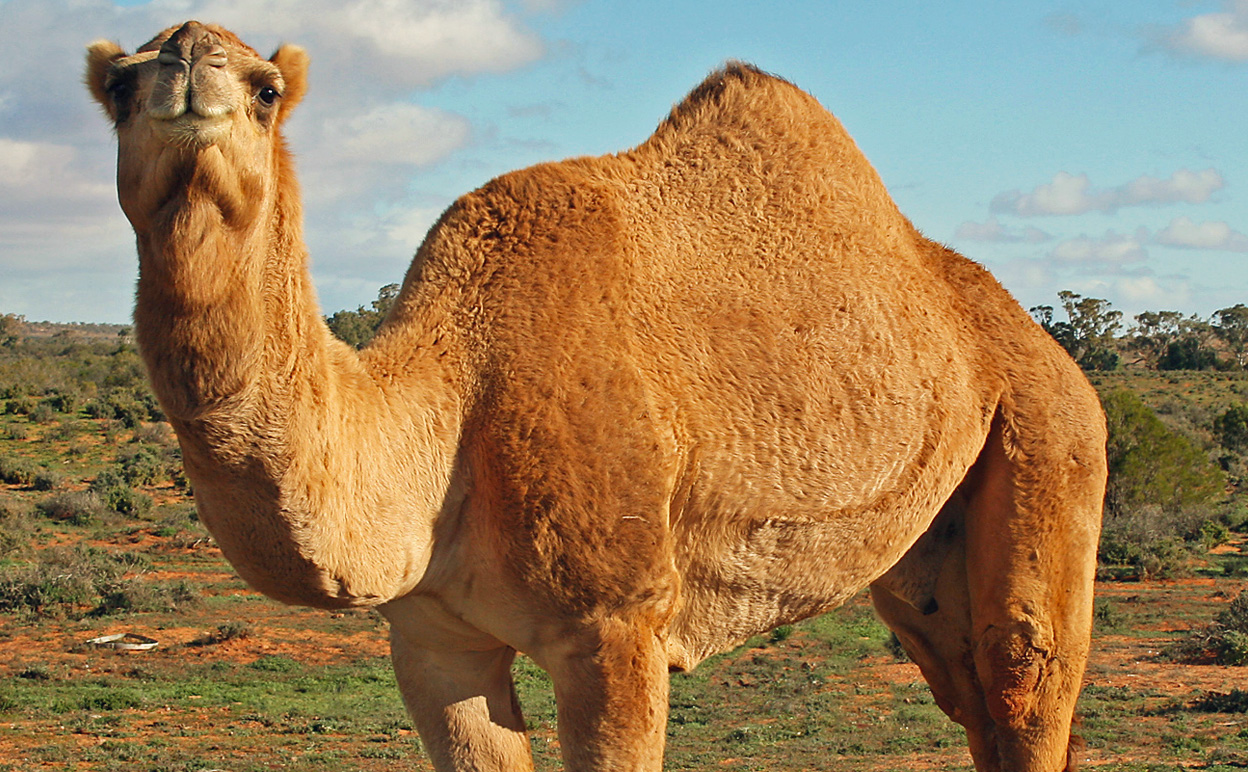
How do environmental conditions affect the movemnet and habitat choices of Australian’s largest introduced herbivore? Image credit: Jjron [CC BY-SA 3.0] via Wikimedia Commons
Principal supervisor: Dr Euan Ritchie
Associate supervisor: Associate Professor John Arnould EMAIL
External supervisor: Dr Andrew Woolnough, Department of Environment and Primary Industries EMAIL
Start date: July 2015
The camel is Australia’s largest introduced herbivore and populations of this species are reaching high numbers across much of the arid zone. Due to their large body-size and mobility, camels may have significant effects on both the habitats and rural communities in which they occur.
There is therefore a clear need to better understand what environmental conditions influence their movement patterns and habitat choice.
A large data set exists from GPS collars which tracked the movements of camels in the Pilbara region of Western Australia over a year. Data includes ambient temperature, activity (every two hours), and GPS location (every three hours).
Using this dataset the aim will be to investigate the links between environmental conditions, activity and movement patterns (habitat use) in camels. The successful student will ideally be experienced in using GIS and have a competent statistical background.
Predators and prey: understanding interactions between wild canids and other fauna in North West Victoria’s semi-arid landscapes (one project)
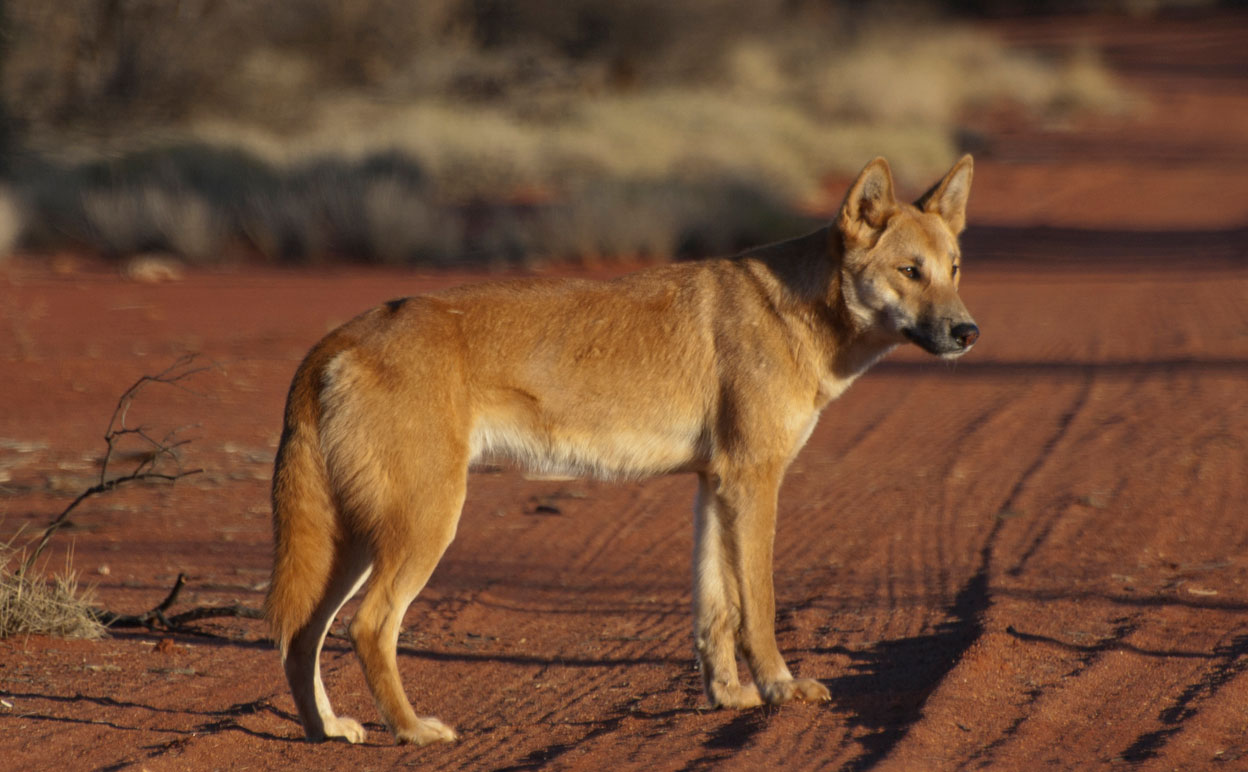
Dingoes are the top predators in northwestern Victoria’s national parks, but what does their distribution and abundance tell us about the wider ecosystem?. Image credit: Angus McNab, used with permission.
Northwest Victoria’s national parks are key flagship areas that are home to high species diversity, including many species of conservation concern. Within this region, wild canids (dingoes/wild dogs), the top predators, are patchily distributed, being relatively common in Big Desert national park but largely absent from the northern Murray Sunset and Hattah-Kulkyne national parks.
Wild canids, like other top predators worldwide, are known to be critical in influencing species throughout the ecosystems in which they occur. However, it remains to be examined what role(s) dingoes/wild dogs perform in northwest Victoria’s national parks. Specifically, do they regulate populations of overabundant herbivores (e.g. goats, kangaroos and rabbits) and/or invasive predators (e.g. cats and foxes), and does this in turn benefit native prey species (e.g. hopping mice and mallee fowl)?
We will examine the role(s) of wild canids by surveying their distribution and abundance across the region, and relating it to that of other key species of conservation and/or pest management concern. This will be achieved through a combination of remote camera trapping and sand pads. In addition, canid diet will be examined through the collection and analysis of fecal pellets, allowing examination of the impact of canids on species recorded in their diet.
It’s all about mammals on this week’s Einstein-A-Go-Go podcast.
Jim Thomas (Tenkile Conservation Alliance) and I chat to the team at Triple R about our adventures in Papua New Guinea, the discovery of new species and our plight to save endangered tree kangaroos in the remote Torricelli mountains.
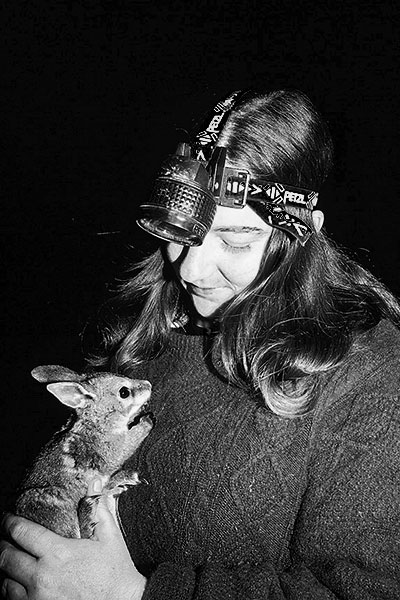
Diana Fisher and nail-tail wallaby (Onychogalea sp.)
It’s a pleasure to have Diana Fisher up next in Q&A with an ecologist. I’ve known her for quite some time and I continue to follow her research on the evolutionary ecology of marsupials with a keen interest.
At times Diana’s work can get quite risqué as you’ll discover below. Most recently, I’ve been working with Diana and many other wonderful ecologists on trying to better understand what’s behind the demise of the northern quoll and, more importantly, what we can do to change this terrible situation.
1. What got you in to ecology?
I don’t know why I’ve always been obsessed with animals. My family lived near a reserve and liked bushwalking, and also I had lots of pets, as many species and individuals as I was allowed.
I liked ecology when I went to uni because I like whole, live animals, although some of the maths scared me as an undergrad (I like it now. Also it helps that these days I have a tame mathematician at home).
2. Why are you still in ecology?
Luck.
3. What’s the best mistake you’ve ever made?
As a postdoc doing evolutionary ecology experiments, putting a field site in the Brindabellas next to Uriarra pine forest near Canberra, which burnt spectacularly in the 2003 Canberra firestorm. I had to start again with a new site on the NSW south coast and a new study species. The new site and species turned out to be much easier (e.g. no −8 ºC mornings checking traps in July), and better.
4. What’s your favourite organism and ecosystem?
All dasyurids, especially antechinus, quolls, and kalutas (Pilbara animals). I have a soft spot for my PhD study animals: bridled nailtail wallabies (sweet, dopey little things). Any tropical terrestrial ecosystem with brigalow, spinifex or rainforest is great.
5. What result has surprised you most in ecology?
If you mean my results, I’ve been shocked by the dramatic way that antechinuses respond to manipulation. I think their way of life is so extreme that you just have to push them a little bit to see over the top responses (one reason why I love dasyurids). I have been involved in a few antechinus breeding experiments. The most surprising was when I stopped females from being promiscuous. I thought sperm competition was important to them and something was going to happen, but I was expecting a civilized slowing of male growth rate or something, not mass death of young unlucky enough to have monogamous mothers. Wild antechinuses have a lot of mass death.
A baby brown antechinus (Antechinus stuartii) and nestbox.
6. What do you see as the next ‘big thing’ in ecology?
I don’t know at all. I don’t think I know what the current big thing in ecology is. I suppose in general community ecology has moved from being focused on competition a couple of decades ago to predation as the major driver of almost everything, and that might continue for a while.
7. What advice would you give to someone starting out in an ecology-based career?
Keep very detailed field notes by writing your data and observations in books (not loose pages). Make copies and keep the originals forever. Data and questions that you worked on as a young person will come back to you later in life, and long term datasets and past data are precious.
8. If you had 10 minutes with a decision-maker what key message would you give them?
Restore and maintain funding for CSIRO and the ARC including for ecology, evolution and biodiversity research. Pay attention to the research findings.
9. What’s your favourite field food?
Whatever locally grown or made food is special to the area: ngali nuts and soursop in the Solomon Islands, smoked beef and local bacon from Tiaro in central Queensland, fish and chips in Bateman’s Bay. I have yet to discover what the local delicacy of the Karratha region is.
10. What’s the best popular book you’ve read?
Popular science books: it’s hard to go past Richard Dawkins ‘The Selfish Gene’. I also really liked ‘The Ghost with Trembling Wings’ by Scott Weidensaul. My favourite non-science book is ‘They Call Me Naughty Lola’ by David Rose.
11. What’s the most important scientific paper you’ve read?
I can’t say what’s important for everyone, but the ideas and methods in Owens IPF, Bennett PM (2000) Ecological basis of extinction risk in birds: habitat loss versus human persecution and introduced predatorsDOI started a long term research direction for me.
The original mechanisms proposed in Pimm et al. (1995) The future of biodiversityDOI and Charnov EL (1991) Evolution of life history variation among female mammalsLINK have also kept cropping up and have inspired a lot of other people too I think.
12. What’s the best piece of advice you’ve been given?
Scientifically: collect data on bycatch, and find out as much as possible when in the field, not just on what you think is directly related to your research question at the time.
Generally: do something involving public speaking at an early age. I was encouraged to do school debating and nothing is as terrifying as improvising in front of a large critical audience as a kid. It cured me of any possible public speaking anxiety forever and surviving that was generally morale boosting.
13. What’s your most interesting/funny field story?
I spent four and a half months living under a tarp in the Solomon Islands, working on rainforest flying foxes for Tim Flannery in 1992 when he was doing Melanesian mammal taxonomy work at the Australian museum. I was only 22. I had recently finished honours, and I went with my similar-aged friend Liz. We were looking for a new, rare monkey-faced bat on New Georgia and Vangunu, to find out something about its natural history, status and distribution.
These are remote and beautifully undeveloped islands with no electricity, sewerage, phones (no sat phones in those days), banks (we had to carry our money for the whole expedition with us), or shops at the time really (people are subsistence farmers), and people do not generally speak English. In retrospect it might have been a risky thing for a couple of young girls to do, but it was brilliant. OH&S was inconspicuous; we handled hundreds of bats without gloves or shots. Visitors were accompanied by local guides everywhere, we always had several young (and old) men with us, and you had to pay to stay on people’s land, but there were lots of land disputes.
We were there on Easter Sunday and that was the only time when all of the guides left to go to church at once, leaving us alone at the camp. A man with a bush knife (like a large cane-cutting machete) turned up saying it was his land and we had to pay him or he would cut the camp down, so we paid him. The Solomons is not like PNG, threats like this are very unusual. When the actual landowners came back they told us that he was lying and we should go to the police. We reported the incident to the least intimidating policeman I’ve ever seen, he was barefoot, smiling, and wearing police shorts, a Hawaiian shirt and straw hat. He asked us if bats lay eggs. I didn’t think the money would be recovered.
The closest I came to any harm on the trip was not due to people or animals though, but when I slipped off a mud path above a rocky creek bed a few metres below, and somehow unconsciously I had noticed a root sticking out of the bank and hooked my leg over it as I fell, so that I did not plummet onto the rocks. I would have surely broken something and that could have been bad.
There is a strong story-telling and oral history culture there. This year I have been back and have a postdoc (Tyrone) and a Solomons student now working on bat ecology, conservation, and re-surveying our past sites where we found the threatened flying fox. It was great to see our former guides again and their children who are now grown up, and give them some photos. Locals remember all about us, and even exactly where each net was. People not born then have shown Tyrone these places.
On the 1992 trip, funny things I can remember are mainly me being a hopeless dag, for example I was offered betelnut, politely took some, got dizzy and fell over. We were sitting around the fire once taking turns telling jokes, and I was worried that I couldn’t remember any at all when put on the spot to think of something culturally appropriate. When pushed repeatedly, I told the only joke I could think of: ‘what’s green and kills you if it falls on you out of a tree?’ Answer: a billiard table. There are no billiard tables there, and Solomons jokes are not abstract surreal statements. Only Liz was laughing (a lot, at me).
New Georgian Monkey-faced Bat (Pteralopex taki), endemic to the Solomon Islands.
14. If you weren’t an ecologist what would you be doing?
Gardening. Working as a public servant in an environment agency (I have done that a few times over the years, but possibly that means I would be unemployed now).
We went in with 40 crowd-funded camera traps and hopes of collecting evidence of some of Papua New Guinea’s most endangered animals. What we found were the first images of previously unrecorded mammals, including a small dorcopsulus wallaby.
Jim Thomas from the Tenkile Conservation Alliance and I chatted with the ABC Radio’s Rachel Carbonelli this morning about our adventures in PNG, conserving tree kangaroos, and the possibility of previously undiscovered mammal species.





![We examined the influence of fire on the distribution of introduced red foxes in semi-arid Australia. Image credit Area51Bel [CC-BY-SA 3.0] via Wikimedia Commons.](https://euanritchie.org/wp-content/uploads/2014/10/firefox.jpg)

![Wilsons Prom is home to native mammals such as the Swamp Wallaby, Wallabia bicolor. Image by Toby Hudson [CC-BY-SA-3.0], via Wikimedia Commons](http://upload.wikimedia.org/wikipedia/commons/f/f1/Wallabia_bicolor_Jenolan_Caves_portrait.jpg)
![Tasmanian Devils, Sarcophilus harrisii, were once abundant on the Australian mainland. Image by JJ Harrison[CC-BY-SA-3.0], via Wikimedia Commons](http://upload.wikimedia.org/wikipedia/commons/4/43/Sarcophilus_harrisii_taranna.jpg)


 Applied ecology and conservation research group


