Categories
Publications Science communication

The Conversation: Scientific integrity must be defended, our planet depends on it

By Euan Ritchie (Deakin University), James Watson (The University of Queensland), Jeremy Kerr, and Martine Maron (The University of Queensland).

This article was originally published on The Conversation. Read the original article, including reader comments.

To conserve Earth’s remarkable species, such as the violet sabrewing, we must also defend the importance of science. Image credit: Jeremy Kerr via The Conversation.

Science is the best method we have for determining what is likely to be true. The knowledge gained from this process benefits society in a multitude of ways, including promoting evidence-based decision-making and management. Nowhere is this more important than conservation, as the intensifying impacts of the Anthropocene increasingly threaten the survival of species.

But truth can be inconvenient: conservation goals sometimes seem at odds with social or economic interests. As a result, scientific evidence may be ignored or suppressed for political reasons. This has led to growing global trends of attacking scientific integrity.

Recent assaults on science and scientists under Donald Trump’s US administration are particularly extreme, but extend far more broadly. Rather than causing scientists to shrink from public discussions, these abuses have spurred them and their professional societies to defend scientific integrity.

Among these efforts was the recent March for Science. The largest pro-science demonstration in history, this event took place in more than 600 locations around the world.

We propose, in a new paper in Conservation Biology, that scientists share their experiences of defending scientific integrity across borders to achieve more lasting success. We summarise eight reforms to protect scientific integrity, drawn from lessons learned in Australia, Canada and the US.

What is scientific integrity?

Scientific integrity is the ability to perform, use and disseminate scientific findings without censorship or political interference. It requires that government scientists can communicate their research to the public and media. Such outbound scientific communication is threatened by policies limiting scientists’ ability to publish, publicise or even mention their research findings.

Public access to websites or other sources of government scientific data have also been curtailed. Limiting access to taxpayer-funded information in this way undermines citizens’ ability to participate in decisions that affect them, or even to know why decisions are being made.

A recent case of scientific information being suppressed concerns the rediscovery, early in 2017, of the plant Hibbertia fumana in New South Wales. Last seen in 1823, 370 plants were found.

Rather than publicly celebrate the news, the NSW Office of Environment and Heritage was reportedly asked to suppress the news until after a rail freight plan that overlapped with the plants’ location had been approved.

Protecting scientists’ right to speak out

Scientists employed by government agencies often cannot discuss research that might relate to their employer’s policies. While it may not be appropriate for scientists to weigh in on policy recommendations – and, of course, constant media commentaries would be chaos – the balance has tipped too far towards restriction. Many scientists cannot publicly refer to their research, or that of others, let alone explain the significance of the findings.

To counter this, we need policies that support scientific integrity, an environment of transparency and the public’s right to access scientific information. Scientists’ right to speak freely should be included in collective bargaining agreements.

Scientific integrity requires transparency and accountability. Information from non-government scientists, through submitted comments or reviews of draft policies, can inform the policy process.

Although science is only one source of influence on policy, democratic processes are undermined when policymakers limit scrutiny of decision-making processes and the role that evidence plays in them.

Let science inform policy

Independent reviews of new policy are a vital part of making evidence-based decisions. There is room to broaden these reviews, inviting external organisations to give expert advice on proposed or existing policies. This also means transparently acknowledging any perceived or actual vested interests.

Australian governments often invite scientists and others to contribute their thoughts on proposed policy. The Finkel Review, for example, received 390 written submissions. Of course, agencies might not have time to respond individually to each submission. But if a policy is eventually made that seems to contradict the best available science, that agency should be required to account for that decision.

Finally, agencies should be proactively engaging with scientific groups at all stages of the process.

Active advocacy

Strengthening scientific integrity policies when many administrations are publicly hostile to science is challenging. Scientists are stuck reactively defending protective policies. Instead, they should be actively advocating for their expansion.

The goal is to institutionalise a culture of scientific integrity in the development and implementation of conservation policies.

A transnational movement to defend science will improve the odds that good practices will be retained and strengthened under more science-friendly administrations.

Many regard science as apolitical. Even the suggestion of publicly advocating for integrity or evidence-based policy and management makes some scientists deeply uncomfortable. It is telling that providing factual information for policy decisions and public information can be labelled as partisan. Nevertheless, recent research suggests that public participation by scientists, if properly framed, does not harm their credibility.

Scientists can operate objectively in conducting research, interpreting discoveries and publicly explaining the significance of the results. Recommendations for how to walk such a tricky, but vital, line are readily available.

Scientists and scientific societies must not shrink from their role, which is more important than ever. They have a responsibility to engage broadly with the public to affirm that science is indispensable for evidence-based policies and regulations. These critical roles for scientists help ensure that policy processes unfold in plain sight, and consequently help sustain functioning, democratic societies.

The authors would like to acknowledge the contribution of Dr Carlos Carroll, a conservation biologist at the Klamath Center for Conservation Research.


The Conversation

Categories
Link Science communication

A new science superhero!

The office of Australia’s Chief Scientist has featured me among it’s “Australian science superheroes”!

Check out my profile on the Chief Scientist website.

Categories
Publications Science communication

The Conversation: Thinking big gives top predators the competitive edge

By Thomas Newsome (Deakin University)

Dingoes could be the key to controlling red foxes and other invasive predators, but only if we encourage them in large enough numbers over a wide enough area, our research shows.

Dingoes can help manage devastating red fox and feral cat numbers, but only if we let enough of them live in key areas. Image credit Bobby Tamayo via The Conversation

Interest in re-introducing or restoring top predators, like dingoes and wolves, has been fuelled by recent studies demonstrating their important roles in their ecosystems. They can especially be vital in suppressing the abundance of lower-order competitors or “mesopredators”, like red foxes and possibly feral cats (which can have devastating effects on native species).

But researchers have found top predators aren’t always successful in reducing mesopredator numbers. Until now, such variation has been linked to human presence, land-use changes and environmental factors such as landscape productivity.

However, our research, published yesterday in Nature Communications, found that a key factor for success is high numbers of dingoes and wolves across their natural range.

The density effect

If you look at how species are typically distributed across a landscape – their range – ecological theory predicts there’ll be lower numbers at the outer edges of their range.

If you do need large numbers of top predators to effectively suppress mesopredators, the core of their range is potentially the best place to look.

We tested this idea, looking at the dingo in Australia and the grey wolf in North America and Europe. The mesopredators included the red fox in Australia, the coyote in North America and the golden jackal in Europe.

We used information from bounty hunting programs, as these provide data on predator numbers across a wide geographical area. In the case of Australia we used historic data from the 1950s, as this is the most recent reliable information about red fox and dingo distribution. The actual population numbers of red foxes and dingoes have changed substantially since then, but the nature of their interactions – which is what we were investigating – has not.

We determined that top predators exist in higher numbers at the core of their ranges in comparison to the edges. We then looked at mesopredator numbers across the range edges of their respective top predator.

The results, which were consistent across the three continents, suggest that top predators can suppress mesopredators effectively (even completely) but only in the core of their geographic range, where their numbers are highest.

In other words, abundant top predators can exert disproportionate mesopredator control once their numbers increase past a certain point.

The ‘enemy constraint hypothesis’

The relationship we uncovered is now formalised as the “Enemy Constraint Hypothesis”. It could apply to other predator dyads, where two animals compete for similar resources – even relationships involving parasites and pathogens.

Our findings are important for understanding species interactions and niches, as well as the ecological role of top predators. It could explain why other studies have found top predators have little influence on mesopredators: they were looking at the edge, not the core, of the top predators’ range.

How many top predators do we need?

Dingoes can be vital for reducing red fox and possibly feral cat numbers. In our case studies the ranges of each top predator were limited primarily by human use of the land and intensive shooting, trapping and poisoning.

Killing pack animals like dingoes can fracture social groups, potentially altering their natural behaviour and interactions with other species. Future studies on predator interactions therefore need to consider the extent to which the animals are acting in response to human intervention.

If we want to benefit from the presence of top predators, we need to rethink our approach to management – especially where they are subjected to broad-scale control, as the dingo is in some parts of Australia.

Changing our relationship with top predators would not come without its challenges, but high extinction rates around the world (and especially in Australia) clearly indicate that we urgently need to change something. If this includes restoring top predators, then we need to think big.

This article was originally published on The Conversation. Read the original article, including reader comments.

The Conversation

The Conversation

Categories
Link Science communication

Capstone Editing: The trouble with academic grant applications

It’s time to look at the way academic grants are awarded. Image: Shutterstock

Regular successful grants are crucial for academic career advancement. Grants fund research, research leads to publications, and publications result in job security and promotion. But the likelihood of success is low, particularly for early-career researchers. Last year, the Australian Research Council (ARC) Discovery Projects, and National Health and Medical Research Council grants had a success rate around 18%, and ARC Linkage Projects around 30%.

A huge amount of effort is being dedicated to writing grants with very little chance of success.

How can we make this system better? My suggestions include prioritising funding for early-career researches, an expression-of-interest system to gauge the success of proposals, transparent and detailed feedback to unsuccessful applicants, and changing the timing of grant season so that is more family-friendly.

Read more on the Capstone Editing blog.

Categories
Media Science communication

The Conversation: Bigfoot, the Kraken and night parrots – searching for the mythical or mysterious

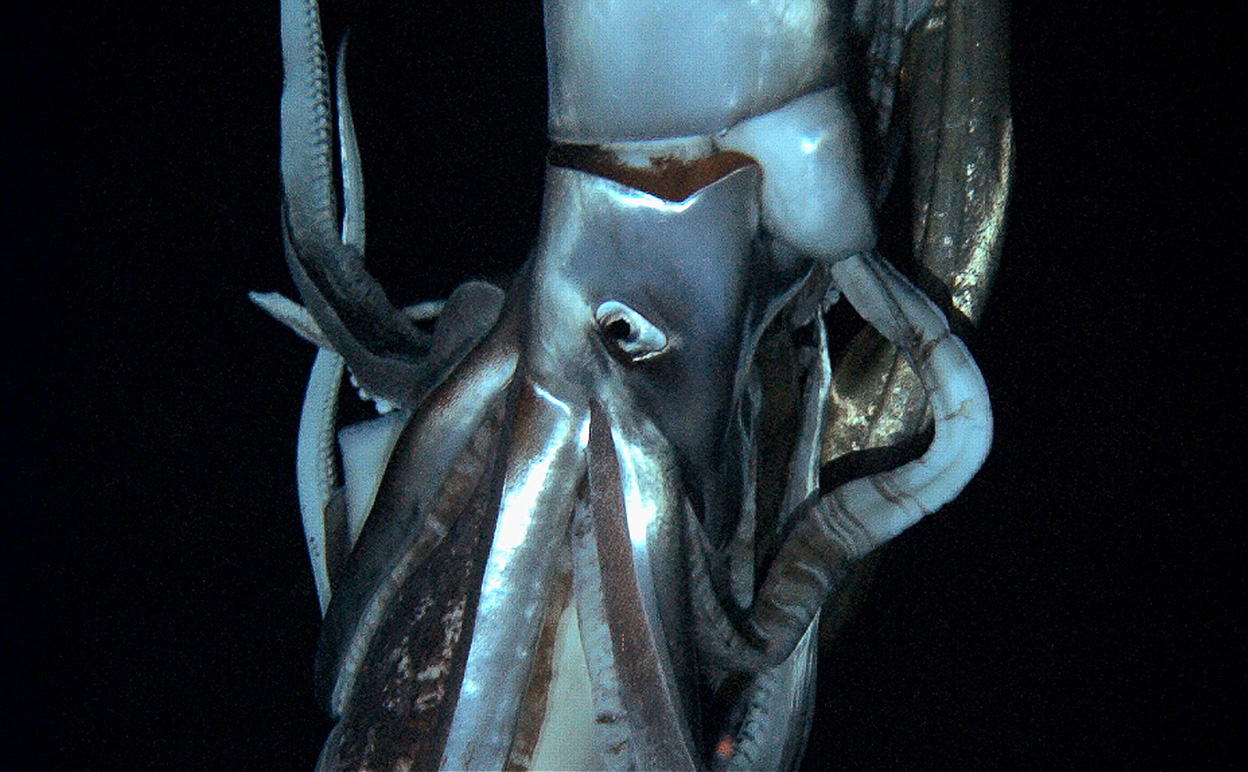
In 2012 scientists succeeded in filming for the first time ever a giant squid in its natural habitat. Image credit: EPA / NHK / NEP / Discovery Channel / AAP

It’s remarkable how little we know about Earth. How many species do we share this planet with? We don’t know, but estimates vary from millions to a trillion. In some respects we know more about the Moon, Mars and Venus than we do about the ocean’s depths and the vast sea floors.

But humans are inquisitive creatures, and we’re driven to explore. Chasing mythical or mysterious animals grabs media headlines and spurs debates, but it can also lead to remarkable discoveries.

The recent photographing of a live night parrot in Western Australia brought much joy. These enigmatic nocturnal birds have been only sporadically sighted over decades.

Another Australian species that inspires dedicated searchers is the Tasmanian tiger, or thylacine. A new hunt is under way, not in Tasmania but in Queensland’s vast wilderness region of Cape York.

Other plans are afoot to search for the long-beaked echidna in Western Australia’s Kimberley region.

In the case of the thylacine, old accounts from the region that sound very much like descriptions of the species raise the prospect that perhaps Cape York isn’t such a bad place to look after all.

But in reality, and tragically, it’s very unlikely that either of these species still survives in Australia. For some species there is scientific research that estimates just how improbable such an event would be; in the case of thylacines, one model suggests the odds are 1 in 1.6 trillion.

Chasing myths

The study and pursuit of “hidden” animals, thought to be extinct or fictitious, is often called cryptozoology. The word itself invites scorn – notorious examples include the search for Bigfoot, the Loch Ness Monster or Victoria’s legendary black panthers.

Granted, it’s probably apt to describe those searches as wild goose chases, but we must also acknowledge that genuine species – often quite sizeable ones – have been discovered.

Remarkable discoveries of animals thought to be fantasies or long extinct include giant squid, mountain gorillas, okapi, Komodo dragons and coelacanths.

In some cases, like the giant squid, these animals have been dismissed as legends. The reclusive oarfish, for example, are thought to be the inspiration for centuries of stories about sea serpents.

Technology to the rescue

Finding rare and cryptic species is self-evidently challenging, but rapid advances in technology open up amazing possibilities. Camera traps now provide us with regular selfies of once highly elusive snow leopards, and could equally be used with other difficult-to-find animals.

Environmental DNA is allowing us to detect species otherwise difficult to observe. Animal DNA found in the blood of leeches has uncovered rare and endangered mammals, meaning these and other much maligned blood-sucking parasites could be powerful biodiversity survey tools.

Acoustic recording devices can be left in areas for extended time periods, allowing us to eavesdrop on ecosystems and look out for sounds that might indicate otherwise hidden biological treasures. And coupling drones with thermal sensors and high resolution cameras means we can now take an eagle eye to remote and challenging environments.

The benefits of exploration and lessons learned

It’s easy to criticise the pursuit of the unlikely, but “miracles” can and do occur, sometimes on our doorstep. The discovery of the ancient Wollemi pine is a case in point. Even if we don’t find what we’re after, we may still benefit from what we learn along the way.

I’ve often wondered how many more species might be revealed to us if scientists invested more time in carefully listening to, recording and following up on the knowledge of Indigenous, farming, and other communities who have long and intimate associations with the land and sea.

Such an approach, combined with the deployment of new technologies, could create a boom of biological discovery.

This article was originally published on The Conversation. Read the original article, including reader comments.

The Conversation

The Conversation

Categories
Link Science communication

Capstone Editing: Crowd funding your research

Is crowd funding the future of grants for science and the arts?

I’ve successfully crowd funded two research projects: The Big Roo Count and Papua New Guinea’s mountain mammals, and learnt a few things along the way.

As well as an alternative source of income for research, crowd funding allows direct and immediate contact with the public. You carry them along on the way with you, which is how science should be.

Read more on the Capstone Editing blog.

Categories
Media Science communication

Radio National: My Feed

It’s all birds, tigers and octopi on social media this week!

Today I spoke to Radio National’s Jonathan Green about what’s been happening in my social media feeds.

Streaming audio via Radio National website

Categories
Science communication

The Conversation: Government needs to front up billions, not millions, to save Australia’s threatened species

By Don Driscoll (Deakin University) Bek Christensen (University of Queensland) and Euan Ritchie (Deakin University)

Southern cassowaries, orange-bellied parrots, Leadbeater’s possums, and Australia’s only purple wattle are among the threatened species the government is seeking conservation investment for under its recently released threatened species prospectus. The prospectus seeks business and philanthropic support in partnership with the government and community groups to raise around A$14 million each year.

Orange-bellied parrots are one of the species included in the government’s Threatened Species Prospectus. Image crdeit: JJ Harrison via Wikimedia Commons

The government has proposed 51 projects, costing from A$45,000 to A$6 million. At first glance the prospectus is a positive initiative.

But it also highlights that the current government is unwilling to invest what’s needed to assure the conservation of our threatened plants, animals and other organisms.

The good news

The government’s partial outsourcing of conservation investment and responsibility might have some benefit. Raising broader awareness about the plight of Australia’s threatened species, particularly among Australia’s leading companies and donors, could lead to valuable conservation gains. It could translate to pressure for greater financial investment in conservation and less damaging actions by big companies.

The prospectus includes an excellent range of critically important projects. These include seed banks for plants facing extinction, and projects to control feral animals and create safe havens for mammals and birds.

These projects could help to save species on the brink of extinction, such as the critically endangered Gilbert’s potoroo, the Christmas Island flying fox and the orange-bellied parrot.

The projects have a high chance of success. Community groups and government are already on board and ready to take action, if only the funds materialise.

Why do so many species need urgent help?

The State of the Environment Report released in early March shows that the major pressures on wildlife have not decreased since 2011 when the previous report was released. The prospects for most threatened species have not improved.

Habitat loss is still the biggest threat. The homes of many threatened species are continually under threat from developments. Coal mines threaten the black-throated finch, urban sprawl eats away at the last 1% of critically endangered Victorian grasslands, and clearing for agriculture has spiked in Queensland.

Feral animals are widespread and control programs have been inadequate. New diseases are emerging, such as the chytrid fungus that has devastated frog populations worldwide.

The horticulture industry, for example, introduced myrtle rust to Australia. The disease was poorly managed when it was first detected. It now infects more than 350 species of the Myrtaceae family (including eucalypts).

We have so many threatened species because national and state governments don’t invest enough money in protecting our natural heritage, and environmental protections have been rolled back in favour of economic development.

Show us the money

Over the past three years the federal government has invested A$210 million in threatened species. This annual investment of A$70 million each year is minuscule compared with the government’s revenue (0.017% of A$416.9 billion).

It includes projects under the National Landcare Program, Green Army (much of which didn’t help threatened species) and the 20 Million Trees program.

The A$14 million that the prospectus hopes to raise is a near-negligible proportion of annual revenue (0.003%).

Globally, the amount of money needed to prevent extinctions and recover threatened species is at least ten times more than what is being spent.

In Australia, A$40 million each year would prevent the loss of 45 mammals, birds and reptiles from the Kimberley region.

Can we afford it? The 2016 Defence White Paper outlines an expansion of Australia’s defence expenditure from A$32.4 billion in 2016-17 to A$58.7 billion by 2025, even though the appropriate level of investment is extremely uncertain.

We are more certain that our biodiversity will continue to decline with current funding levels. Every State of the Environment report shows ongoing biodiversity loss at relatively stable, low-level funding.

And what will happen if industry won’t open its wallets? Will the government close the funding gap, or shrug its shoulders, hoping the delay between committing a species to extinction and the actual event will be long enough to avoid accountability?

In the past few years we’ve seen the extinction of the Christmas Island forest skink, the Christmas Island pipistrelle, and the Bramble Cay melomys with no public inquiry. Academics have been left to probe the causes, and there is no clear line of government responsibility or mechanism to provide enough funding to help prevent more extinctions.

Popularity poll

Another problem is the prospectus’s bias towards the cute and cuddly, reflecting the prejudice in the Commonwealth Threatened Species Strategy. The strategy and prospectus make the assumption that potential benefactors are inclined to fork out for a freckled duck, but not for a Fitzroy land snail.

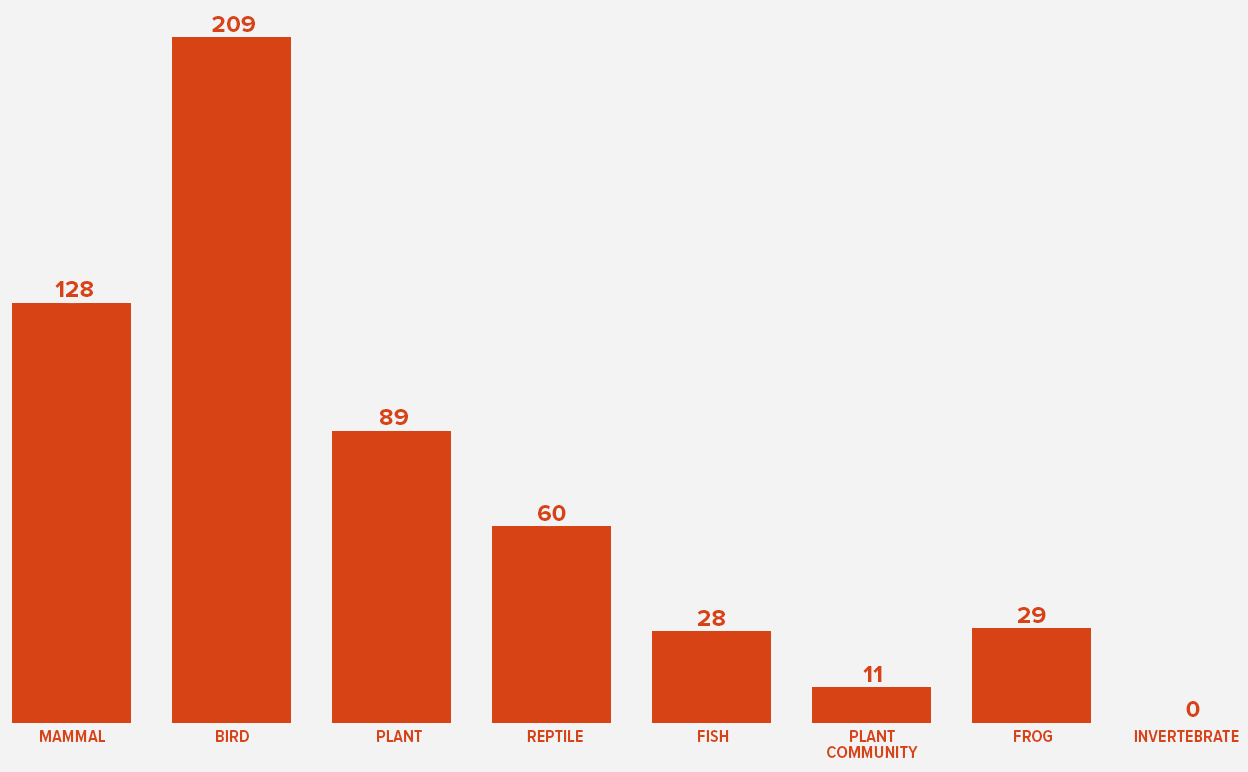
The prospectus includes almost half of Australia’s threatened mammals (listed under the Environment Protection and Biodiversity Conservation Act) and one-fifth of the threatened birds.

Other groups are woefully represented, ranging from 13% of threatened reptiles to just 1% of threatened plants and none of the listed threatened invertebrates. The prospectus does not even mention spectacular and uniquely Australian threatened crayfish, snails, velvet worms, beetles, butterflies, moths and other insects.

The allocation of funds is equally problematic. We found that birds received the most money (A$209,000 per species on average), followed by mammals and plants.

Raising new funds to help save iconic species is valuable, and can help other species. This focus on birds and mammals wouldn’t be a problem if the government were to pick up the tab for the less popular threatened species.

But it hasn’t. That means our threatened species program will continue to be exceptionally biased, while many more species vanish forever, with little acknowledgement.

We think that the prospectus, despite its biases, is a positive initiative. It is vital to engage society, including business and wealthy philanthropists, in the care of Australia’s natural heritage. But it also highlights how little the government is willing to invest in preserving our threatened wildlife and ecosystems.

This article was originally published on The Conversation. Read the original article, including reader comments.

The Conversation

The Conversation

Categories
Publications Science communication

Communication: Science censorship is a global issue

Authors: Euan G Ritchie, Don A Driscoll and Martine Maron

Published in: Nature, volume 542, number 7640 (February 2017)

Government gagging of scientists is a slippery slope towards removing evidence from public debate.

President Donald Trump issued an order on 23 January to effectively gag US government scientists at the Environmental Protection Agency and the Department of Agriculture from communicating with the media and the public (see Nature 54210112017). Regrettably, suppression of public scientific information is already the norm, or is being attempted, in many countries (see, for example, go.nature.com/2kr5dnd). We fear that such gagging orders could encourage senior bureaucrats to use funding as a tool with which to rein in academic freedoms.

In Australia, public servants must abide by codes of conduct for communication that restrict them from contributing scientific evidence to public debates. Allegations emerged in 2011 that an Australian state government had threatened to stop funding university scientists who spoke out against cattle grazing in national parks, despite peer-reviewed evidence that this could damage a fragile alpine ecosystem and was unlikely to reduce fire risk as claimed (see also Nature 4714222011).

The response of scientists to this type of coercion has been to share scientific information widely and openly using such legal means as social media to defend facts and transparency (see Nature 5414352017). Academics and scientific associations are among the last still free to speak, so must continue to do so to protect open discussion of government policies.

Ritchie EG, Driscoll DA, Maron M (2017) Communication: Science censorship is a global issue, Nature 542 PDF DOI 

Categories
Media Science communication

ABC Radio: Has roo meat made it to your dinner table?

Roo meat. Image credit Wikimedia Commons
Kangaroo meat. Image credit Wikimedia Commons

What are you throwing into the trolley as you wander through the meat section at the supermarket? Beef? Lamb? Chicken?

I spoke to ABC’s Gillian O’Shaughnessy about why we should consider eating kangaroo meat.

via 720 ABC Perth

Categories
Media Science communication

3BA Ballarat Today: Would you eat kangaroo on Australia Day?

Roo meat has less fat and cholesterol than beef and is quicker to cook. Would you try roo this Australia day?

via 3BA FM

Categories
Media Science communication

Raising the Bar: How making peace with predators could transform our world

Why are some feral animals running rampant? Should we reintroduce dingoes and Tasmanian devils to parts of Australia? Why doesn’t shark culling work? How can predators help us to fight climate change? Recorded live at Belleville, Melbourne.

via SoundCloud

Categories
Media Science communication

The Conversation: The rise of citizen science is great news for our native wildlife

Thousands of citizen scientists are identifying animals from millions of images taken by automated cameras across Australia. Join in the fun at the Wildlife Spotter website. Image credit Shane Lin via Flickr
Thousands of citizen scientists are identifying animals from millions of images taken by automated cameras across Australia. Join them at the Wildlife Spotter website. Image credit Shane Lin via Flickr

By Euan Ritchie (Deakin University) Jenny Davis (Charles Darwin University) Jenny Martin (University of Melbourne) and Sarah Maclagan (Deakin University)

Australia is renowned for its iconic wildlife. A bilby digging for food in the desert on a moonlit night, a dinosaur-like cassowary disappearing into the shadows of the rainforest, or a platypus diving for yabbies in a farm dam. But such images, though evocative, are rarely seen by most Australians.

As mammalogist Hedley Finlayson wrote in 1935:

The mammals of the area are so obscure in their ways of life and, except for a few species, so strictly nocturnal, as to be almost spectral.

For some species, our time to see them is rapidly running out. We know that unfortunately many native animals face considerable threats from habitat loss, introduced cats and foxes, and climate change, among others.

More than ever before, we need accurate and up-to-date information about where our wildlife persists and in what numbers, to help ensure their survival. But how do we achieve this in a place the sheer size of Australia, and with its often cryptic inhabitants?

Technology to the rescue

Fortunately, technology is coming to the rescue. Remotely triggered camera traps, for example, are revolutionising what scientists can learn about our furry, feathered, scaly, slippery and often elusive friends.

These motion-sensitive cameras can snap images of animals moving in the environment during both day and night. They enable researchers to keep an eye on their study sites 24 hours a day for months, or even years, at a time.

The only downside is that scientists can end up with millions of camera images to look at. Not all of these will even have an animal in the frame (plants moving in the wind can also trigger the cameras).

This is where everyday Australians can help: by becoming citizen scientists. In the the age of citizen science, increasing numbers of the public are generously giving their time to help scientists process these often enormous datasets and, in doing so, becoming scientists themselves.

What is citizen science?

Simply defined, citizen science is members of the public contributing to the collection and/or analysis of information for scientific purposes.

But, at its best, it’s much more than that: citizen science can empower individuals and communities, demystify science and create wonderful education opportunities. Examples of successful citizen science projects include Snapshot Serengeti, Birds in Backyards, School Of Ants, Redmap (which counts Australian sealife), DigiVol (analysing museum data) and Melbourne Water’s frog census.

Through the public’s efforts, we’ve learnt much more about the state of Africa’s mammals in the Serengeti, what types of ants and birds we share our cities and towns with, changes to the distribution of marine species, and the health of our waterways and their croaking inhabitants.

In a world where there is so much doom and gloom about the state of our environment, these projects are genuinely inspiring. Citizen science is helping science and conservation, reconnecting people with nature and sparking imaginations and passions in the process.

Australian wildlife in the spotlight

A fantastic example of this is Wildlife Spotter, which launched August 1 as part of National Science Week.

Researchers are asking for the public’s help to identify animals in over one million camera trap images. These images come from six regions (Tasmanian nature reserves, far north Queensland, south central Victoria, Northern Territory arid zone, and New South Wales coastal forests and mallee lands). Whether using their device on the couch, tram or at the pub, citizen scientists can transport themselves to remote Australian locations and help identify bettongs, devils, dingoes, quolls, bandicoots and more along the way.

By building up a detailed picture of what animals are living in the wild and our cities, and in what numbers, Wildlife Spotter will help answer important questions including:

  • How many endangered bettongs are left?
  • How well do native predators like quolls and devils compete with cats for food?
  • Just how common are common wombats?
  • How do endangered southern brown bandicoots manage to survive on Melbourne’s urban fringe in the presence of introduced foxes, cats and rats?
  • What animals visit desert waterholes in Watarrka National Park (Kings Canyon)?
  • What predators are raiding the nests of the mighty mound-building malleefowl?

So, if you’ve got a few minutes to spare, love Australian wildlife and are keen to get involved with some important conservation-based science, why not check out Wildlife Spotter? Already, more than 22,000 people have identified over 650,000 individual animals. You too could join in the spotting and help protect our precious native wildlife.

This article was originally published on The Conversation. Read the original article online, including reader comments.

The Conversation

The Conversation

Categories
Media Science communication

3AW: Deakin University ecologist calls for Australians to eat differently

I spoke with Tom Elliot on 3AW Drive. My topic: Australians should consider eating kangaroos and camels as opposed to sheep and cows. Maybe one day in the future, introduced pests such as cane toads and European carp could end up on our dinner plates, instead of wreaking havoc with our environment.

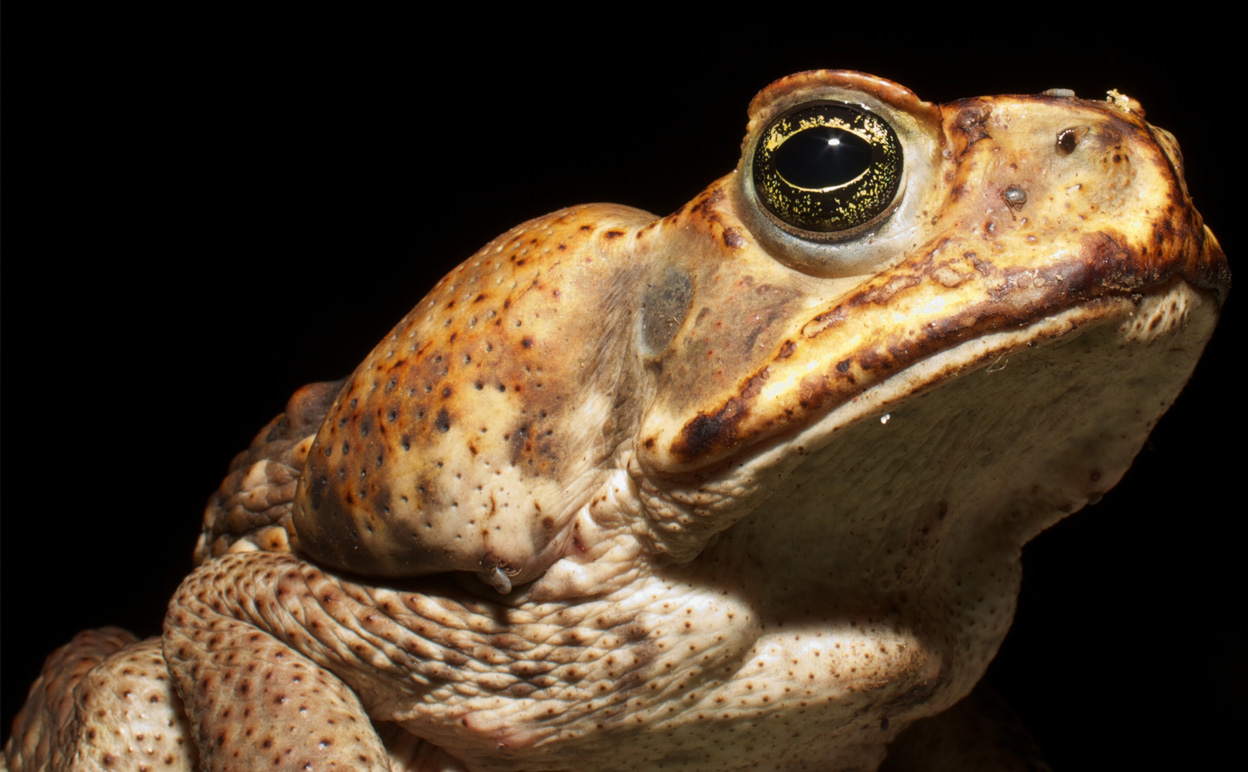
Nutritious, delicious... cane toad!? Image credit Brian Gatwicke via Wikimedia Commons
Nutritious, delicious… cane toad!? Image credit Brian Gatwicke via Wikimedia Commons

via 3AW website

Categories
Science communication

Threatened Species Summit: rewilding

This month I attended the inaugural Threatened Species Summit held at Melbourne Zoo. I used my five minutes to be deliberately provocative; I spoke about rewilding.

View the webcast of the entire session here.

Categories
Media Research Science communication

Deutschlandfunk: Dingoes to cats

Sprechen Sie Deutsch? Neither do I, but that didn’t stop me from talking about Australischer Dingohunde on German radio station Deutschlandfunk.

Read or listen here (in German)

Categories
Research Science communication

A funny thing happened last Thursday

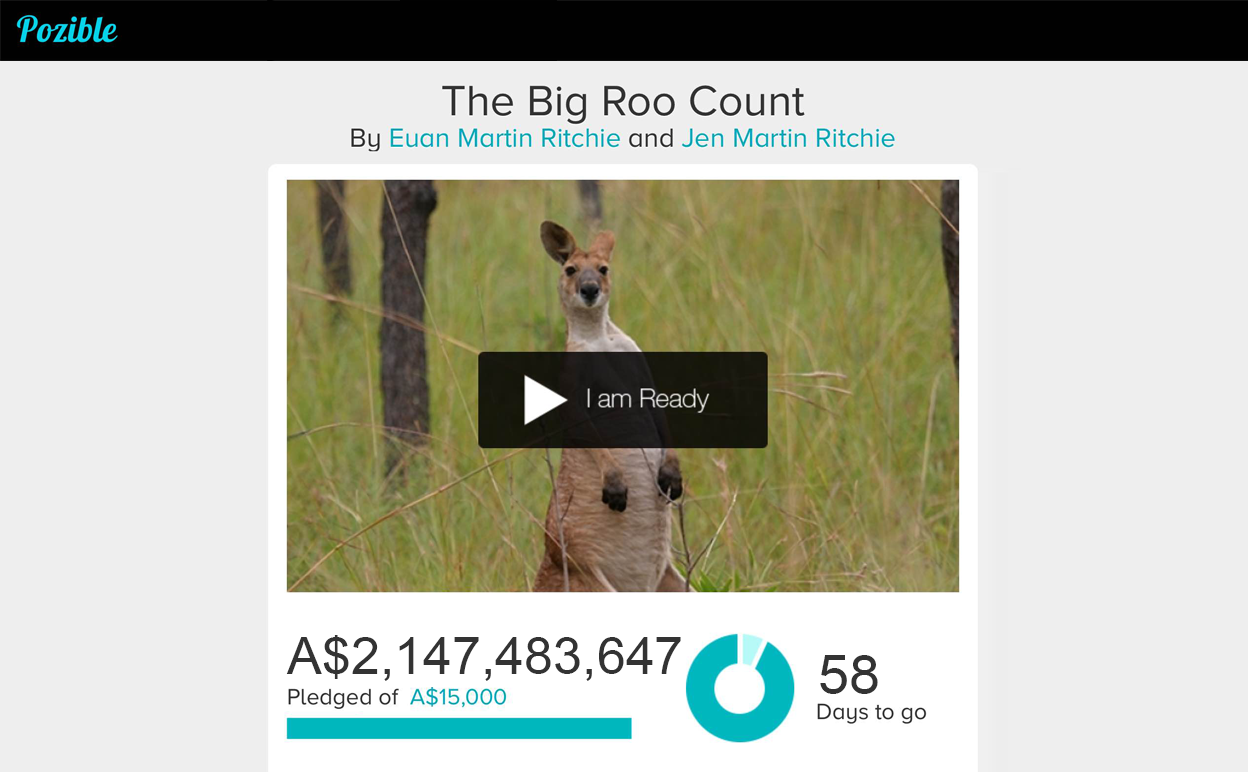
A mysterious benefactor donated more than $2 billion to The Bog Roo Count. Well, almost.
A mysterious benefactor donated more than $2 billion to The Big Roo Count. Well, almost.

A funny thing happened last Thursday. For a brief hour or so Jenny and I became the custodians of billions of conservation dollars. ‘Huh?’, you say?

At approximately 12.30 pm the mysterious Jeffrey Green donated a little over $2 billion to our crowd-funding campaign. Sadly the money disappeared within an hour or so. We never really thought the donation was real, but it was fun to think what it might mean for both the Big Roo Count, and more broadly and importantly Australia’s biodiversity.

Professor Possingham has estimated that if federal and state governments invested $200 million a year we could secure all of Australia’s threatened species. So imagine what more than 500 times that would mean! To put things in perspective, the federal defence budget is roughly $26 billion a year. Stop its budget for three days and you could save all threatened species in Australia.

Imagine… we’re ready!

P.S. Jeff, if you really are keen to donate to our campaign we are ready to receive and make good!

Categories
Research Science communication

The Big Roo Count

Help us conserve northern Australia's iconic mammals by supporting The Big Roo Count. Image credit: David Webb
Help us conserve northern Australia’s iconic mammals by supporting The Big Roo Count. Image credit: David Webb

Ten years ago, with my wife Jen, I was finishing up four years of fieldwork in some of Australia’s most remote and spectacular habitats. We had been lucky enough to be investigating the ecology and conservation of Australia’s tropical kangaroos and wallabies, collecting first-of-its kind information on where they each occurred, how big the populations were and why each species lived in certain areas and not others.

But a lot can change in ten years.

While Jen and I have been blessed with kids, health, happiness and more, our northern mammals haven’t been so lucky. Many are disappearing; some at alarming rates. Why? fires, feral cats and climate change are all likely causes.

We have a plan that will give us our best shot at conserving Australia’s northern kangaroos and wallabies.

This winter, we’re packing our kids and our tent into a four-wheel-drive for an epic journey of scientific discovery to find out how the roos are faring ten years down the track.

We’ll repeat all the work we did a decade ago at the same field sites:

  • roo counts,
  • mapping habitat and measuring its condition,
  • and the most glamourous job of all: counting and collecting kangaroo poos to get more information on which species live where.

This time, we will also be packing exciting new technology including remotely-triggered camera traps.

It’s rare for ecologists to have long-term information like this. Our data will tell us what we are up against in the battle to conserve our native kangaroos, wallabies and other native fauna in the same region. We’ll also take every opportunity to talk with as many people as we can about the conservation issues facing northern Australia’s mammals.

“Euan Ritchie’s re-survey of kangaroos and wallabies across northern Australia 10 years on from his foundational PhD survey is fundamentally important research. Nobody but Euan can undertake the work, and I’m profoundly grateful that he’s willing to do it.” — Professor Tim Flannery

Following the outstanding success of my crowdfunded research project on Papua New Guinea’s remote mountain mammals, we are again partnering with Pozible to bring this project to life. With your generous support, we’ll be able to hire a four-wheel-drive and buy the remote camera traps we need to do this important work.

For more information, a video, regular updates and to pledge your support, visit pozible.com/bigroocount.

Please help us conserve Australia’s iconic northern kangaroos and wallabies. Please support The Big Roo Count!

Categories
Science communication

Belinda Christie: Increasing the success of conservation outcomes

Guest blogger: Belinda Christie

I often ponder why, when we have so much scientific information about how our natural environment is deteriorating and more importantly what we can do to reverse it, does so little change? In fact it’s rapidly getting worse.

Perhaps it’s not just about what we (including scientists) know but just as importantly what we value, and how do we increase and improve the connection between information, values and actions?

Deakin University PhD candidate and guest contributor Belinda Christie offers some interesting thoughts.

Recently, I attended a public forum in Melbourne. After the forum ended, the queues forming behind the food stalls grew quickly. As I waited for my cuppa, I noticed one of the forum’s guest speakers placing his lunch order. He was a marine biologist, who just a few minutes earlier, had presented evidence for the need to increase the number of Australia’s marine national parks. I was surprised, perhaps naïvely, when I heard him order a tuna roll. Was I now more, or less, convinced by the evidence he had presented? I wasn’t sure.

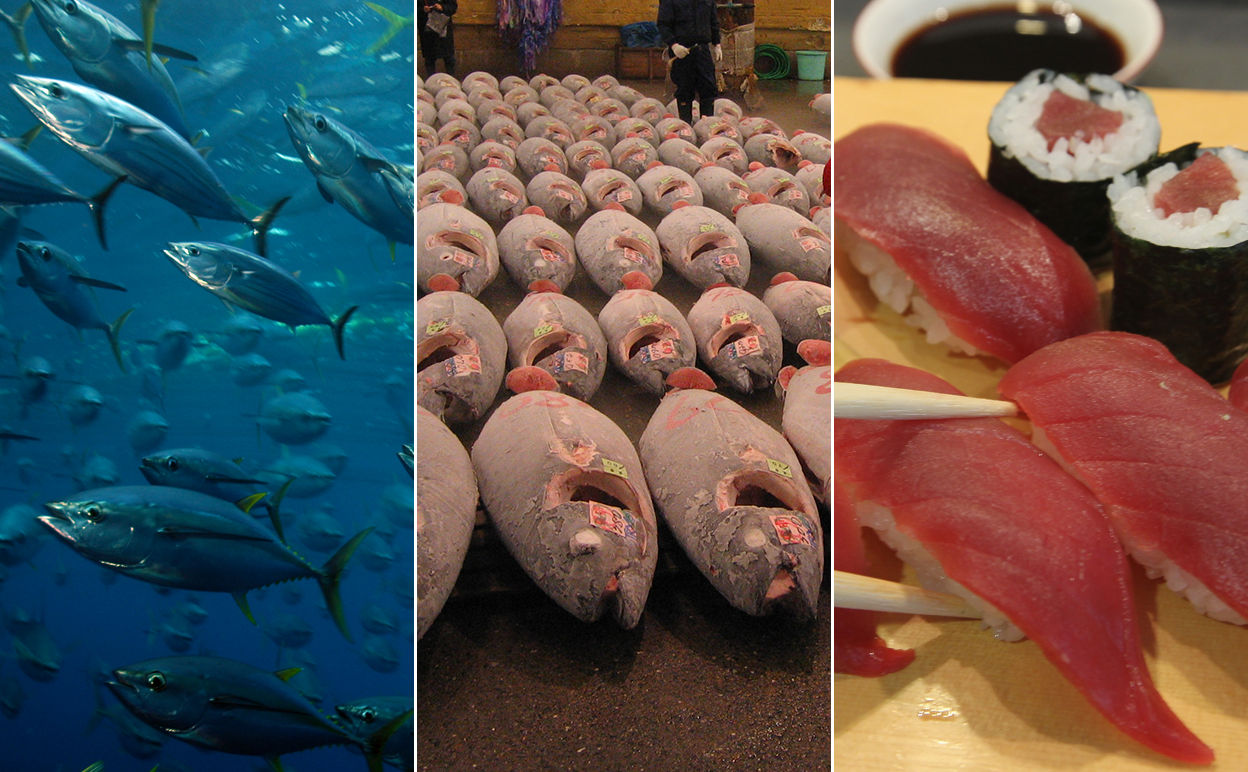
When a marine ecologist orders tuna sushi...
When a marine ecologist orders tuna sushi we might start to examine the connection between the science we teach and the science we practice.

Our daily experience provides many examples of this disconnection between the professional and the personal: the smattering of nurses standing outside the hospital smoking, the personal trainer welcoming clients at the gym while snacking on a bag of potato chips, the academic writing an article about sustainability while sitting with the heater blasting in her very draughty office. There is often a disconnection between working and living the lessons of our professions. This disconnection is of particular importance in environmental science.

There is a common, but misleading, assumption made by both academics and the public that environmental sustainability ‘belongs’ to the sciences, and so, the belief follows, that students of the environmental sciences already learn much about environmental sustainability. We assume that environmental science students learn about the social and economic aspects of their field. We assume they learn about carbon footprints and sustainable lifestyles. We also assume that all ecologists, environmental managers and conservation biologists received such an education.

Research suggests otherwise. Recent research has shown that of all the disciplines, academics from the sciences are the least supportive of environment and sustainability education for all university students, rarely teach these issues in their own classes and have the most difficulty articulating the meaning of sustainability. While environmental science academics might spend time teaching their students about environmental policy and management, few actively educate their students for sustainability by cultivating the knowledge, skills and values to contribute to a more sustainable society.

But what would be the effect if all those studying environmental science courses were intentionally, and explicitly, educated for sustainability? Would this influence the success of future conservation outcomes? Would this effect be positive, negative or somewhere in between?

The answers to these questions probably hinge on your view of the purpose of science itself. You may fear that conservation recommendations will not be taken seriously unless they come from a seemingly neutral, detached and passionless scientist. You may feel that those recommendations should be, as much as possible, removed from politics, public sentiment and cultural context, so they can be seen as ‘objective’ and beyond influence.

Conversely, you may feel that perhaps the public, industry and politicians would be more likely to support a scientist’s recommendations if they are seen to follow their own advice and are a passionate advocate for change. You may feel that conservation recommendations should be aligned with the current political, economic, social and cultural landscape of the community, so that the recommendations are more likely to be accepted.

You may feel, like many others, including some of our best known and most influential scientists, that it is wise to occupy the ground between the two extremes.

Some years ago I was involved in a program which intended to decrease the occurrence of wildlife poaching in Ecuador’s Amazon rainforest. While it was informed by conservation recommendations from biologists and ecologists, the program was largely unsuccessful. The recommendations had failed to cater for the entrenched economic and cultural practices of the local community – the use, and trade, of traditional medicines harvested, often fatally, from wildlife.

While considering the social and economic context of conservation recommendations is already well practiced by many, it wasn’t until the biologists, ecologists and volunteers who had designed the program, publically pledged to adopt the recommended sustainable behaviours personally, and stopped using medicines derived from wildlife, that poaching in the area started to decrease. Without this element of ‘social diffusion’, or peer influence, the program may never have been successful. Had those biologists and ecologists learnt about sustainable living practices within the context of their own culture during their undergraduate education, perhaps the program would have been more influential earlier on.

Educating environmental science students for sustainability however, should be evidence-based, rigorous and preserve the integrity of research. It should take heed of the concerns of those who warn educating for a purpose is akin to indoctrinating students. It can do this by encouraging deep critical reflection so students can learn to assess the concept of the sustainability itself. Doing so can, and should, move an environmental science degree beyond merely providing a professional qualification, to inspiring students to lead by example and to make a measurable difference in their world.

I like to think that if the marine biologist at the forum received such an education, perhaps he would have skipped the tuna roll, and I wouldn’t have been left questioning his conservation recommendations.

Categories
Science communication

Twitter: revolutionising scientific communication one hashtag at a time

Twitter is uniting scientists and science communicators one hashtag at a time.

Social media platforms, such as Twitter, have revolutionised the ability of scientists to communicate and engage with the public and, indeed, also amongst themselves.

It’s quite staggering and indeed wonderful to see how many scientists (new tweeps) are jumping on board each week. Twitter now supports a massive on-line community of researchers with ‘member’ numbers that dwarf even the biggest of professional and more traditional societies. Viva la revolución! And if you’re still not convinced social media is for you, just take a look at this infographic as further evidence why you should be.

Infographic: Twitter’s Role In Science Publication And Communication. Image credit: Catherine Pratt via katiephd.com and visual.ly. Click for a larger version.

One question I’m often asked about Twitter is: where do I start? It is indeed a deep, deep ocean of conversations and it’s easy to feel overwhelmed by this. So where are the people and discussions you want to know about as opposed to the ones it’s best to avoid? Well, one of the great features of Twitter is hashtags. Hashtags serve as permanent and searchable records; ‘libraries’ of topics of interest. So if you want to know the answer to that burning question: what’s the difference between a pigeon and a dove, than you might do best to check out and post your own message on #ornithology. Of course having said that I’m yet to hear a convincing answer for that question! But it is remarkable how quickly questions on Twitter are answered, often it’s a matter of seconds, and in my humble opinion it’s now approaching being a more powerful and reliable source of information than Wikipedia. Indeed questions and their answers are often subject to a form of rigorous, real-time peer review. But if you care not for birds, and statistics is what really gets you out of bed each day, take a look at #rstats. Personally, I think one of the best features of hashtags is their ability to establish ongoing support groups. So if for instance you’re struggling with your PhD and need a little advice or just a friendly pep talk consider jumping on #phdchat.

So having sold the virtues of Twitter and the use of hashtags, here are some of the most common ones I know of, grouped into broad themes. I haven’t explained in detail what each one is as diving in and exploring for yourself is part of the fun. My list is not meant to be exhaustive, nor is it in any particular order of importance or popularity, so please post any good ones I’ve undoubtedly missed in the comments section. Having said that, please only suggest ones that are science-related. I’ll then collate and update my hashtag list and post it on my blog at a later date.

Science communication and public outreach

Environmental policy discussions

Help with statistics and geographic information system (GIS)

And to finish with and prove that scientists are not boring people, but instead very witty and even at times charming, romantic people, check these out!

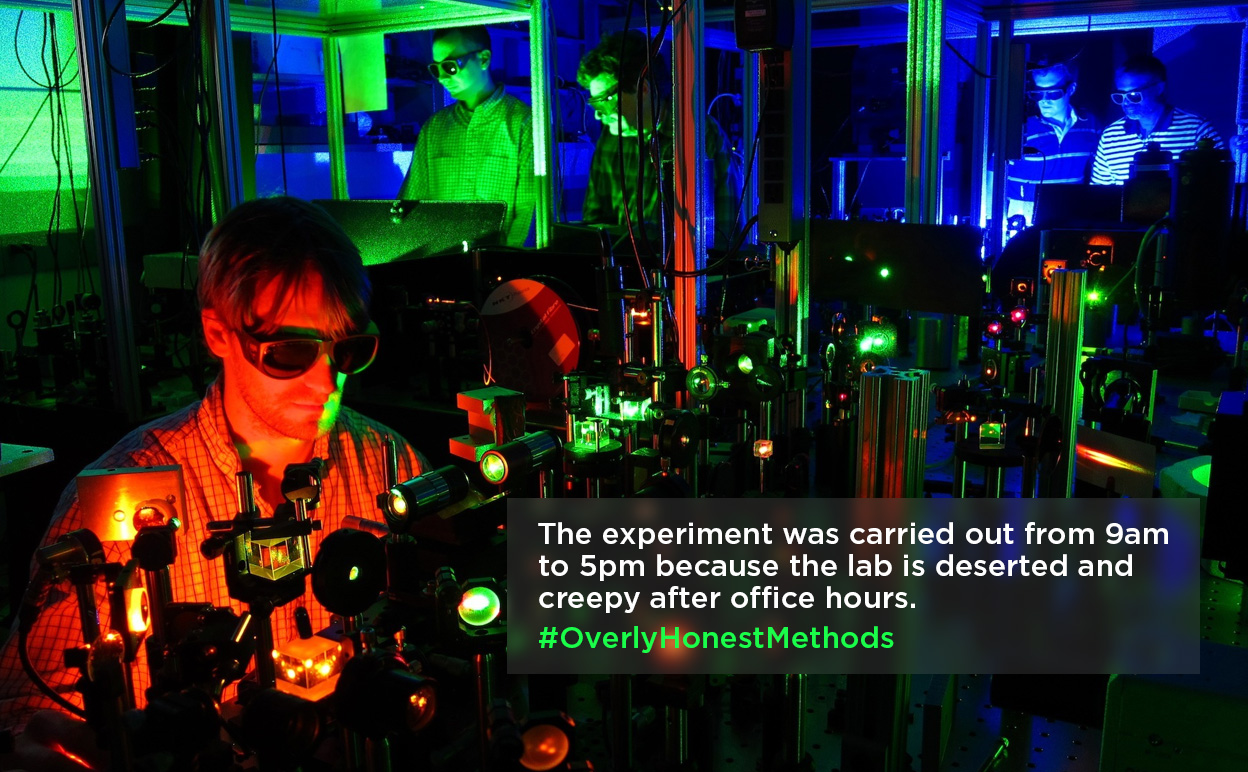
Researchers worldwide are coming clean with the hashtag #OverlyHonestMethods