Categories
Publications

Defending the scientific integrity of conservation-policy processes

Authors: Carlos Carroll, Brett Hartl, Gretchen T Goldman, Daniel J Rohlf, Adrian Treves, Jeremy T Kerr, Euan G Ritchie, Richard T Kingsford, Katherine E Gibbs, Martine Maron, and James E M Watson

Published in: Conservation Biology (early view)

Abstract

Government agencies faced with politically controversial decisions often discount or ignore scientific information, whether from agency staff or nongovernmental scientists. Recent developments in scientific integrity (the ability to perform, use, communicate, and publish science free from censorship or political interference) in Canada, Australia, and the United States demonstrate a similar trajectory.

A perceived increase in scientific integrity abuses provokes concerted pressure by the scientific community, leading to efforts to improve scientific-integrity protections under a new administration. However, protections are often inconsistently applied and are at risk of reversal under administrations publicly hostile to evidence-based policy.

We compared recent challenges to scientific integrity to determine what aspects of scientific input into conservation policy are most at risk of political distortion and what can be done to strengthen safeguards against such abuses.

To ensure the integrity of outbound communications from government scientists to the public, we suggest governments strengthen scientific integrity policies, include scientists’ right to speak freely in collective-bargaining agreements, guarantee public access to scientific information, and strengthen agency culture supporting scientific integrity. To ensure the transparency and integrity with which information from nongovernmental scientists (e.g., submitted comments or formal policy reviews) informs the policy process, we suggest governments broaden the scope of independent reviews, ensure greater diversity of expert input and transparency regarding conflicts of interest, require a substantive response to input from agencies, and engage proactively with scientific societies.

For their part, scientists and scientific societies have a responsibility to engage with the public to affirm that science is a crucial resource for developing evidence-based policy and regulations in the public interest.

Carroll C, Hartl B, Goldman GT, Rohlf DJ, Treves A, Kerr JT, Ritchie EG, Kingsford RT, Gibbs KE, Maron M, Watson JEM (2017) Defending the scientific integrity of conservation-policy processes. Conservation Biology, PDF DOI 

Categories
Publications

Shifting public values and what they mean for increasing democracy in wildlife management decisions

Authors: Lily M van Eden, Chris R Dickman, Euan G Ritchie, and Thomas M Newsome

Published in: Biodiversity and Conservation

Abstract

Over the last century, changing public attitudes about the value of wildlife have triggered substantial changes in species management that have both benefited and hindered conservation efforts. Understanding and integrating contemporary public values is therefore critical for effective conservation outcomes.

Using historic and contemporary examples, we highlight how public attitudes—expressed through the media and campaigns—are shaping the management of introduced and native species, as values shift towards animal welfare and mutualism. We focus on the issue of deliberate human-caused killing of wildlife, because protests against such management have disrupted traditional political and management structures that favoured eradication of wildlife across many jurisdictions and ecological contexts. In doing so, we show that it is essential to work with multiple stakeholder interest groups to ensure that wildlife management is informed by science, while also supported by public values. Achieving this hinges on appropriate science communication to build a better-informed public because management decisions are becoming increasingly democratised.

van Eeden LM, Dickman CR, Ritchie EG, Newsome TM (2017) Shifting public values and what they mean for increasing democracy in wildlife management decisions. Biodiversity and Conservation, PDF DOI 

Categories
Publications Science communication

The Conversation: Thinking big gives top predators the competitive edge

By Thomas Newsome (Deakin University)

Dingoes could be the key to controlling red foxes and other invasive predators, but only if we encourage them in large enough numbers over a wide enough area, our research shows.

Dingoes can help manage devastating red fox and feral cat numbers, but only if we let enough of them live in key areas. Image credit Bobby Tamayo via The Conversation

Interest in re-introducing or restoring top predators, like dingoes and wolves, has been fuelled by recent studies demonstrating their important roles in their ecosystems. They can especially be vital in suppressing the abundance of lower-order competitors or “mesopredators”, like red foxes and possibly feral cats (which can have devastating effects on native species).

But researchers have found top predators aren’t always successful in reducing mesopredator numbers. Until now, such variation has been linked to human presence, land-use changes and environmental factors such as landscape productivity.

However, our research, published yesterday in Nature Communications, found that a key factor for success is high numbers of dingoes and wolves across their natural range.

The density effect

If you look at how species are typically distributed across a landscape – their range – ecological theory predicts there’ll be lower numbers at the outer edges of their range.

If you do need large numbers of top predators to effectively suppress mesopredators, the core of their range is potentially the best place to look.

We tested this idea, looking at the dingo in Australia and the grey wolf in North America and Europe. The mesopredators included the red fox in Australia, the coyote in North America and the golden jackal in Europe.

We used information from bounty hunting programs, as these provide data on predator numbers across a wide geographical area. In the case of Australia we used historic data from the 1950s, as this is the most recent reliable information about red fox and dingo distribution. The actual population numbers of red foxes and dingoes have changed substantially since then, but the nature of their interactions – which is what we were investigating – has not.

We determined that top predators exist in higher numbers at the core of their ranges in comparison to the edges. We then looked at mesopredator numbers across the range edges of their respective top predator.

The results, which were consistent across the three continents, suggest that top predators can suppress mesopredators effectively (even completely) but only in the core of their geographic range, where their numbers are highest.

In other words, abundant top predators can exert disproportionate mesopredator control once their numbers increase past a certain point.

The ‘enemy constraint hypothesis’

The relationship we uncovered is now formalised as the “Enemy Constraint Hypothesis”. It could apply to other predator dyads, where two animals compete for similar resources – even relationships involving parasites and pathogens.

Our findings are important for understanding species interactions and niches, as well as the ecological role of top predators. It could explain why other studies have found top predators have little influence on mesopredators: they were looking at the edge, not the core, of the top predators’ range.

How many top predators do we need?

Dingoes can be vital for reducing red fox and possibly feral cat numbers. In our case studies the ranges of each top predator were limited primarily by human use of the land and intensive shooting, trapping and poisoning.

Killing pack animals like dingoes can fracture social groups, potentially altering their natural behaviour and interactions with other species. Future studies on predator interactions therefore need to consider the extent to which the animals are acting in response to human intervention.

If we want to benefit from the presence of top predators, we need to rethink our approach to management – especially where they are subjected to broad-scale control, as the dingo is in some parts of Australia.

Changing our relationship with top predators would not come without its challenges, but high extinction rates around the world (and especially in Australia) clearly indicate that we urgently need to change something. If this includes restoring top predators, then we need to think big.

This article was originally published on The Conversation. Read the original article, including reader comments.

The Conversation

The Conversation

Categories
Publications

Top predators constrain mesopredator distributions

Authors: Thomas M Newsome, Aaron C Greenville, Duško Ćirović, Christopher R Dickman, Chris N Johnson, Miha Krofel, Mike Letnic, William J Ripple, Euan G Ritchie, Stoyan Stoyanov and Aaron J Wirsing

Published in: Nature Communications, volume 8

Abstract

Top predators can suppress mesopredators by killing them, competing for resources and instilling fear, but it is unclear how suppression of mesopredators varies with the distribution and abundance of top predators at large spatial scales and among different ecological contexts.

We suggest that suppression of mesopredators will be strongest where top predators occur at high densities over large areas. These conditions are more likely to occur in the core than on the margins of top predator ranges.

We propose the Enemy Constraint Hypothesis, which predicts weakened top-down effects on mesopredators towards the edge of top predators’ ranges.

Using bounty data from North America, Europe and Australia we show that the effects of top predators on mesopredators increase from the margin towards the core of their ranges, as predicted.

Continuing global contraction of top predator ranges could promote further release of mesopredator populations, altering ecosystem structure and contributing to biodiversity loss.

Newsome TM, Greenville AC, Ćirović D, Dickman CR, Johnson CN, Krofel M, Letnic M, Ripple WJ, Ritchie EG, Stoyanov S, Wirsing AJ (2017) Top predators constrain mesopredator distributions. Nature Communications, PDF DOI

Categories
Publications Research

The global impacts of domestic dogs on threatened vertebrates

Authors: Tim S Doherty, Chris R Dickman, Alistair S Glen, Thomas M Newsome, Dale G Nimmo, Euan G Ritchie, Abi T Vanak, Aaron J Wirsinge

Published in: Biological Conservation, volume 210 (June 2017)

Abstract

Domestic dogs (Canis familiaris) have a near-global distribution. They range from being feral and free-ranging to owned and completely dependent on humans. All types of domestic dogs can interact with wildlife and have severe negative impacts on biodiversity.

Here, we use IUCN Red List data to quantify the number of threatened species negatively impacted by dogs, assess the prevalence of different types of dog impact, and identify regional hotspots containing high numbers of impacted species. Using this information, we highlight key research and management gaps and priorities.

Domestic dogs have contributed to 11 vertebrate extinctions and are a known or potential threat to at least 188 threatened species worldwide. These estimates are greater than those reported by previous assessments, but are probably conservative due to biases in the species, regions and types of impacts studied and/or reported.

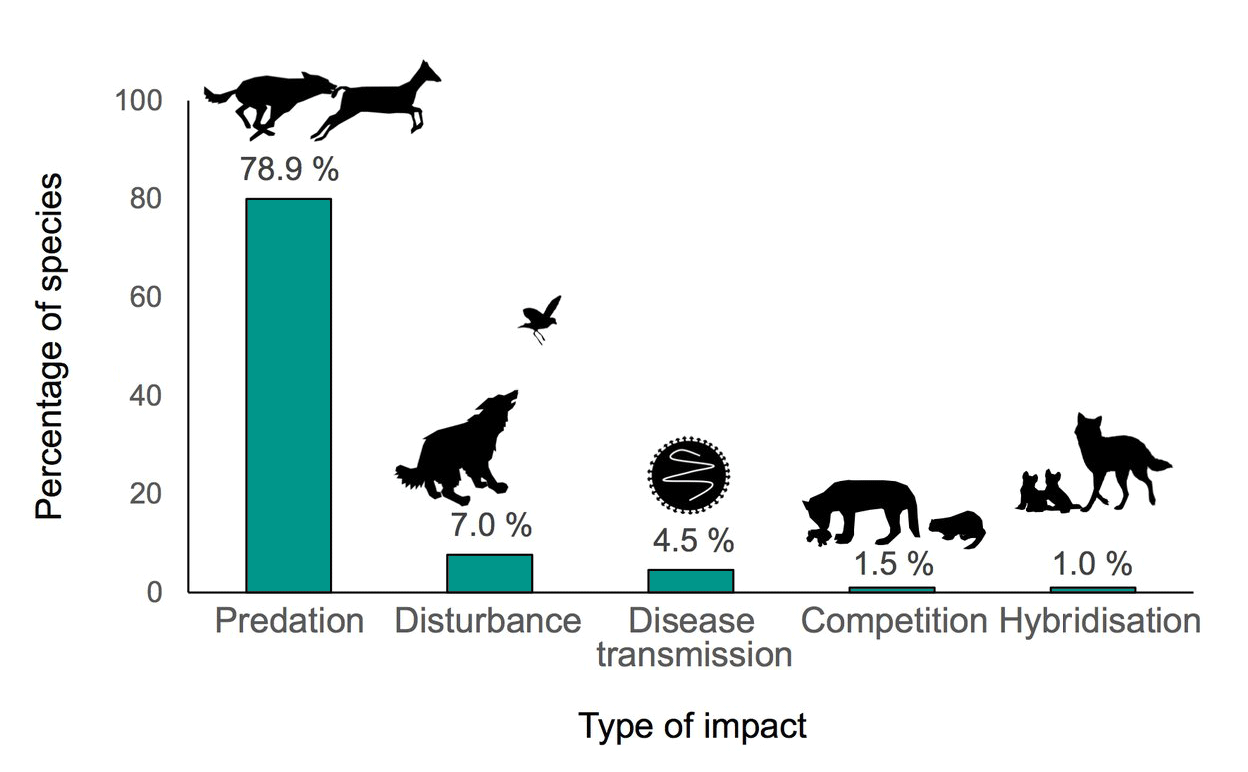
Percentage of extinct or threatened vertebrate species that are, or were, affected by different types of dog impact.

Predation is the most frequently reported impact, followed by disturbance, disease transmission, competition, and hybridisation. Regions with the most species impacted are: South-east Asia, Central America and the Caribbean, South America, Asia (excluding SE), Micro/Mela/Polynesia, and Australia.

We propose that the impacts of domestic dogs can be better understood and managed through: taxonomic and spatial prioritisation of research and management; examining potential synergisms between dogs and other threatening processes; strategic engagement with animal welfare and human health campaigns; community engagement and education; and mitigating anthropogenic effects such as resource subsidies. Such actions are essential for threatened species persistence, especially given that human and dog populations are expected to increase both numerically and geographically in the coming decades.

Doherty TS, Dickman CR, Glen AS, Newsome TM, Nimmo DG, Ritchie EG, Vanak AT, Wirsing AJ (2017) The global impacts of domestic dogs on threatened vertebrates. Biological Conservation, PDF DOI 

Categories
Publications

Making a new dog?

Authors: Thomas M Newsome, Peter J S Fleming, Christopher R Dickman, Tim S Doherty, William J Ripple, Euan G Ritchie, and Aaron J Wirsing

Published in: BioScience (early view)

Abstract

We are in the middle of a period of rapid and substantial environmental change. One impact of this upheaval is increasing contact between humans and other animals, including wildlife that take advantage of anthropogenic foods. As a result of increased interaction, the evolution and function of many species may be altered through time via processes including domestication and hybridization, potentially leading to speciation events.

We discuss the ecological and management importance of such possibilities, using gray wolves and other large carnivores as case studies.

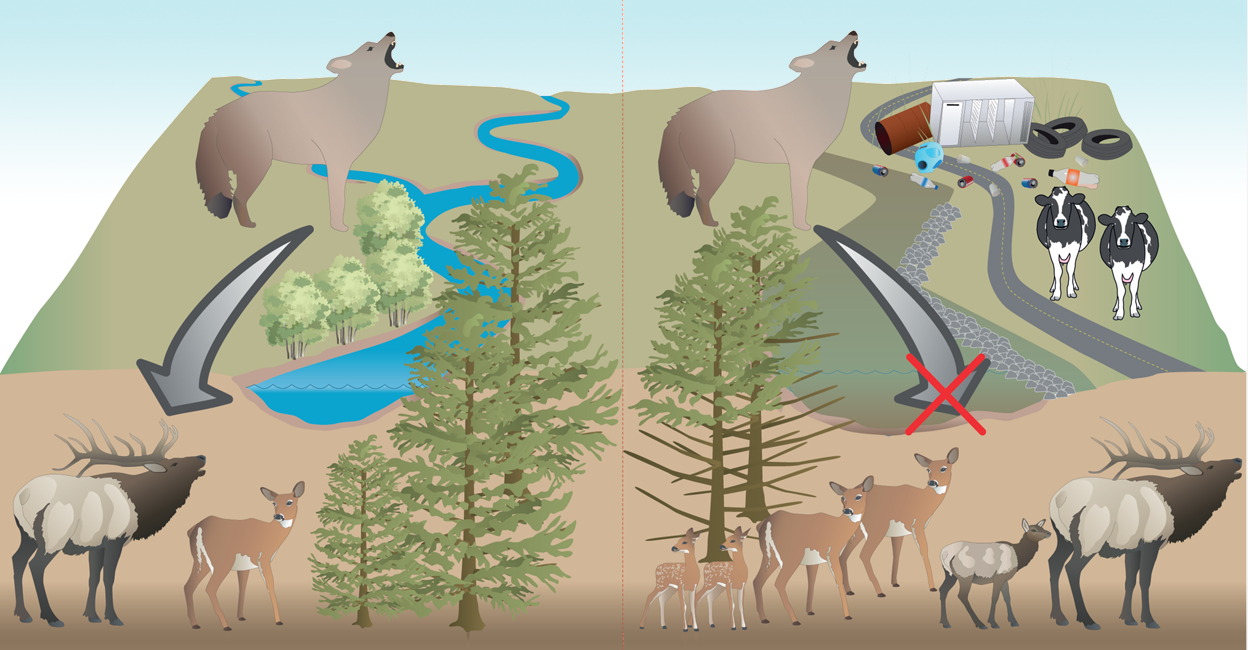
Image caption: A hypothetical comparison of gray wolf (Canis lupus) ecological effects in wilderness areas (left) and human-modified systems (right) where there are abundant anthropogenic foods.

We identify five main ways that carnivores might be affected: changes to social structures, behavior and movement patterns, changes in survivorship across wild- to human-dominated environments, evolutionary divergence, and potential speciation.

As the human population continues to grow and urban areas expand while some large carnivore species reoccupy parts of their former distributions, there will be important implications for human welfare and conservation policy.

Thomas M Newsome, Peter J S Fleming, Christopher R Dickman, Tim S Doherty, William J Ripple, Euan G Ritchie, Aaron J Wirsing (2017) Making a New Dog? BioScience PDF DOI


Categories
Publications Research

Responses of invasive predators and native prey to a prescribed forest fire

Authors: Bronwyn A Hradsky, Craig Mildwaters, Euan G Ritchie, Fiona Christie, and Julian Di Stefano

Published in: Journal of Mammalogy (early view)

Abstract

Fire shapes biome distribution and community composition worldwide, and is extensively used as a management tool in flammable landscapes. There is growing concern, however, that fire could increase the vulnerability of native fauna to invasive predators.

We developed a conceptual model of the ways in which fire could influence predator–prey dynamics.

Using a before–after, control–impact experiment, we then investigated the short-term effects of a prescribed fire on 2 globally significant invasive mesopredators (red fox, Vulpes vulpes, and feral cat, Felis catus) and their native mammalian prey in a fire-prone forest of southeastern Australia. We deployed motion-sensing cameras to assess species occurrence, collected predator scats to quantify diet and prey choice, and measured vegetation cover before and after fire. We examined the effects of the fire at the scale of the burn block (1,190 ha), and compared burned forest to unburned refuges.

Pre-fire, invasive predators and large native herbivores were more likely to occur at sites with an open understory, whereas the occurrence of most small- and medium-sized native mammals was positively associated with understory cover. Fire reduced understory cover by more than 80%, and resulted in a 5-fold increase in the occurrence of invasive predators. Concurrently, relative consumption of medium-sized native mammals by foxes doubled, and selection of long-nosed bandicoots (Perameles nasuta) and short-beaked echidnas (Tachyglossus aculeatus) by foxes increased. Occurrence of bush rats (Rattus fuscipes) declined. It was unclear if fire also affected the occurrence of bandicoots or echidnas, as changes coincided with normal seasonal variations.

Overall, prescribed fire promoted invasive predators, while disadvantaging their medium-sized native mammalian prey. Further replication and longer-term experiments are needed before these findings can be generalized. Nonetheless, such interactions could pose a serious threat to vulnerable species such as critical weight range mammals. Integrated invasive predator and fire management are recommended to improve biodiversity conservation in flammable ecosystems.

Hradsky BA, Mildwaters C, Ritchie EG, Christie F, Di Stefano J (2017) Responses of invasive predators and native prey to a prescribed forest fire, Journal of Mammalogy PDF DOI

Categories
Publications Science communication

Communication: Science censorship is a global issue

Authors: Euan G Ritchie, Don A Driscoll and Martine Maron

Published in: Nature, volume 542, number 7640 (February 2017)

Government gagging of scientists is a slippery slope towards removing evidence from public debate.

President Donald Trump issued an order on 23 January to effectively gag US government scientists at the Environmental Protection Agency and the Department of Agriculture from communicating with the media and the public (see Nature 54210112017). Regrettably, suppression of public scientific information is already the norm, or is being attempted, in many countries (see, for example, go.nature.com/2kr5dnd). We fear that such gagging orders could encourage senior bureaucrats to use funding as a tool with which to rein in academic freedoms.

In Australia, public servants must abide by codes of conduct for communication that restrict them from contributing scientific evidence to public debates. Allegations emerged in 2011 that an Australian state government had threatened to stop funding university scientists who spoke out against cattle grazing in national parks, despite peer-reviewed evidence that this could damage a fragile alpine ecosystem and was unlikely to reduce fire risk as claimed (see also Nature 4714222011).

The response of scientists to this type of coercion has been to share scientific information widely and openly using such legal means as social media to defend facts and transparency (see Nature 5414352017). Academics and scientific associations are among the last still free to speak, so must continue to do so to protect open discussion of government policies.

Ritchie EG, Driscoll DA, Maron M (2017) Communication: Science censorship is a global issue, Nature 542 PDF DOI 

Categories
Publications

The case for a dingo reintroduction in Australia remains strong: a reply to Morgan et al., 2016

Authors: Thomas M Newsome, Aaron C Greenville, Mike Letnic, Euan G Ritchie and Christopher R Dickman

Published in: Food Webs (early view)

dingofootprint
We challenge the arguments of Morgan et al. in regard to the efficacy of dingo reintroductions Image credit: Daryll Bellingham via Flickr

In their paper “Trophic cascades and dingoes in Australia: does the Yellowstone wolf-elk- willow model apply?” Morgan et al. (2016) argue that the case for dingo reintroduction in Australia, based on trophic cascade theory, is “weak”. They conclude that, “because of climate instability, the strong top-down trophic responses reported from the Yellowstone National Park case study are unlikely to apply in arid and semi-arid south-eastern Australia and are speculative at best”.

We agree that dingoes (Canis dingo) are likely to exert different effects on ecological communities in Australia as compared to grey wolves (Canis lupus) in North America. A comparison of body sizes and dietary preferences between these canid species alludes to their functional ecological differences. Differences in the biological communities and climate between Yellowstone National Park and Australia also prevent direct comparisons of trophic cascade-processes between the two regions. These facts should not, however, preclude examination of the efficacy and consequences of dingo reintroductions in Australia.

We contend that Morgan et al. (2016):

  1. misunderstand the circumstances that make trophic cascades important to consider in Australia,
  2. do not acknowledge key reasons why dingo reintroduction has been proposed,
  3. haven’t recognised the different pathways by which dingoes could influence ecosystems via trophic cascades, and
  4. do not fully acknowledge literature and theory relevant to understanding the interplay of bottom-up and top-down processes in Australia.

Our reply is intended to assist managers and decision makers when deciding whether or not to reintroduce dingoes into Australian ecosystems.

Newsome TM, Greenville AC, Letnic M, Ritchie EG, Dickman CR (2017) The case for a dingo reintroduction in Australia remains strong: A reply to Morgan et al., 2016, Food Webs, PDF DOI

Categories
Publications Research

Enumerating a continental-scale threat: How many feral cats are in Australia?

Authors: S Legge, BP Murphy, H McGregor, JCZ Woinarski, J Augusteyn, G Ballard, M Baseler, T Buckmaster, CR Dickman, T Doherty, G Edwards, T Eyre, BA Fancourt, D Ferguson, DM Forsyth, WL Geary, M Gentle, G Gillespie, L Greenwood, R Hohnen, S Hume, CN Johnson, M Maxwell, PJ McDonald, K Morris, K Moseby, T Newsome, D Nimmo, R Paltridge, D Ramsey, J Read, A Rendall, M Rich, E Ritchie, J Rowland, J Short, D Stoked, DR Sutherland, AF Wayne, L Woodford and F Zewe.

Published in: Biological Conservation

Abstract

Feral cats (Felis catus) have devastated wildlife globally. In Australia, feral cats are implicated in most recent mammal extinctions and continue to threaten native species. Cat control is a high-profile priority for Australian policy, research and management.

To develop the evidence-base to support this priority, we first review information on cat presence/absence on Australian islands and mainland cat-proof exclosures, finding that cats occur across >99.8% of Australia’s land area. Next, we collate 91 site-based feral cat density estimates in Australia and examine the influence of environmental and geographic influences on density.

We extrapolate from this analysis to estimate that the feral cat population in natural environments fluctuates between 1.4 million (95% confidence interval: 1.0–2.3 million) after continent-wide droughts, to 5.6 million (95% CI: 2.5–11 million) after extensive wet periods. We estimate another 0.7 million feral cats occur in Australia’s highly modified environments (urban areas, rubbish dumps, intensive farms).

Feral cat densities are higher on small islands than the mainland, but similar inside and outside conservation land. Mainland cats reach highest densities in arid/semi-arid areas after wet periods. Regional variation in cat densities corresponds closely with attrition rates for native mammal fauna.

The overall population estimate for Australia’s feral cats (in natural and highly modified environments), fluctuating between 2.1 and 6.3 million, is lower than previous estimates, and Australian feral cat densities are lower than reported for North America and Europe. Nevertheless, cats inflict severe impacts on Australian fauna, reflecting the sensitivity of Australia’s native species to cats and reinforcing that policy, research and management to reduce their impacts is critical.

Legge, S, et al (2016) Enumerating a continental-scale threat: How many feral cats are in Australia? Biological Conservation PDF DOI


Categories
Publications

Impacts and management of feral cats Felis catus in Australia

Authors: Tim S Doherty, Chris R Dickman, Chris N Johnson, Sarah M Legge, Euan G Ritchie and John CZ Woinarski

Published in: Mammal Review (early view)

Abstract

Feral cats are among the most damaging invasive species worldwide, and are implicated in many extinctions, especially in Australia, New Zealand and other islands. Understanding and reducing their impacts is a global conservation priority.

We review knowledge about the impacts and management of feral cats in Australia, and identify priorities for research and management.

In Australia, the most well understood and significant impact of feral cats is predation on threatened mammals. Other impacts include predation on other vertebrates, resource competition, and disease transmission, but knowledge of these impacts remains limited.

Lethal control is the most common form of management, particularly via specifically designed poison baits. Non-lethal techniques include the management of fire, grazing, food, and trophic cascades. Managing interactions between these processes is key to success.

Given limitations on the efficacy of feral cat management, conservation of threatened mammals has required the establishment of insurance populations on predator-free islands and in fenced mainland enclosures.

Research and management priorities are to: prevent feral cats from driving threatened species to extinction; assess the efficacy of new management tools; trial options for control via ecosystem management; and increase the potential for native fauna to coexist with feral cats.

Doherty TS, Dickman CR, Johnson CN, Legge SM, Ritchie EG, Woinarski JCZ (2016) Impacts and management of feral cats Felis catus in Australia. Mammal Review PDF DOI

Categories
Publications Research

Phylogeography of the antilopine wallaroos (Macropus antilopinus) across tropical northern Australia

Authors: Jessica J Wadley, Damien A Fordham, Vicki A Thomson, Euan G Ritchie and Jeremy J Austin

Published in: Ecology and Evolution (early view)

Abstract

The distribution of antilopine wallaroo, Macropus antilopinus, is marked by a break in the species’ range between Queensland and the Northern Territory, coinciding with the Carpentarian barrier.

Previous work on M. antilopinus revealed limited genetic differentiation between the Northern Territory and Queensland M. antilopinus populations across this barrier. The study also identified a number of divergent lineages in the Northern Territory, but was unable to elucidate any geographic structure.

Here, we re-examine these results to (1) determine phylogeographic patterns across the range of M. antilopinus and (2) infer the biogeographic barriers associated with these patterns.

The tropical savannahs of northern Australia: from the Cape York Peninsula in the east, to the Kimberley in the west. We examined phylogeographic patterns in M. antilopinus using a larger number of samples and three mtDNA genes: NADH dehydrogenase subunit 2, cytochrome b, and the control region. Two datasets were generated and analyzed: (1) a subset of samples with all three mtDNA regions concatenated together and (2) all samples for just control region sequences that included samples from the previous study. Analysis included generating phylogenetic trees based on Bayesian analysis and intraspecific median-joining networks.

The contemporary spatial structure of M. antilopinus mtDNA lineages revealed five shallow clades and a sixth, divergent lineage. The genetic differences that we found between Queensland and Northern Territory M. antilopinus samples confirmed the split in the geographic distribution of the species. We also found weak genetic differentiation between Northern Territory samples and those from the Kimberley region of Western Australia, possibly due to the Kimberley Plateau–Arnhem Land barrier. Within the Northern Territory, two clades appear to be parapatric in the west, while another two clades are broadly sympatric across the Northern Territory. MtDNA diversity of M. antilopinus revealed an unexpectedly complex evolutionary history involving multiple sympatric and parapatric mtDNA clades across northern Australia.

These phylogeographic patterns highlight the importance of investigating genetic variation across distributions of species and integrating this information into biodiversity conservation.

Wadley JJ, Fordham DA, Thomson VA, Ritchie EG, Austin JJ (2016) Phylogeography of the antilopine wallaroo (Macropus antilopinus) across tropical northern Australia. Ecology and Evolution PDF DOI 


Categories
Publications

Trophic cascades in 3D: Network analysis reveals how apex predators structure ecosystems

Authors: Arian D Wallach, Anthony H Dekker, Miguel Lurgi, Jose M Montoya, Damien A Fordham and Euan G Ritchie

Published in: Methods in Ecology and Evolution

Abstract

Trophic cascade theory predicts that apex predators structure ecosystems by regulating mesopredator and herbivore abundance and behaviour. Studies on trophic cascades have typically focused on short linear chains of species interactions. A framework that integrates more realistic and complex interactions is needed to make broader predictions on ecosystem structuring.

Network analysis is used to study food webs and other types of species interaction networks. These often comprise large numbers of species but rarely account for multiple interaction types and strengths. Here we develop an intermediate complexity theoretical framework that allows specification of multiple interaction types and strengths for the study of trophic cascades. This ecological network is designed to suit data typically derived from field-based studies. The trophic cascade network contains fewer nodes than food webs, but provides semi-weighted directional links that enable different types of interactions to be included in a single model.

We use this trophic cascade network model to explore how an apex predator shapes ecosystem structure in an Australian arid ecosystem. We compared two networks that contrasted in the dominance of an apex predator, the dingo (Canis dingo), using published results ranking the direction and strength of key interactions. Nodes and links interacted dynamically to shape these networks. We examined how changes to an apex predator population affects ecosystem structure through their direct and indirect influences on different components of this ecological community.

Under strong apex predator influence, the network structure was denser and more complex, even, and top-down driven; and dingo predation and soil commensalism formed denser interactive modules. Under weak apex predator influence (e.g. reflecting predator control) the resulting network structure was frayed, with mesopredator predation and grazing forming modules.

Our study demonstrates that networks of intermediate complexity can provide a powerful tool for elucidating potential ecosystem-wide effects of apex predators, and predicting the consequences of management interventions such as predator control. Integrating trophic cascades, with their array of complex interactions, with the three-dimensional structure of ecological networks, has the potential to reveal ‘ecological architecture’ that neither captures on its own.

Wallach AD, Dekker AH, Lurgi M, Montoya JM, Fordham DA, Ritchie EG (2016) Trophic cascades in 3D: Network analysis reveals how apex predators structure ecosystems. Methods in Ecology and EvolutionPDF DOI

Categories
Publications

Invasive predators and global biodiversity loss

Authors: Tim S Doherty, Alistair S Glen, Dale G Nimmo, Euan G Ritchie and Chris R Dickman

Published in: Proceedings of the National Academy of Sciences

Abstract

Invasive species threaten biodiversity globally, and invasive mammalian predators are particularly damaging, having contributed to considerable species decline and extinction. We provide a global meta-analysis of these impacts and reveal their full extent.

Invasive predators are implicated in 87 bird, 45 mammal, and 10 reptile species extinctions — 58% of these groups’ contemporary extinctions worldwide. These figures are likely underestimated because 23 critically endangered species that we assessed are classed as “possibly extinct.”

Invasive mammalian predators endanger a further 596 species at risk of extinction, with cats, rodents, dogs, and pigs threatening the most species overall.

Species most at risk from predators have high evolutionary distinctiveness and inhabit insular environments. Invasive mammalian predators are therefore important drivers of irreversible loss of phylogenetic diversity worldwide.

That most impacted species are insular indicates that management of invasive predators on islands should be a global conservation priority. Understanding and mitigating the impact of invasive mammalian predators is essential for reducing the rate of global biodiversity loss.

Doherty TS, Glen AS, Nimmo DG, Ritchie EG, Dickman CR (2016) Invasive predators and global biodiversity loss. Proceedings of the National Academy of Sciences PDF DOI


Categories
Publications

Crying wolf: limitations of predator–prey studies need not preclude their salient messages

Authors: Euan G Ritchie, Jannik Schultner, Dale G Nimmo, Joern Fischer, Jan Hanspach, Tobias Kuemmerle, Laura Kehoe and Ine Dorresteijn

Published in: Proceedings of the Royal Society B, volume 283, issue 1834 (July 2016)

A rapidly growing body of the literature reveals the important roles apex predators play in shaping the composition and functioning of ecological communities worldwide.

The principal effects of apex predators — namely herbivore and mesopredator population suppression — are often evident following their removal from environments, or their reintroduction, including rewilding initiatives. What remains less clear, however, is to what extent humans versus other apex predators affect ecosystems, how both interact across gradients of anthropogenic pressure and how such interactions can be affected by underlying bottom-up processes.

Such questions are critical to answer in the Anthropocene, where effective management of ecosystems and conservation of biodiversity requires a better understanding of how top-down and bottom-up processes vary according to anthropogenic influences…

Ritchie EG, Schultner J, Nimmo DG, Fischer J, Hanspach J, Kuemmerle T, Kehoe L, Dorresteijn I (2016) Crying wolf: limitations of predator–prey studies need not preclude their salient messages, Proceedings of the Royal Society B, 283:1834 PDF DOI

Categories
Publications

Stop jumping the gun: A call for evidence-based invasive predator management

Authors: Tim S Doherty and Euan G Ritchie

Published in: Conservation Letters (early access)

Abstract

Invasive mammalian predators are major drivers of species extinctions globally.

To protect native prey, lethal control is often used with the aim of reducing or exterminating invasive predator populations. The efficacy of this practice however is often not considered despite multiple practical and ecological factors that can limit success.

Here, we summarise contemporary knowledge regarding the use and challenges of lethal control and alternative approaches for reducing invasive predator impacts.

As the prevailing management approach, we outline four key issues that can compromise the effectiveness of lethal control: release of herbivore and mesopredator populations; disruption of predator social systems; compensatory predator immigration; and ethical concerns.

We then discuss the relative merits and limitations of four alternative approaches that may enhance conservation practitioner’s ability to effectively manage invasive predators: top-predator conservation or reintroduction; maintaining habitat complexity; exclusion fencing; and behavioural and evolutionary ecology.

Considerable uncertainty remains regarding the effectiveness of management approaches in different environmental contexts.

We propose that the deficiencies and uncertainties outlined here can be addressed through a combination of adaptive management, expert elicitation, and cost-benefit analyses.

Improved management of invasive predators requires greater consideration and assessment of the full range of management approaches available.

Doherty TS, Ritchie EG (2016) Stop jumping the gun: A call for evidence-based invasive predator management. Conservation Letters PDF DOI

Categories
Publications

Effects of the fire regime on mammal occurrence after wildfire: site effects vs landscape context in fire-prone forests

Authors: Evelyn K Chia, Michelle Bassett, Steve WJ Leonard, Greg J Holland, Euan G Ritchie, Michael F Clarke and Andrew F Bennett

Published in: Forest Ecology and Management, volume 363 (March 2016)

Abstract

Wildfires have major impacts on ecosystems globally. Fire regimes (including fire frequency, intensity, season and type of fire) influence the status of species by altering habitat suitability at the site scale, and by creating heterogeneity at the landscape scale.

The relative effects of site and landscape-scale fire attributes on animal species are rarely examined together. Such knowledge is important, given that fire regimes are sensitive to changing land management practices; and that fires are predicted to become larger and more frequent in some regions as a result of climate change.

Here, we tested the relative influence of elements of the fire regime (fire severity, fire history) at the site-scale, and the landscape context (extent of surrounding unburnt forest, fire heterogeneity) on the occurrence of native terrestrial mammals after severe wildfire in south-eastern Australia.

We conducted surveys by using automatically triggered, infrared cameras at 80 sites in fire-prone eucalypt forests, 2–3 years post-wildfire. Thirteen native mammal species were recorded, eight of which were detected with sufficient frequency for analysis.

Most species were widespread (35–90% of sites) and recorded in all fire severity classes. Fire effects at the site-level were more influential than landscape context effects arising from heterogeneity in the fire regime (e.g. extent of surrounding unburnt forest). Fire severity was the most influential of the fire-regime elements investigated, but it affected different species in different ways.

This study highlights three main points relevant to conservation of terrestrial mammals after wildfire. First, spatial variation in fire severity associated with wildfire (ranging from unburned to severely burned stands) is an important contributor to the post-fire status of species. Second, post-fire environmental conditions are significant: here, rapid regeneration of vegetation following drought-breaking rains greatly influenced the suitability of post-fire habitats. Third, it is valuable to consider the effects of the fire regime at multiple scales, including both the site (forest stand) and its landscape context.

Insights from short-term surveys, such as this, will be enhanced by complementary longitudinal studies, especially where they encompass environmental variation through the post-fire succession.

Chia EK, Bassett M, Leonard SWJ, Hollanda GJ, Ritchie EG , Clarke MF, Bennett AF (2016) Effects of the fire regime on mammal occurrence after wildfire: Site effects vs landscape context in fire-prone forests, Forest Ecology and Management PDF DOI

Categories
Publications Research

Fire severity and fire-induced landscape heterogeneity affect arboreal mammals in fire-prone forests

Authors: Evelyn K Chia, Michelle Bassett, Dale G Nimmo, Steve W J Leonard, Euan G Ritchie, Michael F Clarke and Andrew F Bennett

Published in: Ecoshere, volume 6, issue 10 (October 2015)

EucFires
We examined the role of topography, fire history and fire sensitivity on the occurrence of arboreal mammals 2 to 3 years after wildfire in temperate Eucalypt forests. Image credit: Elizabeth Donoghue via Flickr.

Abstract

In fire-prone regions, wildfire influences spatial and temporal patterns of landscape heterogeneity. The likely impacts of climate change on the frequency and intensity of wildfire highlights the importance of understanding how fire-induced heterogeneity may affect different components of the biota.

Here, we examine the influence of wildfire, as an agent of landscape heterogeneity, on the distribution of arboreal mammals in fire-prone forests in south-eastern Australia.

First, we used a stratified design to examine the role of topography, and the relative influence of fire severity and fire history, on the occurrence of arboreal mammals 2–3 years after wildfire. Second, we investigated the influence of landscape context on the occurrence of arboreal mammals at severely burnt sites. Forested gullies supported a higher abundance of arboreal mammals than slopes.

Fire severity was the strongest influence, with abundance lower at severely burnt than unburnt sites. The occurrence of mammals at severely burned sites was influenced by landscape context: abundance increased with increasing amount of unburnt and understorey-only burnt forest within a one kilometre radius.

These results support the hypothesis that unburnt forest and moist gullies can serve as refuges for fauna in the post-fire environment and assist recolonization of severely burned forest. They highlight the importance of spatial heterogeneity created by wildfire and the need to incorporate spatial aspects of fire regimes (e.g. creation and protection of refuges) for fire management in fire-prone landscapes.

Chia EK, Bassett M, Nimmo DG, Leonard SWJ, Ritchie EG, Clarke MF, Bennett AF (2015) Fire severity and fire-induced landscape heterogeneity affect arboreal mammals in fire-prone forests, Ecosphere, 6:10 PDF DOI

Categories
Publications Research

Fire affects microhabitat selection, movement patterns, and body condition of an Australian rodent (Rattus fuscipes)

Authors: Amber Fordyce, Bronwyn A Hradsky, Euan G Ritchie, And Julian Di Stefano

Published in: Journal of Mammalogy, October 2015 (online)

Abstract

Resource selection by animals influences individual fitness, the abundance of local populations, and the distribution of species. Further, the degree to which individuals select particular resources can be altered by numerous factors including competition, predation, and both natural- and human-induced environmental change. Understanding the influence of such factors on the way animals use resources can guide species conservation and management in changing environments.

In this study, we investigated the effects of a prescribed fire on small-scale (microhabitat) resource selection, abundance, body condition, and movement pathways of a native Australian rodent, the bush rat (Rattus fuscipes). Using a before-after, control-impact design, we gathered data from 60 individuals fitted with spool and line tracking devices.

In unburnt forest, selection of resources by bush rats was positively related to rushes, logs and complex habitat, and negatively related to ferns and litter. Fire caused selection for spreading grass, rushes, and complex habitat to increase relative to an unburnt control location. At the burnt location after the fire, rats selected patches of unburnt vegetation, and no rats were caught at a trapping site where most of the understory had been burnt. The fire also reduced bush rat abundance and body condition and caused movement pathways to become more convoluted. After the fire, some individuals moved through burnt areas but the majority of movements occurred within unburnt patches.

The effects of fire on bush rat resource selection, movement, body condition, and abundance were likely driven by several linked factors including limited access to shelter and food due to the loss of understory vegetation and heightened levels of perceived predation risk.

Our findings suggest the influence of prescribed fire on small mammals will depend on the resulting mosaic of burnt and unburnt patches and how well this corresponds to the resource requirements of particular species.

Fordyce A, Hradsky BA, Ritchie EG, Di Stefano J (2015) Fire affects microhabitat selection, movement patterns, and body condition of an Australian rodent (Rattus fuscipes), Journal of Mammalogy PDF DOI

Categories
Publications Research

Predators help protect carbon stocks in blue carbon ecosystems

Authors: Trisha B Atwood, Rod M Connolly, Euan G Ritchie, Catherine E Lovelock,
Michael R Heithaus, Graeme C Hays, James W Fourqurean and Peter I Macreadie

Published in: Nature Climate Change, September 2015

Tiger Shark
Tiger sharks in Shark Bay, Western Australia, create a landscape of fear where sea turtles and dugongs preferentially forage in seagrass microhabitats that are lower in predation risk and have allowed Cabon stocks. Image credit Albert Kok via Wikimedia Commons.

Abstract

Predators continue to be harvested unsustainably throughout most of the Earth’s ecosystems.

Recent research demonstrates that the functional loss of predators could have far-reaching consequences on carbon cycling and, by implication, our ability to ameliorate climate change impacts. Yet the influence of predators on carbon accumulation and preservation in vegetated coastal habitats (that is, salt marshes, seagrass meadows and mangroves) is poorly understood, despite these being some of the Earth’s most vulnerable and carbon-rich ecosystems.

Here we discuss potential pathways by which trophic downgrading affects carbon capture, accumulation and preservation in vegetated coastal habitats.

We identify an urgent need for further research on the influence of predators on carbon cycling in vegetated coastal habitats, and ultimately the role that these systems play in climate change mitigation.

There is, however, sufficient evidence to suggest that intact predator populations are critical to maintaining or growing reserves of ‘blue carbon’ (carbon stored in coastal or marine ecosystems), and policy and management need to be improved to reflect these realities.

Atwood TB, Connolly RM, Ritchie EG, Lovelock, CE, Heithaus MR, Hays GC, Fourqurean JM, Macreadie PI (2015) Predators help protect carbon stocks in blue carbon ecosystems, Nature Climate Change PDF DOI