Authors: Catherine J Payne, Euan G Ritchie, Luke T Kelly and Dale G Nimmo.
Abstract
Predation and fire shape the structure and function of ecosystems globally. However, studies exploring interactions between these two processes are rare, especially at large spatial scales. This knowledge gap is significant not only for ecological theory, but also in an applied context, because it limits the ability of landscape managers to predict the outcomes of manipulating fire and predators.
We examined the influence of fire on the occurrence of an introduced and widespread mesopredator, the red fox (Vulpes vulpes), in semi-arid Australia. We used two extensive and complimentary datasets collected at two spatial scales.
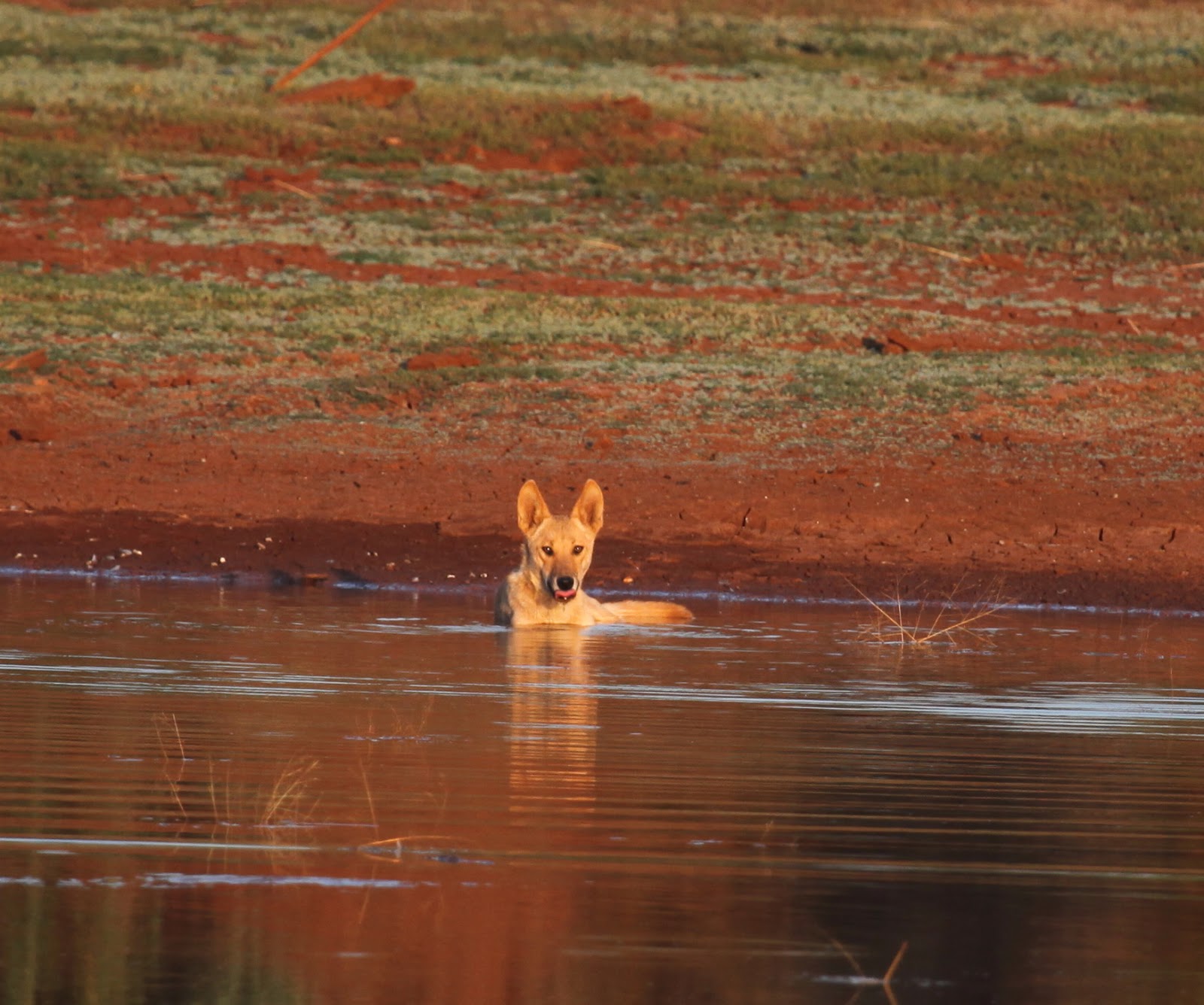
We examined the influence of fire on the distribution of introduced red foxes in semi-arid Australia. Image credit Area51Bel [CC-BY-SA 3.0] via Wikimedia Commons.At the landscape-scale, we surveyed red foxes using sand-plots within 28 study landscapes — which incorporated variation in the diversity and proportional extent of fire-age classes — located across a 104 000 km² study area. At the site-scale, we surveyed red foxes using camera traps at 108 sites stratified along a century-long post-fire chronosequence (0–105 years) within a 6630 km² study area.
Red foxes were widespread both at the landscape and site-scale. Fire did not influence fox distribution at either spatial scale, nor did other environmental variables that we measured.
Our results show that red foxes exploit a broad range of environmental conditions within semi-arid Australia.
The presence of red foxes throughout much of the landscape is likely to have significant implications for native fauna, particularly in recently burnt habitats where reduced cover may increase prey species’ predation risk.
Payne CJ, Ritchie EG, Kelly LT, Nimmo DG (2014) Does Fire Influence the Landscape-Scale Distribution of an Invasive Mesopredator? PLoS ONE 9(10): e107862 PDFDOI
Authors: Keith Bradby, James A Fitzsimons, Andrew Del Marco, Don A Driscoll, Euan G Ritchie, Jenny Lau, Corey JA Bradshaw and Richard J Hobbs.
Published in:Ecological management and restoration
Abstract
Western Australia’s State Barrier Fence represents a continuation of colonial era attitudes that considered kangaroos, emus and dingoes as vermin.
Recent plans to upgrade and extend the Barrier Fence have shown little regard for ecological impacts or statutory environmental assessment processes.
Emus are known to travel up to 1000 kilometres between seasons. This is what happens when their migration is impeded by the West Australian State Barrier Fence. Image credit : Graeme Chapman.
Bradby K, Fitzsimons JA, Del Marco A, Driscoll DA, Ritchie EG, Lau J, Bradshaw CJA Hobbs RJ (2014) Ecological connectivity or Barrier Fence? Critical choices on the agricultural margins of Western Australia. Ecological management and restorationPDFDOI
Authors: Fabrizio Sergio, Oswald J Schmitz, Charles J Krebs, Robert D Holt, Michael R Heithaus, Aaron J Wirsing, William J Ripple, Euan G Ritchie, David Ainley, Daniel Oro, Yadvendradev Jhala, Fernando Hiraldo and Erkki Korpimäki.
Abstract
Research on the ecology of top predators — upper trophic level consumers that are relatively free from predation once they reach adult size — has provided regular contributions to general ecology and is a rapidly expanding and increasingly experimental, multidisciplinary and technological endeavour.
Yet, an exponentially expanding literature coupled with rapid disintegration into specialized, disconnected subfields for study (e.g. vertebrate predators versus invertebrate predators, community ecology versus biological control, etc.) increasingly means that we are losing a coherent, integrated understating of the role and importance of these species in ecosystems.
This process of canalization is likely to hinder sharing of scientific discovery and continued progress, especially as there is a growing need to understand the generality of the top–down forcing, as demonstrated for some members of this group.
Here, we propose ways to facilitate synthesis by promoting changes in mentality and awareness among specialists through increased debate and collaboration, conceptual reviews and a series of exemplary case studies.
The strategy will rely on the collective contribution by all scientists in the field and will strive to consolidate and formalise top-order predation as a holistic, cohesive, cross-taxonomical field of research studying the ecology, evolution and behaviour of apex predators and their capability to exert top–down forcing on lower trophic levels.
Sergio F, Schmitz OJ, Krebs CJ, Holt RD, Heithaus MR, Wirsing AJ, Ripple WJ, Ritchie EG, Ainley D, Oro D, Jhala Y, Hiraldo F, Korpimäki E (2014) Towards a cohesive, holistic view of top predation: a definition, synthesis and perspective. OikosDOIPDF
Authors: Donna B Harris, Stephen D Gregory, Barry W Brook, Euan G Ritchie, David B Croft, Graeme Coulson and Damien A Fordham.
Abstract
Species distribution models have come under criticism for being too simplistic for making robust future forecasts, partly because they assume that climate is the main determinant of geographical range at large spatial extents and coarse resolutions, with non-climate predictors being important only at finer scales.
We suggest that this paradigm might be obscured by species movement patterns.
To explore this we used contrasting kangaroo (family Macropodidae) case studies: two species with relatively small, stable home ranges (Macropus giganteus and M. robustus) and three species with more extensive, adaptive ranging behaviour (M. antilopinus, M. fuliginosus and M. rufus).
We used two contrasting kangaroo case studiess. Image credit: Nick Talbot / Department of Environment and Primary Industries via Flickr [CC BY-NC 2.0]We predicted that non-climate predictors will be most influential to model fit and predictive performance at local spatial resolution for the former species and at landscape resolution for the latter species.
We compared residuals autocovariate – boosted regression tree (RAC-BRT) model statistics with and without species-specific non-climate predictors (habitat, soil, fire, water and topography), at local- and landscape-level spatial resolutions (5 and 50 km).
As predicted, the influence of non-climate predictors on model fit and predictive performance (compared with climate-only models) was greater at 50 compared with 5 km resolution for M. rufus and M. fuliginosus and the opposite trend was observed for M. giganteus.T he results for M. robustus and M. antilopinus were inconclusive. Also notable was the difference in inter-scale importance of climate predictors in the presence of non-climate predictors.
In conclusion, differences in autecology, particularly relating to space use, may contribute to the importance of non-climate predictors at a given scale, not model scale per se. Further exploration of this concept across a range of species is encouraged and findings may contribute to more effective conservation and management of species at ecologically meaningful scales.
Harris DB, Gregory SD, Brook BW, Ritchie EG, Croft DB, Coulson G, Fordham DA (2014) The influence of non-climate predictors at local and landscape resolutions depends on the autecology of the species. Austral Ecology PDFDOI
Authors: Christopher N Johnson, Mathew S Crowther, Chris R Dickman, Michael I Letnic, Thomas M Newsome, Dale G Nimmo, Euan G Ritchie and Arian D Wallach.
Abstract
There has been much recent debate in Australia over whether lethal control of dingoes incurs environmental costs, particularly by allowing increase of populations of mesopredators such as red foxes and feral cats.
Allen et al. (2013) claim to show in their recent study that suppression of dingo activity by poison baiting does not lead to mesopredator release, because mesopredators are also suppressed by poisoning.
We show that this claim is not supported by the data and analysis reported in Allen et al.’s paper.
The management of dingoes is a highly conflicted and frequently emotional issue in rural Australia. Image by Peripitus [CC-BY-SA-3.0] via Wikimedia Commons. Skull and Crossbones icon by Jens Tärning [CC-BY-SA-2.0] via the Noun Project.Johnson CN, Crowther MS, Dickman CR, Letnic MI, Newsome TM, Nimmo DG, Ritchie EG, Wallach AD (2014) Experiments in no-impact control of dingoes: comment on Allen et al. 2013. Frontiers in Zoology 11:17 PDFDOI
Authors: Mark D B Eldridge, Sally Potter, Christopher N Johnson and Euan G Ritchie
Abstract
Tropical savannas cover 20–30% of the world’s land surface and exhibit high levels of regional endemism, but the evolutionary histories of their biota remain poorly studied.
The most extensive and unmodified tropical savannas occur in Northern Australia, and recent studies suggest this region supports high levels of previously undetected genetic diversity.
Macropus robustus, Image credit: David Cook Wildlife Photography[CC BY-NC 2.0] via FlickrTo examine the importance of barriers to gene flow and the environmental history of Northern Australia in influencing patterns of diversity, we investigated the phylogeography of two closely related, large, vagile macropodid marsupials, the antilopine wallaroo (Macropus antilopinus; n=78), and the common wallaroo (Macropus robustus; n=21). Both species are widespread across the tropical savannas of Australia except across the Carpentarian Barrier (CB) where there is a break in the distribution of M. antilopinus.
We determined sequence variation in the hypervariable Domain I of the mitochondrial DNA control region and genotyped individuals at 12 polymorphic microsatellite loci to assess the historical and contemporary influence of the CB on these species. Surprisingly, we detected only limited differentiation between the disjunct Northern Territory and Queensland M. antilopinus populations. In contrast, the continuously distributed M. robustus was highly divergent across the CB.
Although unexpected, these contrasting responses appear related to minor differences in species biology. Our results suggest that vicariance may not explain well the phylogeographic patterns in Australia’s dynamic monsoonal environments. This is because Quaternary envi- ronmental changes in this region have been complex, and diverse individual species’ biologies have resulted in less predictable and idiosyncratic responses.
Eldridge MDB, Potter S, Johnson CN, Ritchie EG (2014) Differing impact of a major biogeographic barrier on genetic structure in two large kangaroos from the monsoon tropics of Northern Australia, Ecology and Evolution PDFDOI
Sharks are critical to keeping environments in balance. Image credit: Terry Goss [CC-BY-SA-3.0] via Wikimedia CommonsWe have good reason to fear sharks and lions.
None of us wants to be an animal’s next meal.
And a number of recent fatal shark attacks in Western Australia have intensified the issue of human-predator conflict.
In response, the WA Government has introduced a shark cull to create “safe zones” for beachgoers – with the first killing on the weekend.
Thousands of people, including surfers, have since rallied against the move.
So what are the broader consequences of losing sharks and other large predators?
Landmark research in the international journal Science this month reviewed the conservation status and ecological roles of the world’s 31 largest carnivores.
Our study suggests that we should be greatly concerned about the ongoing loss of predators.
We studied lions, tigers, African wild dogs, leopards, cheetahs, wolves, lynx, otters, bears, hyenas and dingoes. The study spans all continents except Antarctica.
Alarmingly, roughly 75 per cent of all predators are declining and headed towards extinction.
So unless genuine and urgent efforts are made to conserve these animals, many of them could be gone for ever.
What happens when predators decline or, worse, disappear? In short, wherever we looked, we saw major environmental problems.
Research on Australia’s top predator, the dingo, tells a compelling story.
Over much of the continent, this native predator is shot and poisoned to protect livestock.
But science has now shown that by killing dingoes we make life easier for introduced foxes, cats, goats and pigs, as well as native kangaroos.
This has many impacts: most importantly the net loss of our native animals.
And in many cases, we actually lose more stock after killing dingoes. More sophisticated solutions to managing dingoes are available, like the use of livestock guardian dogs.
Globally, when top predators are lost, the number of mammals grazing on vegetation goes up, causing soil erosion, lower carbon sequestration and loss of habitat for native animals. Predators can also prevent the spread of disease.
In Africa, we are also seeing children forgoing an education to stay home and help their families protect crops from raids by rising numbers of Olive baboons, once kept in check by leopards and lions.
So what about sharks?
Like other top predators, they are critical to keeping environments in balance.
When large sharks are culled, numbers of rays and smaller fish species increase dramatically. Because these smaller species feed on commercially valuable fish, the economic impacts can be huge.
If endangered and legally protected species such as great white sharks are targeted and killed under government orders, we are surely within our rights to request a full cost-benefit analysis.
We need to make sure millions of taxpayer-funded dollars are not being wasted or even making things worse.
Persecuting sharks is not the answer. The management of any wildlife should be based on sound scientific evidence, not political rhetoric.
Clearly, predators have far-reaching ecological, economic and social benefits that are grossly underappreciated.
There is no doubt predators pose challenges, such as wolves attacking livestock and sharks attacking humans. But education and new management practices offer alternatives to culling.
When sharks were culled in Hawaii there was no long-term benefit because shark attacks occurred immediately after.
This is because many species of shark are migratory – some travelling thousands of kilometres. This means killing sharks in a local area only is doomed to fail.
Public education programs about sharks and installing shark exclusion nets is more sensible.
It is telling that many recent victims of shark attacks have come out to protest against the planned shark cull in WA.
Clearly, many people, including those most deeply affected, want smarter solutions to coexisting.
With all of this in mind, governments must find and encourage better ways for people and predators to live together. Failure to do so places us all at risk.
Without tigers, our ecosystems will suffer. Image credit: Sascha Kohlmann via FlickrHumans have an innate fear of large predators, and with good reason. Nobody wants to be a shark or a lion’s next meal.
But new research in the journal Science shows that our inability to live with these animals is putting their survival in great danger, and doing untold damage to the environment.
Through modifying the habitats of large predators or killing predators more directly, we are greatly compromising the ecosystems that they help to keep in balance — free of charge. In turn this environmental degradation creates many problems that have severe consequences for humans.
We ain’t lion, this predator stuff is a big deal. Image credit: Derek Keats via Flickr
Top dogs (and cats) under threat
For the first time, a team of researchers from the United States, Australia, Italy, and Sweden, and led by Professor Bill Ripple at Oregon State University, have analysed the effects of threats such as habitat loss, human persecution and reduced prey on the world’s 31 largest mammalian carnivores.
The species studied include lions, tigers, African wild dogs, leopards, cheetahs, wolves, lynx, otters, bears, hyenas and dingoes. Together they span all continents except Antarctica.
Alarmingly, more than three quarters of the 31 large carnivores are in decline, and 17 species occupy less than half of their historical distributions. The Red Wolf in the southeastern United States is now found in less than 1% of its historical range, and the Ethiopian Wolf in just 2%.
Hotspots of carnivore decline are southeast Asia, southern and East Africa, and the Amazon, where several large carnivores are declining. And in the developed world there are now few places where large carnivores remain.
In Australia, dingoes help keep introduced predators at bay. Image credit: Ars Electronica via FlickrAside from the intrinsic tragedy of losing any species, what should perhaps concern us even more is that we are only just beginning to understand and appreciate just how important large predators are to maintaining healthy ecosystems, and our dependence on the ecosystem services they deliver.
Ripple effect
Seven carnivore species in particular have been shown to have profound effects on the environment and cause what is known as “trophic cascades”. A trophic cascade is a ripple effect, where one species’ influence spreads through multiple levels of a food web.
Species for which this effect is most well-known are African lions, leopards, Eurasian lynx, cougars, gray wolves, sea otters and dingoes.
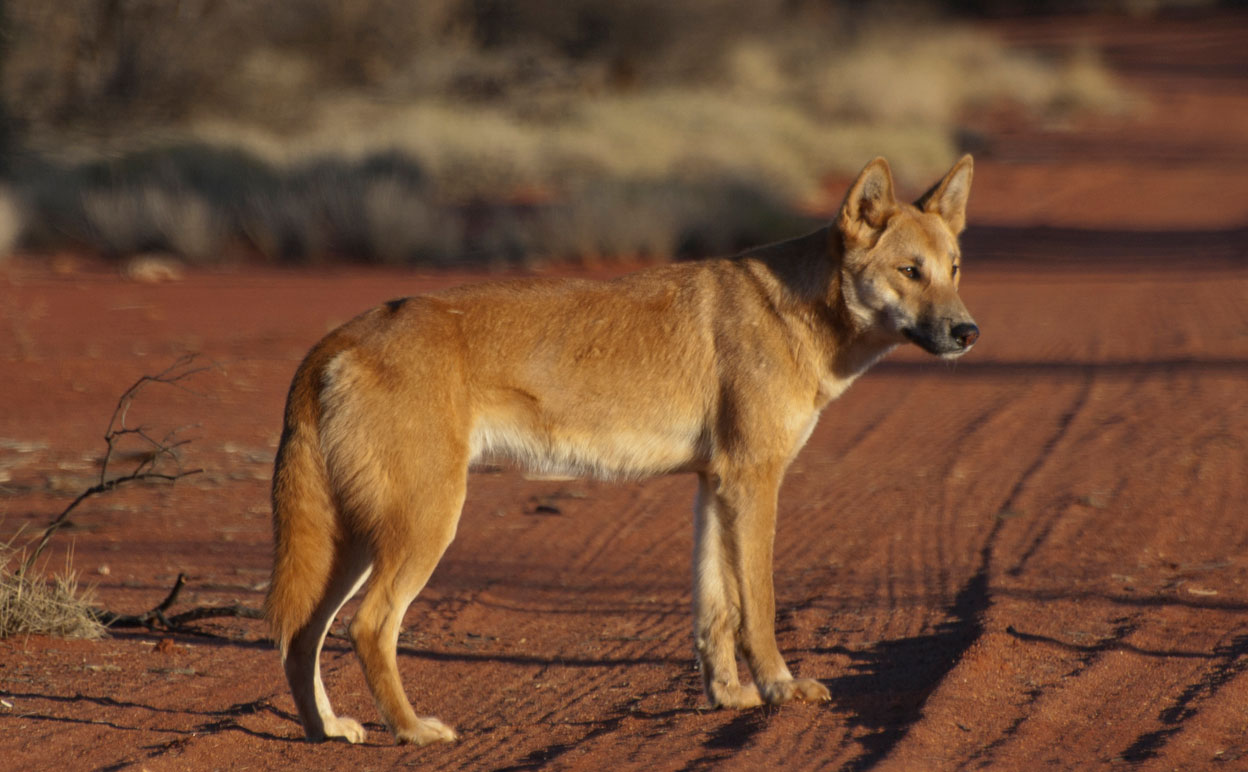
It’s hard being a VIP (very important predator). Image credit: Mike Baird via FlickrIn Australia dingoes greatly reduce kangaroo and red fox numbers, which in turn reduces grazing of vegetation and predation of native animals, helping to conserve and protect biodiversity.
In coastal North America, sea otters keep sea urchin numbers in check, which helps maintain kelp forests and benefits other marine species dependent on this habitat. But in this case otters might also offer a defence against climate change, as healthy kelp forests can grow rapidly and store large amounts of carbon.
And in Africa, a decrease in lions and leopards has coincided with a dramatic increase in Olive Baboons, which threaten farm crops and livestock, and spread intestinal worms. Baboons even impact education, as children have to stay home to defend their farms from raids.
Without lions and leopards, there’s no telling what baboons will do. Image credit: Justin Jensen via FlickrClearly predators have far-reaching ecological, economic and social benefits that are grossly underappreciated. There is no doubt predators pose challenges too, such as wolves attacking livestock. But education and new management practices offer ways forward. For instance, we could use guardian animals to protect livestock from predators.
Together we call on governments to end policies and management practices that are responsible for the ongoing persecution and loss of predators from our planet. Western Australia’s new shark plan is an example of management that fails to account for the science of big predators. Instead we need an international initiative that aims to conserve large predators and promote their coexistence with people.
Authors: William J Ripple, James A Estes, Robert L Beschta, Christopher C Wilmers, Euan G Ritchie, Mark Hebblewhite, Joel Berger, Bodil Elmhagen, Mike Letnic, Michael P Nelson, Oswald J Schmitz, Douglas W Smith, Arian D Wallach and Aaron J Wirsing
Abstract
Large carnivores face serious threats and are experiencing massive declines in their populations and geographic ranges around the world.
We highlight how these threats have affected the conservation status and ecological functioning of the 31 largest mammalian carnivores on Earth.
Consistent with theory, empirical studies increasingly show that large carnivores have substantial effects on the structure and function of diverse ecosystems.
Significant cascading trophic interactions, mediated by their prey or sympatric mesopredators, arise when some of these carnivores are extirpated from or repatriated to ecosystems.
Unexpected effects of trophic cascades on various taxa and processes include changes to bird, mammal, invertebrate, and herpetofauna abundance or richness; subsidies to scavengers; altered disease dynamics; carbon sequestration; modified stream morphology; and crop damage.
Promoting tolerance and coexistence with large carnivores is a crucial societal challenge that will ultimately determine the fate of Earth’s largest carnivores and all that depends upon them, including humans.
Ripple WJ, Estes JA, Beschta RL, Wilmers CC, Ritchie EG, Hebblewhite M, Berger J, Elmhagen B, Letnic M, Nelson MP, Schmitz OJ, Smith DW, Wallach AD, Wirsing AJ (2014) Status and ecological effects of the world’s largest carnivores, Science, 343(6167)DOI
Authors: Euan G Ritchie, Corey JA Bradshaw, Chris R Dickman, Richard Hobbs, Christopher N Johnson, Emma L Johnston, William F Laurence, David Lindenmayer, Michael A McCarthy, Dale G Nimmo, Hugh H Possingham, Robert L Pressey, David M Watson and John Woinarski
Abstract
Conserving biodiversity against a global backdrop of rapid environmental change poses one of the biggest and most important challenges to society. For this reason, systems of nature reserves have never been more important.
Protected areas are under threat in many parts of the world (Mascia and Pailler 2011), but the weakening of protected areas in a rich, developed country with a global reputation for conservation leadership (Harrison 2006) is particularly alarming (Ritchie 2013). Consequently, we are concerned about the recent spate of substantial policy, legislative and management changes being made by three of six Australian state governments for exploitative uses of national parks — actions that could affect much of Australia and have significant negative effects on biodiversity.
In recent decades, the Australian state and federal governments have collectively built a system of terrestrial and marine conservation reserves that aspires to be comprehensive and adequate, and to form the cornerstone of biodiversity conservation. The resulting national reserve system is imperfect, but goes some way toward protecting Australia’s unique species and ecosystems (Taylor et al. 2011). That system is now being systematically undermined, even while continental-scale biodiversity losses are underway.
Ritchie EG, Bradshaw CJA, Dickman CR, Hobbs R, Johnson CN, Johnston EL, Laurence WF, Lindenmayer D, McCarthy MA, Nimmo DG, Possingham HH, Pressey RL, Watson DM, Woinarski J (2013) Continental-scale governance failure will hasten loss of Australia’s biodiversity, Conservation Biology, 27(6) 1133–1135PDFDOI
Few would argue the world isn’t facing enormous challenges: human population growth and the associated demand for resources, mass extinctions or – perhaps the biggest of all – global climate change.
We often look to science to help provide solutions. But if science is to succeed in doing so, society may need scientists to take more risks, think outside the box and, dare we say it, think “dangerously”.
Without taking risks, science won’t solve big problems. Image by Andrew “FastLizard4” Adams via [CC BY-SA 2.0] via FlickrWe live in a world that is increasingly risk averse, obsessed with risk management and harm minimisation. This results in bizarre decisions such as children not being able to play tag for fear of injuries. Some think that such risk management creates conservatism in funding bodies that are more likely to fund safe research with assured outcomes rather than high-risk projects.
But what exactly do we mean by thinking dangerously? In short, scientists need room to propose ideas that could seem too far-fetched or controversial at first glance, such as introducing elephants to Australia to manage weeds.
What use are such dangerous ideas?
Oscar Wilde perhaps put it best: An idea that is not dangerous is unworthy of being called an idea at all.
Dangerous ideas always stimulate fresh thinking, sometimes with profound outcomes.
To illustrate we only need look at perhaps the most dangerous idea of all time, evolution via natural selection, simultaneously proposed by Charles Darwin and the oft forgotten and desperately unfortunate Alfred Russel Wallace. Their idea changed the very course of human history, in how we view the relationships between Earth’s many millions of different inhabitants, and our own place within it.
The most famous example of dangerous science being punished could be heliocentrism, originally proposed by Galileo. Galileo paid a high price for his theory about how Earth and other planets move in relation to a largely stationary sun. Tried by the Inquisition, he was found guilty of being suspected of heresy and spent his remaining days under arrest.
Fortunately we’ve moved on from then but dangerous thinking in science is still attacked. One must only look at the way the science of climate change, and indeed climate change scientists, are often attacked.
Or consider the response to Mark Davis’ recent dangerous idea that species should be judged more by their function than their origin because some alien species have positive ecosystem impacts. More than 140 scientists replied in outrage at the suggestion that we should in any way relax efforts to control alien species, which have been devastating to so much wildlife around the world.
Not dead yet
Thankfully, despite the rise of occupational health and safety, the dangerous idea is not quite dead yet. A recent symposium run by the Royal Zoological Society of NSW set out to propose dangerous zoological ideas. They wanted ideas that could turn out to be right, wrong or irreverent, but most certainly not boring, safe and uninventive.
A full list of the ideas proposed is here and a flavour of the meeting and discussion here. But some of the most stirring presentations were as follows:
Corey Bradshaw and Barry Brook suggested if we want to maintain our energy demands and lifestyles, but still also conserve biodiversity, we must have nuclear power in Australia’s energy mix. Did you know that a person’s entire lifetime’s worth of energy consumption is contained in one golf ball-sized piece of uranium and this has zero emissions? The same amount of energy in coal would be equivalent to the weight of 800 elephants worth and 3,000 elephants worth of emissions! That’s some telling maths, even for the most ardent critic of nuclear power.
Ian Wallis told everyone, most notably Mike Archer, that vegetarians certainly do not have more blood on their hands than omnivores. Why? Because two of the main and increasing sources of protein consumed by humans, pork and chicken, require crops to be produced for their production. So even before you’ve tucked into a drumstick or piece of bacon, you’ve indirectly consumed significant amounts of vegetable matter. Vegetarians by comparison just go straight to the source.
Euan Ritchie (along with Corey Bradshaw again, clearly a very “dangerous” man) proposed we tear down the dingo barrier fence and implement different approaches for predator management and pest control, including the use of guardian animals. Fences, poison and bullets will not solve our pest management issues and conserve biodiversity long-term; in fact it could make things worse. What many people still fail to realise or acknowledge is that species don’t operate in isolation from others within ecosystems. So why do we continue to manage species as if they do? We need to try other approaches, such as rewilding and reintroductions to restore broken ecosystems.
Peter Banks critiqued de-extinction and argued that without extinction there’s no basis to conservation. In another presentation on the same theme, Thom van Dooren discussed how humans mourn the extinct, and that this mourning is vital to conservation action. If humans think endangered species can be brought back by science and a techno-fix approach, what motivation is there to conserve anything? Banks’ dangerous idea is that iconic extinct species such as Thylacines must remain extinct. They do more for conservation dead than they would if they lived again.
Desperate times need bold ideas and bold measures, even potentially “dangerous” ones. There are risks involved, but there are risks also in not being bold and willing to try different things too, especially when the payoffs may be huge. Science is about discovery. If we want to realise its full potential we must start being more adventurous.
This Tasmanian Devil needs a holiday. How about the mainland? Image by sillypucci [CC BY-NC 3.0] via FlickrIn almost all parts of the world our environment is under siege and we are losing the battle to save many species from extinction. The most common threats behind this unfolding catastrophe are habitat loss and modification, invasive species, and climate change. What can we do?
Usually we focus on treating the symptoms — planting trees or shooting pest animals — but these treatments often fail. Perhaps we need radical new solutions for fixing broken ecosystems.
One such solution could be introducing (or reintroducing) species to ecosystems. There is now a serious and broad-based proposal to release Tasmanian Devils into the wild at Wilsons Promontory in Victoria, saving devils from extinction in Tasmania, and restoring damaged ecosystems on the mainland.
What is rewilding?
We can look at the Tasmanian Devil proposal in terms of an ecological concept known as rewilding. In essence, rewilding seeks to restore ecological function to habitats by introducing or reintroducing species that could perform vital roles.
Perhaps the best example comes from Yellowstone National Park in the US, where wolves were returned after a 70-year absence. Wolves are crucial to Yellowstone’s ecosystems. Without them herbivores like deer and moose flourish, and prevent trees from producing saplings (see video below).
In Australia, the Tasmanian Devil is an ideal candidate for reintroduction to the mainland.
Saving devils
Tasmanian Devils used to inhabit mainland Australia. When exactly they went extinct on the mainland is uncertain, with dates ranging from 5,000 to as recent as 500 years ago. But in 1881 Frederick McCoy, the first director of the National Museum, noted that Tasmanian Devils (or perhaps that should be “mainland” devils) are very common in the most recent cave deposits in Victoria. These fossils are identical to living devils in Tasmania.
Why they became extinct is more mysterious. Various theories have attributed blame to climate change, over-hunting by Aboriginal Australians, and dingoes.
But whatever the cause, current conditions at Wilson’s Promontory closely resemble those in Tasmania, and have likely remained unchanged for thousands of years, with no dingoes and plenty of prey. So we can be sure that the devils would fit in.
But why move them now?
One excellent reason is that there is a genuine risk that devils could become extinct in the wild by 2025, as a result of devil facial tumour disease (DFTD). A mainland population would act as a large, wild insurance population, outside of Tasmania where DFTD is present.
How would the mainland benefit?
So we know Tasmanian Devils have been on the mainland before, and that moving them might help save the species from extinction. But what could devils offer the mainland?
One of the biggest benefits devils could offer is in the control of the red foxes, feral cats and overabundant herbivores (such as wombats, rabbits and wallabies). Evidence for this comes from Tasmania. Following the decline of devils due to DFTD, species such as the feral cat have been increasing. This in turn is associated with a halving in population size of a smaller, native predator, the Eastern Quoll (once present, but now extinct in Victoria).
Some have also suggested that the reason foxes have only recently established themselves in Tasmania is not solely due to humans introducing them, but because devils declined around the same time. Prior to DFTD, devils may have been acting as a first line of defence against foxes by killing their cubs.
Currently we spend a lot of money managing foxes on mainland Australia through baiting programs. But are we going to do this forever? Devils may provide a 24-7 predator control service, free of charge.
Focusing on foxes also ignores the fact that there is no effective control of probably Australia’s most damaging feral animal, cats. As noted above, devils are capable of limiting cats too.
Another issue at Wilson’s promontory is an over-abundance of herbivores including wombats, swamp wallabies, rabbits, kangaroos and hog deer. All of these increased rapidly following the removal of dingoes in the 1940s.
In high numbers these herbivores can radically alter habitats, making them unsuitable for other species. We can shoot herbivores to keep them down, or we could introduce a natural predator such as Tasmanian Devils.
What’s next?
Parks Victoria and an ambitious multi-institutional research hub, the Wildlife Biodiversity Co-operative Research Centre are behind the new proposal to move devils to Wilson’s Promontory. Planning is underway for a comprehensive proposal to the Victorian and Tasmanian governments, and thorough consultation with the public.
With this in mind I urge our leaders to be bold and act now. There are always risks with moving species, but not taking calculated risks to conserve our wildlife is perhaps even worse. A devil reintroduction should be viewed as a positive and strategic national decision, and one for which future generations will thank us.
It is not often we can achieve win-wins in conservation, but helping prevent the extinction of the Tasmanian devil by re-establishing a mainland population, and restoring desperately needed ecosystem function to habitats, may just be the best conservation win-win waiting to happen.
Several authors have recently argued that dingoes could be used to help conserve biodiversity in Australia. Fleming et al. (2012) [Australian Mammalogy 34, 119–131] offer the alternative view that restoration of dingo predation is unlikely to help native species, and is more likely to do harm. We think many of the arguments used by Fleming et al. to reach that conclusion are either unsound or beside the point, and we explain why.
The dingo is Australia’s largest terrestrial predator. But what does that mean for smaller predators, prey and the interactions between them? Image by By Christopher Watson [CC-BY-SA-3.0] via Wikimedia Commons. Johnson CN, Ritchie EG (2013) The dingo and biodiversity conservation: response to Fleming et al.Australian Mammalogy, 2013, 35, 8–14DOIPDF
Authors: Blake M Allan, John PY Arnould, Jennifer K Martin and Euan G Ritchie
Abstract
In wildlife research, our ability to GPS track sufficient numbers of individuals is always limited by cost, which restricts inference of species–habitat relationships.
Here, we describe the modification and use of a relatively new and inexpensive off-the-shelf GPS device, to provide detailed and accurate information on the movement patterns of individuals (mountain brushtail possums, Trichosurus cunninghami), including how movement varies through time, and how individuals interact with each other.
Our results demonstrated that this technology has enormous potential to contribute to an improved understanding of the movement patterns and habitat preferences of wildlife at a fraction of the cost of traditional GPS technology.
Allan BM, Arnould JPY, Martin JK, Ritchie EG (2013) A cost-effective and informative method of GPS tracking wildlife, Wildlife Research, 40, 345–348DOIPDF
Authors: Robinson NM, Leonard SWJ, Ritchie EG, Bassett M, Chia EK, Buckingham S, Gibb H, Bennett AF and Clarke MF
Summary
Rapid environmental change is placing increasing pressure on the survival of many species globally. Ecological refuges can mitigate the impacts of change by facilitating the survival or persistence of organisms in the face of disturbance events that would otherwise lead to their mortality, displacement or extinction. Refuges may have a critical influence on the succes- sional trajectory and resilience of ecosystems, yet their function remains poorly understood.
We review and describe the role of refuges in faunal conservation in the context of fire, a globally important disturbance process.
Refuges have three main functions in relation to fire: they enhance immediate survival during a fire event, facilitate the persistence of individuals and populations after fire and assist in the re-establishment of populations in the longer term. Refuges may be of natural or anthropogenic origin, and in each case, their creation can arise from deterministic or stochas- tic processes. The specific attributes of refuges that determine their value are poorly known, but include within-patch attributes relating to vegetation composition and structure; patch- scale attributes associated with their size and shape; and the landscape context and spatial arrangement of the refuge in relation to fire patterns and land uses.
Synthesis and applications: Refuges are potentially of great importance in buffering the effects of wildfire on fauna. There is an urgent need for empirical data from a range of eco- systems to better understand what constitutes a refuge for different taxa, the spatial and tem- poral dynamics of species’ use of refuges and the attributes that most influence their value to fauna. Complementary research is also required to evaluate threats to naturally occurring ref- uges and the potential for management actions to protect, create and enhance refuges. Knowledge of the spatial arrangement of refuges that enhance the persistence of fire-sensitive species will aid in making decisions concerning land and fire management in conservation reserves and large natural areas. Global change in the magnitude and extent of fire regimes means that refuges are likely to be increasingly important for the conservation of biodiversity in fire-prone environments.
Robinson NM, Leonard SWJ, Ritchie EG, Bassett M, Chia EK, Buckingham S, Gibb H, Bennett AF, Clarke MF (2013) Refuges for fauna in fire-prone landscapes: their ecological function and importance. Journal of Applied EcologyDOIPDF
This letter was originally published in Nature on behalf of 21 co-signatories.DOI
Policy and legislative changes by Australia’s state governments are eroding the vital protection of the country’s unique biodiversity.
Reserves are being opened up to ecologically disruptive activities, such as grazing by domestic livestock, logging, mining, recreational hunting and fishing, and commercial development. Protected habitats on private and leasehold land are imperilled too. Queensland and Victoria, for example, are relaxing hard-won laws that limit vegetation clearance on private land, further accelerating the loss of regional biodiversity.
Collectively, these actions increase the pressure on biodiversity conservation in protected areas, many of which are already showing biodiversity loss (for example, the Kakadu National Park in northern Australia). Ecological connectivity is being lost, which will hamper the dispersal of species and their ability to respond to climate-change effects.
Species extinctions are primed to increase. Too many of the country’s unique fauna and flora have been wiped out over the past two centuries (see, for example, C. Johnson Australia’s Mammal Extinctions; Cambridge Univ. Press, 2006), including the Christmas Island pipistrelle bat (Pipistrellus murrayi) in 2009.
There could be no worse time to weaken reserve protection and relax laws designed to reduce habitat loss.
Authors: Leila A Brook, Christopher N Johnson and Euan G Ritchie
Abstract
Apex predators can benefit ecosystems through top–down control of mesopredators and herbivores. However, apex predators are often subject to lethal control aimed at minimizing attacks on livestock. Lethal control can affect both the abundance and behaviour of apex predators. These changes could in turn influence the abundance and behaviour of mesopredators.
The Australian dingo, Canis lupus dingo. Image: Angus McNab.
We used remote camera surveys at nine pairs of large Australian rangeland properties, comparing properties that controlled dingoes Canis lupus dingo with properties that did not, to test the effects of predator control on dingo activity and to evaluate the responses of a mesopredator, the feral cat Felis catus.
Indices of dingo abundance were generally reduced on properties that practiced dingo control, in comparison with paired properties that did not, although the effect size of control was variable. Dingoes in uncontrolled populations were crepuscular, similar to major prey. In populations subject to control, dingoes became less active around dusk, and activity was concentrated in the period shortly before dawn.
Shifts in feral cat abundance indices between properties with and without dingo control were inversely related to corresponding shifts in indices of dingo abundance. There was also a negative relationship between predator visitation rates at individual camera stations, suggesting cats avoided areas where dingoes were locally common. Reduced activity by dingoes at dusk was associated with higher activity of cats at dusk.
Our results suggest that effective dingo control not only leads to higher abundance of feral cats, but allows them to optimize hunting behaviour when dingoes are less active. This double effect could amplify the impacts of dingo control on prey species selected by cats. In areas managed for conservation, stable dingo populations may thus contribute to management objectives by restricting feral cat access to prey populations.
Brook L A, Johnson C N, Ritchie E G (2012) Effects of predator control on behaviour of an apex predator and indirect consequences for mesopredator suppression. Journal of Applied Ecology, 49: 1278–1286. doi: 10.1111/j.1365-2664.2012.02207.x

![We examined the influence of fire on the distribution of introduced red foxes in semi-arid Australia. Image credit Area51Bel [CC-BY-SA 3.0] via Wikimedia Commons.](https://euanritchie.org/wp-content/uploads/2014/10/firefox.jpg)


![Macropus robustus, Image credit: David Cook Wildlife Photography[CC BY-NC 2.0] via Flickr](http://euanritchie.org/wp-content/uploads/2014/01/macropusrobustusdavidcookflickr.jpg)
![Sharks are critical to keeping environments in balance. Image credit: Terry Goss [CC-BY-SA-3.0] via Wikimedia Commons](http://upload.wikimedia.org/wikipedia/commons/5/56/White_shark.jpg)

![Without tigers, our ecosystems will suffer. Image by Sascha Kohlmann [CC-BY-SA 2.0] via Flickr](http://euanritchie.org/wp-content/uploads/2014/01/tiger-flickr-sasha-kohlmann-1248x772px.jpg)
![We ain’t lion, this predator stuff is a big deal. Image by Derek Keats via Flickr [CC BY 2.0] via Flickr](http://euanritchie.org/wp-content/uploads/2014/01/lion-derek-keats-flickr-1248x772px.jpg)
![In Australia, dingoes help keep introduced predators at bay. Image credit: Ars Electronica [CC BY-NC-ND 2.0] via Flickr](http://euanritchie.org/wp-content/uploads/2014/01/dingo-ars-electronica-via-flickr-1248x772px.jpg)
![It’s hard being a VIP (very important predator). Image credit: Mike Baird [CC BY 2.0] via Flickr](http://euanritchie.org/wp-content/uploads/2014/01/sea-otter-mike-baird-via-flickr-1248x772px.jpg)
![Without lions and leopards, there’s no telling what baboons will do. Image credit: Justin Jensen [CC BY 2.0] via Flickr](http://euanritchie.org/wp-content/uploads/2014/01/baboon-justinjensen-via-flickr-1248x772px.jpg)

![Without taking risks, science won’t solve big problems. Image by Andrew "FastLizard4" Adams via [CC BY-SA 2.0]Flickr](http://euanritchie.org/wp-content/uploads/2013/11/dangerousscienceflickr.jpg)
 This article was originally published at