Categories
The Conversation

The Conversation: Long‑sought environmental law reform is finally here. But will the compromise deal actually protect nature?

Brayden Stanford/PexelsCC BY-NC-ND

Justine Bell-James, Professor, TC Beirne School of Law, The University of Queensland; Euan Ritchie, Professor in Wildlife Ecology and Conservation, School of Life & Environmental Sciences, Deakin University; Phillipa C. McCormack, Future Making Fellow, Environment Institute, University of Adelaide, and Yung En Chee, Senior Research Fellow, Environmental Science, The University of Melbourne

This article is republished from The Conversation under a Creative Commons license. Read the original article.

Today is a landmark day for environmental law. After years of false starts and abandoned promises, Labor has finally struck a deal with the Greens to pass long-awaited changes to the federal Environment Protection and Biodiversity Conservation Act. The laws are expected to pass the Senate today – the final parliamentary sitting day of the year.

Change is long overdue, as the 25-year-old laws have been shown to be not fit for purpose. Australia’s unique species and ecosystems are in real trouble. Threatened species populations are falling year after year, while climate change is driving species to extinction and ecosystems towards collapse.

Significantly, neither Labor nor the Greens are declaring the bill a complete success. In its second reading today, Labor Senator Michelle Ananda-Rajah described the bill as “not perfect”, while the Greens described it as falling “woefully short” on climate.

Environment Minister Murray Watt was negotiating with both the Coalition and the Greens to pass the laws. While the Greens agreed to the deal and extracted key concessions on native forest protections, Watt has left some wins for business and the Liberal Party.

The compromise deal is indeed far from perfect. But after five years of stalled reforms, it’s clear significant compromise was the only way for the laws to pass.

What was in the original reform bill?

In late October, Labor introduced reforms that proposed a slew of changes to existing environment laws.

These included provisions for:

  • making national environmental standards to guide decision-making
  • a new federal environmental protection agency
  • planning at a bioregional scale to assess cumulative damage across a landscape

These changes were broadly positive. But other elements raised considerable concern, namely:

  • considerable ministerial discretion over whether to apply the new national environmental standards to development applications
  • a wide-ranging national interest exemption allowing the government to fast-track projects in the undefined “national interest”
  • fast-tracking for some decisions
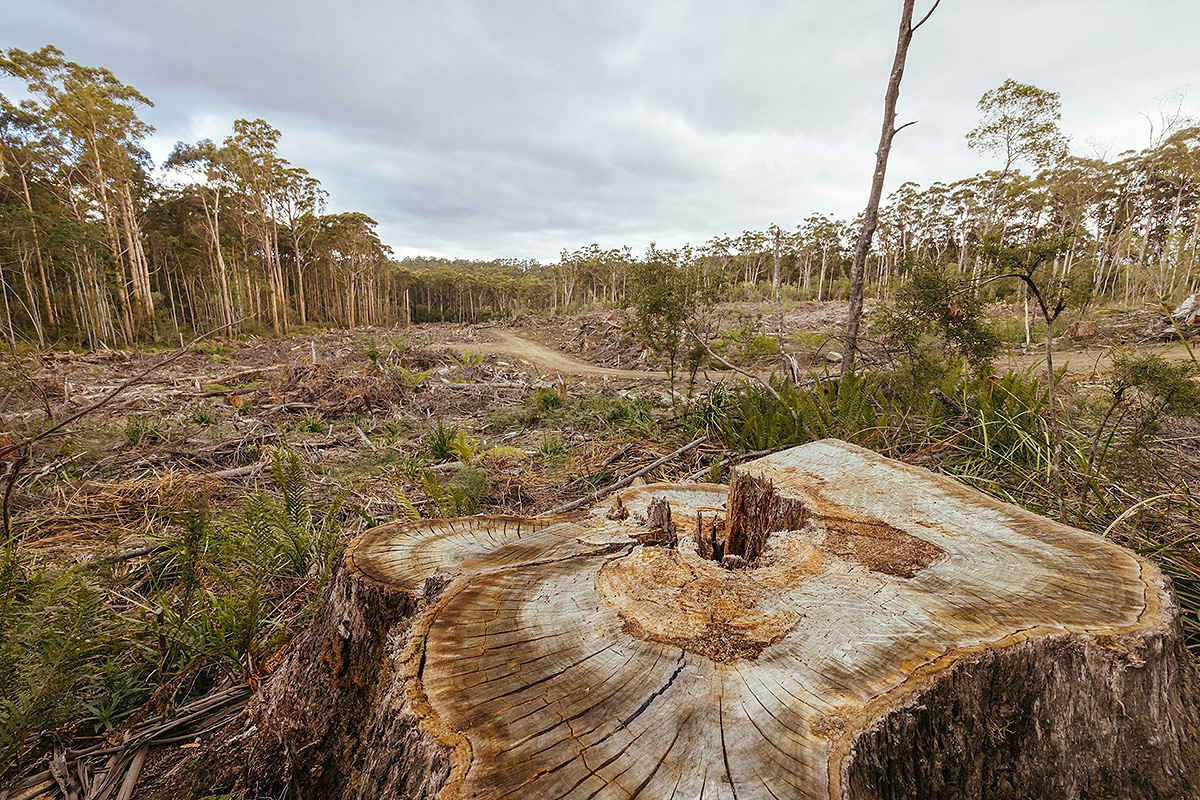
  • excluding native forest logging from Commonwealth oversight
  • plans to devolve environmental decision-making to states, with the pro-mining and anti-regulation Western Australian government the first in line.

The original 500-page draft bill had areas of considerable uncertainty, such as requiring the minister to knock back developments if satisfied they would have “unacceptable impacts”. The idea was sound: create red lines where projects don’t have to be considered if damage to the environment would be too great. But the definitions were confusing and subjective.

For instance, an “unacceptable impact” on a critically endangered species was defined as one that “seriously impairs, will seriously impair, or is likely to seriously impair” species viability. But “seriously impair” was nebulously defined as “something if, compared to the action not being taken, the impact results in the thing being seriously altered for the worse”. Industry criticised this for setting the bar too low, fearing it would stop projects in their tracks.

What concessions have the Greens secured?

While the Labor-Greens deal means the bills can now pass the Senate, it hasn’t fundamentally changed what was introduced by Labor. The concessions include:

  • better protection for native forests
  • banning fast-tracking of new coal and gas projects
  • reining in ministerial discretion.

The Greens are claiming their major concession is the removal of a longstanding exemption for the logging industry for areas of native forest covered by Regional Forest Agreements. Forested areas under these agreements currently have no protection from federal environment laws.

Under the changes, these agreements will have to comply with the laws and meet higher standards within 18 months. The deal contains compensation for forestry workers. This is a clear win for the environment.

The Greens also secured modest progress on climate, but far short of their long-sought climate trigger, which was a non-starter for Labor.

Instead, the bill will be amended to remove coal and gas projects from fast-tracked approvals and to prevent the minister from declaring these to be projects to be in the “national interest”.

Crucially, the Greens claim the deal will tighten ministerial discretion. The original reforms said the minister “must be satisfied” a decision is “not inconsistent with” the National Environmental Standards. This gave the environment minister of the day wide leeway to depart from the standards and approve projects. The Greens are claiming a major win here by changing the language from “not inconsistent with” these standards to “consistent with”. This isn’t semantics – it’s a stricter legal test.

The amendments will also bring more land clearing under the environment assessment regime and allow the minister to declare some matters too important to be offset by paying into the new Restoration Contributions Fund. This could be a potentially important safeguard.

Wins for the Liberals?

In recent months, Watt has pitched these reforms as a win for the environment and for business, which would benefit from faster approvals. But businesses were wary of the nebulous concept of “unacceptable impacts”.

It looks like Liberal Senator Jonathon Duniam’s proposed changes to the definition of “unacceptable impacts” have been supported.

The definition of an “unacceptable impact” on a critically endangered species has been pared back to “seriously impairs […] viability”. This means projects can’t be knocked back if they are only likely to seriously impair viability.

“Seriously impair” has now been redefined as “something if, compared to the action not being taken, the impact results in an impairment or alteration of the thing that is of a severe nature and extent”. These are terms requiring subjective interpretation, but “severe nature” may make it harder to reject projects than “seriously altered for the worse”.

Will the new legislation stem the damage to nature?

The revised bill contains some key elements proposed by the scathing 2020 Samuel Review, such as provision for National Environmental Standards, while the concessions won by the Greens reduce ministerial discretion. Samuel described today’s deal as a “great balance” between environment and business concerns.

Much will be up in the air even after these laws pass. The government has only drafted two of the many environmental standards anticipated, one on matters of national environmental significance and one on environmental offsets. It remains to be seen whether these standards will improve decision-making, and they are also not yet finalised. Major questions around the interpretation of language in the new laws may need to be hashed out in future court proceedings.

The Greens were unable to remove Labor’s new “pay to destroy” from the laws. This is a significant concern, as the controversial ability for developers to pay into a restoration fund will likely be seen as the easy route. This mechanism is already up and running in New South Wales, with poor outcomes.

What now?

These reforms are the end of a tortuous process – and the start of another, far bigger, job. To be successful, they will need to be coupled with far greater public investment and rigorous enforcement.

The true test of these reforms will be whether we succeed in the ultimate act of conserving and recovering the wildlife and places Australians know and love.

The Conversation
Categories
Media Science communication

The Conversation: Out of alignment: how clashing policies make for terrible environmental outcomes

Hanna Taniukevich/Shutterstock

By Euan Ritchie (Deakin University) Catherine Lovelock (The University of Queensland) and Sarah Bekessy (RMIT University).

This article is republished from The Conversation under a Creative Commons license. Read the original article.

Policy alignment sounds dry. But think of it like this: you want to make suburbs cooler and more liveable, so you plant large trees. But then you find the trees run afoul of fire and safety provisions, and they’re cut down.

Such problems are all too common. Policies set by different government departments start with good intentions only to clash with other policies.

At present, the Albanese government is working towards stronger environmental laws, following the scathing 2020 Samuel review of the current Environment Protection and Biodiversity Conservation Act. The review noted planning, funding and regulatory decisions are “not well integrated or clearly directed towards achieving long-term environmental sustainability”.

Stronger laws are not a standalone answer. We must find ways to align government policies far better, so progress on one front doesn’t lead to a setback elsewhere. As the government prepares to announce once in a generation changes to our main environment laws, it must find ways to reduce these clashes.

Nature vs cities

All levels of government have policies aimed at increasing canopy cover and biodiversity in cities. How hard can it be to plant trees?

The problems start when you look for places to actually plant street trees. It’s common to encounter a wall of obstacles, namely, other policies and regulations. Fire prevention, human safety, visibility for road traffic and provision of footpaths and carparks are often legally binding requirements that can stymie this seemingly simple goal.

Most cities in Australia are now actually losing canopy cover rather than gaining more.

On the biodiversity front, urban sprawl is pushing many species and ecosystems to the brink of extinction.

What should we do when threatened species protection conflicts with new housing developments? Rusty Todaro/Shutterstock

Last year, conservationists rediscovered the grassland earless dragon on Melbourne’s grassy western fringes, which we had believed was extinct. Now we had a second chance to save it, in line with the Australian government’s pledge to stop extinctions.

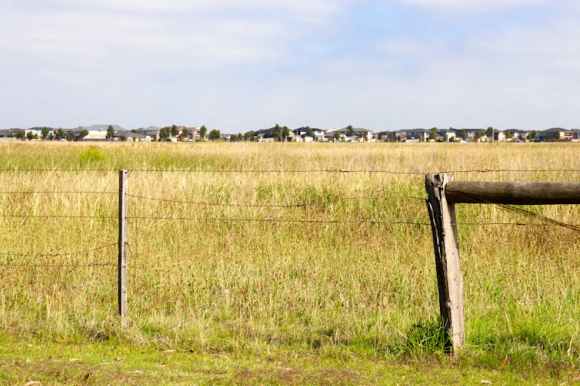
The problem? The grasslands where the dragon was found near Bacchus Marsh, just outside Melbourne, are zoned for housing. Only 1% of the grasslands ecosystems suitable for these reptiles is still intact, and much of it has been earmarked for housing.

From a housing point of view, the continued existence of the dragon now threatens plans for 310,000 homes.

If we had better policy alignment, we would look to achieve both goals: protect the dragon and build more housing through methods such as building sustainable midrise developments in established urban areas.

Protecting the reef while exporting LNG

Meanwhile, the Great Barrier Reef is bleaching again, the fifth bout in just eight years.

Almost all the extra heat trapped by greenhouse gases goes into our oceans, triggering marine heatwaves and bleaching. If the world’s largest living structure bleaches too much, it will begin to die, threatening its rich biodiversity, cultural heritage and industries such as tourism.

On the one hand, Australia wants to protect the reef and has funded efforts to boost water quality.

A LNG carrier departs the port of Gladstone, on the southern Great Barrier Reef. The cargo it carries will, when burned, trap more heat and lead to more bleaching of the reef. Ivan Kuzkin/Shutterstock

But on the other hand, supportive government policies contribute to our recent emergence as a top exporter of liquefied natural gas, which is 85–95% comprised of the potent greenhouse gas methane. Land clearing in the catchments of rivers which flow to the reef is ongoing due to policy loopholes, which adds more smothering sediment, nutrients and pollutants to the reef’s woes.

The shipping sector only has to abide by a voluntary code to avoid invasive species arriving in the ship’s bilge water, even though they could be carrying the tissue loss disease devastating reefs in the Caribbean and Florida.

Renewables versus biodiversity

Calls to fast-track clean energy projects and stop them being held up by environmental approvals are risky. We could tackle one crisis (climate change) by making another worse (biodiversity and extinction).

Australia has destroyed nearly 40% of its forests since European colonisation, with much of the remaining native vegetation highly fragmented. Because this clearing has already happened, it should be entirely possible to build renewables without damaging the homes of native species.

In fact, we can do better – we can take degraded farmland, build solar on it and restore low-lying native vegetation around it to actually boost biodiversity. Requiring new renewable projects to be nature positive would encourage creative approaches to delivering infrastructure while benefiting nature.

Solar versus nature? Why not solar and nature. FenrisWolf/Shutterstock

Policy clashes abound

There is, sadly, no shortage of examples of clashing policies:

Why the lack of alignment?

For politicians, the environment ministry is often seen as a poisoned chalice.

Within government, departments often pull in different directions. When resource and agriculture plans conflict with environmental concerns, it’s not hard to guess which side tends to win. Case in point: the recent plans to remove gas project oversight from environment minister Tanya Plibersek in favour of resources minister Madeleine King.

How can we make policies work together better for the environment? Governments should sift through all relevant policies and regulations to make sure nature-positive approaches are embedded. Requiring development proposals to benefit nature would go a long way to reducing environment-economy conflict. After all, most businesses are now looking into ways of becoming nature-positive.

Too often, environment policies are seen as opposed to those promoting the economy, jobs and industry. But they don’t have to clash.

Tremendous opportunities exist for a safer, more sustainable future, if we address current causes of friction and take a big picture approach to how we develop our policies.

The Conversation

Categories
Publications Research

Predators help protect carbon stocks in blue carbon ecosystems

Authors: Trisha B Atwood, Rod M Connolly, Euan G Ritchie, Catherine E Lovelock,
Michael R Heithaus, Graeme C Hays, James W Fourqurean and Peter I Macreadie

Published in: Nature Climate Change, September 2015

Tiger Shark
Tiger sharks in Shark Bay, Western Australia, create a landscape of fear where sea turtles and dugongs preferentially forage in seagrass microhabitats that are lower in predation risk and have allowed Cabon stocks. Image credit Albert Kok via Wikimedia Commons.

Abstract

Predators continue to be harvested unsustainably throughout most of the Earth’s ecosystems.

Recent research demonstrates that the functional loss of predators could have far-reaching consequences on carbon cycling and, by implication, our ability to ameliorate climate change impacts. Yet the influence of predators on carbon accumulation and preservation in vegetated coastal habitats (that is, salt marshes, seagrass meadows and mangroves) is poorly understood, despite these being some of the Earth’s most vulnerable and carbon-rich ecosystems.

Here we discuss potential pathways by which trophic downgrading affects carbon capture, accumulation and preservation in vegetated coastal habitats.

We identify an urgent need for further research on the influence of predators on carbon cycling in vegetated coastal habitats, and ultimately the role that these systems play in climate change mitigation.

There is, however, sufficient evidence to suggest that intact predator populations are critical to maintaining or growing reserves of ‘blue carbon’ (carbon stored in coastal or marine ecosystems), and policy and management need to be improved to reflect these realities.

Atwood TB, Connolly RM, Ritchie EG, Lovelock, CE, Heithaus MR, Hays GC, Fourqurean JM, Macreadie PI (2015) Predators help protect carbon stocks in blue carbon ecosystems, Nature Climate Change PDF DOI