
I’ve just returned from a glorious two-week family holiday in sunny north Queensland. How I’ve missed the place, so much cool wildlife everywhere! Among the highlights were spotting a male cassowary with three chicks (my son is currently obsessed with these oversized birds), watching platypus swim from our front veranda on the Atherton Tablelands — if you’re looking for a biologist’s paradise you can’t go wrong here — and taking the kids spotlighting for NQ’s arboreal mammals. We missed out on tree kangaroos, alas, but we did see green ringtail, lemuroid, and Herbert River ringtail possums, coppery brushtail possums and long-nosed bandicoots. And at age five, Rohan seems to be well on his way to a successful career in field ecology, spotting the eye-shine of many possums himself.
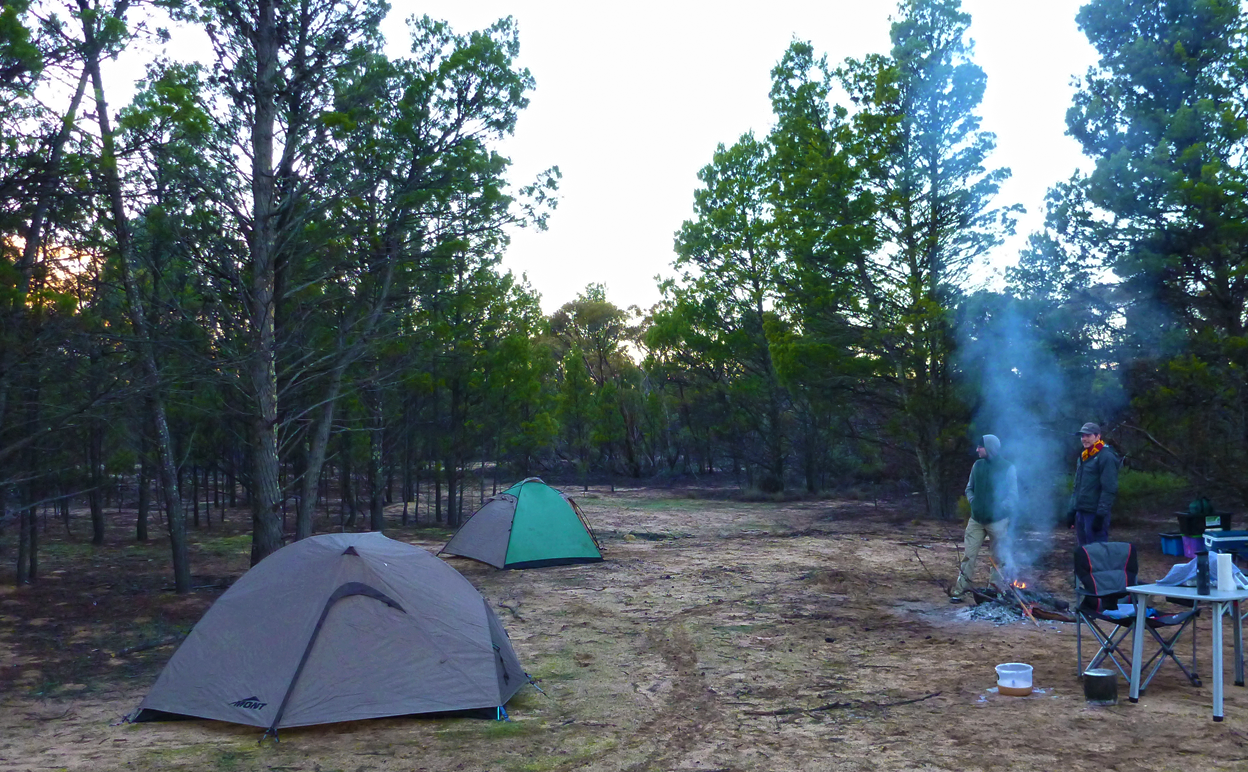
But enough on holidays; what I’d like to update everyone on is the first results to roll in from our Big Desert work. As I’ve written previously, this is an incredibly remote and largely unstudied region, so there’s much to be discovered and learned. What have we found so far? Well, I’ll let the video, below, do most of the talking, but what’s most exciting is that we’ve confirmed there is a dog population in the park, and some individuals appear to look very much like dingoes. We always suspected this, but it’s nice to have positive confirmation. Another interesting result is that goats were not recorded on any of the cameras so far, as compared to the Murray Sunset National Park, to the north, where goats are very abundant, but dogs/dingoes are absent. It’s early days, the habitats of Murray Sunset and the Big Desert / Wyperfeld region are somewhat different, and I’m sure we’ll find some goats in the region soon enough, as they’ve been recorded there. But, it does suggest dingoes may be playing a role in keeping goat numbers down, as we know they do from other studies conducted in other parts of Australia .
Some may remember the Victorian Government recently reviewed the evidence for the existence of big cats; the legendary Black Panther. Well, we may just have found it ourselves! (second-last clip in the video). On a serious note though, cats appear to be relatively common, and great variation exists in their morphology (as seen on the videos). Cats are known to be a major factor behind the extinction of many native species, and new research also shows how they have large impacts on wildlife through the spread of toxoplasmosis. We’re keen to understand more about the role of foxes and dingoes in suppressing cats and therefore disease transmission, but more on that later…
No rest for the wicked. I’m off to Belfast next week to attend the 11th International Mammalogical Congress. I’ll be speaking about the dingo barrier fence and co-chairing a symposium on trophic cascades, ecological restoration and conservation of mammals. I’m really looking forward to a week of listening to mammal research from around the world, and perhaps just a wee Guinness or two as well.





![99-year private leases granted by the Victorian Government open the door to inappropriate development in national parks, such as Wilsons Promontory. Image by Steve Bennett [CC-BY-SA-3.0-2.5-2.0-1.0] via Wikimedia Commons.](https://euanritchie.org/wp-content/uploads/2013/06/wilsonspromnatpark_wikimediacommons.png)
![Kakadu National Park – our biggest and possibly most important national park – is a global conservation embarrassment. Image by Cgoodwin [CC-BY-3.0] via Wikimedia Commons](http://commons.wikimedia.org/wiki/File:Kakadu_brumbies.jpg)
![Kakadu National Park. Image: Thomas Schoch [CC-BY-SA-2.5], via Wikimedia Commons](http://upload.wikimedia.org/wikipedia/commons/d/d9/Yello_Water_Kakadu_National_Park_Australia.jpg)
 Applied ecology and conservation research group