Categories
Research

From the Big Desert

One of the main reasons this website exists is to increase outreach, or put more excitingly, to share with everyone the super cool conservation stuff I’m passionate about and fortunate enough to do as part of my job!

I’ve just got back from one of my new favorite places, Victoria’s Big Desert / Wyperfeld region. This region is about as remote as Victoria gets. It’s a large, relatively intact section of Mallee heath that is characterised by seemingly endless white sand and large dune systems.

The Big Desert / Wyperfeld system is vast and stunning!

On first glance, one could be forgiven for thinking this system is ‘simple’. However, its faunal diversity, particularly its reptiles, is quite outstanding, and the diversity of plants is well known. However, my reason for visiting this region recently was not to look at reptiles or admire the floristic diversity, but rather to examine other curious inhabitants of the region. Predators and herbivores, in particular dingoes/wild dogs and foxes, and kangaroos and goats, respectively.

Just what story does the owner of these footprints have to tell?

The aim is to examine what areas of the landscape dogs are using and whether this in turn affects the distribution and abundance of kangaroos and goats, as we know occurs elsewhere in Australia. This is important work, as the dog population in this part of Victoria is unlikely to consist of ‘pure’ dingoes, and we know little about what ‘wild dogs’ do. The question is: what ecological function do these dogs perform?

Of course, dogs can also have impacts on livestock, particularly sheep, so we’ll be looking at what dogs are eating too (through various means including scat analysis) and how they use the public- and private-land interface (along a gradient from outside to inside the Big Desert / Wyperfeld park region).

Two honours students (Thomas Healey and Jessica Lawton) will also be starting work in the region very soon. Tom will be examining predator-predator interactions, and Jess, the response of small mammals to the presence of predators and fire. Together these studies will build on previous research in the region. And, as always with this type of work, we’ll be looking for eager volunteers to help us out.

Lastly, a piece of advice, when you travel to the Victorian desert in June, don’t forget your sleeping bag, imagine how cold that would be…!

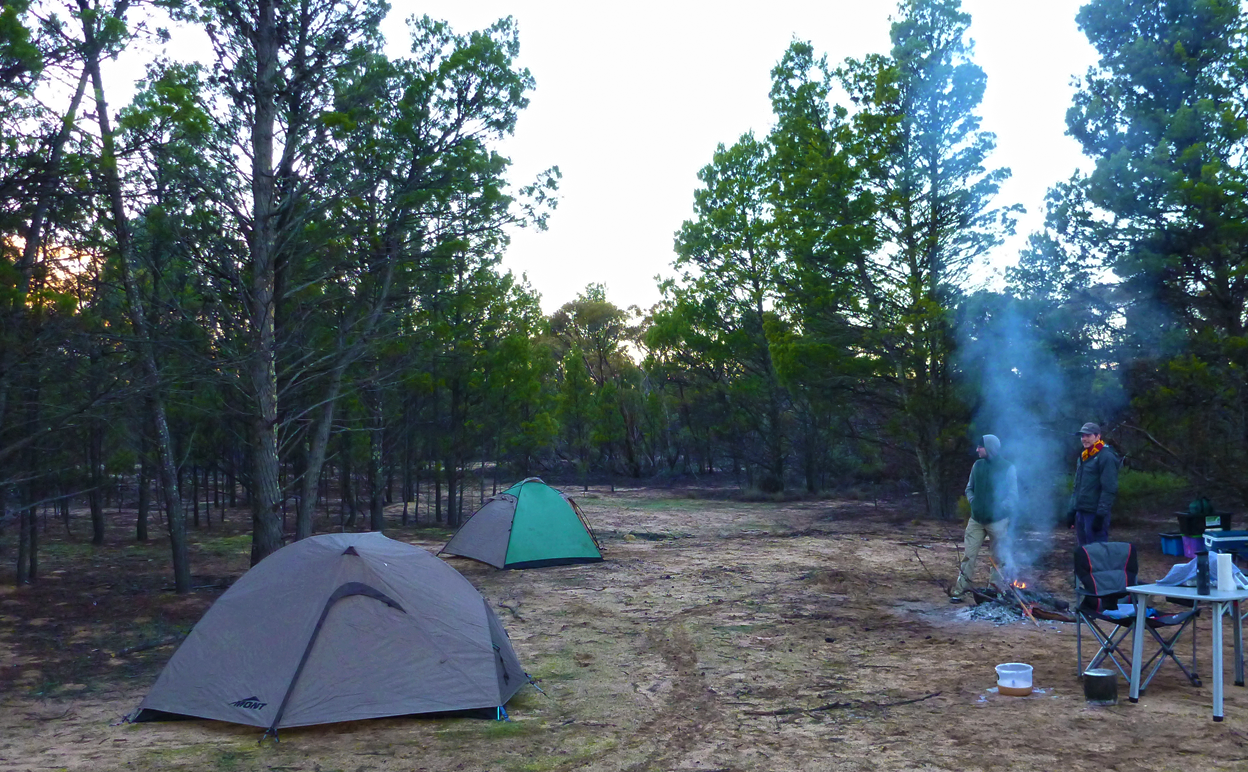
Even Mallee roads get busy.
It was cold up there, ice-on- the-windscreen cold. Lucky I was prepared, oh wait…
Categories
Research Uncategorized

Fully funded on Pozible!

I’m thrilled to announce that we have reached our $20,000 funding target on Pozible, a little over 48 hours ahead of deadline.

A huge thank you to everyone who supported the project, helped to spread the word, or made a donation — large or small.

PozibleFullyFunded

We will now be able to begin our project: the first comprehensive camera trapping study of animals in the spectacular and remote Torricelli Mountain range in Papua New Guinea. We will build on the already amazing work of the Tenkile Conservation Alliance (TCA) and strengthen the alliance’s partnership with Deakin University.

This is something tangible we can do to help arrest the extinction crisis. Engendering hope is critical.

It has been wonderful to see science and conservation capturing the public’s imagination. I really hope the crowd funding model continues to increase the connection between the public and the scientific communities.

My first foray in to crowd funding has been exhilarating, humbling and exhausting… all at once!

One more thing: if you haven’t pledged but would like to help out, there is still time. More dollars means more cameras, which means more data. Or, if you would like to help out my Deakin colleagues, there are still 5 exciting projects that need support.

Again, on behalf of myself and the TCA, a huge thank you. We are very, very excited to get cameras out and start discovering just what’s out there!

Categories
Research

80% funded on Pozible. Four days to go!

Pozible80percentFunded4DaysToGo

Categories
Media

The Guardian: We should not play Russian roulette with Australia’s national parks

Recent laws allowing hunting and logging in our parks are misguided. Our reserves protect biological diversity and shouldn’t be used otherwise.

99-year private leases granted by the Victorian Government open the door to inappropriate development in national parks, such as Wilsons Promontory. Image by Steve Bennett [CC-BY-SA-3.0-2.5-2.0-1.0] via Wikimedia Commons.
The Victorian Government has recently moved to allow logging, grazing, shooting, and commercial development in national parks, and fishing in marine sanctuaries. These moves devalue the primary objective of parks — protecting biodiversity and ecosystem function.

I added my voice to that of 16 eminent Australian ecologists to draw attention to this extremely important issue.

Read the full article (and comments) at The Guardian website.

Categories
Media

Deakin University Life and Environmental Science news: Keeping the conversation going about extinction

I was featured today on the School of Life and Environmental Science’s news page.

I’ve been pretty busy getting the message out there on mainstream and social media lately. The message: extinction affects us all. Because of our impacts, we are losing thousands of species each year, leaving us culturally, economically, emotionally and environmentally the poorer. Society’s biggest challenge — and arguably failure — is the continuing loss of species from Earth.

The article shone a light on some of my recent media presence, from my opinion piece on The Conversation to a tweet that Stephen Fry shared with his six million followers.

Categories
Media

The Conversation: Making national parks truly national

Australia boasts over 500 national parks covering 28 million hectares of land, or about 3.6% of Australia. You could be forgiven for thinking we’re doing well in the biodiversity-conservation game.

But did you know that of those more than 500 national parks, only six are managed by the Commonwealth Government?

Kakadu National Park – our biggest and possibly most important national park – is a global conservation embarrassment. Image by Cgoodwin [CC-BY-3.0] via Wikimedia Commons
Federal Environment Minister Tony Burke has proposed extending the Commonwealth’s power to veto potentially high-impact activities like logging, grazing and mining proposed in national parks.

As ecologists and conservation scientists, we couldn’t agree more with the intent of this proposal, although we have several recommendations and caveats.

Read more at The Conversation.

Categories
Research

Tenkile updates

I’ve been busy garnering support and raising awareness for our crowd funding campaign.

Check out the full update on Pozible.

In short:

  1. The Tenkile Conservation Alliance opened its new research centre.
  2. Polyglot extraordinaire Stephen Fry threw his weight (and that of his six million Twitter followers) behind the project.
  3. I’ve continued my media assault.
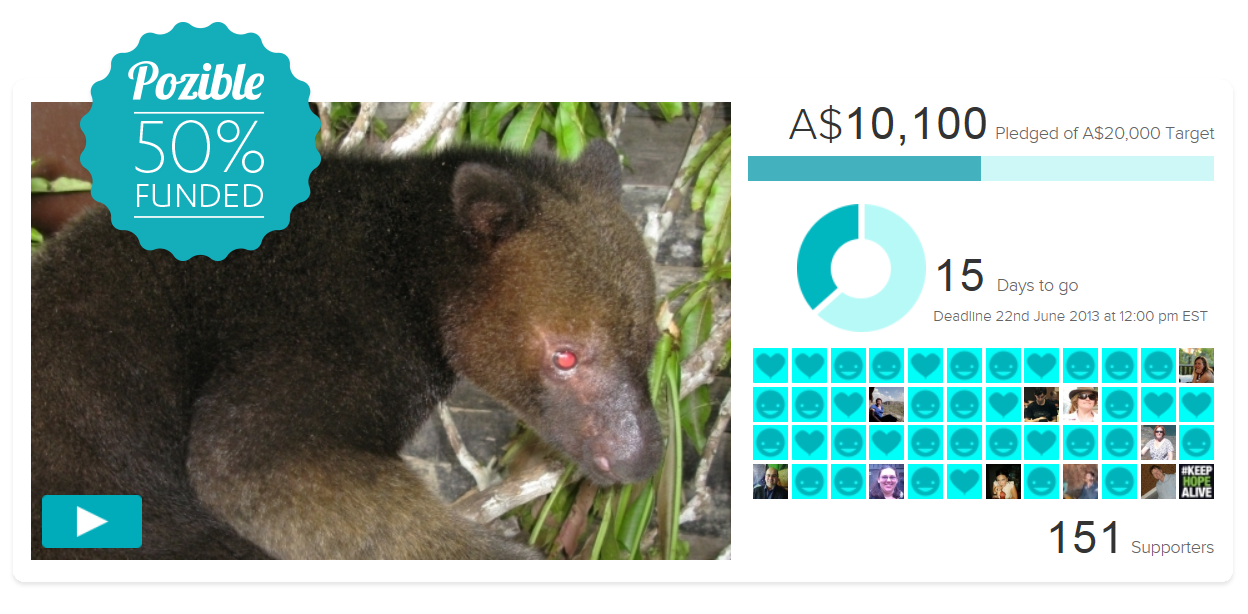
  4. And, we hit the $10,000 mark: 50% funded on Pozible.

Please continue to spread the word and thanks again for all your support.

Categories
Research

50% funded on Pozible!

Pozible50percentFunded

Categories
Media

Mongabay.com: Saving the Tenkile – an expedition to protect one of the most endangered animals you’ve never heard of

Mongabay.com is one of the world’s most popular environmental science and conservation news sites and publisher of Tropical Conservation Science, a peer-reviewed, open-access academic journal that seeks to provide opportunities for scientists in developing countries to publish their research in their native languages.

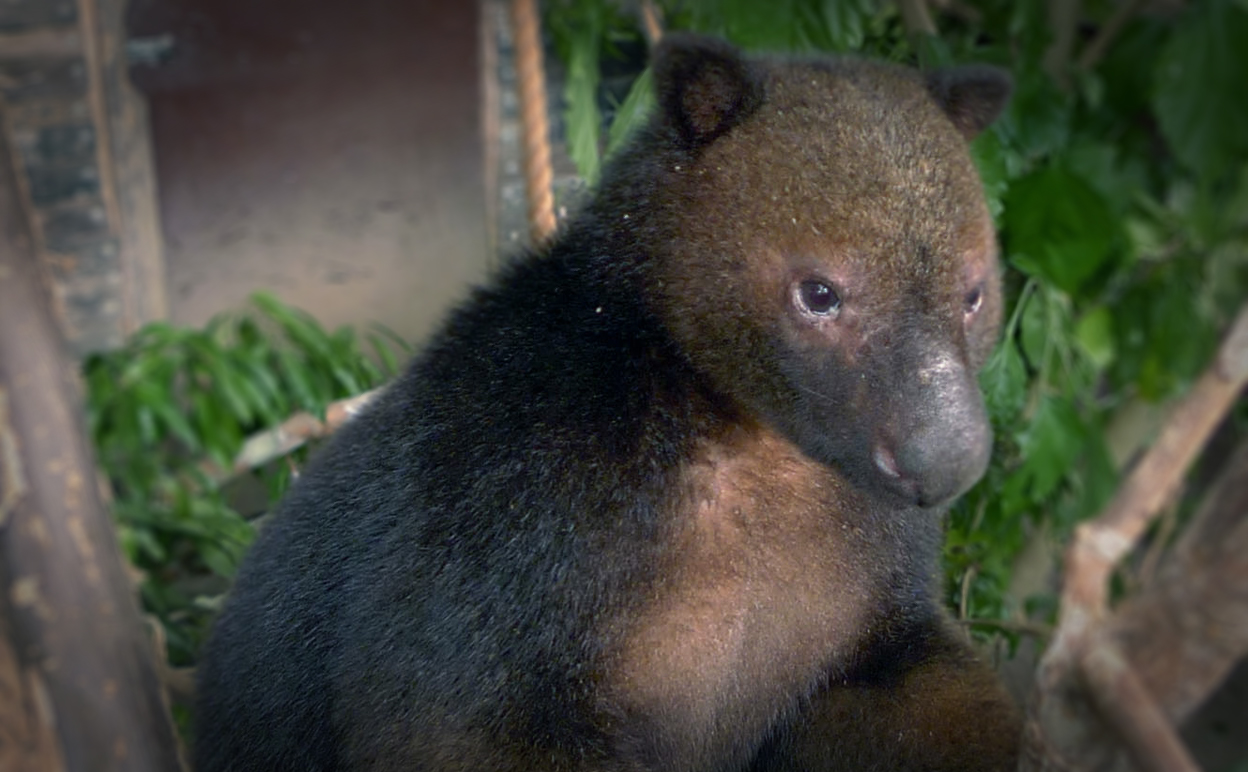
The tenkile, or Scott's tree kangaroo (Dendrolagus scottae). Image: Tenkile Conservation Alliance
The tenkile, or Scott’s tree kangaroo (Dendrolagus scottae). Image: Tenkile Conservation Alliance

Here’s my interview with Jordana Dulaney on the decline of the tenkile, and my new project to conserve the species.

Categories
Research

Twitter: Stephen Fry

Wow: An endorsement from Stephen Fry!

Help us to reverse the extinction crisis and save some of Papua New Guinea’s most special and irreplaceable animals.

Pledge your support at pozible.com/tenkile

Categories
Media Research

ABC Radio: Talking tenkiles with Tony Peacock

Tony Peacock, CEO of the Cooperative Research Centres Association, was kind enough to give me a voice on ABC Radio today with Alex Sloan.

In this interview we talk about the potential of crowdfunding for Australian research, and the role it may play in my own project: discovering the mountain mammals of the Papua New Guinea mountains.

Categories
Media

Radio National Bush Telegraph: Managing national parks

Tensions between state and federal government are rising over the issue of how to manage national parks.

Today I chatted with Radio National’s Cameron Wilson about state / federal relations when it comes to our natural parks.

via the ABC Radio website.

Categories
Media

The Wire: Australia’s National Parks under threat

Experts are warning Australia’s National Parks are facing a ‘death by a thousand cuts’. As protections against grazing, hunting and logging within the parks relax, we are at risk of finding out first-hand just how fragile these eco-systems are, and why they desperately need protecting.

Professor Bill Laurance and I speak to The Wire’s Graham Backhaus.

via The Wire

Categories
Media

The Conversation: Our national parks must be more than playgrounds or paddocks

Kakadu National Park. Image: Thomas Schoch [CC-BY-SA-2.5], via Wikimedia Commons
It’s make or break time for Australia’s national parks.

National parks on land and in the ocean are dying a death of a thousand cuts, in the form of bullets, hooks, hotels, logging concessions and grazing licences. It’s been an extraordinary last few months, with various governments in eastern states proposing new uses for these critically important areas.

Read more at The Conversation

Categories
Media

Einstein A Go-Go: extinction, crowd funding and tree kangaroos

Did you miss today’s show on Triple R’s Einstein A Go-Go about extinction, crowd funding and trees kangaroos?

Don’t worry, you can listen to it here.

Categories
Media

Ideas for Sustainability: Tree kangaroos and crowd-funding follow-up

Funding is getting harder and harder to find right? And, the future doesn’t look great, well, at least in Australia. But, before you get depressed and start contemplating another career there is a way we can find funding to undertake important research. It doesn’t rely on governments or funding bodies, it relies on you, me, anyone! It’s called crowd funding.

Read my guest post on Professor Joern Fischer’s blog: Ideas for Sustainability

Categories
Research

Papua New Guinea’s mountain mammals, a crowdfunding campaign

The Papua New Guinean mountains are home to amazing and endemic animals including the critically endangered Tenkile and Weimang tree kangaroos. Many of this region’s fauna are under severe threat of extinction.

Our project, a partnership between Deakin University and the Tenkile Conservation Alliance is the first comprehensive camera-trapping study of animals in the spectacular and remote Torricelli Mountain range. We will use automated, motion-sensing cameras to collect crucial information about these animals to establish the habitats that are most important – critical information if we are to save them.

I’m excited to be part of an Australian university first – using ‘crowdfunding’ to raise money for research. Our goal is $20,000, and we’re using the Australian crowdfunding website Pozible.

Please consider donating or, equally important, help us to spread the word.

Pozible: Discovering Papua New Guinea’s Mountain Mammals

Facebook group: Discovering Papua New Guinea’s Mountain Mammals

Deakin University Newsroom: Deakin Makes Research Pozible

Tenkile Conservation Alliance 

Categories
Media

ABC Radio: Rifles and spotlights threatened endangered PNG tree kangaroos

This morning I spoke on air with Geraldine Coutts about the threats to Papua New Guinea’s endangered tree kangaroos, my research plans, and the new crowd funding campaign to raise the capital.

Stream the interview from ABC Radio Australia

Categories
Media

Australian Geographic: Extinction – is it really that bad?

Perhaps society’s biggest challenge, and arguably our largest failure, is the continuing loss of species from Earth.

We still have little idea of how many species exist on Earth. Only a fraction have been formally described, and even fewer assessed for their conservation status.

How do we conserve what we don’t know exists?

Thylacinus cynocephalus, the extinct Tasmanian Tiger
Thylacinus cynocephalus, the extinct Tasmanian Tiger, or Thylacine

If Earth were a house, it would be as though we had listed the contents of only one room, and even then were not aware of their true value, while simultaneously the house was being demolished.

Read my article in Australian Geographic

Categories
Media

ABC Radio: Euan Ritchie and animal extinction

Species extinction happens and will continue to happen so should we care about it?

The most notable extinct species in Australia is the Tasmanian Tiger and its demise did have wide reaching impact on the local ecology.

I spoke to the ABC’s Chris Coleman to discuss this issue.

Download the MP3

More at ABC Riverina