Categories
Publications Research Science communication

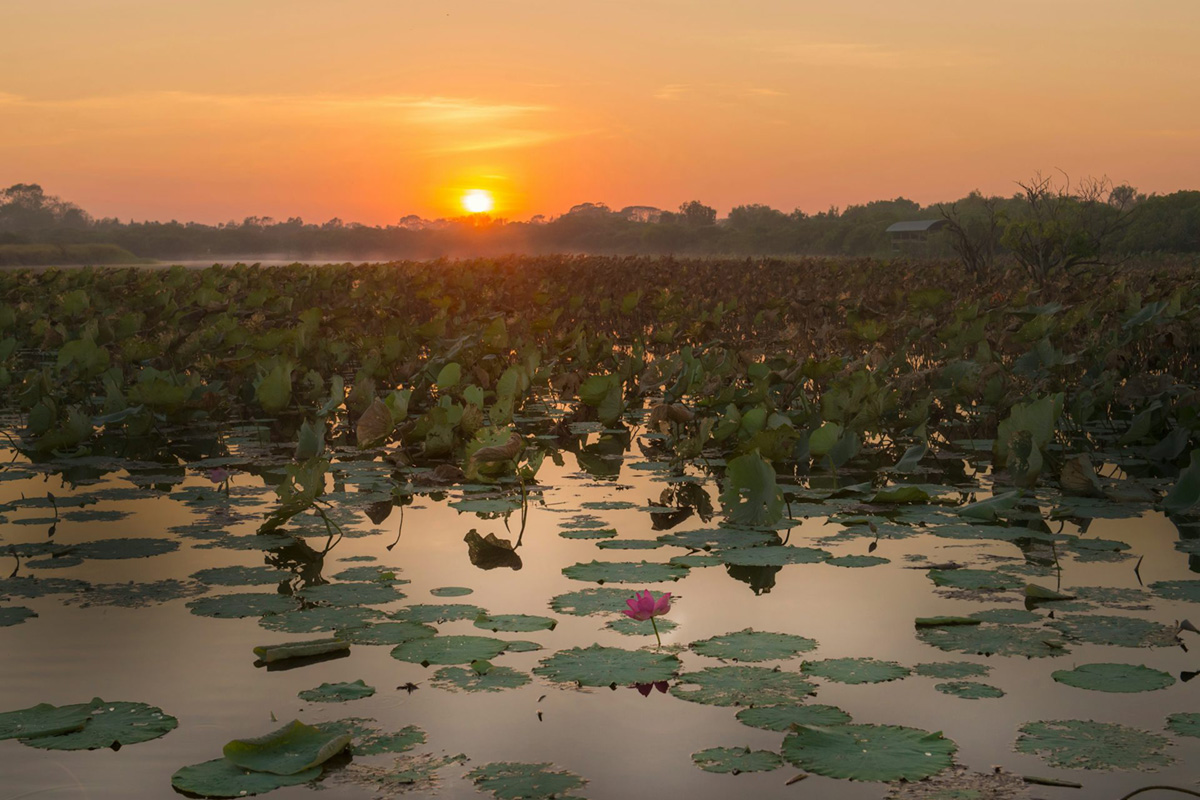
Nature under fire in Australia’s tropical savannas

Authors: Brett Murphy, John Woinarsk and Euan G Ritchie

Published in: Landscape Architecture Australia

The tropical savannas of northern Australia are highly vulnerable to changes in climate as well as to more direct human impacts.

Addressing these challenges will require urgent, coordinated action at all levels.

Murphy B, Woinarsk J, Ritchie EG (2025) Nature under fire in Australia’s tropical savannas. Landscape Architecture Australia PDF LINK

Categories
Science communication The Conversation

The Conversation: Dingoes are not domestic dogs – new evidence shows these native canines are on their own evolutionary path

By Kylie M Cairns (UNSW Sydney), Bradley Smith, (CQUniversity Australia), Euan Ritchie (Deakin University) and Thomas Newsome (University of Sydney).

This article is republished from The Conversation under a Creative Commons license. Read the original article.

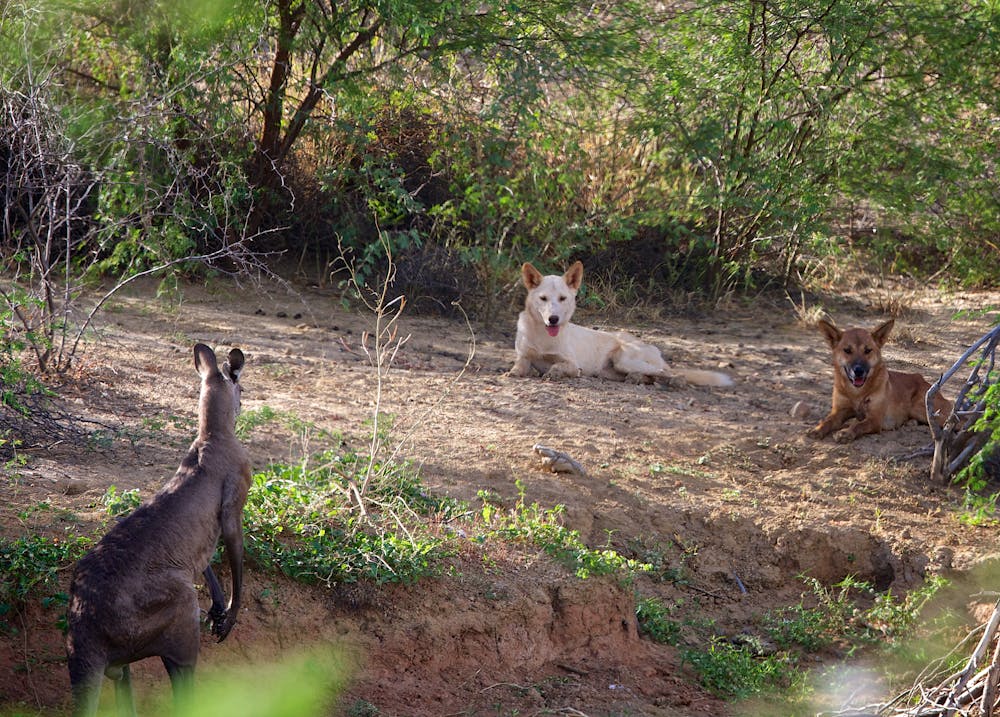
For decades, scientists, policymakers, graziers and land managers have been locked in a surprisingly high-stakes debate over what defines a dingo. Are these wild canids their own species? Or are they simply feral dogs?

The intensity of the debate can seem baffling. But the naming of animals influences how they are perceived and managed. The dingo debate has very real consequences for conservation laws, cultural recognition and respect, and the future of one of Australia’s iconic animals.

Australia’s wild canines have been on their own evolutionary path for thousands of years. As a distinct lineage, they should be recognised in their own right as a species or subspecies. They are not Canis familiaris, the domestic dog. They should be named either Canis dingo or Canis lupus dingo.

Species aren’t always in neat boxes

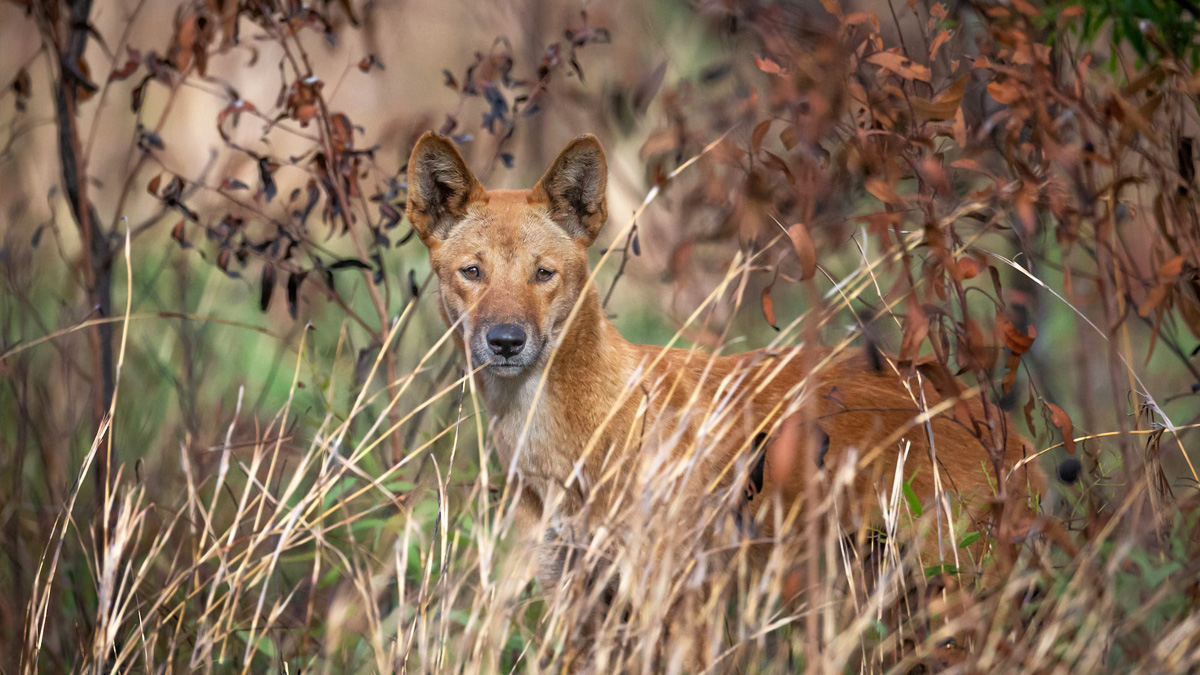
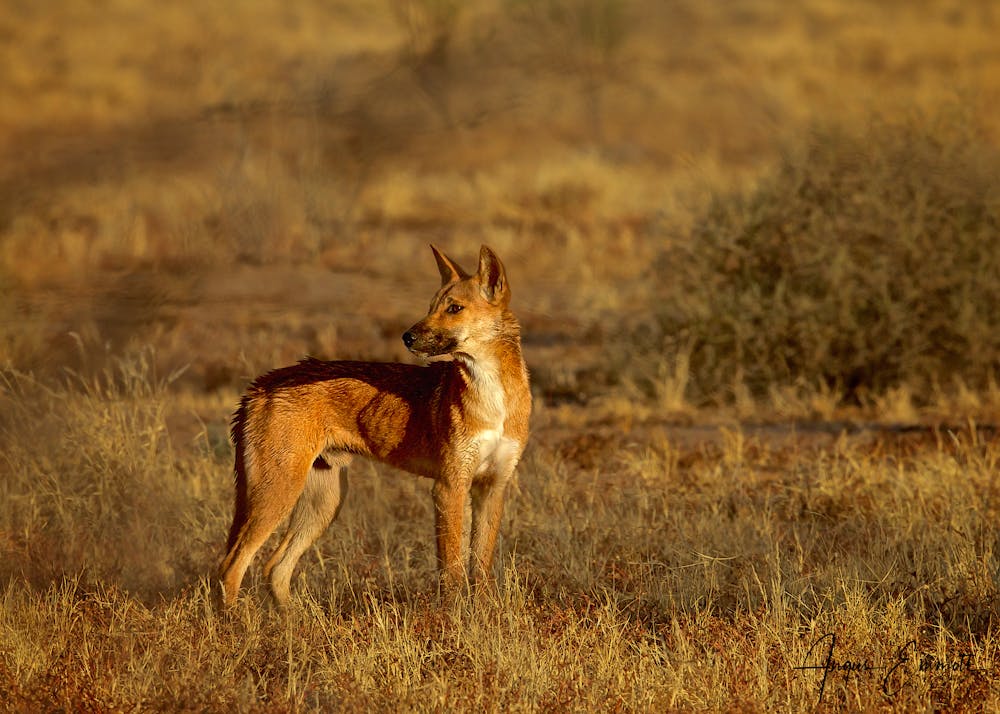
A typical ginger dingo in the Strzelecki desert, South Australia.
Matthew Brun, CC BY-ND

In evolutionary terms, what matters is the trajectory. Did human contact fundamentally alter the appearance, biology and behaviour of the species, locking it into a domestic lifestyle? Or did human influence have little effect, meaning the species has been shaped primarily by natural selection in the wild?

Do dingoes meet the criteria to be considered taxonomically distinct?

Many modern dog breeds such as pugs have been bred for specific body shapes and traits rendering them less likely to survive in the wild by themselves.
Abuk Sabuk/Wikimedia, CC BY

Our research shows how the four conditions have been met to consider dingoes separate:

1. Reproductive isolation

Dingoes have been separated from other Canis lineages for 8,000-11,000 years. Genetic studies show dingoes have little contemporary interbreeding with domestic dogs, even when they live in the same areas. While all Canis species can interbreed and produce fertile offspring, differences in breeding seasons and behaviour act as natural barriers. Unlike dingoes, domestic dogs rarely establish wild, self-sustaining populations.

2. Genetic distinctiveness

3. An independent evolutionary lineage

Dingoes have carved out their own ecological niche in Australia’s unique environments, from deserts to snowy mountains. They have developed separate traits such as hyperflexible joints and a single breeding season over autumn and winter. By contrast, humans have heavily shaped the evolutionary path of domestic dogs, making them reliant on us.

4. Clear up whether dogs found in South-East Asia are dingoes

What’s in a name?

The question over how dogs evolved is not yet resolved. Some taxonomists believe dogs are a subspecies of wolf, while others disagree. Given this uncertainty, giving dingoes a unique scientific name can be done in two ways.

But if dingoes are not distinct from wolves, the correct name would be Canis lupus dingo. This would treat it as a subspecies of wolf, while still acknowledging its wild lineage separate to domestic dogs.

The name of the dingo matters

There is real power in the name of a species.

Under some state laws, dingoes are defined as “wild dogs”. This means dingoes are targeted for lethal control – even in many national parks. If treated as a domestic dog, dingoes can be ineligible for official threatened species lists.

As a result, the species is often overlooked for targeted conservation, while its culturally significant role for many First Nations peoples is often not recognised nor respected.

Defining dingoes as a distinct species or subspecies would allow governments to differentiate them from domestic dogs in laws, policies and conservation programs, and align western science with First Nations knowledge holders who have long distinguished between dingoes and dogs.

Ending decades of confusion will take work

Dingoes are culturally important for many First Nations peoples. This is a black and tan Wilkerr (the name used by Wotjobaluk peoples in northwestern Victoria) in Wyperfeld National Park.
Big Desert Dingo Research, CC BY-NC-ND

To clear up long-running disagreement over the dingo, we believe the time has come for an independent, evidence-based review by a national scientific body. This would bring together geneticists, ecologists, taxonomists and First Nations representatives.

This approach helped untangle similarly knotty problems overseas, such as the United States National Academies’ review to settle the taxonomy of red and Mexican wolves.

An Australian review could finally end decades of confusion for the dingo and ensure our laws reflect the most up-to-date scientific evidence.

Taxonomic debates might sound obscure. But this naming question will shape the future of one of Australia’s ecologically and culturally significant animals.

We believe the evidence shows the dingo is not a domestic dog – it’s on its own path. The question is whether Australia can accept this evidence.

The Conversation
Categories
Science communication The Conversation

The Conversation: Want to see Australia’s rare and remarkable species for yourself? Here are 10 standout spots

Brolgas (Antigone rubicunda) Uwe-Bergwitz/Getty

By Patrick Finnerty (Postdoctoral Research Fellow in Conservation and Wildlife Management, University of Sydney), Euan Ritchie (Professor in Wildlife Ecology and Conservation, School of Life & Environmental Sciences, Deakin University) and Rhys Cairncross (Ecologist and PhD Researcher, University of Sydney).

This article is republished from The Conversation under a Creative Commons license. Read the original article.

Australia is home to an extraordinary variety of wildlife, ranging from striking palm cockatoos to elusive mountain pygmy-possums and remarkable rat-kangaroos.

Most of us never get to see these creatures in real life – and that’s a real shame. Spending time in nature looking for wildlife is more than just a hobby – it’s a way to reconnect with the natural world and remember why it matters.

But how do you actually see these creatures for yourself? It’s often easier than you think.

As wildlife researchers, we’ve spent a long time in the field looking for wildlife. Here are ten standout locations where you have a good chance of seeing some genuinely remarkable Australian creatures – and tips on doing so without causing them stress or harming the environment.

1. Kutini-Payamu / Iron Range National Park, Queensland

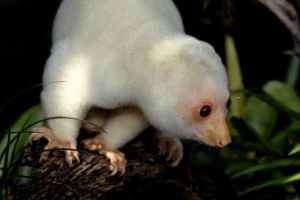
Located in far north Queensland, Iron Range is renowned for lush rainforests and rich wildlife. Here, you can spot majestic palm cockatoos, secretive green pythons, the striking green, red and blue hues of eclectus parrots and the adorable common spotted cuscus, a species of possum. These species also occur in Papua New Guinea, but the Cape York region is the only place to spot them in Australia.

Spotting tips: Walk the trails with binoculars during peak times for bird activity, early morning or late afternoon. At night, use a head torch to spot pythons, frogs, death adders, geckoes, rufous owls, cuscus and other nocturnal fauna.

2. Atherton Tablelands, Queensland

The shy spotted cuscus (Spilocuscus maculatus) lives in Australia’s far north. John Giustina/Getty

Inland from Cairns lies the Atherton Tablelands, an elevated region with a cooler climate and abundant and diverse wildlife. Here, you can spot vibrant Ulysses butterflies, shy platypuses and rare marsupials. Australia’s largest snake, the scrub python, can block entire roads as it warms itself up before the night’s hunt. Rare waterfall frogs can be spotted in fast-flowing falls.

Lumholtz’s tree kangaroos can be spotted hopping along limbs at Curtain Fig National Park and Mount Hypipamee National Park, alongside green ringtail possums and striped possums with elongated fingers to ferret out grubs.

Meanwhile, musky rat-kangaroos can be seen “gardening” on the forest floor at Lake Eacham and Lake Barrine. These are the smallest kangaroos and the only non-hopping species. Your best chance of sighting an elusive northern quoll or northern bettong is at Davies Creek National Park.

Spotting tips: Take guided night walks to glimpse nocturnal wildlife. Use a head torch with a red filter. Move quietly and regularly stop to listen for movement and animal calls. Binoculars are a must for spotting creatures high in the canopy.

3. Western Treatment Plant, Victoria

Surprisingly, Melbourne’s Western Treatment Plant is a mecca for birdwatchers. The huge wastewater facility is recognised as a wetland of international importance. Migratory birds such as sharp-tailed sandpipers and red-necked stints can be seen, while well-hidden bitterns, rare orange-bellied parrots and Australia’s dancing crane, the brolga, can be glimpsed feeding in dense heath during cooler months. Almost 300 species have been recorded here.

Spotting tips: Visit during migration seasons (spring and autumn) for the best birdwatching opportunities. Use binoculars, telescopes, or telephoto lenses for close-up views without disturbance. Visitors need a permit.

4. Lunawanna-allonah / Bruny Island and Wukaluwikiwayna / Maria Island, Tasmania

South of Hobart lies Bruny Island, a sanctuary for endangered species such as eastern and spotted-tailed quolls. Most of Tasmania’s endemic bird species are found here, such as green rosellas and forty-spotted pardalotes. Rare swift parrots can also be seen.

North of Hobart is Maria Island, an island national park where no cars are allowed – and where Tasmanian devils, bandicoots and wombats can readily be seen.

Spotting tips: Join guided tours to see nocturnal wildlife or birds in Bruny Island’s tall forests. Eastern quolls can often be seen at night on the main road when heading north from the island’s isthmus. Tasmanian devils and bandicoots can be seen around campsites at Maria Island at night.

5. Flinders, Portsea and Blairgowrie piers, Victoria

Snorkelling the cool waters beneath Flinders, Portsea and Blairgowrie piers is a revelation. Here live spectacular weedy sea dragons, sand octopuses, big-belly seahorses, ornate cowfish, smooth and eagle rays, Port Jackson and banjo sharks and vividly coloured nudibranchs.

Spotting tips: Snorkel or dive during calm weather for best visibility. Keep your distance from marine life for their safety (and yours).

6. Sydney Harbour and cliff tops, New South Wales

Sydney’s iconic harbour and surrounding cliffs are well suited for marine life enthusiasts. Every winter, humpback and southern right whales migrate past the headlands, while pods of bottlenose dolphins can be seen year-round. White-bellied sea eagles, Australasian gannets and short-tailed shearwaters add to the spectacle in the skies.

Spotting tips: Join whale-watching cruises between May and November for the best chance. Clifftop spotting is best done with binoculars from Royal National Park, North Head, Clovelly and The Gap.

7. Binybara / Lee Point, Northern Territory

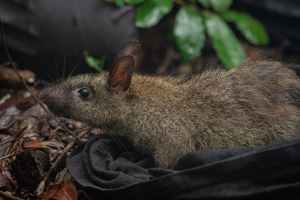
The black-footed tree-rat (Mesembriomys gouldii) is a clever native rodent with a knack for life in the trees. François Brassard, CC BY-NC-ND

Around 200 bird species have also been recorded here. Flocks of great knots, eastern curlews and grey-tailed tattlers feed on the mudflats, while the woodlands are home to the dazzling colour of Gouldian finches and the charismatic blue-winged kookaburra.

Spotting tips: Visit at night to see the tree-rat moving between trees, or come at low tide to watch thousands of shorebirds feeding. Binoculars will be invaluable.

8. Wadjemup / Rottnest Island, Western Australia

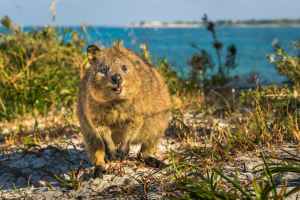
The ‘smiling’ quokkas (Setonix brachyurus) on Rottnest Island have become globally famous. Posnov/Getty

Offshore from Perth, Rottnest Island is rightly famous for its smiling quokkas. But other unique species such as King’s skink and venomous dugites can be seen here too, while osprey nests occupied for decades can be seen on rock stacks. The reefs around the island have WA’s southernmost coral.

Spotting tips: Cycling is the best way to explore different habitats on the largely car-free island. Keep your distance from quokkas and other wildlife to ensure they stay wild.

9. Kunama Namadgi / Kosciuszko National Park, New South Wales

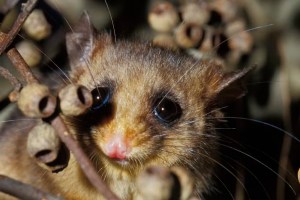
Mountain pygmy possums (Burramys parvus) are hard to spot – but the thrill of seeing these tiny, secretive marsupials is hard to beat. Jason Edwards/Getty

Australia’s highest peaks are home to the nation’s most remarkable alpine wildlife. Birdwatchers can spot gang-gang cockatoos feeding in eucalypts, while lucky hikers might glimpse an alpine dingo crossing a snow-dusted plain, or see a strikingly coloured Corroborree frog in a bog or fen.

This is the only place in the world where you can encounter a critically endangered mountain pygmy-possum. These tiny marsupials hibernate under winter snow and emerge to feed on bogong moths in spring.

Kosciuszko is also home to the native smoky mouse and – remarkably – to Leadbeater’s possum, long thought to be confined to Victoria’s Central Highlands.

Spotting tips: For the best chance of spotting a mountain pygmy-possum, visit between late spring and early summer when the snow has melted. Stick to alpine boulder fields such as those around Charlotte Pass and Mount Kosciuszko. You may need to camp overnight to see nocturnal possums and the smoky mouse. Binoculars and patience are essential to glimpse these shy species.

10. Karta Pintingga/Kangaroo Island, South Australia

Southwest of Adelaide lies the large Kangaroo Island, home to echidnas, tammar wallabies, a rare subspecies of the glossy black-cockatoo and Kangaroo Island dunnarts. Koalas are common. While the island’s isolation has protected these species, the 2020 megafires caused much damage. Wildlife is now bouncing back.

Spotting tips: Explore national parks and conservation areas with a local guide. Observe from a distance.

Take care of wildlife

Wildlife spotting has to be done with care. Think of yourself as a guest in someone else’s home.

Keep a respectful distance, don’t touch wildlife, move quietly and use binoculars or a zoom lens for a closer look rather than creeping closer.

If you’re out after dark, make sure your head torch has a red light option. This light is vastly less damaging to animal eyes optimised for the dark.

When snorkelling or diving, avoid hitting corals and sponges with your fins.

It can be tempting to use playback of calls to attract birds such as owls. But this is very disruptive and can do real damage.

Avoid moving logs, bark, stones and other habitat in your effort to see animals. This is disruptive and risks bites from venomous creatures.

Clean and disinfect your boots before moving between areas to avoid spreading soil-borne pathogens such as cinnamon fungus and chytrid fungus.

Whatever you do, don’t feed wildlife. It might seem harmless, but it can change their natural behaviour, make them ill and even make them dependent on people.

Posting sightings on citizen science apps such as iNaturalist and FrogID can help scientists learn more about these species and aid their conservation.

Enjoy the journey

As wildlife researchers, we often seek out species in their natural habitat. These moments never lose their impact.

It’s a remarkable thing to see a creature in its natural habitat. A successful sighting gives a sense of awe and joy. At a time when many people are cut off from nature, deliberately seeking out these species is a powerful and rewarding act.

The Conversation
Categories
Science communication The Conversation

The Conversation: Farmers fear dingoes are eating their livestock – but predator poo tells an unexpected story

Dingo (Canis dingo) Kristian Bell/Shutterstock

By Rachel Mason (PhD candidate in Conservation Biology, Deakin University) and Euan Ritchie (Professor in Wildlife Ecology and Conservation, School of Life & Environmental Sciences, Deakin University).

This article is republished from The Conversation under a Creative Commons license. Read the original article.

In Australia, predators such as dingoes and foxes are often shot or poisoned with baits to prevent them from killing sheep and cattle. Feral cats and foxes are also killed to protect native wildlife.

But research elsewhere suggests public perceptions of how predators affect ecosystems and livestock are not always accurate.

A contentious issue

Our study took place in the Big Desert-Wyperfeld-Ngarkat reserve complex in the semi-arid mallee region of Victoria and South Australia. This continuous ecosystem comprises about 10,000 km² of protected native mallee bushland, and is entirely surrounded by crop and livestock farming areas.

Fox-baiting is conducted along the boundaries of Victorian-managed reserve areas. Dingo baiting occurs in the South Australian-managed section of the park.

Since March 2024, the small dingo population has been protected in Victorian-managed areas due to their critically low numbers in the region.

Prior to the change, Victorian farmers and authorised trappers could control dingoes on private land and within public land up to 3km from farms. Farmers say they have lost livestock since dingoes were protected.

What are predators eating in the mallee region?

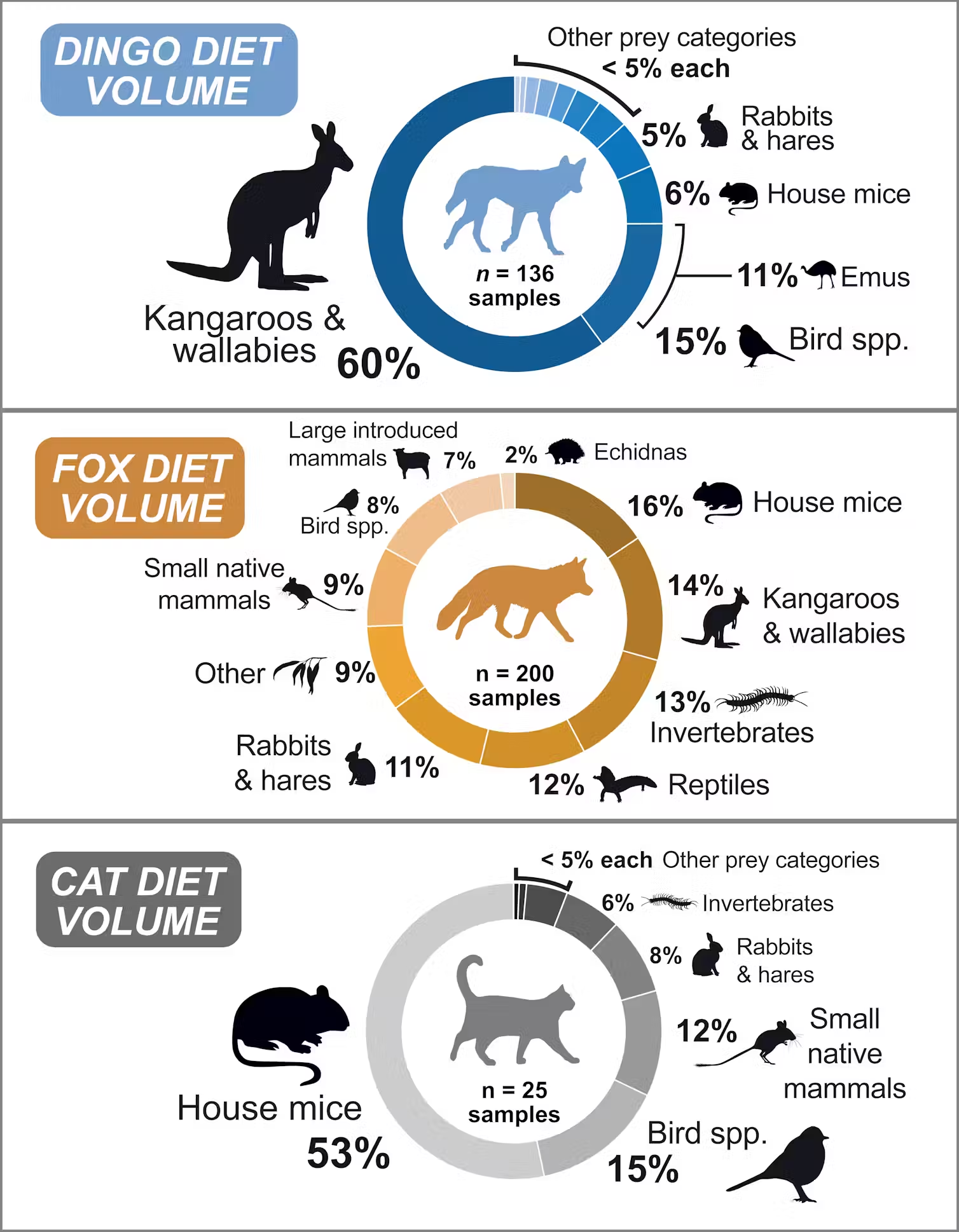
We collected and analysed 136 dingo, 200 fox and 25 cat scats to determine what each predator in the area was eating and how their diets differed.

Livestock was not a major part of the diet of dingoes, foxes or cats. Some 7% of fox scats contained sheep or cattle remains. This was more than that of dingoes, at 2% of scats. No feral cat scats contained livestock remains.

The dingo diet was dominated by kangaroos, wallabies and emus, which comprised more than 70% of their diet volume.

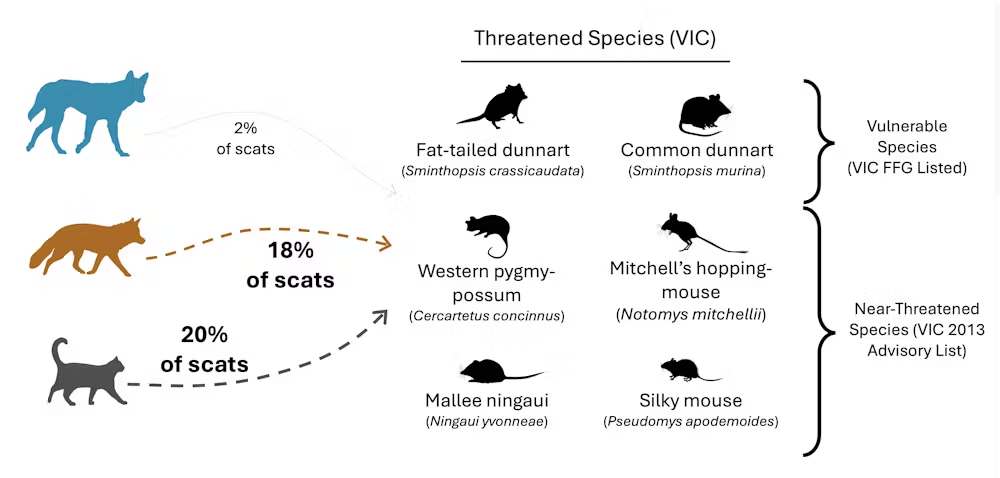
Cats and foxes consumed more than 15 times the volume of small native mammals compared with dingoes, including threatened species such as fat-tailed dunnarts.

Frequency of occurrence of threatened and near-threatened species in the diet of dingoes, foxes and cats in the Big Desert-Wyperfeld-Ngarkat park complex. Rachel Mason

Our data must be interpreted with caution. Scat analysis cannot differentiate between livestock killed by predators and those that are scavenged. It also can’t tell us about animals that a predator killed but did not eat.

In 2022–23, when we collected the scats, rainfall in the area was high and prey was abundant. So, while we found livestock were not likely to be a substantial part of these predators’ diets at the time of our research, this can change depending on environmental conditions.

For example, fire and extended drought may force predators to move further to find food and water. They may move from conservation areas to private land, where they could prey on livestock.

Volume of prey categories in the diet of dingoes, foxes and cats in the Big Desert-Wyperfeld-Ngarkat complex. Rachel Mason

A taste for certain prey

A predator’s poo doesn’t tell the full story of how it affects prey populations.

To understand this further, we used motion-sensing wildlife cameras to assess which prey were available in the ecosystem. We compared it to the frequency they occurred in predator’s diets. This allowed us to determine if dingoes, foxes or cats target specific prey.

We found foxes and cats both consumed small mammals proportionally more than we expected, given the prey’s availability in the study area. Cats consumed birds at a higher rate than expected, and dingoes consumed echidnas more than expected.

Further intensive monitoring work is needed to determine how these dietary preferences affect the populations of prey species.

Embracing the evidence

The findings build on a substantial previous research suggesting foxes and cats pose a significant threat to native mammals, birds, reptiles and other wildlife, including many threatened species. Our results suggest foxes may cause more harm to sheep than dingoes overall – a finding consistent with research elsewhere in Victoria.

Dingoes were the only predator species that regularly preyed on kangaroos and wallabies. These species are abundant in the region. They can also compete with livestock for grazing pastures, consume crops and degrade native vegetation.

Currently, dingoes are killed on, or fenced out of, large parts of Australia due to their perceived threat to livestock.

Lethal control of invasive species remains important to protect native wildlife and agriculture. But such decisions should be based on evidence, to avoid unforeseen and undesirable results.

Non-lethal and effective alternatives exist to indiscriminately killing predators to protect livestock, such as protection dogs and donkeys. These measures are being embraced by farmers and graziers globally, often with high and sustained success.

In Australia, governments should better embrace and support evidence-based and effective approaches that allow farming, native carnivores and other wildlife to coexist.

The Conversation
Categories
Science communication The Conversation

The Conversation: Australians want nature protected. These three environmental problems should be top of the next government’s to-do list

The striking Palm Cockatoo, (Probosciger aterrimus) is only found at the northern tip of the Cape York Peninsula, as well as parts of Papua New Guinea and the Aru Islands, Indonesia. Christina Zdenek

By Euan Ritchie (Professor in Wildlife Ecology and Conservation, School of Life & Environmental Sciences, Deakin University), John Woinarski (Professor of Conservation Biology, Charles Darwin University) and Martine Maron (Professor of Environmental Management, The University of Queensland).

This article is republished from The Conversation under a Creative Commons license. Read the original article.

Australia is a place of great natural beauty, home to many species found nowhere else on Earth. But it’s also particularly vulnerable to introduced animals, diseases and weeds. Habitat destruction, pollution and climate change make matters worse. To conserve what’s special, we need far greater care.

Unfortunately, successive federal governments have failed to protect nature. Australia now has more than 2,000 threatened species and “ecological communities” – groups of native species that live together and interact. This threatened list is growing at an alarming rate.

If re-elected, Labor has vowed to complete its reforms and introduce a federal Environment Protection Agency, in some other form.

The Coalition has not made such a commitment. Instead, it refers to “genuine conservation”, balancing the environment and the economy. They’ve also promised to cut “green tape” for industry.

But scientific evidence suggests much more is required to protect Australia’s natural wonders.

Fighting invaders

Labor has made a welcome commitment of more than A$100 million to counter “highly pathogenic avian influenza”. This virulent strain of bird flu is likely to kill millions of native birds and other wildlife.

The government also provided much-needed funding for a network of safe havens for threatened mammals. These safe-havens exclude cats, foxes and other invasive species.

But much more needs to be done. Funding is urgently needed to eradicate red imported fire ants, before eradication becomes impossible. Other election commitments to look for include:

Stopping land clearing and habitat destruction

Such proposals are supposed to be referred to the federal environment minister for assessment under the Environment Protection and Biodiversity Conservation (EPBC) Act.

But most habitat destruction is never referred. And if it is, it’s mostly deemed “not a controlled action”. That means no further consideration is required and the development can proceed.

Only about 1.5% of the hundreds of thousands of hectares of land cleared in Australia every year is fully assessed under the EPBC Act.

This means our threatened species and ecological communities are suffering a “death by a thousand cuts”.

How do we fix this? A starting point is to introduce “national environmental standards” of the kind envisaged in the 2020 review of the EPBC Act by Professor Graeme Samuel.

A strong Environment Protection Agency could ensure impacts on biodiversity are appropriately assessed and accounted for.

Protecting threatened species

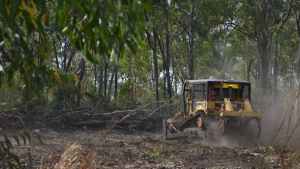
Habitat destruction at Lee Point, Darwin. Martine Maron

For Australia to turn around its extinction crisis, prospective elected representatives and governments must firmly commit to the following actions.

Stronger environmental law and enforcement is essential for tackling biodiveristy decline and extinction. This should include what’s known as a “climate trigger”, which means any proposal likely to produce a significant amount of greenhouse gases would have to be assessed under the EPBC Act.

This is necessary because climate change is among the greatest threats to biodiversity. But the federal environment minister is currently not legally bound to consider – or authorised to refuse – project proposals based on their greenhouse gas emissions. In an attempt to pass the EPBC reforms in the Senate last year, the Greens agreed to postpone their demand for a climate trigger.

Key threats to species, including habitat destruction, invasive species, climate change, and pollution, must be prevented or reduced. Aligning government policies and priorities to ensure environmental goals aren’t undermined by economic and development interests is essential.

Show nature the money!

Neither major party has committed to substantial increases in environmental spending in line with what experts suggest is urgently needed.

Without such increased investment Australia’s conservation record will almost certainly continue to deteriorate. The loss of nature hurts us all. For example, most invasive species not only affect biodiversity; they have major economic costs to productivity.

Whoever forms Australia’s next government, we urge elected leaders to act on the wishes of 96% of surveyed Australians calling for more action to conserve nature.

The Conversation
Categories
Science communication The Conversation

The Conversation: Environment Minister Tanya Plibersek has been taken to court over 11 threatened species. Here’s why

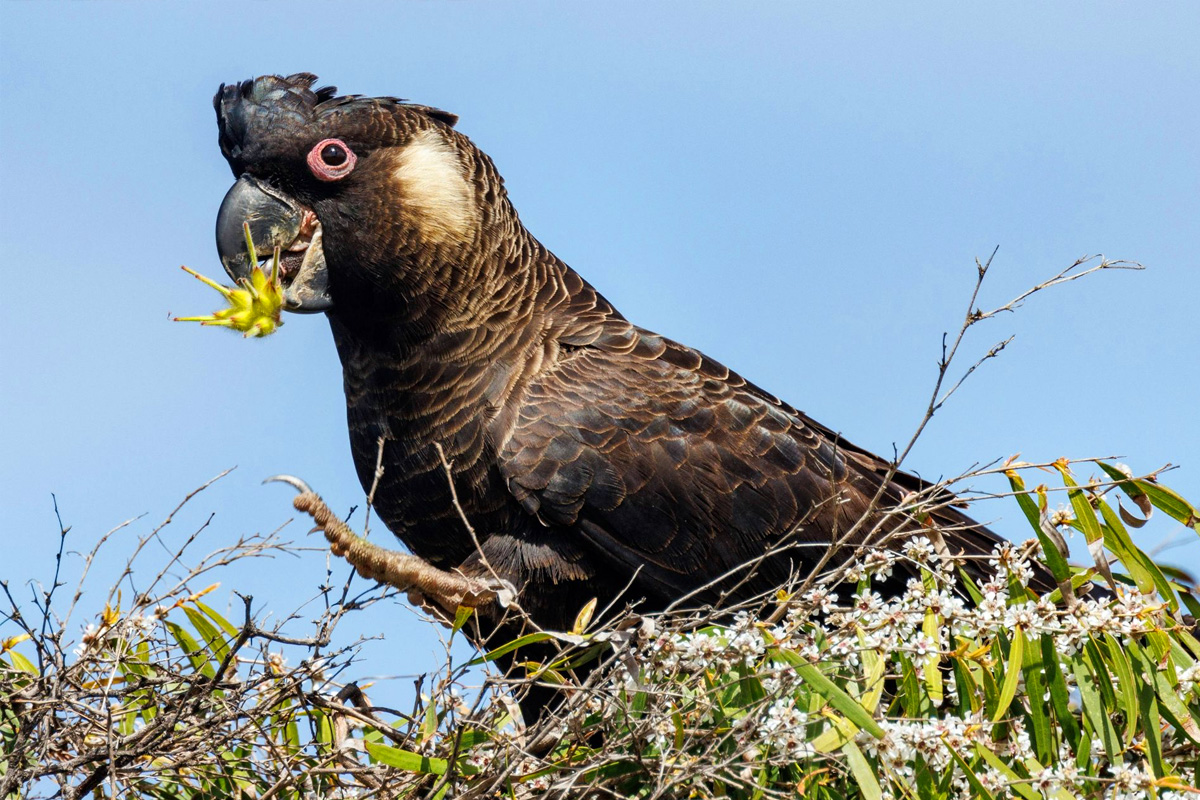
Carnaby’s Black Cockatoo. Imogen Warren/Shutterstock

By Euan Ritchie, Professor in Wildlife Ecology and Conservation, School of Life & Environmental Sciences, Deakin University.

This article is republished from The Conversation under a Creative Commons license. Read the original article.

What do the Australian lungfish, ghost bat, sandhill dunnart and southern and central greater gliders have in common? They’re all threatened species that need a formal “recovery plan” – but do not have one.

Today, environmental group the Wilderness Society launched a case in the Federal Court against Environment Minister Tanya Plibersek, arguing she and successive environment ministers have failed to meet their legal obligations to create threatened species recovery plans.

Other species forming the basis of the case are Baudin’s cockatoo, the Australian grayling, Carnaby’s black cockatoo, red goshawk, forest red-tailed black cockatoo and the Tasmanian wedge-tailed eagle.

Many other species and ecological communities also don’t have recovery plans. If successful, the case would set a precedent compelling future environment ministers to meet their legal obligations and improve Australia’s dire conservation record. This is a significant moment for conservation in Australia – testing how accountable environment ministers are in preventing species extinctions.

Why do recovery plans matter?

Threatened species recovery plans lay out very clearly why species or ecological communities are in trouble and the actions necessary to save them. Once a plan is in place, it can directly benefit the species by tackling threats and safeguarding habitat.

Proposals such as a new farm, suburb or mining project can be assessed by the environment minister and rejected if they are inconsistent with recovery plans and place threatened species at increased risk of extinction. Recovery plans have helped dozens of species come back from the brink.

Under Australia’s national environmental laws, the environment minister must decide whether a recovery plan is required for a species or ecological community listed as threatened.

Recovery is possible, but plans are vital

Successive governments have failed to keep up with creating and implementing recovery plans in a timely manner. The perennial and chronic lack of funding for conservation means there’s little capacity to do the vital but time-consuming work of planning and recovery.

As a result, the federal government has increasingly shifted to offering conservation advices in place of recovery plans. Conservation advices can be produced and updated faster than recovery plans. This is useful if, say, a new threat emerges and needs a rapid response.

But there’s a key legal difference. When the environment minister is considering a project such as land clearing for new farmland or a mine, they need only consider any conservation advice in place. When a recovery plan is in place, the minister is legally obliged not to approve actions which are contrary to its objectives and would make the plight of a species or ecological community worse.

A conservation advice can be thought of more like a fact sheet without the same legal weight or accountability that recovery plans have.

In March 2022, the Morrison government scrapped recovery plans for 176 threatened species and habitats, despite thousands of submissions arguing against this.

After the Albanese government took power in May 2022, it pledged to end “wilful neglect” of the environment and to introduce stronger environmental laws. Sadly, this commitment has not been honoured.

Why do we need recovery plans?

The range of northern Australia’s ghost bats has shrunk significantly. Ken Griffiths/Shutterstock

Australia’s species protection record is unenviable. Since European colonisation, more than 100 species have been driven to extinction and more than 2,000 species and ecological communities are listed at risk of suffering the same fate.

For a species to be considered threatened, its population has to have shrunk or meet other criteria putting it at risk of extinction. The severity of the decline and hence its extinction risk will determine how it’s categorised, from vulnerable through to critically endangered. Recovery plans lay out the research required to actually recover these species, meaning helping their populations to grow out of the danger zone.

A key role for these plans is to coordinate planning and action between relevant interest groups and agencies. This is especially important for species found across state and territory borders, such as the southern greater glider and the migratory swift parrot. The greater glider should have had a recovery plan in place since 2016, but does not.

Are individual plans still worthwhile?

Faced with so many species in need of protection and limited funding, prominent figures including former Environment Minister Peter Garrett have argued we should focus our efforts on protecting ecosystems rather than single species to make the best use of scarce funds.

But there is a deeper issue. Australia is one of the wealthiest nations in the world. It has the capacity to greatly increase conservation spending without impoverishing humans, and should do so for the benefit of the economy, culture and our health and wellbeing.

That’s not to say ecosystem protection isn’t worthwhile. After all, ecosystems are made up of species and their interactions with each other and their environment. You cannot have healthy species without healthy ecosystems and vice versa.

But if we focus only on protecting large expanses of wetland, forest and grasslands, we risk overlooking a key issue. Two species in the same ecosystem can be very differently affected by a specific threat (predation by foxes, for instance). Some species can even have conflicting management needs. For some species, invasive species are the biggest threat, while climate change and intensified fire regimes threaten others the most.

Extinction is a choice

The sandhill dunnart is one of 11 species listed in the court case. Kristian Bell/Shutterstock

As Australia’s natural world continues to deteriorate, climate change deepens and worsening wildlife woes abound, these issues will no doubt be front of mind for many in the upcoming federal election.

It can be easy to see these trends as inevitable. But they are not – the collapse of nature is a choice. We have what we need for success, including traditional, ecological and conservation knowledge. What’s sorely needed is political will.

There were once fewer than 50 northern hairy-nosed wombats alive. Today, that number exceeds 400. When supported, conservation can succeed.

Almost all Australians want their government to do more to save our species. Let us hope whoever forms the next government takes up that challenge – even if it takes court cases to prompt action.

The Conversation
Categories
Media Science communication The Conversation

The Conversation: Labor’s dumping of Australia’s new nature laws means the environment is shaping as a key 2025 election issue

Controversy over land clearing at the Lee Point (Binybara) housing development site, near Darwin, highlights the urgent need for environmental law reform. Image credit: Euan Ritchie

By Peter Burnett (Australian National University), Euan Ritchie, (Deakin University), and Jaana Dielenberg (Charles Darwin University).

This article is republished from The Conversation under a Creative Commons license. Read the original article.

Prime Minister Anthony Albanese has shelved the proposed reforms to Australia’s 25-year-old environment laws, citing a lack of parliamentary support for the changes.

The decision breaks Labor’s 2022 election commitment to overhaul the protections. The Albanese government is now the latest in a string of governments that have tried and failed to reform the law known formally as the Environmental Protection and Biodiversity Conservation (EPBC) Act.

This is despite two major independent reviews calling for wholesale change.

Labor’s capitulation does not, however, change the facts. Australia’s natural environment is deteriorating rapidly. Laws are urgently needed to protect our nation’s valuable natural assets.

Establishing effective laws is an investment that will benefit Australia’s biodiversity, economy, cultural values, health and wellbeing. Nature is now a key 2025 election issue.

How did we get here?

An independent review of the EPBC Act, known as the Samuel Review, was completed in 2020 under the former Coalition government. It found that without urgent changes, most of Australia’s threatened plants, animals and ecosystems will become extinct.

The centrepiece of reform is to set national environmental standards that would be overseen by an independent regulator and watchdog called Environmental Protection Australia (EPA). But reform was split into three stages.

Stage one legislated for national markets in nature repair and expanded the requirement to assess potential impacts on water resources under the EPBC Act. The so-called “water trigger” now captures “unconventional gas” projects such as shale gas recovery in the Northern Territory’s Beetaloo Basin. The law passed in December 2023, but the markets are not yet functioning.

Stage two of the reforms, including establishing a federal EPA, came before the Senate in late 2024. Plibersek had reportedly made a deal with the crossbench to secure passage. But this deal was scuttled by Albanese at the eleventh hour.

Stage two was relisted for discussion in the upcoming first parliamentary sitting week of 2025, this week. But on Saturday, Albanese told The Conversation the government would, again, not be proceeding with the reform this term.

The reforms have been delayed for so long that we are now closer to the next statutory review of the laws, due in 2029, than to the last one.

Stage three, which covers the bulk of substantive reform recommended in the Samuel Review, is yet to be seen publicly.

What will happen after the next election?

Albanese must go to the polls by May 17, but there is speculation the election may be as early as March. So what is the likely fate of these environmental reforms in the next term?

A Roy Morgan poll on Monday found if a federal election were held now, the result would be a hung parliament. So the result is looking tight.

Government control of the Senate is rare. So whoever is in power after the election is very likely to rely on crossbench support for any reforms.

Albanese has ruled out forming a coalition with the Greens or crossbenchers in the event of a hung parliament. However, Opposition Leader Peter Dutton says he would negotiate with independents to form government.

A returned Albanese majority government would probably revisit the scuttled deal on stage two. With elections in the rear-view mirror, Albanese may be prepared to wear some political pain early in the next term to secure a deal. He would also still need to roll out the bulk of the Nature Positive reforms, the detail of which remains hidden behind a vague “stage three” banner.

A minority Albanese government may face a tougher ask: demands from an environmentally progressive crossbench for major commitments to environmental reform in return for promises of support on budget and confidence.

A Coalition government would be coming from a very different angle. Dutton has painted Nature Positive as a “disaster” for the economy, expressing particular concern about impacts on the mining sector.

The Coalition’s environmental agenda is increasingly focused on “cutting green tape” – in other words, reducing bureaucratic hurdles for developers – and repealing bans on nuclear power stations. Finding crossbench support in the Senate for this agenda could be challenging.

The Greens have vowed to make environmental protection a key election issue, urging voters to cast their ballot for nature this election.

A recent poll published by the Biodiversity Council shows 75% of Australians support strengthening national environmental law to protect nature. Only 4% are opposed and the rest are undecided.

But converting a high level of broad support into votes is another thing altogether – especially during a cost-of-living crisis.

Crystal clear consequences

The political crystal ball remains cloudy. But when it comes to the state of Australia’s environment, the picture is clear.

The environment continues to decline and the consequences are increasingly serious. These consequences extend beyond further irreversible loss and the increasing cost of environmental repair, to include the economic and social consequences of losing more of the natural assets on which our quality of life depends.

The building blocks of successful reform are all on the table, where the Samuel Review put them in 2020.

When will governments accept that kicking the can down the road is selling us all down the drain?

Logging is leaving koalas homeless. Image credit: AAP, supplied by WWF Australia
The Conversation
Categories
Science communication

Euan Ritchie wins Eureka prize for ‘Promoting Understanding of Science’

I’m extremely honoured to have been awarded the 2024 Eureka prize for Promoting Understanding of Science.

I would like to acknowledge my fellow finalists, Dr Vanessa Pirotta (Macquarie University) and Associate Professor Suzie Sheehy (University of Melbourne) who are each equally deserving of this recognition.

I feel privileged to work with so many amazing and inspiring people each day, and to be able to help tell our scientific stories, which have never been more important given the dual climate change and biodiversity decline and extinction crises we confront.

I encourage everyone to tell their scientific stories, you never know who might be listening, and stories told well can change the world.

I also extend my thanks to the Australian Museum for hosting the ‘Oscars’ of Australian science, and Celestino, for supporting this important award category recognising the role of communicating research beyond scientific journals and academia.

I want to thank Deakin University for allowing me to do the work that I do, and my family, friends, colleagues, and students for their ongoing support.

I would to acknowledge that my work has occurred across the unceded Country of First Nations Peoples, Australia’s first scientists and storytellers.

Here’s a little snippet of the awards ceremony; thanks to thanks to my wonderful wife and science communicator extraordinaire, Jen for capturing this memory for me.

Categories
Science communication The Conversation

The Conversation: Move over Olympians, Australia’s wildlife are incredible athletes

The now extinct oolacunta or desert rat-kangaroo. John Gould, 1863

This article is republished from The Conversation under a Creative Commons license. Read the original article.

Now that the Paris Olympics and Paralympics have disappeared from our screens, let’s get back to watching animal videos.

But seriously, have you ever paused to think about the athletic abilities of Australian wildlife?

In my research as an ecologist, I’m constantly amazed by the strength, speed and resilience of our native animals. Their prowess is testament to the wonders of evolution, and the necessity of species having to adapt to challenging and changing environments in order to survive.

Let’s take a closer look at some of our best competitors and how might they fare, against humans and overseas entrants. On your marks, get set… swim, hop, dig, dance, glide!

Swimming

Australians are renowned for being strong swimmers. But what is the fastest swimmer in the animal kingdom?

On this there is much debate. Some suggest it’s the Indo Pacific sailfish, clocking in at about 30km/hr. That’s impressive, but much slower than oft-cited (but inaccurate) claims it can travel at more than 100km/hr.

For perspective, the fastest human to swim the 50 metres freestyle is American Caeleb Dressel, completing this in a time of 20.16 seconds. That’s roughly 9km/h – faster than many people jog, but still no match for a sailfish.

As in humans, swimming speed in fishes tends to increase with body length. Larger species that challenge sailfish for the fastest swimmer title include blue or black marlin. Shorter, torpedo-like bluefin tuna are also in contention. All are found in Australian waters, though not exclusively.

Sprinting, long and high jump

Aussie icons, red kangaroos can reach speeds of around 60-70km/hr. But they are no match for cheetahs, which can move at more than 120km/hr.

Long jump is surely the kangaroo’s main event. Red kangaroos can jump a staggering 13 metres or more. Amazingly, this might not be enough to clinch gold. Snow leopards can jump more than 15 metres.

Kangaroos can clear heights of up to 3m, so would perform well in the high jump. But they’d finish behind bottlenose dolphins, which can jump over 7m in the air, just for kicks.

Battles of strength

African elephants can lift more than 1,000kg and weaver ants more than 100 times their own body weight.

But relative to size, a truly impressive champion is Australia’s horned dung beetle. At just a centimetre long, these diminutive powerhouses can pull more than 1,100 times their own body weight, roughly equating to an average man lifting two fully-loaded 18-wheeler trucks.

And yet, horned dung beetles might still only claim silver. Another invertebrate Aussie, the tiny tropical moss mite, is perhaps the world’s strongest animal. It can pull more than 1,180 times its weight.

Packing the fastest, deadliest punch

In terms of combat sports, bigger is not always better.

Peacock mantis shrimps – invertebrates found in Australian marine waters and elsewhere – have the swiftest and most powerful punch in the lightweight crustacean division.

They kill prey by punching them with strong, club-like appendages. They deliver blows at up to 23m per sec, akin to the speed and force of a .22 calibre bullet being fired.

So powerful is the punch, it vaporises water and creates a super-hot shockwave that breaks up and incapacitates its prey.

Tantalising contests

What about a digging contest? Eastern barred bandicoots can shift 4.8 tonnes of soil a year. How would that stack up against marsupial moles, which can disappear almost instantly into desert sands? Or the expert excavations of wombats and aardvarks that can dig more than half a metre in 15 seconds?

In terms of free-diving and flying, there’s really no contest. Cuvier’s beaked whale can dive nearly 3000m and peregrine falcons can reach over 320 km/hr. These animals are found across the globe, however – not just in Australia.

Australia’s largest gliding marsupial, the greater glider, can sail up to 100m between trees. But gliding gold would surely go to the giant flying squirrel, which can glide up to 450m.

I’d love to see a shooting contest between Australia’s archer fish and Madagascar’s panther chameleon. But finding the right arena for both aquatic and land-based sharpshooters would be tricky.

Raygun’s kangaroo hop is now legendary, but a breaking (break dancing) contest between a peacock spider, spanish dancer (a type of nudibranch) and a magnificent riflebird might genuinely break the internet.

Appreciating wildlife athletes

So who would win a global contest for the best wildlife athlete overall?

If the competition was on land and focused on running, jumping, strength and climbing, it’s hard to go past the overall abilities of a Bengal tiger.

Many amazing wildlife athletes are threatened with extinction. Others are gone forever.

They include the incredible oolacunta – also known as the desert rat kangaroo. It’s powers of endurance in the desert are the stuff of folklore. As legendary Australian mammalogist Hedley Herbert Finlayson wrote in 1931:

Its speed for such an atom, was wonderful, and its endurance amazing … when we finally got it, it had taken the starch out of three mounts and run us 12 miles; all under such adverse conditions of heat and rough going, as to make it almost incredible that so small a frame should be capable of such an immense output of energy.

Let’s celebrate wildlife and their athletic abilities and ensure they have a secure future.

The Conversation

Categories
Research Science communication The Conversation

The Conversation: The power of one: solitary carnivores outkill group hunters

Mark Elbroch, Panthera

By Luke Emerson and Euan Ritchie, Deakin University.

This article is republished from The Conversation under a Creative Commons license. Read the original article.

Earth’s majestic “apex predators” are some of the most prolific hunters in the world. But which ones kill the most?

Such information allows us to better understand how different predators affect their environment. It can also guide hunting quotas and help evaluate how humans affect carnivores.

These apex predators perform vital roles in ecosystems. Yet tragically they are among the world’s most threatened animals. Carnivores frequently come into conflict with humans, particularly over livestock and public safety.

Our approach

We examined 196 papers that either quantified large mammal carnivore kill rates, or reported data we could use to calculate the rates ourselves.

We focused on the large land-based carnivores weighing 15 kilograms or more. We also searched for kill rate studies on four smaller species — coyote, wolverine, fossa (a cat-like predator found in Madagascar) and the Tasmanian Devil — as they’re all considered apex predators in certain regions and ecosystems.

We only found kill rate estimates for 17 (55%) of the 31 carnivore species included in our review. Studies came from 27 countries across five continents.

The research focused on mammals weighing 15 kg or more. Jurgens Potgieter, Shutterstock

Carnivores hunt in different ways

We found kill rates differ between carnivores with different social structures and hunting strategies.

Social predators, such as wolves and lions, tend to kill fewer animals per carnivore than solitary hunters such as bears, tigers and Eurasian lynx. For example, on average grey wolves made a kill every 27 days per wolf, compared with every four days per Eurasian lynx.

Larger wolf packs can bring down large animals such as bison more easily. Similarly, groups of cheetahs can tackle larger prey than solitary cheetahs. This could mean they don’t need to hunt as often.

Working as a team may also reduce losses to scavengers, as groups can better defend their kills through sheer numbers. Or they might be better at scavenging and stealing (“kleptoparasitism”) from others.

Canine predators such as wolves and African wild dogs often rely on high-energy pursuits over long distances. For example, grey wolves can pursue prey for more than 20 kilometres. In contrast, cats rely on stealth, using an ambush hunting strategy. This saves energy.

Solitary large carnivores such as tigers, leopards and Eurasian lynx, which mainly hunt hooved mammals, have similar kill rates regardless of body mass. This suggests large land-based carnivores are compelled to hunt prey closer to their own size or larger, to compensate for the energy used in the hunt.

Smaller carnivores such as cheetahs, pumas and African wild dogs often kill more prey than their larger counterparts, but only consume about half of what they kill.

This behaviour benefits other species such as lions, bears and wolves and is likely a consequence of having to compensate for the theft and loss of food. Pumas are thought to provide more than 1.5 million kilograms of carrion a day across North and South America.

If you’ve seen The Lion King movie, you’d be forgiven for thinking hyenas largely steal and scavenge their food. But that’s not the case. Lions often steal from hyenas, as well as from other carnivores such as cheetahs and African wild dogs.

Bias in kill rate research

More than half (55%) of all kill rate studies have been conducted in North America. Africa follows with almost a quarter (24%), then Europe (12.5%).

Asia was a long way behind with 7% of all kill rate studies. That’s just 13 studies covering six species. This is despite being the largest continent, home to 17 (55%) of the 31 large carnivore species included in our review.

No reliable kill rate studies have been published from Australia.

A third (33%) of all kill rate studies focused on grey wolves, followed by pumas (20%), lions (12%) and Eurasian lynx (8%). This means we know little about the predatory behaviour and roles of other large carnivores.

Grey wolves are considered a threat to livestock and wildlife that humans value. This has prompted significant investment in research to understand their predatory behaviour and that of other large North American carnivores.

Such work has subsequently been used to inform appropriate management and conservation of these predators and their prey.

A third of all studies focused on grey wolves. Evelyn D. Harrison, Shutterstock

Carnivores bring benefits

Kill rate studies provide more than just a tally of carnivore behaviour. They offer deeper insights into the relationships between predators and prey, and their effects on ecosystems.

Large carnivores shape ecosystems by scaring and killing prey, which can change their behaviour, distribution and abundance. They also supply food to other species, affecting the flow of nutrients and energy.

In many ways, large carnivores also help people. They can reduce the risk of vehicle collisions, by killing deer that might otherwise wander onto roads. They may limit the spread of disease by preying on sick animals, and control herbivores, aiding livestock producers.

Yet carnivores, including Australia’s dingo, are still widely persecuted. We need to do all we can to maintain their pride of place at the pinnacle of Earth’s ecosystems.

Of course, if you really want to know which species is the biggest killer, it’s humans. We are the dominant predator across Earth.The Conversation

The Conversation

Categories
Media Science communication

Australian Geographic: Law reform for nature

Australia’s wildlife and ecosystems are iconic, integral to our national identity and loved the world over. But they’re often disregarded, destroyed and are suffering decline at alarming rates. More than 100 species extinct and 2000-plus threatened species and ecological communities: this is Australia’s unenviable conservation record since European colonisation.

The Leadbeater’s possum (Gymnobeliedeus leadbeateri) is one of many animal species that remain at high risk of extinction despite being listed as endangered on the Environment Protection and Biodiversity Conservation Act for almost a decade. Image credit: Green MPs via Flickr

It might seem a strange thing for a wildlife ecologist to say, but genuine progress for conservation in Australia does not hinge on more science.

Read more in my opinion piece on the Australian Geographic website.

Categories
Science communication

Euan Ritchie nominated for Eureka Prize 2024

Numbats, quokkas, rakali, bilbies… just a few of Australia’s amazing and unique mammals whose ecosystems are under threat from human impacts including development and climate change. 

I am honoured to once again be named among 55 finalists shortlisted for 19 Australian Museum Eureka Prizes, Australia’s premier science awards.

The 2024 awards reward excellence in research and innovation, leadership, science engagement, and school science.

I’m nominated in for the Celestino Eureka prize for promoting understanding of science for my work to foster public understanding of nature, wildlife and how science can help overcome environmental challenges.

The winners are to be announced on Wednesday 4 September 2024.

Categories
Media Science communication

The Conversation: Out of alignment: how clashing policies make for terrible environmental outcomes

Hanna Taniukevich/Shutterstock

By Euan Ritchie (Deakin University) Catherine Lovelock (The University of Queensland) and Sarah Bekessy (RMIT University).

This article is republished from The Conversation under a Creative Commons license. Read the original article.

Policy alignment sounds dry. But think of it like this: you want to make suburbs cooler and more liveable, so you plant large trees. But then you find the trees run afoul of fire and safety provisions, and they’re cut down.

Such problems are all too common. Policies set by different government departments start with good intentions only to clash with other policies.

At present, the Albanese government is working towards stronger environmental laws, following the scathing 2020 Samuel review of the current Environment Protection and Biodiversity Conservation Act. The review noted planning, funding and regulatory decisions are “not well integrated or clearly directed towards achieving long-term environmental sustainability”.

Stronger laws are not a standalone answer. We must find ways to align government policies far better, so progress on one front doesn’t lead to a setback elsewhere. As the government prepares to announce once in a generation changes to our main environment laws, it must find ways to reduce these clashes.

Nature vs cities

All levels of government have policies aimed at increasing canopy cover and biodiversity in cities. How hard can it be to plant trees?

The problems start when you look for places to actually plant street trees. It’s common to encounter a wall of obstacles, namely, other policies and regulations. Fire prevention, human safety, visibility for road traffic and provision of footpaths and carparks are often legally binding requirements that can stymie this seemingly simple goal.

Most cities in Australia are now actually losing canopy cover rather than gaining more.

On the biodiversity front, urban sprawl is pushing many species and ecosystems to the brink of extinction.

What should we do when threatened species protection conflicts with new housing developments? Rusty Todaro/Shutterstock

Last year, conservationists rediscovered the grassland earless dragon on Melbourne’s grassy western fringes, which we had believed was extinct. Now we had a second chance to save it, in line with the Australian government’s pledge to stop extinctions.

The problem? The grasslands where the dragon was found near Bacchus Marsh, just outside Melbourne, are zoned for housing. Only 1% of the grasslands ecosystems suitable for these reptiles is still intact, and much of it has been earmarked for housing.

From a housing point of view, the continued existence of the dragon now threatens plans for 310,000 homes.

If we had better policy alignment, we would look to achieve both goals: protect the dragon and build more housing through methods such as building sustainable midrise developments in established urban areas.

Protecting the reef while exporting LNG

Meanwhile, the Great Barrier Reef is bleaching again, the fifth bout in just eight years.

Almost all the extra heat trapped by greenhouse gases goes into our oceans, triggering marine heatwaves and bleaching. If the world’s largest living structure bleaches too much, it will begin to die, threatening its rich biodiversity, cultural heritage and industries such as tourism.

On the one hand, Australia wants to protect the reef and has funded efforts to boost water quality.

A LNG carrier departs the port of Gladstone, on the southern Great Barrier Reef. The cargo it carries will, when burned, trap more heat and lead to more bleaching of the reef. Ivan Kuzkin/Shutterstock

But on the other hand, supportive government policies contribute to our recent emergence as a top exporter of liquefied natural gas, which is 85–95% comprised of the potent greenhouse gas methane. Land clearing in the catchments of rivers which flow to the reef is ongoing due to policy loopholes, which adds more smothering sediment, nutrients and pollutants to the reef’s woes.

The shipping sector only has to abide by a voluntary code to avoid invasive species arriving in the ship’s bilge water, even though they could be carrying the tissue loss disease devastating reefs in the Caribbean and Florida.

Renewables versus biodiversity

Calls to fast-track clean energy projects and stop them being held up by environmental approvals are risky. We could tackle one crisis (climate change) by making another worse (biodiversity and extinction).

Australia has destroyed nearly 40% of its forests since European colonisation, with much of the remaining native vegetation highly fragmented. Because this clearing has already happened, it should be entirely possible to build renewables without damaging the homes of native species.

In fact, we can do better – we can take degraded farmland, build solar on it and restore low-lying native vegetation around it to actually boost biodiversity. Requiring new renewable projects to be nature positive would encourage creative approaches to delivering infrastructure while benefiting nature.

Solar versus nature? Why not solar and nature. FenrisWolf/Shutterstock

Policy clashes abound

There is, sadly, no shortage of examples of clashing policies:

Why the lack of alignment?

For politicians, the environment ministry is often seen as a poisoned chalice.

Within government, departments often pull in different directions. When resource and agriculture plans conflict with environmental concerns, it’s not hard to guess which side tends to win. Case in point: the recent plans to remove gas project oversight from environment minister Tanya Plibersek in favour of resources minister Madeleine King.

How can we make policies work together better for the environment? Governments should sift through all relevant policies and regulations to make sure nature-positive approaches are embedded. Requiring development proposals to benefit nature would go a long way to reducing environment-economy conflict. After all, most businesses are now looking into ways of becoming nature-positive.

Too often, environment policies are seen as opposed to those promoting the economy, jobs and industry. But they don’t have to clash.

Tremendous opportunities exist for a safer, more sustainable future, if we address current causes of friction and take a big picture approach to how we develop our policies.

The Conversation

Categories
Science communication The Conversation

The Conversation: Why move species to islands? Saving wildlife as the world changes means taking calculated risks

Eastern Barred Bandicoot (Perameles gunnii), John Gould 1863

By Anthony Rendall (Deakin University), Amy Coetsee (The University of Melbourne), Aviya Naccarella (Deakin University) and Euan Ritchie (Deakin University).

This article is republished from The Conversation under a Creative Commons license. Read the original article.

The eastern barred bandicoot was once found in abundance across the basalt plains of western Victoria. But habitat destruction and predation by introduced red foxes drove the species to the brink of extinction on the mainland.

Establishing populations in fenced reserves was critical in providing insurance against extinction. To further increase bandicoot numbers to provide long-term security against extinction, we needed more fox-free land.

A bold plan was hatched: move the species to where the predators weren’t. Introduce them to Victoria’s fox-free Phillip and French islands.

Six years later, the bandicoot made conservation history, as the first species in Australia to be reclassified from extinct in the wild to endangered.

Why don’t we translocate all endangered species to islands? The technique can be effective, but can come with unwanted consequences.

The surprising benefits of translocation

Eastern barred bandicoots are ecosystem engineers. As they dig for their dinner of worms, beetles, bulbs, fungi and other foods, their industrious work improves soil quality, and in turn, the health of vegetation.

So when we translocate threatened species, we can get a double win – a rapid increase in their populations and restoration of lost ecosystem functions.

Australia’s landscapes look very different than they did before European colonisation around 230 years ago.

Industrialised farming, introduced predators and habitat destruction and fragmentation are driving biodiversity decline and extinctions. As species die out, ecosystems lose the vital functions wildlife perform. Without them, ecosystems might not operate as well or even collapse – a little like a poorly serviced car engine.

We feel the loss most acutely when we lose keystone species on which many other species depend, such as oysters and bees. Restoring these functions can improve biodiversity and the sustainability of food production. For instance, encouraging owls to return to farmland can cut the use of damaging rodent poisons, as owls eat thousands of mice and rats yearly.

Before colonisation, industrious digging mammals and their soil excavations were extremely widespread. Regrettably, introduced foxes and cats have made short work of many of Australia’s diggers. Six of 29 digging species are now extinct, including the lesser bilby, pig-footed bandicoot and desert rat-kangaroo. Many others are endangered.

Could translocation save more species?

Conservationists have successfully translocated species such as the western swamp tortoise, the Shark Bay mouse, and northern quolls.

The northern quoll is the smallest of Australia’s four quoll species. John Webb/AAP

New environments don’t necessarily need to be predator-free. The eastern barred bandicoot is thriving on Phillip and French Island, in the presence of feral and domestic cats. The key is there are no foxes.

Many islands are now being thought of as conservation arks, able to provide safe havens for several threatened species at once. Dirk Hartog Island, Western Australia’s largest, is now home to reintroduced western quolls, dibblers, mulgaras and other small mammals, as well as two translocated hare-wallaby species.

Why is translocation not more common?

The technique can work very well – but it can also backfire.

In the 1920s, conservationists undertook the first translocation in Australia by moving koalas to Phillip and French Island – the same Victorian islands now a refuge for bandicoots. While this protected koalas from hunting pressure, koala populations exploded, and the tree-dwelling marsupials ate themselves out of house and home in some areas.

In 2012, conservationists began introducing Tasmanian devils to Maria Island, just off Tasmania’s east coast. They wanted to conserve a healthy population free from the contagious facial tumour which has devastated their populations. On Maria Island, the devils became too successful, wiping out the island’s penguin and shearwater populations.

You can see translocations aren’t a silver bullet. We have to carefully consider the pros and cons of any such conservation intervention. Ecosystems are complex. It’s not easy to predict what will happen to an ecosystem if we introduce a species new to the area.

The decision to translocate a species is a value judgement – it prioritises one species over the broader ecosystem. Opponents of translocation question whether we are doing the right thing in valuing efforts to conserve a single species over the innate value of the existing ecosystem.

What’s the best approach in future?

Translocation is not the end goal. Islands cannot support the vast array of threatened species in Australia.

The end goal is to establish and expand threatened species populations on the mainland in fenced reserves before eventually reintroducing them to the wild where they will encounter introduced predators.

Making sure foxes don’t repopulate Phillip Island takes constant surveillance. This photo shows a fox which evaded capture for two months in 2022. Phillip Island Nature Parks/AAP

Research is being done to explore how we can make this work, such as:

1) Predator-savvy wildlife: some native species may be able to adapt to living alongside introduced predators – with some help. For example, conservationists have exposed semi-captive bilbies to small numbers of feral cats with the aim of increasing their wariness and ultimately boosting their chances of survival. Results have been encouraging.

2) Building ecosystem resilience: we know more intact native ecosystems can reduce the chance of damage from invasive species . That means re-establishing native ecosystems could boost their resilience.

Moving a species from its home is a bold and risky decision. It’s critical local communities and First Nations groups are consulted and able to guide discussions and any eventual actions.

For their part, governments, land managers and conservationists must think more broadly about how we might best conserve species and ecosystems in a rapidly changing world.

Categories
Science communication The Conversation

The Conversation: Harry Potter and the Disenchanted Wildlife: how light and sound shows can harm nocturnal animals

Charles Rex Arbogast/AP

By Jaana Dielenberg, University Fellow, Charles Darwin University; Euan Ritchie, Professor in Wildlife Ecology and Conservation, School of Life & Environmental Sciences, Deakin University; Loren Fardell, Research Fellow, The University of Queensland, and Therésa Jones, Professor in Evolution and Behaviour, The University of Melbourne

This article is republished from The Conversation under a Creative Commons license. Read the original article.

Light and sound shows in parks can enthral crowds with their colour, music and storytelling. Lasting for weeks to months, the shows provide entertainment and can boost local economies. But unless they are well-located, the shows can also harm wildlife.

A planned production at a wildlife sanctuary in outer Melbourne has brought these concerns to the fore. In April and May this year, a wildlife reserve on the Mornington Peninsula will host Harry Potter: A Forbidden Forest Experience. The event involves a two-kilometre night walk where, according to organisers, characters from the film are “brought to life”.

The event has prompted an outcry from people worried about the effect on the reserve’s vulnerable wildlife. The sanctuary, known as The Briars, is home to native animals including powerful and boobook owls, owlet-nightjars, koalas, wallabies, Krefft’s gliders, lizards, frogs, moths and spiders. A petition calling for the event to be relocated has attracted more than 21,000 signatures.

Research shows artificial light, sound and the presence of lots of people at night can harm wildlife. It’s not hard to see why. Imagine if a music and light show, and thousands of people, turned up at your house every night for weeks on end. How would you feel?

A history of community opposition

In addition to the lights and sounds, these shows can involve artificial smoke and animated sculptures. While they often take place along existing walking trails, they attract huge crowds at a time when animals usually have the place to themselves.

The Parrtjima light show in Alice Springs has raised concern for threatened black-footed rock wallabies. Paul Balfe via Wikimedia Commons

Most of Australia’s mammals and frogs and many bird and reptile species are nocturnal, or active at night. They have adapted to the natural darkness, sounds and smells of the night.

The Harry Potter experience planned for The Briars has taken place elsewhere around the world, including at a nature area near the Belgian capital of Brussels. That event, in February last year, was also opposed by locals on ecological grounds. Belgian Minister for Nature Zuhal Demir has reportedly said the show would not return this year due to concern for wildlife.

Light shows proposed for other wildlife conservation areas have also faced community opposition. In Australia, there were calls to halt the Parrtjima light festival in the Alice Springs Desert Park over potential harm to the threatened black-footed rock wallabies. The Lumina light show proposed for Mount Coot-tha in Brisbane has also attracted concern for wildlife.

Light, sounds, action!

Small mammals such as microbats avoid habitat that is artificially lit. Pictured: Gould’s long-eared bat. Victorian Government Department of Environment Primary Industries

What’s more, human-caused noise also stresses animals and changes animal behaviour. It masks the natural soundscape, making it harder for animals to find mates or hear the calls of their young. It can also mean animals can’t hear predators or their prey.

When thousands of humans travel through an area they leave strong predator-like smells. This can be stressful for wildlife. It can also mask smells vital for an animal’s survival, such as that of food and predators.

Long-term harm

When faced with all this disruption, many nocturnal animals will hide until a site returns to normal, which in the case of light shows is often close to midnight. This cuts in half the time animals have to go about their life-sustaining activities and exposes them to greater risks when they do go out.

Light and sound shows are usually temporary – but can have major long-term impacts.

In species with low birth rates and short lifespans, a disturbance to breeding can be catastrophic. For example, males of the genus Antechinus (small marsupials) live long enough for just one short breeding season. If they are disrupted, there are no second chances.

Find a better location

The Mornington Peninsula Shire Council has defended the Harry Potter event, saying the placement of props, lights and sounds has been carefully considered.

Organisers may have minimised impacts where they can, but evidence suggests the impact on wildlife will still be extensive.

Events such as this clearly affect wildlife. Finding genuinely suitable locations should be done with care – and should avoid wildlife conservation areas altogether.

The Conversation
Categories
Science communication The Conversation

The Conversation: Crocs love feral pigs and quolls have a taste for rabbit – but it doesn’t solve the invasive species problem

Imogen Warren, Shutterstock

By Euan Ritchie, Deakin University.

This article is republished from The Conversation under a Creative Commons license. Read the original article.

Across the vast Australian continent, feral pigs, feral deer and European rabbits roam in their millions. By different names – wild boar, venison and lapin – these could all be served in a Michelin star restaurant.

Feral and invasive species are becoming popular meals for native wildlife too. For species like the saltwater crocodile and spotted-tailed quoll, the menu is expanding and changing due to the arrival of invasive alien species – one of the greatest threats to biodiversity globally.

The good news is, many invasive alien species make good tucker. Around the world, native wildlife are dining on increasing numbers of exotic prey. In the United States, endangered snail kites — a wetland raptor — crunch through invasive apple snails, red-banded snakes swallow North American bullfrogs in China, dingoes devour feral sambar deer and goats in Australia, Sulawesian toads gobble up introduced yellow crazy ants in Indonesia, and golden eagles and saltwater crocodiles both love eating feral pigs on opposite sides of the Pacific.

Of crocs and pigs

So can we say these invasives are useful in some sense? Exotic prey can help boost numbers of some native predators. Saltwater crocodiles in the Northern Territory are rapidly bouncing back after widespread, severe culling.

Feral pigs are a very damaging invasive species in Australia. Shutterstock

Using the bones of crocodiles collected through time, researchers have shown that over roughly half a century, salties have shifted from a diet largely based on fish to a more terrestrial diet, including feral water buffalo and pigs.

This seems like a much-needed good news story for the environment – a natural way to limit feral pigs, one of Australia’s most widespread and damaging invasive species. At present, though, we don’t know for sure that crocs keep pig numbers down.

On the other hand, female estuarine crocodiles begin reproducing at around 12 years of age, and do so once a year under the right conditions. Crocodiles cut back on hunting and other activity during cooler months. Together, this means feral pigs can endure relatively high predation rates and still persist in ecosystems in large numbers.

Of quolls and rabbits

The largest of Australia’s four predatory marsupial quoll species, the spotted-tailed quoll, is known to enjoy rabbit even when there is a diverse and abundant selection of native mammals within the same area.

Unfortunately, quolls are now absent or still declining in many places, due likely to competition or predation with the bigger, heavier predators Europeans introduced: feral cats and foxes. In the bush, male cats can be sizeable – exceeding 6 kilos, roughly double the size of your average spotted-tailed quoll.

This begs the question – if cats and foxes could be eradicated or greatly reduced in some areas, could we reintroduce quolls to help manage rabbit populations or prevent their return?

Dangerous dinners

Not all introduced prey make safe meals.

Cane toads have devastated some native species such as northern quolls, which naturally prey on native amphibians but cannot survive toad toxin.

Regrettably, a recent attempt to train quolls not to eat cane toads appears to have failed.

But other species have learnt to safely eat cane toads, including the rakali (Australian water rat), which removes and eats toad hearts and livers with surgical precision. The humble bin chicken (white ibis) has also figured out how to make toads safer by washing them.

European house mice and introduced rats can be easy prey for owls, snakes, and many other native predators. Unfortunately, these easy pickings can become their last suppers – not because the rodents are toxic, but because they may well have eaten rodenticide which makes them easier to hunt. Once a sick, dying rodent is eaten, the predator can in turn be poisoned and die. Scavengers who eat poisoned predators can also die, affecting entire food chains and ecosystems.

Sometimes predators can find themselves prey, depending on their age and size. In Australia, large pythons, goannas and monitor lizards eat foxes and cats, but these same reptiles are preyed upon by cats and foxes when younger and smaller.

Invasive prey aren’t going away

As time goes on, invasive prey species can become regular meals for native predators – and part of the food web.

deer in australia
Millions of feral deer now roam Australia. Kazredracer/Flickr

When we try to remove invasive prey species from ecosystems, we must take a big picture view and proceed with great caution.

When feral cats were killed off on New Zealand’s Little Barrier island, it was done with the best intentions: protect the seabirds nesting there. But with the cats gone, invasive rat populations surged and soon began killing the seabird chicks.

In Australia’s arid regions, we now have experimental evidence to suggest biological controls such as rabbit haemorrhagic disease do keep rabbit numbers down, alongside culling and destroying warrens. With the rabbits suppressed, plants and native herbivores can bounce back. This, in turn, pushes cat and fox populations lower, as these two predators maintain their high numbers in arid regions in part due to an abundance of rabbits.

But this doesn’t work in the wetter, more vegetated south-east. Here, there’s little evidence rabbit control greatly affects fox populations.

So should we celebrate crocs chomping on pigs and rakali eating cane toads? Of course – it’s a sign that some of our native predators can adapt to these introduced species. But it’s not true for all native wildlife. Our quolls are doing far worse with the new arrivals.

And for every native predator finding new tucker, there are far more cats and foxes eating birds, reptiles, frogs, and small marsupials, while pigs, deer, camels, horses, donkeys, and water buffalo run amok. We have already set these creatures loose – we must use all means possible to try and rein them in.

The Conversation
Categories
Science communication The Conversation

The Conversation: 5 things we need to see in Australia’s new nature laws

Shane Bartie, Shutterstock

By Euan Ritchie, Deakin University; Jack Pascoe, The University of Melbourne; Kirsty Howey, Charles Darwin University; Terry Hughes, James Cook University, and Yung En Chee, The University of Melbourne

This article is republished from The Conversation under a Creative Commons license. Read the original article.

Australia’s abysmal rates of extinctions and land clearing since European colonisation are infamous globally. Our national environmental legislation has largely failed to protect biodiversity, including many threatened plants, animals and ecological communities. But change is afoot.

The federal government is reforming our national environmental law. Following a scathing review in 2021, the legislation is being rewritten. While amendments to the Environment Protection and Biodiversity Conservation Act 1999 (EPBC Act) are yet to be tabled in parliament, the government says “rolling consultation” has begun.

About 30 environment, business and industry groups attended “targeted stakeholder workshops” last month. Public consultation begins with two webinars, on November 23 and 28. Government officials are offering to “explain how the proposed changes are designed to work and how they compare to existing laws”. But they are not sharing the draft legislation yet.

How can we assess whether these new laws can prevent further species loss and habitat destruction? Here’s an essential checklist of five things the law must include if we are to avoid calamity and hasten environmental recovery.

1. A climate trigger

The EPBC Act does not explicitly discuss and account for climate change and its impacts. So the federal environment minister is not legally bound to consider – or authorised to refuse – new or expanded coal mines and fossil gas fields based on their future climate impacts.

But climate change clearly threatens biodiversity and special places such as the Great Barrier Reef, as well as human communities and culture.

2. Habitat means homes for wildlife

Protection of sufficient and connected habitat must be central to Australia’s national environmental law. If homes for swift parrots, koalas, greater gliders and other threatened species continue to be destroyed and fragmented, it is all but guaranteed Australia will fail in its stated quest to avoid further extinctions.

Northern Australia is home to exceptional but declining biodiversity that is increasingly threatened by development of pastoral, cotton and fracking industries.

Significant increases in land clearing and water extraction are seldom referred under the EPBC Act, let alone assessed.

Environmental law reform must stem the accelerating loss of biodiversity in this region and elsewhere. Reforms must include expanding the water trigger to apply to shale gas fracking, and ensuring significant land clearing is referred and assessed.

It is also crucial that federal approval powers are not devolved to states and territories, particularly in remote regions where so much damage occurs out of sight and out of mind.

3. Setting clear objectives and measuring outcomes

The new laws must state policy objectives such as no new extinctions and no actions that accelerate climate change.

Decision-makers must be required to address direct, indirect and cumulative threats that undermine these objectives.

The new National Environment Standards (the centrepiece of this law reform) must stipulate red lines not to be crossed, such as no clearing of any critically endangered ecological communities or critical habitat of threatened species.

4. An independent umpire

We need a well-resourced, independent umpire, operating at arms length from government. This “independent cop on the beat” will need powers to prevent activities and developments deemed too harmful for biodiversity.

The government has vowed to create a national Environmental Protection Agency. The functioning and powers of such an entity risk being severely undermined if the environment minister of the day has the ability to “call-in” projects and make unilateral decisions over whether they can proceed. That would also create concern regarding industry influence and pressure on ministers to approve projects.

It’s essential ministers not only have regard for environmental standards but also follow them to the letter of the law.

5. A Voice for Country and culture

Our national environment laws must make room for genuine Aboriginal and Torres Strait Islanders participation in how matters of cultural and environmental significance are managed.

Our new nature laws must interact with federal cultural heritage laws, which are also under reform. Entities of cultural significance, such as humpback whales and dingoes, must be cared for in a way deemed appropriate by Indigenous Australians. Such a mechanism must be co-designed with Aboriginal and Torres Straight Islanders.

Policy must continue to be developed in partnership with Aboriginal and Torres Strait islander people. We suggest a Land and Sea Country Commissioner, “a Voice for Country”, could lead this ongoing collaboration. We also need to ensure groups are adequately resourced and supported to Care for Country.

We must do better

The time has come to lift our ambitions and truly protect our nation’s precious environment and biodiversity.

The Conversation
Categories
Science communication The Conversation

The Conversation: ‘The boss of Country’, not wild dogs to kill: living with dingoes can unite communities

Image credit: Angus Emmott

By Euan Ritchie (Deakin University), Bradley Smith, (CQUniversity Australia), Kylie M Cairns (UNSW Sydney), Sonya Takau (Indigenous Knowledge), and Whitney Rassip (Indigenous Knowledge).

This article is republished from The Conversation under a Creative Commons license. Read the original article.

Aside from humans, dingoes are Australia’s largest land-based predator. They are arguably our most maligned, misunderstood, and mismanaged native species.

But evidence suggests this iconic canine helps maintain healthy ecosystems. They’re also a tourist draw-card. And they hold deep values for First Nations peoples.

Since colonisation, Australian governments and land managers have trapped, shot, poisoned and excluded dingoes from large parts of their Country. Policy and practices have frequently overlooked First Nations’ perspectives.

It doesn’t have to be this way. We can hear the diverse voices and values of First Nations peoples, livestock producers, ecologists, and others as we shape future policy and practices. By collaborating and drawing from both Indigenous and Western knowledge, we can find ways to live in harmony with our apex predator.

A photograph showing a kangaroo looking at two resting dingoes
Dingoes keep kangaroo numbers in check, benefiting vegetation, other wildlife, and livestock graziers. Angus Emmott

How are dingoes currently treated?

Under federal environmental law, any species present in Australia before AD 1400, such as the dingo, is classified as native. However, dingoes are not listed nationally as a threatened species. So individual state governments make their own decisions about how to treat them.

In the Northern Territory, Queensland and Victoria, dingoes are managed as protected wildlife in National Parks and conservation areas but they’re unprotected on private land.

In Western Australia, South Australia, the Australian Capital Territory and New South Wales, dingoes are unprotected wildlife. That means they are afforded no protection, even in conservation areas.

But state governments also list “wild dogs” as a priority pest species. That allows – even requires – them to be killed on public and private land.

Some states, such as Victoria, have “wild dog” bounties where landholders can turn in wild dog (but more likely dingo) body parts for money.

The state definitions of “wild dogs” includes dingoes and dingo-dog hybrids. This is based on the mistaken belief that interbreeding between dingoes and dogs was widespread across Australia.

But recent DNA research shows dingo-dog hybrids are rare. Most wild dingoes have little to no dog ancestry. This has led scientists, conservationists, and First Nations peoples to call on state governments to change dingo policies.

A photograph showing two dead dingos hanging from the branches of a tree in an agricultural landscape
Macabre scenes such as this are not uncommon across rural Australia. Angus Emmott

Stark contrasts in dingo management

Stretching more than 5,600km across Australia, the dingo barrier fence is the longest continuous artificial environmental barrier in the world. It was designed to keep dingoes out of the more productive sheep grazing areas in southeastern Australia.

In South Australia, dingoes south of the “dingo fence” are declared “wild dogs” and subject to an eradication policy. North of the “dingo fence” they are unprotected wildlife.

In contrast, dingoes are listed as threatened throughout Victoria. They are protected on public land (if more than 3 km from a private land boundary).

The existence of an isolated and threatened “Big Desert” wilkerr (dingo) population on the border between these two states highlights their differing approaches.

While the Victorian population is partially protected in the Big Desert-Wyperfeld conservation reserve complex, the South Australian wilkerr population is poisoned four times a year inside Ngarkat Conservation Area.

Photograph of a handmade sign below the road sign to Clifton that reads 'These sheep-killing mongrels are destroying the wool industry'. Someone crossed out the words 'sheep' and 'wool industry', replaced with 'dingo' and 'ecosystems'
Dingoes are regarded as pests by some and ecologically essential by others. Angus Emmott

What do dingoes mean to First Nations peoples?

Dingoes hold strong cultural significance for First Nations peoples across Australia. They are considered loved and respected family members that have always been by their sides. A healthy dingo population is seen as essential for healthy Country and healthy people.

Despite the harms of colonisation on dingoes and First Nations, Indigenous people continue to feel and nurture this connection to dingoes. Maintaining their culture means fulfilling the general cultural obligation and rights of First Nations peoples to protect this sacred animal.

This was reinforced at the National Inaugural First Nations Dingo Forum in Cairns last month (September 15–16). The forum produced a powerful statement signed by more than 20 Nations.

The national dingo declaration is clear: First Nations peoples want an immediate end to the “genocide” (deliberate killing) of dingoes on Country. Lethal control of dingoes is not acceptable, nor justified.

We join the call for an end to the use of the term “wild dog”, because it’s misleading and disrespectful. Pure dingoes, not feral or hybrid wild dogs, are predominately being killed.

First Nations people want to see the dingo reinstated as “the boss of Country”. They call on governments at all levels to involve First Nations peoples in decisions relating to dingo management, to implement and support educational programs across a variety of platforms and organisations, and to see dingoes protected under legislation.

The recent Victorian decision to maintain lethal control of dingo populations against the wishes of First Nations peoples is extremely disappointing.

Non-lethal ways to protect livestock

While lethal methods have historically been used to protect livestock from dingoes, there is growing awareness of their limitations.

Firstly, these methods have not been consistently effective in eliminating livestock losses. In some cases they have exacerbated the problem, possibly due to killing and loss of older individuals, which can change the social cohesion of dingo populations, breeding, their movements and how territorial they are. It may also alter how successful they are at hunting kangaroos, causing more attacks on livestock.

Secondly, they have been associated with adverse consequences for biodiversity. In some cases, having dingoes around can be beneficial for graziers by reducing the total grazing pressure of kangaroos, feral goats, and other herbivores, and in some cases the impacts of feral pigs too. Increasing numbers of landholders are recognising this.

Lastly, there is growing consensus these lethal approaches are not aligned with the values of the general public, particularly First Nations peoples.

A photograph of a lone dingo standing side-on in a dry grassland
Healthy Country and people requires dingoes. Angus Emmott

Non-lethal approaches to managing dingoes are gaining prominence as they are more environmentally sustainable and compassionate. These approaches prioritise coexistence by reducing conflict between dingoes and human interests while allowing dingoes to persist in landscapes.

One of the most promising non-lethal methods involves guardian animals, such as livestock-guarding dogs, llamas, and donkeys. These guardian animals establish protective bonds with livestock and effectively deter dingoes from approaching, reducing livestock losses for graziers.

Additionally, there is growing interest in developing innovative dingo deterrents, such as electric fencing and devices that emit loud noises, smells or visual stimuli, to discourage interaction between livestock and dingoes.

Initiatives promoting best practices for animal husbandry, including secure fencing, corralling, shepherding, and reducing access to resources (such as water and carcasses), play a crucial role in diminishing the attractiveness of livestock as prey to dingoes.

Working and walking together

By promoting coexistence and exploring and investing in innovative non-lethal solutions, we can strike a balance between safeguarding human interests, preserving the vital ecological role that dingoes perform, and respecting First Nations’ culture. In doing so, it is our hope that communities will be more united than divided.

We would like to acknowledge retired graziers Angus and Karen Emmott and family from far North Queensland. Their personal story about dingoes at Noonbah Station in Queensland’s Channel Country helped inform our article, and we consider Angus a co-author.The Conversation

The Conversation
Categories
Science communication

Letter to Victorian ministers: Public policy in Victoria regarding dingoes

To:

The Hon Ingrid Stitt
Minister for Environment Victoria

The Hon Gayle Tierney
Minister for Agriculture,Victoria

The Hon Sonya Kilkenny
Minister for Outdoor Recreation Victoria

The Hon Jaclyn Symes
Attorney General of Victoria

CC:

Dr Fiona Fraser
Threatened Species Commissioner, Australia

Re: Public policy in Victoria regarding dingoes

Dear Minister/s,

The undersigned wish to provide expert opinion concerning recent scientific advances in our understanding of the identity and ancestry of dingoes and the implications this has for public policy relating to ‘wild dogs’ and dingoes in Victoria.

We urge the Victorian Government to:

  • Revoke (and not renew) the Order in Council unprotecting dingoes on private land and on publicland within 3 km of private land boundaries (Ecosystem Decline Inquiry recommendation 28) which is contrary to the listing of dingoes as a threatened species in Victoria. It is significant that when the Victorian Scientific Advisory Committee recommended the listing of the dingo as a threatened taxon, under the Flora and Fauna Guarantee Act in 2007, they identified that “…wild dog control programs, (including baiting and other control measures) …” have the potential to result in a “decline of remnant dingo populations and recruitment to those populations”. Dingoes should be protected on all public land.
  • Adopt recommendations 8 and 28 of the Victorian Inquiry into Ecosystem Decline to:
    • Trial the reintroduction (or re-establishment) of dingoes as apex predators into suitable Victorian ecosystems. This would be consistent with the Victorian Labor 2018 Policy Platform, which committed to “…identify and recognise the ecological function of dingoes as part of biodiversity programs and management initiatives…”.
    • Revise fund and implement the threatened species Dingo Action Statement (no. 248).
  • Update terminology in Victorian policy to refer to dingoes versus feral dogs to reflect the identity of wild canines accurately and transparently in Victoria.
  • Grant wildlife status to dingo backcrosses. Animals with predominately dingo DNA hold conservation and cultural value. The characterisation of dingo backcrosses as ‘wild dogs’ is not evidence based. Granting wildlife status to dingo backcrosses is consistent with the Victorian Labor 2022 Policy Platform, which commits to the protection of “… native apex land predator populations (Canis dingo) in Victorian ecosystems including through recognition of dingo dominant hybrids as wildlife…”.

These changes in Victorian policy are justified based on genetic research by Cairns et al. (2023) that demonstrates:

  1. Nearly all of the “wild dogs” DNA tested in Victoria were dingoes with no evidence of dog ancestry. Most of the remaining animals carried more than 93% dingo ancestry. No first- cross dingo-dog hybrids or feral dogs were found in the study. Previous genetic surveys of ‘wild dogs’ also found that first-cross hybrids and feral dogs were extremely rare in Australia.
  2. Previous DNA testing methods misidentified pure dingoes as being mixed. All previous genetic surveys of wild dingo populations have used a low resolution 23-marker DNA test. This now outdated method is still used by NSW DPI, which DNA tests samples from AgVIC, Arthur Rylah Institute and other state government agencies. Comparisons between the advanced DNA testing method and the outdated 23-marker DNA test, found that the latter frequently misidentified animals as carrying dog ancestry when they did not. Therefore, the existing departmental understanding of dingo ancestry across Victoria is incorrect; policy needs to be based on updated genetic surveys.
  3. There are multiple dingo populations in Australia. High-density genomic data identified more than four wild dingo populations in Australia. In Victoria there are at least two dingo populations present: South and Big Desert. The South dingo population was observed in eastern Victoria whilst the Big Desert population was found in western Victoria around Big Desert and Wyperfield and extends into Ngarkat Conservation Area in South Australia.
  4. Dingo populations in Victoria are challenged by low genetic variability. Preliminary evidence from high density genomic testing of dingoes in western and eastern Victoria found evidence of limited genetic variability, which could be a serious conservation concern. Dingoes in western Victoria, in particular, had extremely low levels of genetic variability and no evidence of gene flow with other dingo populations demonstrating their effective isolation. This preliminary evidence suggests that the western Victoria (Big Desert) dingo population is especially threatened by inbreeding and genetic isolation. Additional information is urgently needed on the genetic health of Victorian dingo populations to develop an evidence-based dingo conservation policy. Continued lethal control of Victorian dingo populations could exacerbate the low levels of genetic variability and further challenge the survival of these populations.

It is important to emphasise the importance of dingoes in Victorian ecosystems. Dingoes are the sole non-human land-based top predator on the Australian mainland. Their importance to the ecological health and resilience of Australian ecosystems cannot be overstated, from regulating wild herbivore abundance (e.g. various kangaroo species), to reducing the impacts of feral mesopredators (cats, foxes) on native marsupials (Johnson & VanDerWal 2009; Wallach et al. 2010; Brook et al. 2012; Letnic et al. 2012; Letnic et al. 2013; Davis et al. 2015; Newsome et al. 2015; Morris & Letnic 2017; Geary et al. 2018; Thompson et al. 2022). Current Victorian public policy concerning dingoes effectively ignores this ecological reality.

Over the past two decades, ecological research in Australian ecosystems, and elsewhere in the world, has increasingly demonstrated the importance of conserving medium to large-sized predators for ecosystem health and the preservation of biodiversity. Diminishing predator populations tend to be associated with ecosystem instability and native species decline. The extinction of a diverse suite of large carnivorous marsupials thousands of years ago (and the more recent local and functional extinctions of quoll species across much of Australia) has already simplified the structure of wildlife communities in Australia. The dingo is a keystone species that benefits small animals and plant communities by suppressing and changing the behaviours of mammalian herbivores and smaller predators (including introduced foxes and feral cats) (Johnson & VanDerWal 2009; Wallach et al. 2010; Brook et al. 2012; Letnic et al. 2012; Letnic et al. 2013; Davis et al. 2015; Newsome et al. 2015; Morris & Letnic 2017; Geary et al. 2018; Thompson et al. 2022). Their presence adds a stabilising influence and provides ecosystem resilience for species only found in Australia.

Dingoes are listed as Threatened under the Flora and Fauna Guarantee Act 1988 (Victoria) and are protected wildlife under the Wildlife Act 1975 (Victoria). However, under an Order by Council renewed on 18 September 2018, dingoes are unprotected on all private land in Victoria, and public land within 3 km of any private land boundary, within certain areas of the state. Even so, lethal control extends far beyond 3 kms in some areas, especially considering that 1080 fox baits are lethal to dingoes. We underline the need for significantly improved protection of dingoes within Victorian ecosystems. Dingoes are threatened by low genetic variability, habitat loss, increased frequency and intensity of bushfires and ongoing lethal control programs, which breaks down pack structure and may increase the risk of hybridisation with domestic dogs.

We also wish to clarify that the terminology ‘wild dog’ is not appropriate when discussing wild canids in Victoria, or more generally in Australia. In Victoria, Cairns et al. 2023 have shown that of their Victorian DNA tested samples nearly 90% were dingoes with no evidence of dog ancestry. Furthermore, the few dingoes found to be carrying dog ancestry all had more than 85% dingo DNA. Continued use of the terminology ‘wild dog’ is misleading and promotes confusion regarding the use of lethal control to target a threatened native predator in Victoria. Additionally, use of the term ‘wild dog’ fails to acknowledge and respect the value dingoes hold for many First Nations people in Victoria.

Existing Victorian Government policy is incompatible with the conservation of dingoes and their ecological function and in conflict with their listing as a threatened species.

In this context, we strongly emphasise the following points:

  • The negative ecological consequences of lethal control of dingoes could seriously harm the biodiversity, resilience and health of Victoria’s ecosystems.
  • Non-lethal forms of farm stock protection (e.g. the use of guardian dogs and strategic fencing) have not been adequately supported and trialled as an alternative to lethal control. Alternative methods like the use of livestock guardian dogs have provenhighly successful overseas and where trialled in Australia, see van Bommel and Johnson (2012, 2023). Other measures include improved livestock fencing, husbandry, adopt predator smart deterrents and protection measures on private land should be the primary aim of policy (Boronyak et al. 2023). Funds currently spent on dingo control should be allocated to investment in non-lethal management strategies and training for primary producers.
  • Continued lethal control of dingoes is likely to facilitate increases in mesopredator (cat and fox) and herbivore (kangaroos, wallabies, feral goats, and potentially deer) populations that are currently managed as pests. This will in turn threaten livestock production through the spread of disease by cats (e.g. toxoplasmosis, which can cause abortion in livestock), increased fox populations (which pose a significant risk to lambs), overgrazing by non-stock animals (e.g. kangaroos), and suppress populations of native, threatened species.
  • The extent and intensity of lethal control are disproportionate to the relatively small scale of the threat dingoes pose to farm stock in Victoria. Landholders should be supported to seek new measures ofstock protection including electric fencing, livestock guardian animals, changes to animal husbandry, etc. before resorting to lethal control (Boronyak and Jacobs 2023).
  • Lethal control should be targeted, evidence-based, and balanced against the need to maintain ecological resilience and animal welfare. Further, there is considerable evidence that haphazard,broad-scale baiting can actually make conflict with livestock producers worse (Allen & Gonzalez 1998; Allen 2015).
  • Pre- and post-baiting monitoring should be done to document the effect of 1080 aerial baiting in Victorian ecosystems and allow assessment of whether baiting programs are effective at reducing livestock predation, and hence, what the overall return on investment is.
  • Continued use of the terminology ‘wild dog’ is not justified because wild canids in Australia are dingoes and dingo backcrosses, not feral domestic dogs. The current policy distinction between dingoes and ‘wild dogs’ is based on an ecologically unproven distinction between ‘pure’ dingoes and ecologically functional ‘dingo backcrosses’. The weight of scientific evidence is that there is no valid ecological distinction to be made.
  • Lethal control programs may impact on the genetic viability of persisting dingo populations by compounding low genetic variability with reduced gene flow, resulting in genetic bottlenecking.
  • The “wild dog” bounty should be discontinued as it is not targeted to locations where there may belegitimate stock loss concern, is not evidence-based and it encourages the recreational killing of a listed threatened species.
  • The Australian public expects lethal control to be a last resort measure in attempting to solve human-wildlife conflicts.
  • Given the low number of sheep lost in Victoria to dingo predation, relative to the total Victorian sheep flock (100-200 sheep per million sheep annually), scarce public funds would be more cost-effectively spent on trialling financial compensation of landholders for verified stock loss, as an alternative to lethal control.
  • Lethal control of dingoes should not be undertaken without culturally appropriate consultation with the First Nations peoples of Victoria, some of whom consider dingoes to be a totem animal.

Aerial baiting programs pose direct risks to dingoes as well as other native fauna including Spot-tailed Quolls. It is not known what impact 1080 aerial baiting has on spot- tailed quoll populations in terms of sub-lethal effects to fertility, longevity and fitness, particularly if their population density is very low, as in Victoria. Aerial baiting programs suppress the dingo population which releases mesopredators such as feral cats andred foxes and large herbivores including feral pigs, deer and goats. The impacts of feral cats and red foxeson species like Spot-tailed Quolls is likely to be amplified in disturbed ecosystems that are subjected to 1080 baiting. Indiscriminate and non-target specific lethal management should not be implemented if there is a risk to the persistence of threatened native fauna, which includes both dingoes and Spot-tailed Quolls.

We strongly urge the Minister to revoke the Order in Council unprotecting dingoes in Victoria, cease the ‘wilddog’ bounty in Victoria and to reconsider the use of 1080 baiting for canids that will kill dingoes, including through aerial baiting. We also urge the Minister to affirm endorsement of the dingo as ‘a threatened species of conservation priority’ and direct the Department of Energy, Environment and Climate Action (DEECA) to develop a conservation strategy in Victoria that maximises the preservation and protection of dingoes in the Victorian landscape. On the balance of scientific evidence, ethical reasoning and society-wide expectations, protection of dingoes should be enhanced rather than diminished. We would also urge the Victorian Government to consult with dingo conservation organisations, scientists and First Nations people more widely during the development of Victorian State Government policy concerning dingoes.

Signed

Dr Kylie M Cairns, Research Fellow
School of Biological, Earth and Environmental Sciences University of New South Wales

Professor Mike Letnic
Ecology and Conservation Biology
School of Biological, Earth and Environmental Sciences University of New South Wales

Dr Bradley Smith, Senior Lecturer
Scientific Director, Australian Dingo Foundation School of Health,Medical and Applied Sciences Central Queensland University

Mr Rob Appleby
Centre for Planetary Health and Food Security Griffith University

Ms Zali Jestrimski
School of Life and Environmental Sciences University of Sydney

Mr Kevin D Newman
Quantitative and Applied Ecology Group,
School of Agriculture, Food and Ecosystem Sciences, University of Melbourne

Dr Barry Traill AM, Independent Zoologist

Dr Jack Tatler
East Coast Ecology

Associate Professor Justin W Adams, Director,
3D Innovation and Design (3DID) Studio
Head, Integrated Morphology and Palaeontology (IMAP) Laboratory Centre for Human Anatomy Education,
Department of Anatomy and Developmental Biology,
Monash Biomedicine Discovery Institute, Monash University

Dr Daniel Hunter
The Natural History Unit

Associate Professor Melanie Fillios
Director of Place Based Education and Research School of Humanities, Arts, and Social Sciences,
University of New England

Dr Loukas Koungoulos,
College of Asia and the Pacific Australian National University

Professor Euan Ritchie,
Wildlife Ecology and Conservation,
School of Life and Environmental Sciences,
Deakin University

Associate Professor Georgette Leah Burns
School of Environment and Science,
Centre for Planetary Health and Food Security Griffith University

Professor Chris Johnson, Professor of Wildlife Conservation
School of Natural Sciences,
University of Tasmania

Dr Holly Sitters, Honorary Research Fellow
School of Agriculture, Food and Ecosystem Sciences,
University of Melbourne

Professor Chris Dickman FAA, FRZS
Desert Ecology Research Group,
School of Life and Environmental Sciences,
The University of Sydney

Professor Corey J A Bradshaw, Matthew Flinders Professor of Global Ecology
Global Ecology | Partuyarta Ngadluku Wardli Kuu,
College of Science and Engineering,
Flinders University

Dr Neil Jordan, Senior Lecturer & Deputy Director (Research)
Centre for Ecosystem Science
School of Biological, Earth and Environmental Sciences,
University of New South Wales

Associate Professor Mathew Crowther,
School of Life and Environmental Sciences,
The University of Sydney

Dr Louise Boronyak, Associate Institute for Sustainable Futures, University of Technology Sydney

Dr Gabriel Conroy, Senior Lecturer,
School of Science, Technology and Engineering,
University of the Sunshine Coast

Dr Damian Morrant, CEO & Principal Ecologist,
Biosphere Environmental Consultants Pty Ltd

Dr Angela Wardell-Johnson, Environmental Sociologist,
Editorial Board for Conservation Biology,
Living in the lands of the Djiringanj & Thaua of the Yuin Nation, Merimbula, NSW

Dr Linda Van Brommel,
School of Natural Sciences,
University of Tasmania

References

Allen LR (2014) Wild dog control impacts on calf wastage in extensive beef cattle enterprises. Animal Production Science, 54, 214-220.

Allen LR (2015) Demographic and functional responses of wild dogs to poison baiting. Ecological Management & Restoration, 16, 58-66.

Allen LR, Gonzalez A (1998) Bating reduces dingo numbers, changes age structures yet often increases calf losses. In: 11th Australian Vertebrate Pest Conference.

Boronyak, L., Jacobs, B. and Smith, B (2023). Unlocking lethal dingo management in Australia. Diversity, 15(5), p.642.

Boronyak, L. and Jacobs, B., 2023. Pathways to coexistence with dingoes across Australian farminglandscapes. Frontiers in Conservation Science, 4, p.1126140.

Brook LA, Johnson CN, Ritchie EG (2012) Effects of predator control on behaviour of an apex predator and indirect consequences for mesopredator suppression. Journal of Applied Ecology, 49, 1278-1286.

Cairns KM, Crowther MS, Parker HG, Ostrander EA, Letnic M (2023) Genome-wide variant analyses reveal new patterns of admixture and population structure in Australian dingoes. Molecular Ecology, 32, 4133-4150

Davis NE, Forsyth DM, Triggs B, Pascoe C, Benshemesh J, Robley A, Lawrence J, Ritchie EG, Nimmo DG,Lumsden LF (2015) Interspecific and Geographic Variation in the Diets of Sympatric Carnivores: Dingoes/Wild Dogs and Red Foxes in South- Eastern Australia. Plos One, 10, e0120975.

Geary WL, Ritchie EG, Lawton JA, Healey TR, Nimmo DG (2018) Incorporating disturbance into trophicecology: fire history shapes mesopredator suppression by an apex predator. Journal of Applied Ecology, 55, 1594-1603.

Johnson CN, VanDerWal J (2009) Evidence that dingoes limit abundance of a mesopredator in easternAustralian forests. Journal of Applied Ecology, 46, 641-646.

Letnic M, Baker L, Nesbitt B (2013) Ecologically functional landscapes and the role of dingoes as trophic regulators in south-eastern Australia and other habitats. Ecological Management and Restoration, 14, 101-105.

Letnic M, Koch F (2010) Are dingoes a trophic regulator in arid Australia? A comparison of mammal communities on either side of the dingo fence. Austral Ecology, 35, 167- 175.

Letnic M, Ritchie EG, Dickman CR (2012) Top predators as biodiversity regulators: the dingo Canis lupus dingo as a case study. Biological Reviews of the Cambridge Philosophical Society, 87, 390-413.

Mitchell DR, Cairns SC, Koertner G, Bradshaw CJA, Saltré F, Weisbecker V (2023) Differential developmentrates and demographics in red kangaroo (Osphranter rufus) populations separated by the dingo barrier fence. Journal of Mammalogy, doi:10.1093/jmammal/gyad053.

Morris T, Letnic M (2017) Removal of an apex predator initiates a trophic cascade that extends fromherbivores to vegetation and the soil nutrient pool. Proceedings of the Royal Society B: Biological Sciences, 284, 20170111.

Moseby KE, Crowther MS, Letnic M (2019) Ecological role of an apex predator revealed by a reintroduction experiment and Bayesian statistics. Ecosystems, 22, 283-295.

Newsome TM, Ballard G-A, Crowther MS, Dellinger JA, Fleming PJS, Glen AS, Greenville AC, Johnson CN,Letnic M, Moseby KE, Nimmo DG, Nelson MP, Read JL, Ripple WJ, Ritchie EG, Shores CR, Wallach AD, Wirsing AJ, Dickman CR (2015) Resolving the value of the dingo in ecological restoration. Restoration Ecology, 23, 201-208.

Pople AR, Grigg GC, Cairns SC, Beard LA, Alexander P (2000) Trends in the numbers of red kangaroos and emus on either side of the South Australian dingo fence: evidence for predator regulation? Wildlife Research, 27, 269-276.

Prowse TAA, Johnson CN, Cassey P, Bradshaw CJA, Brook BW (2015) Ecological and economic benefits to cattle rangelands of restoring an apex predator. Journal of Applied Ecology, 52, 455-466.

Smith BP, Cairns KM, Adams JW, Newsome TM, Fillios M, Déaux EC, Parr WCH, Letnic M, Van Eeden LM, Appleby RG, Bradshaw CJA, Savolainen P, Ritchie EG, Nimmo DG, Archer-Lean C, Greenville AC, Dickman CR, Watson L, Moseby KE, Doherty TS, Wallach AD, Morrant DS, Crowther MS (2019)Taxonomic status of the Australian dingo: the case for Canis dingo Meyer, 1793. Zootaxa, 4564, 173-197.

Thompson ER, Driscoll DA, Venn SE, Geary WL, Ritchie EG (2022) Interspecific variation in the diet of anative apex predator and invasive mesopredator in an alpine ecosystem. Austral Ecology, 47, 1260-1270.

van Bommel L, Johnson CN (2012) Good dog! Using livestock guardian dogs to protect livestock from predators in Australia’s extensive grazing systems. Wildlife Research, 39, 220-229.

van Bommel L, Johnson CN (2023) Still a good dog! Long-term use and effectiveness of livestock guardian dogs to protect livestock from predators in Australia’s extensive grazing systems. Wildlife Research, doi:10.1071/WR23008.

van Eeden LM, Newsome TM, Crowther MS, Dickman CR, Bruskotter J (2019) Social identity shapes support for management of wildlife and pests. Biological Conservation, 231, 167-173.

van Eeden LM, Newsome TM, Crowther MS, Dickman CR, Bruskotter J (2020) Diverse public perceptions of species’ status and management align with conflicting conservation frameworks. Biological Conservation, 242, 108416.

Wallach AD, Johnson CN, Ritchie EG, O’Neill AJ (2010) Predator control promotes invasive dominated ecological states. Ecology Letters, 13, 1008-1018.

Categories
Science communication

Euan Ritchie nominated for Eureka Prize 2023

I am honoured to be named among 55 entries shortlisted for 18 Australian Museum Eureka Prizes; Australia’s premier science awards

The 2023 awards recognise leaders in research and innovation, leadership, science engagement and school science.

I am nominated for the Celestino Eureka Prize which promotes the understanding of science.

The winners will be announced on Wednesday 23 August 2023.