
Authors: Blake M Allan, Daniel Ierodiaconou, Dale G Nimmo, Mathew Herbert, Euan G Ritchie
Published in: Frontiers in Ecology and the Environment, volume 13, issue 7 (September 2015)
Abstract
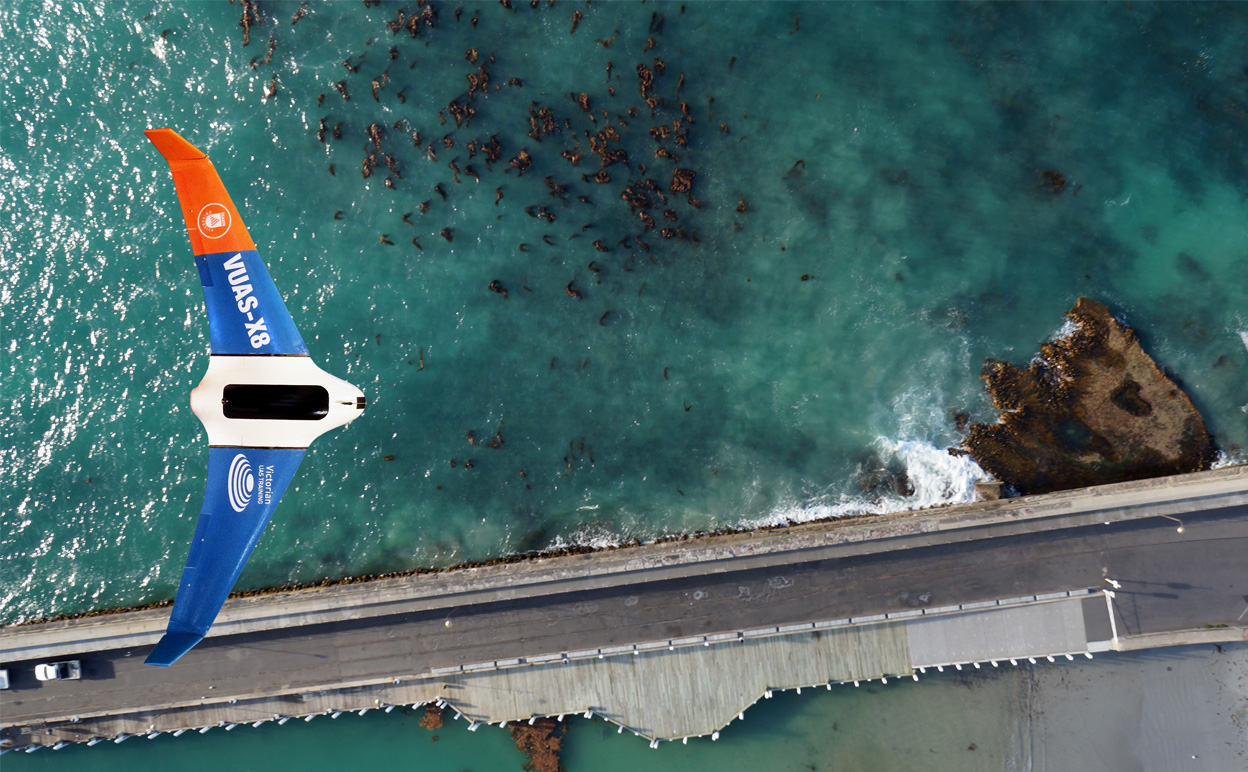
Unmanned aerial vehicles (UAVs) are at the cutting edge of technology being applied in ecological research.
As UAV technology continues to rapidly develop, Vincent et al. (Front Ecol Environ 2015; 13[2]: 74–75) noted that the potential research applications of UAVs are stymied by legislative regulations imposed by government bodies. However, US laws are being revised to reflect differences between UAV and manned aircraft, and new Federal Aviation Administration (FAA) policies in the US will greatly assist ecologists who seek to use UAVs in their research. New FAA policy grants a Certificate of Waiver or Authorization (COA) for UAV applications by registered operators who meet their new criteria (WebTable 1; FAA 2015). This is a breakthrough, given that previous policy required a “Certificate of Authorization” for individual UAV flights. Ecologists, once becoming certified operators, now have an automatic “Certificate of Authorization” for undertaking most UAV operations relevant to conducting science. As a result of the change in policy, UAV laws in the US now more closely resemble the unambiguous and less restrictive UAV laws in Australia (WebTable 1), where Google and Amazon chose to site their drone delivery testing facilities.
Regardless of legislative change, there are ways to incorporate UAVs into research that can avoid some of the issues outlined by Vincent et al. If universities do not want to become registered operators, they can collaborate with industry partners who are registered. We are currently using such an approach in our ecological research. We believe this provides the best starting point for academic institutions to use UAVs for research purposes, without the need for in-house logistical support or expertise to meet legislative requirements.
While few universities have UAV Operators Certificate (UOC) approval in Australia (http://bit.ly/1cNbY6T), 25 academic institutions in the US — as of July 2015 — hold a COA (http://1.usa.gov/1CDy5W3). Thus, if Vincent et al. worked with a registered industry partner who already had a COA, they could work as close as two nautical miles from the airstrip they describe without the requirement to hold their own COA.
To conduct research within two nautical miles of a registered airstrip still requires a COA, and with good reason. A registered airstrip is marked on official aviation maps for all aircraft, and can be used for emergency landings. The last thing that a pilot in distress needs is to mistake a small UAV in close proximity for a large airplane in the distance. After all, UAV operators typically do not monitor aviation radio frequencies to inform pilots otherwise. It is important for the broader research community to recognize that UAVs are not toys; they are certified aircraft used for commercial purposes, and can pose a serious threat to both people and property when used irresponsibly.
Finally, proposed changes to UAV laws in Australia could relax the requirement of a UOC for remote-piloted aircraft under 2 kg (CASA 2014). As ecologists already undertaking research with UAVs under 2 kg, we are excited about the possibilities that such changes could foster.
Continued positive changes in UAV-relevant legislation globally — together with industry partnerships — should promote the rapid uptake of UAVs as important tools in conducting ecological field-based studies.
Allan BM, Ierodiaconou D, Nimmo DG, Herbert M Ritchie EG (2015) Free as a drone: ecologists can add UAVs to their toolbox. Frontiers in Ecology and the Environment, 13: 354–355. PDF DOI

![We examined the influence of fire on the distribution of introduced red foxes in semi-arid Australia. Image credit Area51Bel [CC-BY-SA 3.0] via Wikimedia Commons.](https://euanritchie.org/wp-content/uploads/2014/10/firefox.jpg)


![Macropus robustus, Image credit: David Cook Wildlife Photography[CC BY-NC 2.0] via Flickr](https://euanritchie.org/wp-content/uploads/2014/01/macropusrobustusdavidcookflickr.jpg)
![Sharks are critical to keeping environments in balance. Image credit: Terry Goss [CC-BY-SA-3.0] via Wikimedia Commons](http://upload.wikimedia.org/wikipedia/commons/5/56/White_shark.jpg)

![Without tigers, our ecosystems will suffer. Image by Sascha Kohlmann [CC-BY-SA 2.0] via Flickr](https://euanritchie.org/wp-content/uploads/2014/01/tiger-flickr-sasha-kohlmann-1248x772px.jpg)
![We ain’t lion, this predator stuff is a big deal. Image by Derek Keats via Flickr [CC BY 2.0] via Flickr](https://euanritchie.org/wp-content/uploads/2014/01/lion-derek-keats-flickr-1248x772px.jpg)
![In Australia, dingoes help keep introduced predators at bay. Image credit: Ars Electronica [CC BY-NC-ND 2.0] via Flickr](https://euanritchie.org/wp-content/uploads/2014/01/dingo-ars-electronica-via-flickr-1248x772px.jpg)
![It’s hard being a VIP (very important predator). Image credit: Mike Baird [CC BY 2.0] via Flickr](https://euanritchie.org/wp-content/uploads/2014/01/sea-otter-mike-baird-via-flickr-1248x772px.jpg)
![Without lions and leopards, there’s no telling what baboons will do. Image credit: Justin Jensen [CC BY 2.0] via Flickr](https://euanritchie.org/wp-content/uploads/2014/01/baboon-justinjensen-via-flickr-1248x772px.jpg)

 Applied ecology and conservation research group


