It’s raining feral cats and wild dogs on social media!
Today I spoke to Radio National’s Patricia Karvelus about what’s been happening in my social media feeds, from dog bounties to hashtag #scicomm.
 Applied ecology and conservation research group
It’s raining feral cats and wild dogs on social media!
Today I spoke to Radio National’s Patricia Karvelus about what’s been happening in my social media feeds, from dog bounties to hashtag #scicomm.
Today on Triple R, I had the honour and pleasure of sharing the airwaves with Australian Nobel Laureate Professor Peter Doherty.
Listen via 3RRR Radio on Demand (requires Flash)

Reintroducing Tasmanian Devils to mainland Australia could solve a raft of conservation issues, and Wilson’s Promontory seems to be the ideal place to start.
Read more at the Sydney Morning Herald.
By Euan Ritchie (Deakin University) and Brett Murphy (Charles Darwin University).
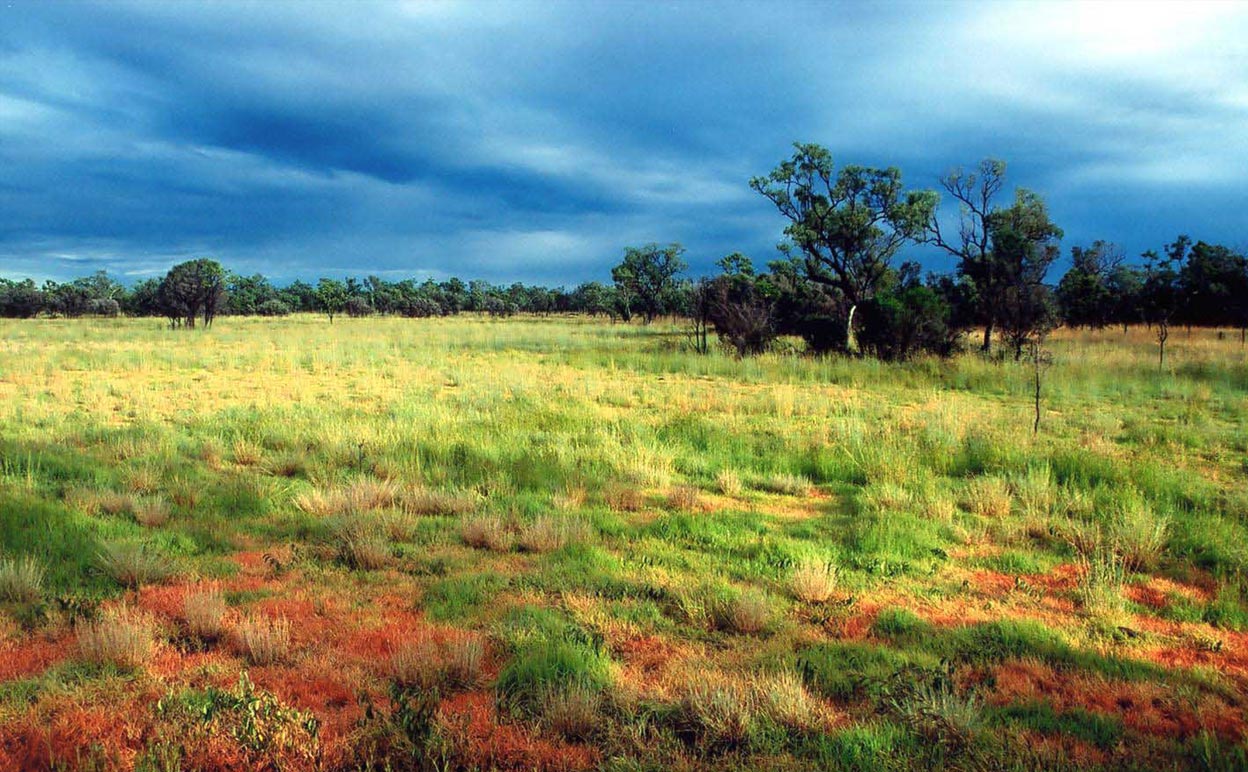
Australia’s Top End, Kimberley and Cape York Peninsula evoke images of vast, awe-inspiring and ancient landscapes. Whether on the hunt for a prized barramundi, admiring some of the oldest rock art in the world, or pursuing a spectacular palm cockatoo along a pristine river, hundreds of thousands of people flock to this region each year. But how are our vast northern landscapes faring environmentally, and what challenges are on the horizon?
Above 17° south, bounded by a rough line from Cairns, Queensland, to Derby, Western Australia, are the high-rainfall (more than 1,000 mm a year) tropical savannas. These are the largest and most intact ecosystem of their kind on Earth. With the exception of some “smaller” pockets of rainforest (such as Queensland’s Kutini-Payamu (Iron Range) National Park), the vegetation of the region is dominated by mixed Eucalyptus forest and woodland with a grassy understorey.
There is a distinct monsoonal pattern of rainfall. Almost all of it falls during the wet season (December-March), followed by an extended dry (April-November). Wet-season rains drive abundant grass growth, which subsequently dries and fuels regular bushfires – making these landscapes among the most fire-prone on Earth. The dominant land tenures of the region are Indigenous, cattle grazing and conservation.
These savannas are home to a vast array of plant and animal species. The Kimberley supports at least 2,000 native plant species, while the Cape York Peninsula has some 3,000. More than 400 bird and 100 mammal species call the region home, along with invertebrates such as moths, butterflies, ants and termites, and spiders. Many of the latter are still undescribed and poorly studied.
Many species, such as the scaly-tailed possum, are endemic to the region, meaning they are found nowhere else.
The general lack of extensive habitat loss and modification, as compared to the broad-scale land clearing in southern Australia since European arrival, can give a false impression that the tropical savannas and their species are in good health. But research suggests otherwise, and considerable threats exist.
Fire-promoting weeds such as gamba grass, widely sown until very recently as fodder for cattle, are transforming habitats from diverse woodlands to burnt-out, low-diversity grasslands. Indeed, the fires themselves, which are considered too frequent and too late in the dry season at some locations, are now thought to be a primary driver of species loss.
Notable examples of wildlife in trouble include declines of many seed-eating birds, such as the spectacular Gouldian finch, and the catastrophic decline of native mammal species, most prominently in Australia’s largest national park, Kakadu.
It is likely some threats may also combine to make matters worse for certain species. For instance, frequent fires, intensive cattle grazing and the overabundance of introduced species such as feral donkeys and horses all combine to remove vegetation cover. This, together with the presence of feral cats, makes some native animals more vulnerable to predation.
This globally significant ecosystem, already under threat, is facing new challenges too. Proposals to use the region as a food bowl for Asia are associated with calls for the damming of waterways and land clearing for agriculture.
This is against a backdrop of climate change, which among other effects may bring less predictable wet seasons, more frequent and intense storms (cyclones) and fires, and hotter, longer dry seasons. Such changes are not only likely to harm some species, but could also make those much-touted agricultural goals far more difficult to achieve.
Great opportunities do exist in northern Australia, including carbon farming and expanded tourism enterprises. In some cases this might require difficult transitions, as already seen in parts of Cape York Peninsula, where often economically unviable cattle stations have become joint Indigenous and conservation-managed lands.
A key priority for the Great Northern Savannas should be to maintain people on country. It’s often thought that the solution to reducing environmental impacts is removing people from landscapes, but as people disappear so too does their stewardship and ability to manage and care for the land.
Importantly, and finally, we must also learn the historical lessons from southern Australia if we are to avoid making similar mistakes all over again, jeopardising the unique and precious values of the north.
The Conversation’s EcoCheck series takes the pulse of some of Australia’s most important ecosystems to find out if they’re in good health or on the wane.
Are you a researcher who studies an iconic Australian ecosystem and would like to give it an EcoCheck? Get in touch.


By Euan Ritchie (Deakin University) Jenny Davis (Charles Darwin University) Jenny Martin (University of Melbourne) and Sarah Maclagan (Deakin University)
Australia is renowned for its iconic wildlife. A bilby digging for food in the desert on a moonlit night, a dinosaur-like cassowary disappearing into the shadows of the rainforest, or a platypus diving for yabbies in a farm dam. But such images, though evocative, are rarely seen by most Australians.
As mammalogist Hedley Finlayson wrote in 1935:
The mammals of the area are so obscure in their ways of life and, except for a few species, so strictly nocturnal, as to be almost spectral.
For some species, our time to see them is rapidly running out. We know that unfortunately many native animals face considerable threats from habitat loss, introduced cats and foxes, and climate change, among others.
More than ever before, we need accurate and up-to-date information about where our wildlife persists and in what numbers, to help ensure their survival. But how do we achieve this in a place the sheer size of Australia, and with its often cryptic inhabitants?
Fortunately, technology is coming to the rescue. Remotely triggered camera traps, for example, are revolutionising what scientists can learn about our furry, feathered, scaly, slippery and often elusive friends.
These motion-sensitive cameras can snap images of animals moving in the environment during both day and night. They enable researchers to keep an eye on their study sites 24 hours a day for months, or even years, at a time.
The only downside is that scientists can end up with millions of camera images to look at. Not all of these will even have an animal in the frame (plants moving in the wind can also trigger the cameras).
This is where everyday Australians can help: by becoming citizen scientists. In the the age of citizen science, increasing numbers of the public are generously giving their time to help scientists process these often enormous datasets and, in doing so, becoming scientists themselves.
Simply defined, citizen science is members of the public contributing to the collection and/or analysis of information for scientific purposes.
But, at its best, it’s much more than that: citizen science can empower individuals and communities, demystify science and create wonderful education opportunities. Examples of successful citizen science projects include Snapshot Serengeti, Birds in Backyards, School Of Ants, Redmap (which counts Australian sealife), DigiVol (analysing museum data) and Melbourne Water’s frog census.
Through the public’s efforts, we’ve learnt much more about the state of Africa’s mammals in the Serengeti, what types of ants and birds we share our cities and towns with, changes to the distribution of marine species, and the health of our waterways and their croaking inhabitants.
In a world where there is so much doom and gloom about the state of our environment, these projects are genuinely inspiring. Citizen science is helping science and conservation, reconnecting people with nature and sparking imaginations and passions in the process.
A fantastic example of this is Wildlife Spotter, which launched August 1 as part of National Science Week.
Researchers are asking for the public’s help to identify animals in over one million camera trap images. These images come from six regions (Tasmanian nature reserves, far north Queensland, south central Victoria, Northern Territory arid zone, and New South Wales coastal forests and mallee lands). Whether using their device on the couch, tram or at the pub, citizen scientists can transport themselves to remote Australian locations and help identify bettongs, devils, dingoes, quolls, bandicoots and more along the way.
By building up a detailed picture of what animals are living in the wild and our cities, and in what numbers, Wildlife Spotter will help answer important questions including:
So, if you’ve got a few minutes to spare, love Australian wildlife and are keen to get involved with some important conservation-based science, why not check out Wildlife Spotter? Already, more than 22,000 people have identified over 650,000 individual animals. You too could join in the spotting and help protect our precious native wildlife.

Extinction, ecosystem services, environmental politics, urban ecology, reconnecting with nature, the population issue, and yes, even more.
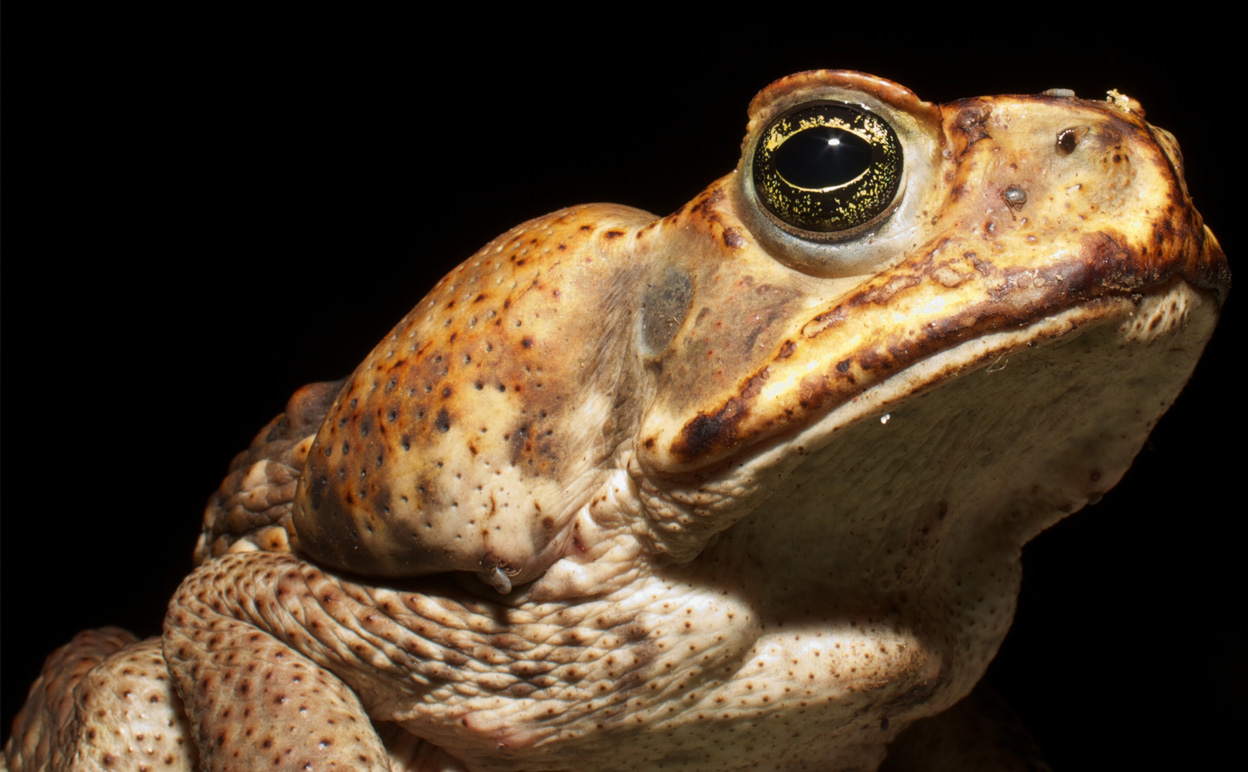
I spoke with Tom Elliot on 3AW Drive. My topic: Australians should consider eating kangaroos and camels as opposed to sheep and cows. Maybe one day in the future, introduced pests such as cane toads and European carp could end up on our dinner plates, instead of wreaking havoc with our environment.
By Euan Ritchie (Deakin University) and Adam Munn (University of New South Wales)

We may be what we eat, but our dietary choices also affect the health of the environment, and farmers’ back pockets.
Energy and water use, native habitat cut down for crops and grazing, and emissions that exacerbate climate change, are just some of the profound effects agriculture has on Earth. And, there are more and more mouths to feed.
Perversely, both starvation and obesity are severe health issues across the world. With agriculture confronted by economic and environmental uncertainties, society faces enormous challenges.
But challenges also offer great opportunities. Drastically rethinking what we eat, and where and how food is produced, could help our health, the planet, and our farming businesses.
That means eating fewer sheep and cows, and more kangaroos, feral animals, and insects.
Australia’s rangelands — the drier regions of the country predominantly used for livestock and grazing — cover about 80% of the country. They are often in poor condition and economically unviable. In part, this is due to the fact we still farm many animals, mostly in ways that are unsuited to the Australian climate and environment.
Hard-hoofed animals contribute to soil compaction and erosion, and have even been linked to the spread of the invasive cane toad. But the environmental impact of intensive stock farming extends much further.
Continuing to farm using a European-derived, intensive system is a recipe for land degradation and environmental collapse, especially with the compounding impacts of climate change (severe weather events, more frequent and intense droughts, and fires).
Past and current agricultural practices have also profoundly altered our environment. It may be impossible to restore these lands to their original condition, so we must learn to operate in the new environment we’ve created.
More broadly, many experts have identified our meat consumption and intensive farming as a significant driver of global problems.
To address these issues, we need a cultural shift away from intensive agriculture. The days of riding and relying on the sheep’s back, cattle’s hoof, or the more recent, and increasingly popular, chicken’s wing, may need to pass.
Native wildlife and some feral animals tread more lightly on the environment than intensively produced livestock do, and thus provide more sustainable options for food production on Australia’s arid lands. Kangaroos and goats place one-third of the pressure on grazing lands compared with sheep.
We already eat some of these animals, but could arguably eat more of them, including feral goats, camels, deer, rabbits, pigs, and buffalo, as well as native emus and kangaroos.
Yet more extreme proposals could include feral donkeys, cats, horses; and even cane toads. Horses are already consumed in Europe and cats in central Australia.
Eating more feral and native animals, and relying less on chicken, sheep, domestic pigs, and cattle would help meet ethical concerns too. Wild animals such as kangaroos are killed quickly, without the extended stress associated with industrialised farming, containment, and transportation to abattoirs.
And by harvesting sometimes overabundant wild native animals (such as kangaroos) and feral species, we may be able to reduce their impacts on ecosystems, which include overgrazing and damage to waterways.
An even greater leap would be to eat fewer four-limbed animals and more six-legged creatures. Insects are often high in protein and low in fat, and can be produced in large numbers, efficiently and quickly. They are already consumed in large numbers in some regions, including Asia.
Evidence that a market for such a food revolution exists is that shops are already popping up selling mealworm flour, ant seasoning salt, and cricket protein powder, among other delicacies.
Thanks to Australia’s variable climate, swinging between drought and flood, many farms are also tied to a boom-and-bust cycle of debt and credit.
As the climate becomes increasingly unpredictable, this economic strategy must be detrimental to the farmers, and is shown by many farm buy-backs or sell-offs.
It makes sense to use species that are naturally more resilient and able to respond to boom-and-bust cycles. Kangaroos and other species can forage on our ancient and typically nutrient-poor soils without the need for nutritional supplements (such as salt licks), and are physiologically more efficient at conserving water. This could lead to a more sustainable supply of food and income for farmers, without the dizzying economic highs but also without the inevitable prolonged and despairing lows.
To be clear, we are not suggesting completely replacing livestock, but diversifying and tailoring enterprises to better suit Australia’s environment.
To support more diverse agricultural enterprises we will need to overcome many obstacles, such as licences to hunt, what we’re comfortable consuming, and land use regulation. But we shouldn’t shy away from these challenges. There are tremendous opportunities for rural, regional and Indigenous communities, and indeed cities too.
We need a more diverse mix of meat to adapt to the pressures of a growing population and climate change. Supermarket aisles that display beef, chicken, pork and lamb, alongside kangaroo, camel, deer, goat, and insects, could be just what the environmental, health and economic doctors ordered.
By Don Driscoll and Euan Ritchie (Deakin University).
The electioneering has begun. In a campaign set to be dominated by economic issues, the Coalition and Labor are locking horns over who can best manage our finances, protect jobs and make housing more affordable. The Greens predictably decry the major parties, including their cavalier climate-change policies.
These are important issues, but are they highest priority on the political agenda? An arguably even greater issue exists that nobody is seriously championing, but which impacts all of us, socially, environmentally and economically.
Our natural heritage – the plants, animals and other organisms that help define Australia’s identity – are in dire straits. Yet this biodiversity crisis is barely mentioned in political discourse, nor is it foremost in the public consciousness.

The world economy is losing €50 billion (A$73 billion) a year through lost ecosystem services. It is predicted to lose €14 trillion per year by 2050 without action now. With potentially 7% of global economic product at stake by mid-century, nature conservation must surely be on the agenda in this election.
Actions needed to conserve our natural heritage, and reap substantial rewards, will challenge some of our most cherished ideas about social and economic policy. This demands reforms to reverse creeping losses to our democratic process.
Looking at the major parties’ platforms, it is clear that nature is not on the agenda. Labor lists 23 positive policies, none of which deals directly with conserving Australia’s plants and animals. The Liberal-National Party has done slightly better, claiming to believe in preserving Australia’s natural beauty and environment for future generations. However, its federal platform, released last year, shows no evidence of this belief.
Public concern has also shifted away from nature issues and towards other concerns like terrorism, as well as traditional areas of focus such as health care and the economy. This shift can be seen in some surprising places, such as the major grassroots lobby group GetUp – of its ten current campaigns only one, the Great Barrier Reef program, is directly about conserving wildlife diversity.
The value of biodiversity to humans is well established (for example, see here, here, and here). Biodiversity reduces stress, crime and disease. It also provides new economic opportunities and many other benefits, from climate control, to flood defence, to the many benefits delivered by birds.
These are just the tip of the iceberg, but like the polar ice they are at risk of disappearing through our neglect.
Despite biodiversity’s immense value, Australia’s natural heritage is not assured. Good news stories exist,
but as a succession of government State of the Environment reports over recent decades has shown, our natural heritage continues to be squandered.
The reports cite population growth, economic growth and climate change as key drivers of decline. Land clearing and invasive species also lead to biodiversity loss. All must be addressed to reverse the alarming trajectory of our wildlife.
These threats to our natural heritage should be high on the political agenda. But despite recent extinctions, caused in no small part by a failure to act quickly on conservation advice, bureaucrats and politicians have failed to rise to the challenge. Australia’s plants, animals and other wildlife continue to be swept aside with an enthusiasm and abandon reminiscent of the 19th-century pioneers.
Nature is missing in action from the political agenda for many reasons. Here are two key ones: questionable political donations and processes, and the gagging of the public service, government and university scientists. Both issues go to the heart of our democracy.
Australia has some of the weakest electoral laws concerning political donations and spending. Time lags between receiving donations and declaring them means that appropriate scrutiny of policy motivations, particularly at election times, is uncommon. This is concerning, because links between political favours for donors, while hard to prove, are frequently noted.
These correlations are not surprising. Corporate political activities are typically not gestures of goodwill, but a widely accepted corporate strategy aimed at securing better outcomes. Because many companies depend on using land for activities such as digging up resources and clearing native vegetation, the success of their political donations can often be reflected in damage to nature.
Equally concerning is the deafening silence from people who really know how damaging government policies can be for the environment. Inconvenient truths might challenge government policies. So public servants, including government scientists, are prohibited from speaking, or tweeting. Governments will go to extremes more often seen in the pages of crime thrillers to track down and punish whistle-blowers.
Governments attempting to silence academics hit the spotlight over cattle grazing trials in Victorian national parks. A senior Victorian public servant reportedly threatened to withdraw further funding from the University of Melbourne if the university did not agree to oversee the government’s grazing trial, despite the trial being widely regarded as flawed and unnecessary. Faced with this type of pressure, many university scientists simply avoid public debate for fear of damaging their job prospects or government funding.
In this climate of silence, major biodiversity issues and damaging government policies aren’t appropriately aired. The public don’t hear about it and so can’t make informed decisions at the polling booth. Consequently, government and public service barriers to honest media coverage undermine an informed democracy.
Valuing and preserving nature are critical for our well-being and prosperity, but species continue disappearing at alarming rates to causes we could better manage.
There are things that can be done, at a political level, to help stop this erosion of Australia’s natural heritage before it’s too late. In addition to adequately funding conservation, we should reform political funding rules. We should also encourage, even legally require, honest and open disclosure of how government policy impacts our environment.
By Peter Macreadie (University of Technology Sydney), Euan Ritchie (Deakin University) Graeme Hays (Deakin University), Rod Connolly (Griffith University) and Trisha B Atwood (Utah State University).
If you knew that there was zero percent chance of being eaten by a shark, would you swim more often? Rhetorical questions aside, the fear of being eaten has a profound influence on other animals too, and on the way they use marine environments.
Turtles, for example, fear being eaten by sharks and this restricts the movement and behaviour of entire populations. But when the fear of being eaten dissipates, we see that turtles eat more, breed more, and go wherever they please.
It might sound like turtle paradise, but in an article published today in Nature Climate Change we show that loss of ocean predators can have serious, cascading effects on oceanic carbon storage and, by extension, climate change.

For a long time we’ve known that changes to the structure of food webs – particularly due to loss of top predators – can alter ecosystem function. This happens most notably in situations where loss of predators at the top of the food chain releases organisms lower in the food chain from top-down regulatory control. For instance, the loss of a predator may allow numbers of its prey to increase, which may eat more of their prey, and so on. This is known as “trophic downgrading”.
With the loss of some 90% of the ocean’s top predators, trophic downgrading has become all too common. This upsets ecosystems, but in our article we also report its effects on the capacity of the oceans to trap and store carbon.
This can occur in multiple ecosystems, with the most striking examples in the coastal zone. This is where the majority of the ocean’s carbon is stored, within seagrass, saltmarsh and mangrove ecosystems – commonly known as “blue carbon” ecosystems.
Blue carbon ecosystems capture and store carbon 40 times faster than tropical rainforests (such as the Amazon) and can store the carbon for thousands of years. This makes them one of the most effective carbon sinks on the planet. Despite occupying less that 1% of the sea floor, it is estimated that coastal blue carbon ecosystems sequester more than half the ocean’s carbon.
The carbon that blue carbon ecosystems store is bound within the bodies of plants and within the ground. When predators such as sharks and other large fish are removed from blue carbon ecosystems, resulting increases in plant-eating organisms can destroy the capacity of blue carbon habitats to sequester carbon.
For example, in seagrass meadows of Bermuda and Indonesia, less predation on herbivores has resulted in spectacular losses of vegetation, with removal of 90–100% of the above-ground vegetation.
Such losses of vegetation can also destabilise carbon that has been buried and accumulated over millions of years. For example, a 1.5-square-kilometre die-off of saltmarsh in Cape Cod, Massachusetts, caused by recreational overharvesting of predatory fish and crabs, freed around 248,000 tonnes of below-ground carbon.
If only 1% of the global area of blue carbon ecosystems were affected by trophic cascades as in the latter example, this could result in around 460 million tonnes of CO2 being released annually, which is equivalent to the annual CO2 emissions of around 97 million cars, or just a bit less than Australia’s current annual greenhouse gas emissions.
So what can be done? Stronger conservation efforts and modification of fishing regulations can help restore marine predator populations, and thereby help maintain the important indirect role that predators play in climate change mitigation.
It’s about restoring balance so that we have, for example, healthy and natural numbers of both sea turtles and sharks. Policy and management need to reflect this important realisation as a matter of urgency.
More than 100 million sharks may be killed in fisheries each year, but if we can grant these predators great protection they may just help to save us in return.
This article was originally published on The Conversation. Read the original article, including reader comments.
I joined Defender Radio (a podcast of The Association for the Protection of Fur-Bearing Animals) to discuss a recently published paper, the role predators play, and how we can work to improve policy for animals and the environment around the world.
Sprechen Sie Deutsch? Neither do I, but that didn’t stop me from talking about Australischer Dingohunde on German radio station Deutschlandfunk.
Read or listen here (in German)
By Tim Doherty (Edith Cowan University), Chris Dickman (University of Sydney), Dale Nimmo (Charles Sturt University) and Euan Ritchie (Deakin University).

Cats, rats and foxes have wrought havoc on Australian wildlife and ecosystems. Known as “invasive mammalian predators”, these are species that have established populations outside their native range.
Responsible for numerous extinctions across the globe, this group of species also includes American mink in Europe, stoats and ferrets in New Zealand, and mongooses on many islands.
One common solution is to kill these predators. However, research published this week in the journal Biological Conservation shows it’s much more complicated than that. Killing invasive predators often doesn’t work and is sometimes actually worse for native wildlife.
Management of the threats to biodiversity posed by invasive predators has focused on reducing their populations using lethal control. This includes poison baiting, trapping and shooting.
These programs have at times been successful at local scales and on islands. However, they are extremely costly and they often fail to stop declines of native fauna at larger scales.
Such management programs often occur with little regard for how they might interact with other threats that are impacting ecosystems. This has led to unpredictable outcomes of invasive predator control. Sometimes it doesn’t work or, worse, it results in a negative outcome for wildlife.
We identified six disturbances with strong potential to increase the impacts of invasive predators: fire, grazing by large herbivores, land clearing, altered prey populations, the decline of top predators and resource subsidies from humans (such as increased food or shelter availability).
These disturbances interact with invasive predators in three main ways.
First, disturbances such as fire, grazing and land clearing result in a loss of vegetation cover, which makes prey more vulnerable to predation.
For example, small mammals in the Kimberley region of northern Western Australia experienced more predation by feral cats in an intensely burnt area, compared with patchily burnt and unburnt areas. Grazing by livestock similarly removes protective cover. Research shows that feral cats prefer to hunt in these areas because of the improved hunting success.
Second, increases in food or declines of competing top predators can allow populations of invasive predators to increase, thereby increasing their impact on native species.
For example, introduced prey species, such as rabbits in Australia, can support larger predator populations. This can lead to increased predation pressure on native species – a process termed “hyperpredation”.
The extinction of the Macquarie Island parakeet was attributed to this process. The parakeet co-existed with feral cats for more than 60 years, but declined rapidly to extinction following the introduction of rabbits to the island in 1879. Resource subsidies, such as garbage or hunters’ carcass dumps, can also support larger predator populations, leading to greater predation pressure.
Third, many of these disturbances also have a direct impact on native species, which is exacerbated by invasive predators. For example, habitat fragmentation reduces population sizes of many native species due to habitat loss. Increased predation by invasive predators can therefore make a bad situation much worse.
Our synthesis shows that management of invasive predators is likely to benefit from employing more integrated approaches.
Maintaining habitat complexity and refuges for prey species is one way that invasive predator impacts can be reduced. This includes improved management of fire and grazing. Lower-intensity fires that retain patchiness could reduce the predation-related impacts of fire on native species. Such approaches may be the best option where no effective predator control method exists, such as for cats in northern Australia.
Native top predators such as wolves in Europe and North America or dingoes in Australia can have suppressive effects on invasive predators. “Rewilding” is an option in some places where these species have declined. Where native predators conflict with livestock producers, guardian animals can often protect livestock from predation instead of lethal control.
Reducing resource subsidies is a simple way of reducing food resources for invasive predator populations.
If lethal control is used, it should be applied with caution. Selectively removing individual pest species from ecosystems can do more harm than good. Multi-species approaches are the best way to avoid such surprises and the order in which species are removed is an important consideration.
Rather than focusing on single processes, conservation managers should consider the multiple disturbances operating in stressed ecosystems and use management actions that address these threats in unison. Such integrated approaches are essential if further extinctions are to be avoided.
The paper is free to download until 30 July 2015.
Interactions within Mallee ecosystem food chains are out of balance.
The apex predator of the Mallee landscape — the dingo — is on the decline, allowing invasive species in the middle order of the food chain to become overabundant.
Propping up dingo numbers in the region will help control local pest species and problems associated with planned burning.
In 2012, I penned a piece for The Conversation about farming endangered species such as rhinos. I posed questions about what it means to farm an animal — taking it out of its evolutionary and ecological context — for the purpose of… conservation? Or is this just another means to extinction?

Yesterday I was interviewed by ABC radio’s Sarah Sedghi about this topic in the wake of devastating news that illegal rhino poaching in South Africa has hit a record high.
The war between cat-lovers and bird-lovers may have found its compromise: larger predators. Dingoes may do a far better job than humans of keeping feral cats in check, and without the ethical baggage. In other words, if you want to kill a feral cat, get a wild dog.
That’s the message from Arian Wallech et al. in a recently published piece: Novel trophic cascades: apex predators enable coexistence. Wallach’s paper reinforces my research into the interactions between dingoes and feral cats in Australia. Using native predators to kill or scare off introduced predators could be our best bet; working with nature , not against it.
But can we apply our learnings to other contexts and ecosystems? Stan Gehrt of Ohio State University thinks so: he studies the much-maligned coyote — specifically a thriving urban population in Chicago — which seems to be keeping the local cats at bay.
Our $2 billion windfall-that-wasn’t made the Daily Mail.

Today Buzzfeed ran a story on our mysterious billionaire benefactor: This Roo-Counting Couple Lost $2 Billion In Cruel Pozible Prank.
We’re not so sure it was a cruel prank so much as a software glitch, but it makes for a much better story!
Jen and I were on Triple R’s weekend science wrap, Einstein A-Go-Go, raising awareness (and hopefully funds) for The Big Roo Count.

 Applied ecology and conservation research group