Authors: Robert J Lennox, Austin J Gallagher, Euan G Ritchie, and Steven J Cooke
Published in:Biological Conservation, volume 224 (August 2018)
Abstract
Predators shape ecosystem structure and function through their direct and indirect effects on prey, which permeate through ecological communities. Predators are often perceived as competitors or threats to human values or well-being. This conflict has persisted for centuries, often resulting in predator removal (i.e. killing) via targeted culling, trapping, poisoning, and/or public hunts. Predator removal persists as a management strategy but requires scientific evaluation to assess the impacts of these actions, and to develop a way forward in a world where human-predator conflict may intensify due to predator reintroduction and rewilding, alongside an expanding human population.
We reviewed literature investigating predator removal and focused on identifying instances of successes and failures. We found that predator removal was generally intended to protect domestic animals from depredation, to preserve prey species, or to mitigate risks of direct human conflict, corresponding to being conducted in farmland, wild land, or urban areas. Because of the different motivations for predator removal, there was no consistent definition of what success entailed so we developed one with which to assess studies we reviewed. Research tended to be retrospective and correlative and there were few controlled experimental approaches that evaluated whether predator removal met our definition of success, making formal meta-analysis impossible. Predator removal appeared to only be effective for the short-term, failing in the absence of sustained predator suppression. This means predator removal was typically an ineffective and costly approach to conflicts between humans and predators.
Management must consider the role of the predator within the ecosystem and the potential consequences of removal on competitors and prey. Simulations or models can be generated to predict responses prior to removing predators. We also suggest that alternatives to predator removal be further developed and researched.
Ultimately, humans must coexist with predators and learning how best to do so may resolve many conflicts.
Lennox RJ, Gallagher AJ, Ritchie EG, Cooke SJ (2018) Evaluating the efficacy of predator removal in a conflict-prone world, Biological Conservation, PDFDOI
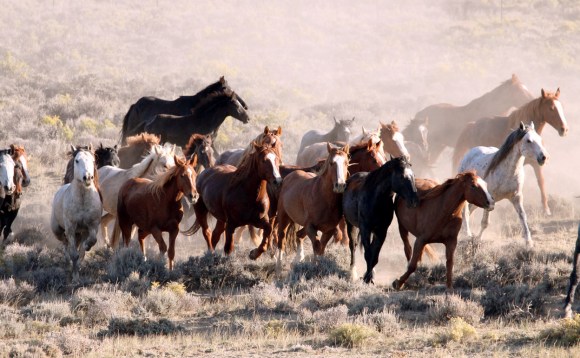
With the passing of the so-called “brumby bill” against scientific advice, feral horses will continue to damage the internationally significant Kosciuszko National Park.
By Don Driscoll, Euan Ritchie, and Tim Doherty (Deakin University)
Late on Wednesday night the so-called “brumby bill” was passed without amendment in the New South Wales Parliament. The controversial Coalition bill, supported by the Christian Democrats and the Shooters, Fishers and Farmers Party, means that feral horses must be kept in Kosciuszko National Park.
It also creates a community advisory panel, with no scientific experts appointed, to advise the minister on how to manage the horse population in the alpine ecosystem.
The NSW government has attracted accusations of a conflict of interest. Former Nationals member Peter Cochran, who now runs a commercial venture offering brumbie-spotting rides through the National Park (and who has donated extensively to Deputy Premier John Barilaro) reportedly commissioned lawyers to draft the bill. Peter Cochran, John Barilaro and Gladys Berejiklian have denied all accusations of conflict of interest and underhanded conduct.
The bill has also been criticised by scientific bodies. In a letter to NSW Premier Gladys Berejiklian this week, the Australian Academy of Science noted that the legislation removes consideration of scientific advice, and called for the bill to be withdrawn or substantially amended.
In a rare move, the International Union for the Conservation of Nature has also written to the NSW government, expressing concern over the potential degradation of this internationally significant national park.
Out of step with other states
The NSW Labor Party does not support the bill and has pledged to repeal the legislation if elected next March. The legislation represents a radical change in NSW’s management of feral horses, coming after a 2016 draft strategy that recommenced reducing their population by 90% over 20 years.
Barilaro argued against aerial culling when he presented the Brumby bill to parliament, calling it cruel and barbaric. He reiterated that the bill is meant to prevent lethal control in his response to Victoria’s announcement. But surprisingly, the draft legislation makes no mention of control methods, lethal or otherwise.
The deputy premier also referred to the Guy Fawkes National Park horse cull in northern NSW in 2000 to support his argument against aerial culling. But an independent enquiry found that the cull was an appropriate humane response to the situation, where horses were starving to death and causing environmental damage after a fire. The RSPCA and independent reports show that aerial culling is an acceptable and humane way to manage horse numbers.
Further, the brumby bill now locks in the predictable outcome that thousands of horses are likely to starve to death in the next drought or after large fires. It is therefore puzzling that actions likely to increase horse suffering are not of great concern to many within the pro-brumby lobby.
Is a compromise possible, in which both cultural and conservation goals can be accommodated? We think so. The feral horse population can be removed from the national parks and sensitive ecosystems. Brumby herds can thrive on extensive private property in the region, an approach already proven in South Australia’s Coffin Bay National Park.
The brumby bill was written and presented to parliament by groups with at best a perceived conflict of interest, and promoted by using inaccurate information about culling and heritage. It has been roundly criticised by leading national and international scientific bodies for not taking adequate account of science and the key role of national parks in conserving biodiversity.
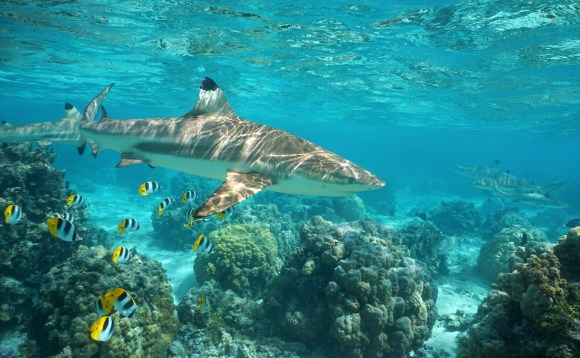
Black tip sharks swim with tropical fish in a lagoon in French Polynesia.
By Robert Lennox (Carleton University), Austin Gallagher (University of Miami), Euan Ritchie (Deakin University) and Steven J Cooke (Carleton University).
In French Polynesia, fishing is an integral part of everyday life. The people living here fish on the flats and along the reef using nets, hooks and line, harpoons, spearguns and traditional artisanal traps.
They fish for food. They are also seeing the benefits of using their traditional knowledge to guide recreational fishing tourists — a business with potential to improve long term employment security.
Abundant sharks in the lagoon led to questions about their contribution to the fishery and whether it would help the fishery if they were targeted. This is a question that is often on the minds of humans when they encounter predators.
As an ecologist working with the fish populations in French Polynesia, I went looking for research about what happens to an ecosystem when a predator is removed. Are the responses predictable? Does it work? Can we make generalizations?
Our new study, published in Biological Conservation, surveyed the research on predator removal and identified several interesting — and perhaps unexpected — trends.
Humans and other predators
Predators are among the most charismatic animals on Earth — lions, eagles and sharks adorn many human symbols. On land, in the air and in water, predators fascinate and inspire, they are quintessential representations of nature’s majesty and might.
In spite of their ecological, economic and cultural significance, predators are among the most heavily persecuted animals, due to conflict with humans and their assets.
Predators attack and kill livestock, hunt economically important prey and can kill or injure people or be perceived as a threat to human safety. These conflicts may motivate humans to try to manage predators to lessen the damages.
One of the oldest and most rudimentary methods is to cull or remove them, even though predators are already rare and some are threatened with extinction.
The motivation to remove predators is easy to understand, but what if predator removal does not even achieve the desired outcomes?
In balance
Predators are essential to ecosystems because they regulate prey populations. Without predators, prey can become over-abundant. This can result in damage to local plants, as well as disease outbreaks that can spread to domesticated animals.
Top predators like wolves dominate small predators like coyotes, keeping those populations in check too. Without predators, ecosystems become unbalanced in many ways because plants, herbivores and small predators change in response to their loss.
In a perfect scenario, successful predator removal would strike a balance. It would reduce conflict and be sustainable, but not cause the predator population to disappear entirely. However, our review of 141 studies of predator removal revealed that success is rarely achieved.
A small number of studies have shown successful removal of predators without harming the predator population, and led to increases in the prey population. However, these examples of success were generally from the Arctic where wolves were removed to increase caribou or moose numbers. In that scenario, there are fewer links in the food web, possibly making responses more predictable.
Generally, however, the responses were unpredictable and removing predators often failed for one reason or another.
Coexistence, not conflict
Ecosystems are complex networks of species. They include plants, decomposers, naturally subordinate predators (such as feral cats, foxes and coyotes), pathogens, predators and their prey. Together, they all play vital roles in regulating each other.
When humans remove predators, the effects are consistently negative. The action can, for example, fracture wolf packs into smaller units, or increase the reproductive rates of coyotes to produce even more offspring. This can have knock on effects, including an increase in disease, plant damage if herbivore populations explode and even an increase in the number of collisions between large herbivores, such as moose, and vehicles.
Instead of killing predators, there are other measures we can take to reduce conflict and learn to live with wildlife. In parts of Alberta, biologists are encouraging landowners to use electric fencing around bee hives and chicken coops to fend off bears. These types of non-lethal solutions can be tested and may often be more effective than removing the predator.
Other studies have suggested that “rewilding” an ecosystem — that is, reintroducing species into the ecosystem — can reduce conflicts. When their prey are abundant, the predators have less interest in nearby livestock. One study showed that lynx conflict with farmers increased when their natural prey, roe deer, were scarcer.
Essential elements
Instead of removing predators to manage human-wildlife conflict, we should be looking towards non-lethal alternatives. Using deterrent devices (lights, sounds or flapping material) can keep predators away from homes, fields and livestock.
The services that predators and functioning ecosystems provide to humans are of enormous value, and we would be wise to work hard to conserve and maintain them for the benefit of all.
Predators aren’t only symbols, they are essential parts of healthy terrestrial and aquatic landscapes. And beyond what we value, we should feel an imperative to preserve the diversity of life we share Earth with, most of which precedes our own evolution.
Crowdfunded campaigns to save the orange-bellied parrot are a rare ray of hope. Image credit: Fatih Sam
By Eduardo Gallo-Cajiao (University of Queensland), Carla Archibald (University of Queensland), Euan Ritchie (Deakin University), Rachel Friedman (University of Queensland), Richard Fuller (The University of Queensland), Rochelle Steven (University of Queensland), and Tiffany Morrison (James Cook University)
If not for the public’s generosity, the iconic Statue of Liberty might not have the solid and impressive footing she does today. In the late 1800s, government funds for the monument were exhausted. Yet through a fundraising campaign, the New York World newspaper garnered support from over 160,000 residents to cover the pedestal costs.
Just as large monuments need solid bases to ensure their long-term existence, so too does the environment. In the case of nature conservation, it requires money to support diverse research projects, on-ground activities, and outreach aimed at protecting and managing species and habitats.
While the health of the environment continues to decline globally, in most regions government funding falls short of what is required to stem the losses. Crowdfunding plays an important and under-appreciated role for biodiversity conservation.
Our new research presents a global analysis of how crowdfunding, still a relatively novel and minor financial mechanism in the conservation community, is contributing to conservation around the world.
Show me the money. What’s being funded and why?
Crowdfunding offers a powerful mechanism for mobilising resources for conservation across borders. We recorded 577 conservation-oriented projects (from 72 crowdfunding platforms), which have raised around US$4.8 million since 2009. The people leading these projects were based in 38 countries, but projects took place across 80 countries.
This pattern has important implications for conservation, because there is often a mismatch between high-priority areas for global conservation and countries with the greatest financial and technical capacity. For instance, we discovered that a third of the projects were delivered in different countries to where their proponents were based. The USA, UK and Australia were the countries with the highest outflow of projects (“project exporters”). Indonesia, South Africa, Costa Rica and Mexico had the highest inflow (“project importers”).
Crowdfunding could be supporting conservation work of actors that do not have as much capacity for raising funds.
The people leading projects were primarily from non-governmental organisations (35%) or universities (30%), or were freelancers (26%). Importantly, among non-governmental organisations, we discovered organisations operating at sub-national levels proposed a majority of projects.
Additionally, crowdfunding for conservation is not all about research. While most of the projects we reviewed focused on research (40%), many tackled raising awareness of conservation-related issues (31%) or boots-on-the-ground activities (21%). This expands the sphere of anecdotal evidence and commentary about crowdfunding related to conservation, which has so far revolved around research. For the first time, we’ve systematically unpacked how these funds are being used for additional activities to support conservation.
Crowdfunding can also support innovative projects that traditional funding agencies deem too risky or unconventional. For example, one project supported buying and training two Maremma sheepdogs to protect penguins against predatory foxes in southeastern Australia. (That might sound familiar to those who’ve seen the movie Oddball.)
Such opportunities for innovation can have important consequences for conservation worldwide; crowdfunding could be considered an incubator for novel ideas before widespread dissemination.
More than half of the projects we recorded (around 58%) largely focused on species. These included a disproportionate number of threatened bird and mammal species.
Prominent projects to save orange-bellied parrots or Papua New Guinea’s endangered tree kangaroos are important success stories.
This is not to underplay crowdfunding’s importance for ecosystems – whether land-based (20%), marine (9%) or freshwater (4%). Crowfunding is supporting projects ranging from protection of wilderness areas in remote Tasmania to research informing the conservation of the Californian coast.
Crowdfunding benefits extend beyond dollars and cents
The amount of money for conservation via crowdfunding has so far been relatively modest compared to more traditional conservation finance mechanisms. However, the benefits of crowdfunding extend well beyond dollars and cents. Crowdfunding helps communicate environmental issues and empower researchers and communities.
The figure below shows the reach of a single tweet during the Big Roo Count campaign. It shows how conservation-related messages can spread widely and engage communities via social media.
The discussion over novel sources and recipients of conservation funding continues. At the same time, transparency and oversight remain critical for managing expectations and overall effectiveness of funding. Crowdfunding contributes one more building block to democratising conservation funding and increasing transparency.
The authors would like to acknowledge the contribution of Edward Game.
Authors: Eduardo Gallo-Cajiao, Carla Archibald, Rachel Friedman, Richard A Fuller, Edward T Game, Tiffany Morrison, and Euan G Ritchie
Published in:Conservation Biology
Abstract
Raising funds is critical for conserving biodiversity and hence so too is scrutinizing emerging financial mechanisms that might help achieve this goal. In this context, anecdotal evidence indicates crowdfunding is being used to support a variety of activities needed for biodiversity conservation, yet its magnitude and allocation remain largely unknown.
We conducted a global analysis to help address this knowledge gap, based on empirical data from conservation‐focused projects extracted from crowdfunding platforms. For each project, we determined the funds raised, date, country of implementation, proponent characteristics, activity type, biodiversity realm, and target taxa.
We identified 72 relevant platforms and 577 conservation‐focused projects that have raised US$4,790,634 since 2009. Whilst proponents were based in 38 countries, projects were delivered across 80 countries, indicating a potential mechanism of resource mobilization. Proponents were from non‐governmental organizations (35%), universities (30%), or were freelancers (26%). Most projects were for research (40%), persuasion (31%), and on‐ground actions (21%). Projects have focused primarily on species (57.7%) and terrestrial ecosystems (20.3%), and less on marine (8.8%) and freshwater ecosystems (3.6%). Projects have focused on 208 species, including a disproportionate number of threatened bird and mammal species.
Crowdfunding for biodiversity conservation has now become a global phenomenon and presents signals for potential expansion, despite possible pitfalls. Opportunities arise from its spatial amplifying effect, steady increase over time, inclusion of Cinderella species, adoption by multiple actors, and funding of a range of activities beyond research.
Our study paves the way for further research on key questions, such as campaign success rates, effectiveness, and drivers of adoption. Even though the capital input of crowdfunding so far has been modest compared to other conservation finance mechanisms, its contribution goes beyond funding research and providing capital.
Embraced with due care, crowdfunding could potentially become an increasingly important financial mechanism for biodiversity conservation.
Gallo-Cajiao E, Archibald C, Friedman R, Steven R, Fuller RA, Game ET, Morrison TH, Ritchie EG (2018) Crowdfunding biodiversity conservation, Conservation BiologyPDFDOI
Authors: Hung Nguyen, Sarah J Maclagan, Tu Dinh Nguyen, Thin Nguyen, Paul Flemons, Kylie Andrews, Euan G Ritchie, and Dinh Phung
Published in: 2017 IEEE International Conference on Data Science and Advanced Analytics
Abstract
Efficient and reliable monitoring of wild animals in their natural habitats is essential to inform conservation and management decisions. Automatic covert cameras or “camera traps” are being an increasingly popular tool for wildlife monitoring due to their effectiveness and reliability in collecting data of wildlife unobtrusively, continuously and in large volume. However, processing such a large volume of images and videos captured from camera traps manually is extremely expensive, time-consuming and also monotonous. This presents a major obstacle to scientists and ecologists to monitor wildlife in an open environment.
Leveraging on recent advances in deep learning techniques in computer vision, we propose in this paper a framework to build automated animal recognition in the wild, aiming at an automated wildlife monitoring system. In particular, we use a single-labeled dataset from Wildlife Spotter project, done by citizen scientists, and the state-of-the-art deep convo- lutional neural network architectures, to train a computational system capable of filtering animal images and identifying species automatically.
Our experimental results achieved an accuracy at 96.6% for the task of detecting images containing animal, and 90.4% for identifying the three most common species among the set of images of wild animals taken in South-central Victoria, Australia, demonstrating the feasibility of building fully automated wildlife observation. This, in turn, can therefore speed up research findings, construct more efficient citizen science- based monitoring systems and subsequent management decisions, having the potential to make significant impacts to the world of ecology and trap camera images analysis.
Nguyen H, Maclagan SJ, Nguyen TD, Nguyen T, Flemons P, Andrews K, Ritchie EG, Phung D (2017) Animal recognition and identification with deep convolutional neural networks for automated wildlife monitoring, 2017 IEEE International Conference on Data Science and Advanced Analytics PDFDOI
Understanding Earth’s species and ecosystems is a monumentally challenging scientific pursuit. But with the planet in the grip of its sixth mass extinction event, it has never been a more pressing priority.
To unlock nature’s secrets, ecologists turn to a variety of scientific instruments and tools. Sometimes we even repurpose household items, with eyebrow-raising results – whether it’s using a tea strainer to house ants, or tackling botfly larvae with a well-aimed dab of nail polish.
But there are many more high-tech options becoming available for studying the natural world. In fact, ecology is on the cusp of a revolution, with new and emerging technologies opening up new possibilities for insights into nature and applications for conserving biodiversity.
Our study, published in the journal Ecosphere, tracks the progress of this technological development. Here we highlight a few examples of these exciting advances.
Tiny tracking sensors
Electronically recording the movement of animals was first made possible by VHF radio telemetry in the 1960s. Since then even more species, especially long-distance migratory animals such as caribou, shearwaters and sea turtles, have been tracked with the help of GPS and other satellite data.
But our understanding of what affects animals’ movement and other behaviours, such as hunting, is being advanced further still by the use of “bio-logging” – equipping the animals themselves with miniature sensors.
Many types of miniature sensors have now been developed, including accelerometers, gyroscopes, magnetometers, micro cameras, and barometers. Together, these devices make it possible to track animals’ movements with unprecedented precision. We can also now measure the “physiological cost” of behaviours – that is, whether an animal is working particularly hard to reach a destination, or within a particular location, to capture and consume its prey.
Taken further, placing animal movement paths within spatially accurate 3D-rendered (computer-generated) environments will allow ecologists to examine how individuals respond to each other and their surroundings.
These devices could also help us determine whether animals are changing their behaviour in response to threats such as invasive species or habitat modification. In turn, this could tell us what conservation measures might work best.
Autonomous vehicles
Remotely piloted vehicles, including drones, are now a common feature of our skies, land, and water. Beyond their more typical recreational uses, ecologists are deploying autonomous vehicles to measure environments, observe species, and assess changes through time, all with a degree of detail that was never previously possible.
Coupling autonomous vehicles with sensors (such as thermal imaging) now makes it easier to observe rare, hidden or nocturnal species. It also potentially allows us to catch poachers red-handed, which could help to protect animals like rhinoceros, elephants and pangolins.
3D printing
Despite 3D printing having been pioneered in the 1980s, we are only now beginning to realise the potential uses for ecological research. For instance, it can be used to make cheap, lightweight tracking devices that can be fitted onto animals. Or it can be used to create complex and accurate models of plants, animals or other organisms, for use in behavioural studies.
Bio-batteries
Keeping electronic equipment running in the field can be a challenge. Conventional batteries have limited life spans, and can contain toxic chemicals. Solar power can help with some of these problems, but not in dimly lit areas, such as deep in the heart of rainforests.
“Bio-batteries” may help to overcome this challenge. They convert naturally occurring sources of chemical energy, such as starch, into electricity using enzymes. “Plugging-in” to trees may allow sensors and other field equipment to be powered cheaply for a long time in places without sun or access to mains electricity.
Combining technologies
All of the technologies described above sit on a continuum from previous (now largely mainstream) technological solutions, to new and innovative ones now being trialled.
Emerging technologies are exciting by themselves, but when combined with one another they can revolutionise ecological research. Here is a modified exerpt from our paper:
Not only will this minimise the stress to animals and the inadvertent spread of diseases, but it should also provide a more “natural” picture of how plants, animals and other organisms interact.
Realising the techno-ecological revolution will require better collaboration across disciplines and industries. Ecologists should ideally also be exposed to relevant technology-based training (such as engineering or IT) and industry placements early in their careers.
Authors: Blake M Allan, Dale G Nimmo, Daniel Ierodiaconou, Jeremy VanDerWal, Lian Pin Koh, and Euan G Ritchie
Published in:Ecosphere, volume 9, issue 5 (May 2018)
Abstract
Increasingly complex research questions and global challenges (e.g., climate change and biodiversity loss) are driving rapid development, refinement, and uses of technology in ecology. This trend is spawning a distinct sub‐discipline, here termed “technoecology.”
We highlight recent ground‐breaking and transformative technological advances for studying species and environments: bio‐batteries, low‐power and long‐range telemetry, the Internet of things, swarm theory, 3D printing, mapping molecular movement, and low‐power computers. These technologies have the potential to revolutionize ecology by providing “next‐generation” ecological data, particularly when integrated with each other, and in doing so could be applied to address a diverse range of requirements (e.g., pest and wildlife management, informing environmental policy and decision making).
Critical to technoecology’s rate of advancement and uptake by ecologists and environmental managers will be fostering increased interdisciplinary collaboration. Ideally, such partnerships will span the conception, implementation, and enhancement phases of ideas, bridging the university, public, and private sectors.
Allan BM, Nimmo DG, Ierodiaconou D, VanDerWal J, Koh LP, Ritchie EG (2018) Futurecasting ecological research: the rise of technoecology, EcospherePDFDOI
Following an epic and determined journey by an amorous male pygymy three-toed sloth, witnessing golden eagles duel over a fox carcass against a backdrop of majestic mountains, or simply being in awe of one of evolution’s most sublime creations, the sword-billed hummingbird, it’s fair to say I was more than a little excited to experience the Melbourne production of BBC’s Planet Earth II Live in Concert.
The show is a fusion of BBC’s extraordinary wildlife and landscape footage, from the Planet Earth II documentary series. It’s presented on a suitably massive screen, accompanied by a live orchestra playing a score written specially for this visual and aural celebration of nature.
The start of the show was sensational, a montage of wildlife imagery from around the world, with the emotional roller-coaster expertly enhanced by the beauty and fusion with the music that filled the room. It was akin to walking through a gallery, where the individual, finer details of paintings were unimportant, but the overall majesty of what was on show swept you away. I wish the remainder of the show had continued in this vein.
The actual images of wildlife were as we’ve come to expect from the BBC’s legendary wildlife team, second to none. A close-up of a lioness’s paw rippling as it moved across the sands of the Namib Desert while stalking a giraffe, a starling murmuration above Rome, langurs leaping through Jodhpur and, of course, the now famous great escape by a hatchling marine iguana from scores of hungry racer snakes were all captivating.
The orchestra was outstanding. Such was the power of the wildlife footage that at times it was possible to forget their presence, but at key moments onscreen they were most certainly heard and felt, providing a truly emotional and visceral experience.
There were many things to like, but a number of important elements didn’t work, which really detracted from what the show could have been. The first and perhaps most important problem was that each sequence was introduced, in far too much detail, by Eric Bana, who had the unenviable task of trying to replace some of David Attenborough’s narration of the original documentary series.
Bana’s commentary was aimed at making people more informed about the wildlife being featured, but it had the unfortunate effect of giving away exactly what was about to happen next, rather than allowing the audience to have the joy of discovering this for themselves, a very odd production decision. It made the performance feel quite stilted and disjointed, which wasn’t helped by an unannounced 20-minute intermission mid-show.
Bana is a fine Australian actor, but his casual approach and lighthearted jokes were unnecessary, and often not particularly funny. Most importantly, it took attention away from the main event, which should have been what was happening on screen. It reminded me of watching a great film on commercial TV and being engrossed, only to be wrenched out of this blissful state by the dreaded commercial break. This happened multiple times throughout the evening. Judicious and sparing use of surtitles could have remedied this situation.
Another deficiency was the editing and sequence of footage. We were told about the plight of a primate relative of humans, the Indri, from Madagascar’s rapidly disappearing forests. So why then did this sequence start with flying draco lizards from Southeast Asia and toucans from South America? Perhaps many were not bothered by this and instead it just reflects my ecological background.
The Indri was one of several species to appear a number of times in the show, sometimes without narration or explanation. This seemed puzzling given how much amazing material the BBC has at its disposal. Australian wildlife was also conspicuous by its absence.
Finally, at times the show’s lighting was over-the-top, washing out and obscuring imagery on the screen.
There was an attempt towards the end of the show to send a message to the audience about the plight of life of Earth, including how our cities could better accommodate plants and animals to live alongside us. There were painful times during the show when I felt like I was watching soon-to-be ghosts, given the current and dire mass extinction event we have created and are witnessing. I couldn’t help notice the irony of the many audience members watching wildlife while drinking bottled water they’d bought during the show’s intermission, a symptom of our dependence on plastics and consumption.
There is no question in my mind that a greater union between the arts and sciences, such as this event, has enormous potential for positive change.
So my greatest hope is that everyone who attended the show felt moved the next day to assess their own choices and how they affect the other species with which we share this planet, and that together we collectively demand our governments to ensure a sustainable future that preserves Earth’s remarkable wonders.
There are more and more of us on Earth, and increasingly we’re choosing to live in cities. This is a problem for wildlife: urbanisation is one of the greatest threats to biodiversity. Sprawling construction to accommodate people completely removes or modifies the homes of many other species.
But although we need to do all we can to mitigate these effects and their causes, cities are far from biodiversity wastelands. In fact, cities are home to large numbers of species, many of which are threatened.
One such example is the iconic but endangered southern brown bandicoot. New research has found these shy animals thriving in peri-urban areas (the interface between cities and more rural areas) on the outskirts of Melbourne.
Novel ecosystems
Through our effects on the environment, humans are increasingly creating “novel ecosystems”: areas composed of new combinations of species and/or new and modified environmental conditions. In these areas there are winners and losers. How we perceive and manage such ecosystems could have a big influence on conserving species more broadly, and helping to address Earth’s extinction crisis.
Our goal was to see whether novel sites could support resident bandicoots. Crucially, could peri-urban areas allow bandicoots to breed, recruit (attract new migrating individuals) and survive well enough for populations to persist?
Don’t judge habitats by their appearance
Contrary to what the Human Threat Hypothesis (and logic) might predict, we found more bandicoots at novel sites (66 individuals recorded over 1722 trap-nights) than remnant sites (26 individuals recorded over 1384 trap-nights). And bandicoots were most abundant at the novel site with the most urbanised surroundings. The condition of females was similar between novel and remnant sites.
Most bandicoots at novel sites were resident (meaning they were observed at the same location multiple times thoughout the study). At these same sites we recorded successful breeding, recruitment of young adults, and survival of mature adults.
Our results challenge conventional conservation thinking. Where bandicoots did best is also where known predators such as foxes and feral cats are present and abundant, as opposed to the nature reserves from which they are largely absent. Remnant areas also have more intact native vegetation, whereas bandicoots in urban areas nested in roadsides full of invasive blackberry, a weed often targeted for removal.
Bandicoots like thick vegetation, but they appear not to care which plant species they use – as long as cover is sufficient. Blackberry bushes may protect bandicoots from predators, and also be a source of food through the insects they attract.
On the topic of food and just how adaptable bandicoots are, locals within our study region reported them dining on pet and domestic animal food from backyards.
Conservation opportunities in cities
A growing body of evidence suggests that even heavily modified environments can support viable populations of native plants and animals, and we should endeavour to manage these areas more sympathetically for the benefit of more species. This does not mean that all species will thrive in cities and heavily modified environments – there will always be a need for conservation reserves – but it throws the wilderness-versus-city dichotomy into question.
We need greater awareness of the nature we already share our cities with. Deliberate encouragement such as greener building and urban design that encourages wildlife to return and flourish would substantially benefit humans and other species alike. We are a part of and dependent upon nature, and as such should celebrate and seek to re-establish these vital connections.
Authors: Sarah J Maclagan, Terry Coates, and Euan G Ritchie
Published in:Biological Conservation, volume 223 (July 2018)
Abstract
Novel ecosystems are increasingly common worldwide, particularly in areas heavily impacted by humans such as urban and peri-urban landscapes. Consequently, interest in their potential contribution to biodiversity conservation is growing, including their ability to sustain populations of threatened species. However, few studies have explored whether novel habitats can support viable populations over time and how they compare to less modified, remnant habitats.
We investigated the capacity for novel habitats to support an endangered mammal, the southern brown bandicoot (Isoodon obesulus obesulus: Peramelidae), in a highly-modified landscape near Australia’s second largest city, Melbourne. We compared bandicoot abundance and body condition between five novel and two remnant sites, and examined whether novel sites support residency and key demographic processes necessary for bandicoot population persistence. We found that bandicoot abundance was higher at novel than remnant sites, with the highest abundance at the novel site with the most urbanised surroundings. Female body condition was similar between novel and remnant sites. The majority of bandicoots at novel sites were resident, and breeding activity, recruitment of first-year adults, and survival of mature adults were observed at all novel sites.
Our results demonstrate the potential significance of novel habitats for conserving threatened species within heavily-modified landscapes, and encourage us not to judge the quality of habitats on their novelty alone. Broadening our appreciation of the potential value of novel ecosystems could increase off-reserve species conservation opportunities, a key priority within the context of the Anthropocene and unprecedented global change and biodiversity loss.
Maclagan SJ, Coates T, Ritchie EG (2018) Don’t judge habitat on its novelty: Assessing the value of novel habitats for an endangered mammal in a peri-urban landscape, Biological ConservationPDFDOI
Authors: Hayley Davis, Euan G Ritchie, Sarah Avitabile, Tim Doherty, and Dale G Nimmo
Published in:The Royal Society Open Science (April 2018)
Abstract
Fire shapes the composition and functioning of ecosystems globally. In many regions, fire is actively managed to create diverse patch mosaics of fire-ages under the assumption that a diversity of post-fire-age classes will provide a greater variety of habitats, thereby enabling species with differing habitat requirements to coexist, and enhancing species diversity (the pyrodiversity begets biodiversity hypothesis). However, studies provide mixed support for this hypothesis.
Here, using termite communities in a semi-arid region of southeast Australia, we test four key assumptions of the pyrodiversity begets biodiversity hypothesis:
that fire shapes vegetation structure over sufficient time frames to influence species’ occurrence,
that animal species are linked to resources that are themselves shaped by fire and that peak at different times since fire,
that species’ probability of occurrence or abundance peaks at varying times since fire, and
that providing a diversity of fire-ages increases species diversity at the landscape scale.
Termite species and habitat elements were sampled in 100 sites across a range of fire-ages, nested within 20 landscapes chosen to represent a gradient of low to high pyrodiversity. We used regression modelling to explore relationships between termites, habitat and fire.
Fire affected two habitat elements (coarse woody debris and the cover of woody vegetation) that were associated with the probability of occurrence of three termite species and overall species richness, thus supporting the first two assumptions of the pyrodiversity hypothesis. However, this did not result in those species or species richness being affected by fire history per se. Consequently, landscapes with a low diversity of fire histories had similar numbers of termite species as landscapes with high pyrodiversity.
Our work suggests that encouraging a diversity of fire-ages for enhancing termite species richness in this study region is not necessary.
Davis H, Ritchie EG, Avitabile S, Doherty T, Nimmo DG (2018) Testing the assumptions of the pyrodiversity begets biodiversity hypothesis for termites in semi-arid Australia, Royal Society Open SciencePDFDOI
Authors: Hayley M Geyle, John CZ Woinarski, G Barry Baker, Chris R Dickman, Guy Dutson, Diana O Fisher, Hugh Ford, Mark Holdsworth, Menna E Jones, Alex Kutt, Sarah Legge, Ian Leiper, Richard Loyn, Brett P Murphy, Peter Menkhorst, April E Reside, Euan G Ritchie, Finley E Roberts, Reid Tingley and Stephen T Garnett
Published in:Pacific Conservation Biology
Abstract
A critical step towards reducing the incidence of extinction is to identify and rank the species at highest risk, while implementing protective measures to reduce the risk of extinction to such species. Existing global processes provide a graded categorisation of extinction risk.
Here we seek to extend and complement those processes to focus more narrowly on the likelihood of extinction of the most imperilled Australian birds and mammals. We considered an extension of existing IUCN and NatureServe criteria, and used expert elicitation to rank the extinction risk to the most imperilled species, assuming current management.
On the basis of these assessments, and using two additional approaches, we estimated the number of extinctions likely to occur in the next 20 years. The estimates of extinction risk derived from our tighter IUCN categorisations, NatureServe assessments and expert elicitation were poorly correlated, with little agreement among methods for which species were most in danger – highlighting the importance of integrating multiple approaches when considering extinction risk.
Mapped distributions of the 20 most imperilled birds reveal that most are endemic to islands or occur in southern Australia. The 20 most imperilled mammals occur mostly in northern and central Australia.
While there were some differences in the forecasted number of extinctions in the next 20 years among methods, all three approaches predict further species loss.
Overall, we estimate that another seven Australian mammals and 10 Australian birds will be extinct by 2038 unless management improves.
Geyle HM, Woinarski JCZ, Baker GB, Dickman CR, Dutson G, Fisher DO, Ford H, Holdsworth M, Jones ME, Kutt A, Legge S, Leiper I, Loyn R, Murphy BP, Menkhorst P, Reside AE, Ritchie EG, Roberts FE, Tingley R, Garrett ST (2018) Quantifying extinction risk and forecasting the number of impending Australian bird and mammal extinctions, Pacific Conservation BiologyPDFDOI
The native dingo Canis dingo — the only remaining terrestrial, large-bodied, top predator in mainland Australia — is classified as a pest species because it threatens livestock.
Barrier fencing, and lethal methods — such as 1080 poisoning, trapping and shooting — are used as control methods, in a management practice that parallels the persecution of the Tasmanian tiger.
We need to focus on limiting human population growth, reducing resource consumption, and cracking down on government corruption, if we’re going to stop the global loss of species known as the sixth great extinction…
Three-quarters of species on earth were wiped out in the fifth mass extinction, including the dinosaurs. 66 million years later, scientists are now warning that we are entering the sixth mass extinction, and it’s caused by people…
Authors: Don A Driscoll, Lucie M Bland, Brett A Bryan, Thomas M Newsome, Emily Nicholson, Euan G Ritchie, and Tim S Doherty
Published in:Nature Ecology & Evolution
Abstract
The Convention on Biological Diversity and its Strategic Plan for Biodiversity 2011–2020 form the central pillar of the world’s conservation commitment, with 196 signatory nations; yet its capacity to reign in catastrophic biodiversity loss has proved inadequate. Indicators suggest that few of the Convention on Biological Diversity’s Aichi targets that aim to reduce biodiversity loss will be met by 2020. While the indicators have been criticized for only partially representing the targets, a bigger problem is that the indicators do not adequately draw attention to and measure all of the drivers of the biodiversity crisis.
Here, we show that many key drivers of biodiversity loss are either poorly evaluated or entirely lacking indicators. We use a biodiversity-crisis hierarchy as a conceptual model linking drivers of change to biodiversity loss to evaluate the scope of current indicators. We find major gaps related to monitoring governments, human population size, corruption and threat-industries.
We recommend the hierarchy is used to develop an expanded set of indicators that comprehensively monitor the human behaviour and institutions that drive biodiversity loss and that, so far, have impeded progress towards achieving global biodiversity targets.
Driscoll DA, Bland LM, Bryan BA, Newsome TM, Nicholson E, Ritchie EG, Doherty TS (2018) A biodiversity-crisis hierarchy to evaluate and refine conservation indicators, Nature Ecology & EvolutionPDFDOI
By Euan Ritchie (Deakin University), Bek Christensen (Queensland University of Technology), Bill Bateman (Curtin University), Dale Nimmo (Charles Sturt University), Don Driscoll (Deakin University), Grant Wardell-Johnson (Curtin University) Noel D Preece (James Cook University) and Sarah Luxton (Curtin University).
More than 1,800 plant, animal and ecological communities are listed as being at risk of extinction, ranging from individual species such as the orange-bellied parrot and Gilbert’s potoroo, all the way up to entire ecosystems such as the Great Barrier Reef. This number rises every year, in the face of threats such as climate change, rampant land clearing, mining and invasive species.
In the midst of such a tremendous environmental challenge, the federal government has released a draft document, Australia’s strategy for nature 2018–2030, for public comment. This is a welcome step, but regrettably the strategy falls a long way short of what’s required and contains significant flaws. It contains no firm commitments or measurable targets, and overlooks a substantial amount of relevant scientific evidence.
As representatives of Australia’s peak professional ecological body, the Ecological Society of Australia (ESA), we are deeply concerned that the strategy is not fit for its purpose of protecting Australia’s biodiversity.
A bolder, science-based vision
As part of ESA’s formal submission to the public consultation, we provide an alternative, evidence-based vision. This includes nine key recommendations for nature conservation in Australia.
1. Set measurable targets. Any project needs a set of quantifiable targets, otherwise we won’t know whether it has been successful or not. Some suggestions:
establish a comprehensive national network of ecosystem monitoring sites by 2025
reverse the declines of all species that are threatened by human-caused factors by 2025.
2. Commit to preventing human-caused species extinctions. The strategy should state explicitly that human-driven species extinctions are not acceptable, and establish and maintain clear paths of accountability.
3. Adequately fund the strategy’s implementation. Australia should show international leadership in conservation by investing at the upper end of OECD and G20 averages. At present Australia allocates less than 0.8% of GDP to conservation. We suggest 2% as an urgent minimum investment, with scope to expand funding to ensure that targets can be met.
4. Focus on the intrinsic value of biodiversity. The draft strategy is supposed to represent “Australia’s biodiversity conservation strategy and action inventory”, but it does not define biodiversity, choosing instead to focus on the vague notion of “nature”. We recommend the document return its focus to biodiversity, defined in the Convention on Biodiversity as “the variability among living organisms from all sources including, inter alia, terrestrial, marine and other aquatic ecosystems and the ecological complexes of which they are a part; this includes diversity within species, between species and of ecosystems”.
5. Make specific legislative recommendations. The strategy should specify the legislative revisions that will be needed to improve conservation, with particular focus on the flagship Environment Protection and Biodiversity Conservation (EPBC) Act 1999. This should include:
requiring threat-abatement plans to efficiently manage major threats to many species, such as impacts of feral predators and herbivores, invasive plants and new diseases
specifically protecting high-value ecosystems, including those of economic value such as the Great Barrier Reef, and those that are critical for species survival, and rare ecosystems.
6. Commit to establishing a comprehensive system of protected areas, including marine parks. Despite longstanding commitments to developing a fully representative network of protected areas in Australia, many bioregions remain poorly represented in the National Reserve System and the national marine protected area system.
9. Recognise key issues that affect Australian biodiversity conservation. Any successful strategy should specifically address new and emerging issues that can harm our environment, such as Australia’s increasing use of natural resources, environmental water flows in rivers, and overfishing.
We cannot ignore human population growth, increasing per capita consumption and subsequent resource demand as drivers of threats to healthy and resilient ecosystems.
Our unique plants, animals and other organisms shape our national identity. They have wide-ranging benefits to our society, as well as being inherently valuable in their own right. They need a much stronger commitment to their ongoing protection.
I recently spoke with Jo Printz, from Mornings on ABC Central Victoria about our recently published paper examining the relationships between fire, dingoes and foxes, in Victoria’s Big Desert-Wyperfeld region.
Over the past few years, Australia has lost the Christmas Island pipistrelle, the Christmas Island skink and the Bramble Cay melomys – the first mammal in the world to have been wiped out by human-caused climate change.
Has the creation of the government’s threatened species strategy and a Threatened Species Commissioner helped? Or is red tape actually hindering conservation efforts?
I spoke to Phillip Adams on Radio National about the extinction crisis facing Australian fauna.




 Several initiatives, such as


 Applied ecology and conservation research group