Authors: John CZ Woinarski, Keith Morris and Euan G Ritchie
Published in: Tracey J, Lane C, Fleming P, Dickman C, Quinn J, Buckmaster, T, McMahon S (ed) (2015) 2015 National Feral Cat Management Workshop Proceedings.
Summary
Feral cats have been present in Australia since soon after European settlement. They are now numerous and pervasive across the continent, and occur on many islands. Although they have been recognised as a Key Threatening Process to Australian biodiversity under the EPBC Act since 1999, and there has been a Threat Abatement Plan for them in place since 2008, there has to date been little progress towards their effective management.
The challenges to effective control of feral cats in Australia are formidable. The geographic scale of concern is immense; many potential control mechanisms (such as trapping and shooting) typically have only superficial, transient and localised benefits; design of effective baits has only recently progressed substantially; there may be significant non-target impacts (including for threatened species such as quolls) from such toxic baits; baiting programs may need to be sustained for many years, and in many places need to also consider integration with control of foxes; reduction in cat numbers may have unwanted consequences (increases in other pest species, such as rabbits or introduced rodents); control programs will be expensive; and there will be some community concern about cat control.
However, progress towards the effective control of feral cats will achieve marked biodiversity benefits. Such control is likely to be substantially more efficient and cost-effective, and produce more enduring outcomes, than alternative conservation approaches based on intensive management for individual threatened species.
Here, we propose short-term (one year) targets towards the effective control of feral cats in Australia. These targets are set within a broader contextual and long-term (ca. 20 years) objective: No further extinctions of Australian wildlife, and pronounced recovery (and return to the wild) of at least 40 currently threatened animal species.
The targets recommended here are designed strategically to help establish a robust foundation for the decadal-scale campaign likely to be required to achieve enduring success. This should not be taken to indicate that significant progress can be achieved, if at all, only at glacial speed. Rather, explicit and dramatic short-term targets set now are required to overcome inertia, to recognise that this is a problem that should be confronted, to demonstrate that successful outcomes are possible, and because the continuing existence of some threatened species requires immediate action.
Woinarski JCZ, Morris K, Ritchie EG (2015) Draft national targets for feral cat management: Towards the effective control of feral cats in Australia – targets with teeth in Tracey J, Lane C, Fleming P, Dickman C, Quinn J, Buckmaster, T, McMahon S (ed) (2015) 2015 National Feral Cat Management Workshop Proceedings, Canberra, 21-22 April 2015. PestSmart Toolkit publication, Invasive Animals Cooperative Research Centre, Canberra, Australia. PDFLINK
Authors: Ine Dorresteijn, Jannik Schultner, Dale G Nimmo, Joern Fischer, Jan Hanspach, Tobias Kuemmerle, Laura Kehoe and Euan G Ritchie
Published in:Proceedings of the Royal Society B, volume 282 (September 2015)
Apex predators perform important functions that regulate ecosystems world- wide. However, little is known about how ecosystem regulation by predators is influenced by human activities. In particular, how important are top-down effects of predators relative to direct and indirect human-mediated bottom-up and top-down processes?
Combining data on species’ occurrence from camera traps and hunting records, we aimed to quantify the relative effects of top-down and bottom-up processes in shaping predator and prey distributions in a human-dominated landscape in Transylvania, Romania. By global standards this system is diverse, including apex predators (brown bear and wolf), mesopredators (red fox) and large herbivores (roe and red deer). Humans and free-ranging dogs represent additional predators in the system.
Using structural equation modelling, we found that apex predators suppress lower trophic levels, especially herbivores. However, direct and indirect top- down effects of humans affected the ecosystem more strongly, influencing species at all trophic levels.
Our study highlights the need to explicitly embed humans and their influences within trophic cascade theory. This will greatly expand our understanding of species interactions in human-modified landscapes, which compose the majority of the Earth’s terrestrial surface.
Dorresteijn I, Schultner J, Nimmo DG, Fischer J, Hanspach J, Kuemmerle T, Kehoe L, Ritchie EG (2015) Incorporating anthropogenic effects into trophic ecology: predator–prey interactions in a human-dominated landscape, Proceedings of the Royal Society B, 282: 20151602 PDFDOI
This month I attended the inaugural Threatened Species Summit held at Melbourne Zoo. I used my five minutes to be deliberately provocative; I spoke about rewilding.
Ecosystem ecology: understanding interactions between predators, prey, and fire in Victoria’s Big Desert
Principal supervisor: Dr Euan Ritchie
External Supervisor: Dr Dale Nimmo (Charles Sturt University)
Start date: February 2016
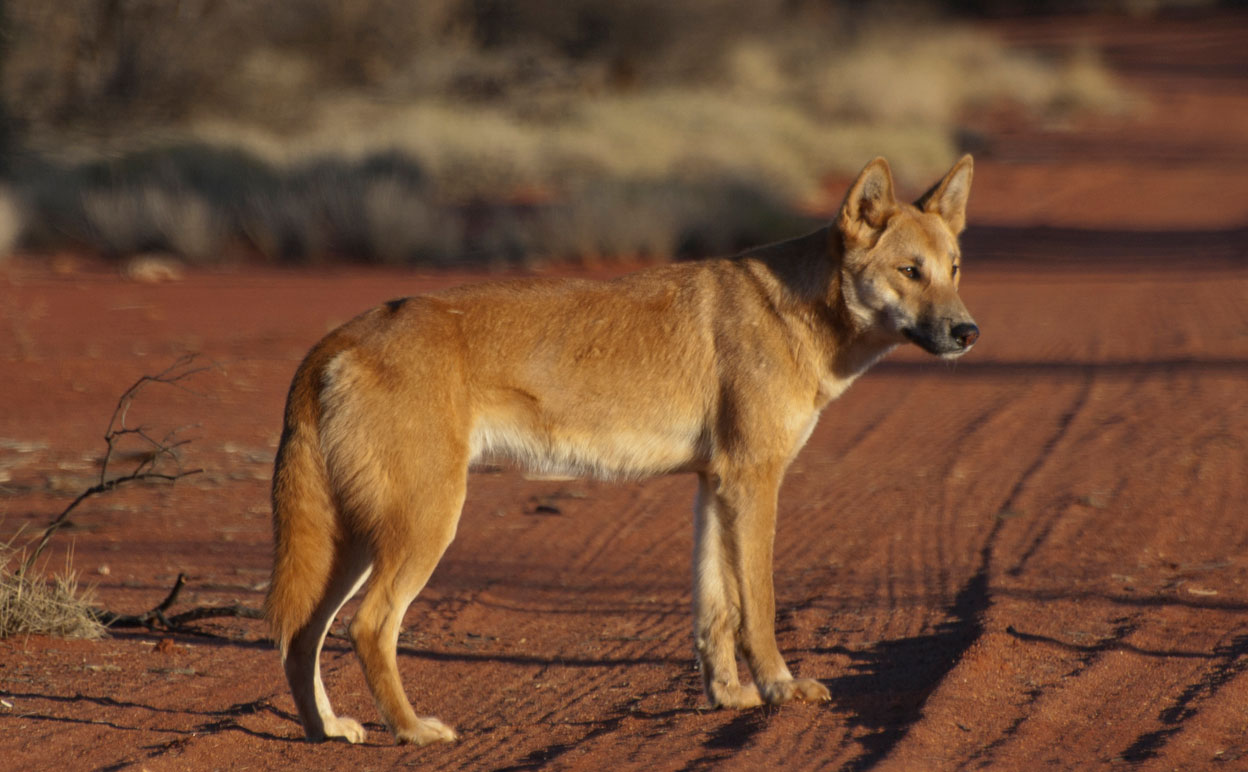
Dingoes and wild dogs are top predators in northwest Victoria’s national parks. Image credit: Angus McNab.
Northwest Victoria’s conservation reserves are key flagship areas home to high species diversity, including many species of conservation concern. Within this region, wild canids (dingoes/wild dogs), the top predators, are patchily distributed, being relatively common in the Big Desert-Wyperfeld region, but largely absent from the northern Murray Sunset and Hattah-Kulkyne national parks.
Wild canids, like other top predators worldwide, are known to be critical in influencing species throughout the ecosystems in which they occur. However, it remains to be determined what role(s) dingoes/wild dogs perform in Big Desert-Wyperfeld. Specifically, do they regulate populations of overabundant herbivores (e.g. kangaroos) and/or invasive predators (e.g. cats and foxes), and does this in turn benefit native prey species (e.g. hopping mice)?
We will examine the role(s) of wild canids by surveying their distribution and abundance in the Big Desert-Wyperfeld region, and relating it to that of other key species of conservation and/or pest management concern. This will be achieved through a combination of remote camera trapping, sand pads, scat counts and giving up density experiments.
Putting the heat on species interactions: predators, prey and fire in Wilsons Promontory National Park
Principal Supervisor: Dr Euan Ritchie
External Supervisors: Dr Dale Nimmo (Charles Sturt University)
Start date: July 2016
Wilsons Prom is home to native mammals such as the Swamp Wallaby, Wallabia bicolor. Image by Toby Hudson, via Wikimedia Commons
Fire and predation are key processes that shape the structure and function of ecological communities. Despite their importance, few studies have examined how they may interact to affect the distribution, abundance and habitat preferences of species across different habitats.
This project will examine the effects of fire and predation on mammals in Wilsons Promontory National Park. This work is supported by a Parks Victoria research partnership.
How does the composition and configuration of agricultural land use affect patch occupancy of bat species?
Principal Supervisor: Dr Euan Ritchie
External Supervisors: Dr Dale Nimmo (Charles Sturt University)
Start date: February 2016
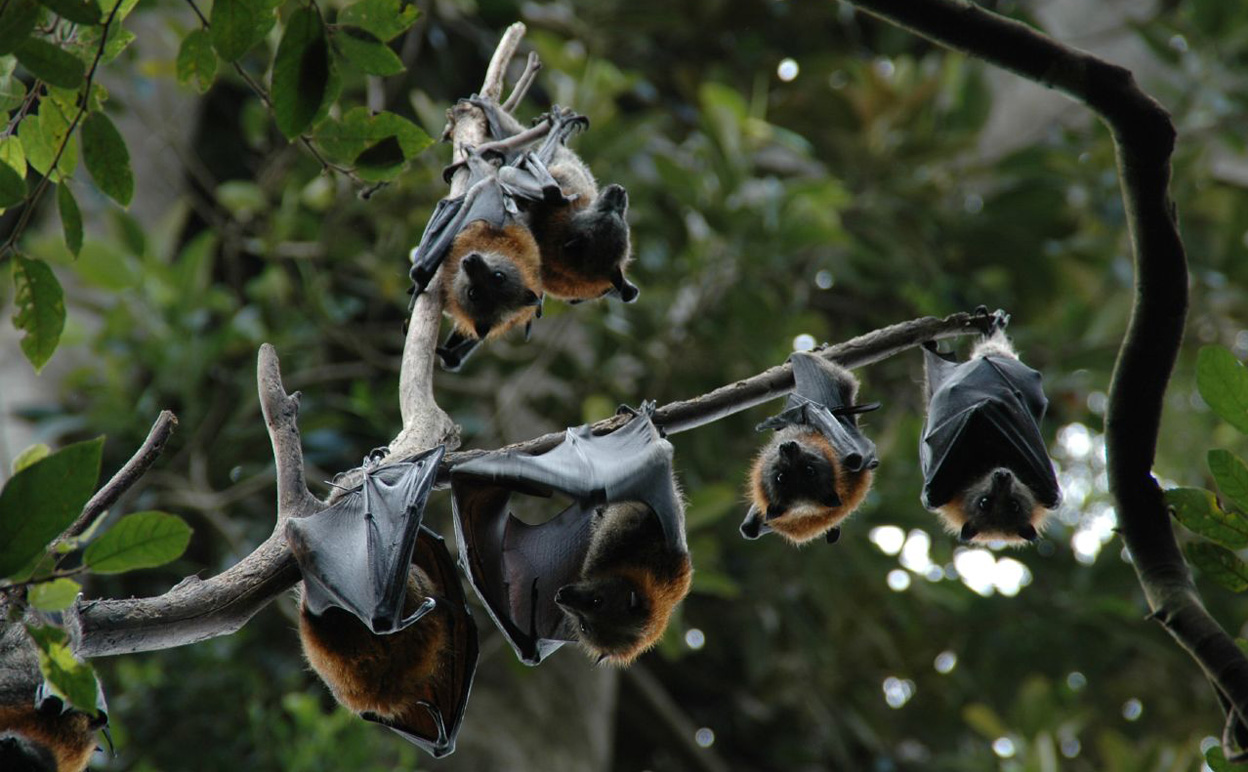
More than 20 species of bat are found in Victoria. Image credit: bellogarrey via Flickr
Bat species are an important element of Australia’s countryside biodiversity. They also provide ecosystem services to agriculture through invertebrate pest control.
Previous studies have highlighted the importance of remnant vegetation embedded within farmland for the conservation of bat species, but little research has investigated how agricultural matrix surrounding these remnant patches influences patch occupancy.
This study will investigate how the composition and configuration of farmland surrounding remnant vegetation influences patch occupancy of bat species. Remnant patches of native vegetation embedded within agricultural land across in the Goulburn Broken Catchment Management Authority will be surveyed using echolocation call detection. The majority of the remnants patches selected for surveys have been identified by the catchment as high priority conservation sites.
The results of this project will provide important insights as to how best manage agricultural land in order to enhance the conservation potential of remnant vegetation, as well as potentially increase ecosystem services to agriculture.
Fox, cat and fire interactions in the Grampians National Park
Principal Supervisor: Dr Euan Ritchie
External and co-supervisors: Dr Dale Nimmo (Charles Sturt University) and Associate Professor John White (Deakin University)
Start date: July 2016
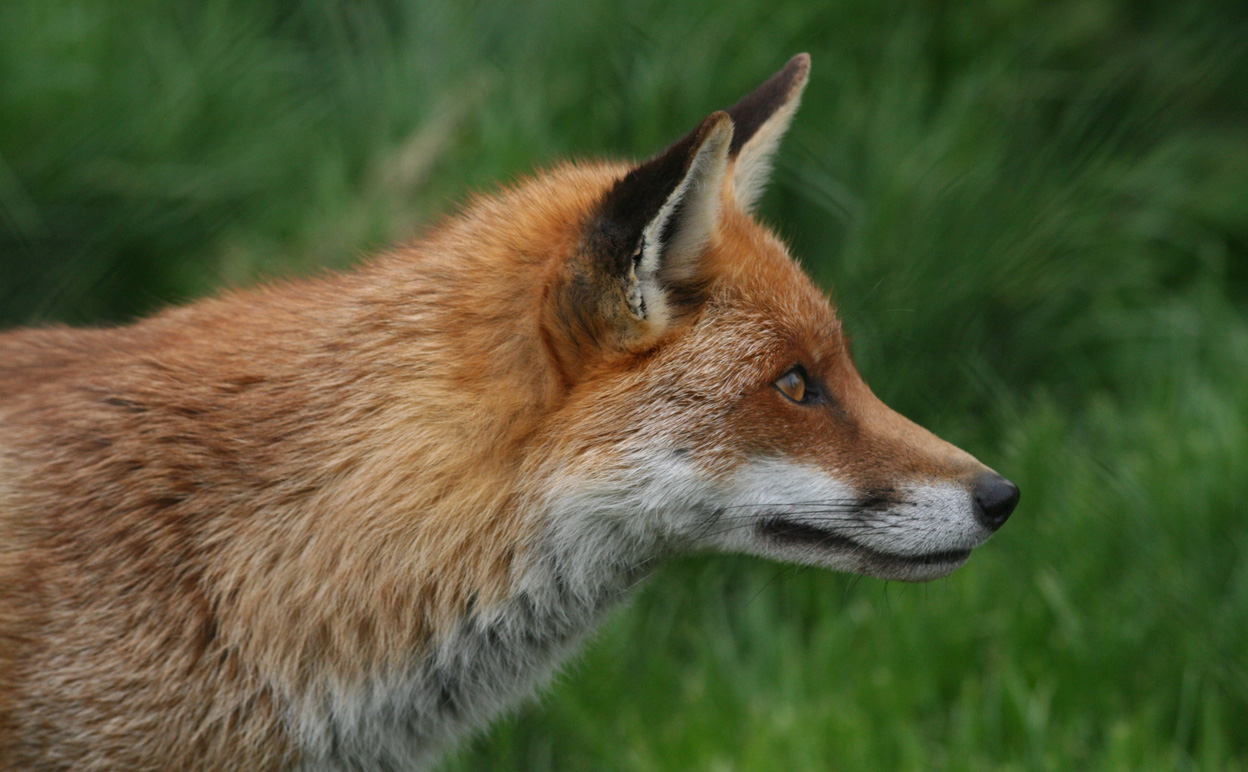
Foxes are invasive predators in the Grampians. Image credit: Dan Derrett via Flickr
This project, a research partnership between Parks Victoria and Deakin University, will examine fox and cat distribution across the Grampians National Park. Specifically, it will aim to:
Determine the most effective way to survey these invasive predators, using a combination of camera traps, scat counts and sand pads.
Examine the effect of fire on fox and cat habitat use.
Examine how foxes and cats are associated with native mammals (as part of an ongoing, long-term study led by Associate Professor White).
The ecological role of eastern barred bandicoots in a newly established island population
Principal Supervisor: Dr Euan Ritchie
External and co-supervisors: Dr Duncan Sutherland (Phillip Island Nature Parks) and Dr Amy Coetsee (Zoos Victoria)
Start date: February 2016
Eastern barred bandicoots persist only in captivity or within fox-free nature reserves. Image credit JJ Harrison via Wikimedia Commons
Mainland eastern barred bandicoots (EBBs) are listed as extinct in the wild, persisting only in captivity or within fox-free fenced reserves.
Phillip Island Nature Parks, together with Zoos Victoria and the Eastern Barred Bandicoot Recovery Team, are conducting an experimental release of EBBs onto fox-free Churchill Island, adjacent to Phillip Island, which lies outside the known historic range of the species.
This project forms part of a broader effort to bring the EBBs back from the brink of extinction and off the threatened species list.
We are seeking an honours student for a project to experimentally determine the role of EBBs as ecological engineers and to continue a monitoring programme into the survival rates, reproductive success and habitat use of EBBs.
The project will involve soil and habitat assessments, live-trapping, radio-tracking and camera trapping.
The candidate will require a manual driver’s licence. Field accommodation on Phillip Island is available.
Cats, rats and foxes have wrought havoc on Australian wildlife and ecosystems. Image credit Paul Hocksenar, Jude, Paul Hocksenar via Flickr.
Cats, rats and foxes have wrought havoc on Australian wildlife and ecosystems. Known as “invasive mammalian predators”, these are species that have established populations outside their native range.
Responsible for numerous extinctions across the globe, this group of species also includes American mink in Europe, stoats and ferrets in New Zealand, and mongooses on many islands.
One common solution is to kill these predators. However, research published this week in the journal Biological Conservation shows it’s much more complicated than that. Killing invasive predators often doesn’t work and is sometimes actually worse for native wildlife.
Killing for conservation
Management of the threats to biodiversity posed by invasive predators has focused on reducing their populations using lethal control. This includes poison baiting, trapping and shooting.
These programs have at times been successful at local scales and on islands. However, they are extremely costly and they often fail to stop declines of native fauna at larger scales.
Such management programs often occur with little regard for how they might interact with other threats that are impacting ecosystems. This has led to unpredictable outcomes of invasive predator control. Sometimes it doesn’t work or, worse, it results in a negative outcome for wildlife.
Key disturbances
We identified six disturbances with strong potential to increase the impacts of invasive predators: fire, grazing by large herbivores, land clearing, altered prey populations, the decline of top predators and resource subsidies from humans (such as increased food or shelter availability).
These disturbances interact with invasive predators in three main ways.
First, disturbances such as fire, grazing and land clearing result in a loss of vegetation cover, which makes prey more vulnerable to predation.
For example, small mammals in the Kimberley region of northern Western Australia experienced more predation by feral cats in an intensely burnt area, compared with patchily burnt and unburnt areas. Grazing by livestock similarly removes protective cover. Research shows that feral cats prefer to hunt in these areas because of the improved hunting success.
Second, increases in food or declines of competing top predators can allow populations of invasive predators to increase, thereby increasing their impact on native species.
For example, introduced prey species, such as rabbits in Australia, can support larger predator populations. This can lead to increased predation pressure on native species – a process termed “hyperpredation”.
The extinction of the Macquarie Island parakeet was attributed to this process. The parakeet co-existed with feral cats for more than 60 years, but declined rapidly to extinction following the introduction of rabbits to the island in 1879. Resource subsidies, such as garbage or hunters’ carcass dumps, can also support larger predator populations, leading to greater predation pressure.
Third, many of these disturbances also have a direct impact on native species, which is exacerbated by invasive predators. For example, habitat fragmentation reduces population sizes of many native species due to habitat loss. Increased predation by invasive predators can therefore make a bad situation much worse.
Getting it right
Our synthesis shows that management of invasive predators is likely to benefit from employing more integrated approaches.
Maintaining habitat complexity and refuges for prey species is one way that invasive predator impacts can be reduced. This includes improved management of fire and grazing. Lower-intensity fires that retain patchiness could reduce the predation-related impacts of fire on native species. Such approaches may be the best option where no effective predator control method exists, such as for cats in northern Australia.
Native top predators such as wolves in Europe and North America or dingoes in Australia can have suppressive effects on invasive predators. “Rewilding” is an option in some places where these species have declined. Where native predators conflict with livestock producers, guardian animals can often protect livestock from predation instead of lethal control.
If lethal control is used, it should be applied with caution. Selectively removing individual pest species from ecosystems can do more harm than good. Multi-species approaches are the best way to avoid such surprises and the order in which species are removed is an important consideration.
Rather than focusing on single processes, conservation managers should consider the multiple disturbances operating in stressed ecosystems and use management actions that address these threats in unison. Such integrated approaches are essential if further extinctions are to be avoided.
Authors: Tim S Doherty, Chris R Dickman, Dale G Nimmo and Euan G Ritchie
Abstract
Invasive species have reshaped the composition of biomes across the globe, and considerable cost is now associated with minimising their ecological, social and economic impacts. Mammalian predators are among the most damaging invaders, having caused numerous species extinctions.
Here, we review evidence of interactions between invasive predators and six key threats that together have strong potential to influence both the impacts of the predators, and their management.
We show that impacts of invasive predators can be classified as either functional or numerical, and that they interact with other threats through both habitat- and community-mediated pathways.
Ecosystem context and invasive predator identity are central in shaping variability in these relationships and their outcomes. Greater recognition of the ecological complexities between major processes that threaten biodiversity, including changing spatial and temporal relationships among species, is required to both advance ecological theory and improve conservation actions and outcomes.
We discuss how novel approaches to conservation management can be used to address interactions between threatening processes and ameliorate invasive predator impacts.
Doherty TS, Dickman CR, Nimmo DG, Ritchie EG (2015) Multiple threats, or multiplying the threats? Interactions between invasive predators and other ecological disturbances, Biological Conservation, 190, 60-68 PDFDOI
Interactions within Mallee ecosystem food chains are out of balance.
The apex predator of the Mallee landscape — the dingo — is on the decline, allowing invasive species in the middle order of the food chain to become overabundant.
Propping up dingo numbers in the region will help control local pest species and problems associated with planned burning.
In 2012, I penned a piece for The Conversation about farming endangered species such as rhinos. I posed questions about what it means to farm an animal — taking it out of its evolutionary and ecological context — for the purpose of… conservation? Or is this just another means to extinction?
What if the only rhinos left in the world existed in zoos? Or horn factories? Image credit: Steve Evans via Flickr
Yesterday I was interviewed by ABC radio’s Sarah Sedghi about this topic in the wake of devastating news that illegal rhino poaching in South Africa has hit a record high.
The war between cat-lovers and bird-lovers may have found its compromise: larger predators. Dingoes may do a far better job than humans of keeping feral cats in check, and without the ethical baggage. In other words, if you want to kill a feral cat, get a wild dog.
That’s the message from Arian Wallech et al. in a recently published piece: Novel trophic cascades: apex predators enable coexistence. Wallach’s paper reinforces my research into the interactions between dingoes and feral cats in Australia. Using native predators to kill or scare off introduced predators could be our best bet; working with nature , not against it.
But can we apply our learnings to other contexts and ecosystems? Stan Gehrt of Ohio State University thinks so: he studies the much-maligned coyote — specifically a thriving urban population in Chicago — which seems to be keeping the local cats at bay.
Authors: A Specht, S Guru, L Houghton, L Keniger, P Driver, EG Ritchie, K Lai, A Treloar
Published in:Science of the Total Environment (online April 2015)
Abstract
Open-data has created an unprecedented opportunity with new challenges for ecosystem scientists. Skills in data management are essential to acquire, manage, publish, access and re-use data. These skills span many disciplines and require trans-disciplinary collaboration.
Science synthesis centres support analysis and synthesis through collaborative ‘Working Groups’ where domain specialists work together to synthesise existing information to provide insight into critical problems. The Australian Centre for Ecological Analysis and Synthesis (ACEAS) served a wide range of stakeholders, from scientists to policy-makers to managers. This paper investigates the level of sophistication in data management in the ecosystem science community through the lens of the ACEAS experience, and identifies the important factors required to enable us to benefit from this new data-world and produce innovative science.
ACEAS promoted the analysis and synthesis of data to solve transdisciplinary questions, and promoted the publication of the synthesised data. To do so, it provided support in many of the key skillsets required. Analysis and synthesis in multi-disciplinary and multi-organisational teams, and publishing data were new for most. Data were difficult to discover and access, and to make ready for analysis, largely due to lack of metadata. Data use and publication were hampered by concerns about data ownership and a desire for data citation. A web portal was created to visualise geospatial datasets to maximise data interpretation. By the end of the experience there was a significant increase in appreciation of the importance of a Data Management Plan.
It is extremely doubtful that the work would have occurred or data delivered without the support of the Synthesis centre, as few of the participants had the necessary networks or skills. It is argued that participation in the Centre provided an important learning opportunity, and has resulted in improved knowledge and understanding of good data management practices.
Specht A, Guru S, Houghton L, Keniger L, Driver P, Ritchie EG, Lai K, Treloar A (2015) Data management challenges in analysis and synthesis in the ecosystem sciences, Science of the Total EnvironmentDOIPDF
A mysterious benefactor donated more than $2 billion to The Big Roo Count. Well, almost.
A funny thing happened last Thursday. For a brief hour or so Jenny and I became the custodians of billions of conservation dollars. ‘Huh?’, you say?
At approximately 12.30 pm the mysterious Jeffrey Green donated a little over $2 billion to our crowd-funding campaign. Sadly the money disappeared within an hour or so. We never really thought the donation was real, but it was fun to think what it might mean for both the Big Roo Count, and more broadly and importantly Australia’s biodiversity.
Professor Possingham has estimated that if federal and state governments invested $200 million a year we could secure all of Australia’s threatened species. So imagine what more than 500 times that would mean! To put things in perspective, the federal defence budget is roughly $26 billion a year. Stop its budget for three days and you could save all threatened species in Australia.
Imagine… we’re ready!
P.S. Jeff, if you really are keen to donate to our campaign we are ready to receive and make good!
Help us conserve northern Australia’s iconic mammals by supporting The Big Roo Count. Image credit: David Webb
Ten years ago, with my wife Jen, I was finishing up four years of fieldwork in some of Australia’s most remote and spectacular habitats. We had been lucky enough to be investigating the ecology and conservation of Australia’s tropical kangaroos and wallabies, collecting first-of-its kind information on where they each occurred, how big the populations were and why each species lived in certain areas and not others.
But a lot can change in ten years.
While Jen and I have been blessed with kids, health, happiness and more, our northern mammals haven’t been so lucky. Many are disappearing; some at alarming rates. Why? fires, feral cats and climate change are all likely causes.
We have a plan that will give us our best shot at conserving Australia’s northern kangaroos and wallabies.
This winter, we’re packing our kids and our tent into a four-wheel-drive for an epic journey of scientific discovery to find out how the roos are faring ten years down the track.
We’ll repeat all the work we did a decade ago at the same field sites:
roo counts,
mapping habitat and measuring its condition,
and the most glamourous job of all: counting and collecting kangaroo poos to get more information on which species live where.
This time, we will also be packing exciting new technology including remotely-triggered camera traps.
It’s rare for ecologists to have long-term information like this. Our data will tell us what we are up against in the battle to conserve our native kangaroos, wallabies and other native fauna in the same region. We’ll also take every opportunity to talk with as many people as we can about the conservation issues facing northern Australia’s mammals.
“Euan Ritchie’s re-survey of kangaroos and wallabies across northern Australia 10 years on from his foundational PhD survey is fundamentally important research. Nobody but Euan can undertake the work, and I’m profoundly grateful that he’s willing to do it.” — Professor Tim Flannery
Following the outstanding success of my crowdfunded research project on Papua New Guinea’s remote mountain mammals, we are again partnering with Pozible to bring this project to life. With your generous support, we’ll be able to hire a four-wheel-drive and buy the remote camera traps we need to do this important work.
For more information, a video, regular updates and to pledge your support, visit pozible.com/bigroocount.
Please help us conserve Australia’s iconic northern kangaroos and wallabies. Please support The Big Roo Count!
Authors: Naomi E Davis, David M Forsyth, Barbara Triggs, Charlie Pascoe, Joe Benshemesh, Alan Robley, Jenny Lawrence, Euan G Ritchie, Dale G Nimmo and Lindy F Lumsden.
Abstract
Dingoes/wild dogs (Canis dingo/familiaris) and red foxes (Vulpes vulpes) are widespread carnivores in southern Australia and are controlled to reduce predation on domestic livestock and native fauna.
We used the occurrence of food items in 5875 dingo/wild dog scats and 11,569 fox scats to evaluate interspecific and geographic differences in the diets of these species within nine regions of Victoria, south-eastern Australia.
The nine regions encompass a wide variety of ecosystems. Diet overlap between dingoes/wild dogs and foxes varied among regions, from low to near complete overlap. The diet of foxes was broader than dingoes/wild dogs in all but three regions, with the former usually containing more insects, reptiles and plant material. By contrast, dingoes/wild dogs more regularly consumed larger mammals, supporting the hypothesis that niche partitioning occurs on the basis of mammalian prey size.
The key mammalian food items for dingoes/wild dogs across all regions were black wallaby (Wallabia bicolor), brushtail possum species (Trichosurus spp.), common wombat (Vombatus ursinus), sambar deer (Rusa unicolor), cattle (Bos taurus) and European rabbit (Oryctolagus cuniculus). The key mammalian food items for foxes across all regions were European rabbit, sheep (Ovis aries) and house mouse (Mus musculus).
Foxes consumed 6.1 times the number of individuals of threatened Critical Weight Range native mammal species than did dingoes/wild dogs. The occurrence of intraguild predation was asymmetrical; dingoes/wild dogs consumed greater biomass of the smaller fox.
The substantial geographic variation in diet indicates that dingoes/wild dogs and foxes alter their diet in accordance with changing food availability.
We provide checklists of taxa recorded in the diets of dingoes/wild dogs and foxes as a resource for managers and researchers wishing to understand the potential impacts of policy and management decisions on dingoes/wild dogs, foxes and the food resources they interact with.
Davis NE, Forsyth DM, Triggs B, Pascoe C, Benshemesh J, Davis NE, Forsyth DM, Triggs B, Pascoe C, Benshemesh J, Robley A, Lawrence J, Nimmo DG, Ritchie EG, Lumsden LF (2015) Interspecific and Geographic Variation in the Diets of Sympatric Carnivores: Dingoes/Wild Dogs and Red Foxes in South-Eastern Australia. PLoS ONE 10(3): e0120975.PDFDOI
Authors: Mark R Ziembicki, John C Z Woinarski, Jonathan K Webb, Eric Vanderduys, Katherine Tuft, James Smith, Euan G Ritchie, Terry B Reardon, Ian J Radford, Noel Preece, Justin Perry, Brett P Murphy, Hugh McGregor, Sarah Legge, Lily Leahy, Michael J Lawes, John Kanowski, Chris N Johnson, Alex James, Anthony D Griffiths, Graeme Gillespie, Anke S K Frank, Alaric Fisher and Andrew A Burbidge.
Abstract
Recent studies at some sites in northern Australia have reported severe and rapid decline of some native mammal species, notwithstanding an environmental context (small human population size, limited habitat loss, substantial reservation extent) that should provide relative conservation security.
All of the more speciose taxonomic groups of mammals in northern Australia have some species for which the conservation status has been assessed as threatened, with 53% of dasyurid, 46% of macropod and potoroid, 33% of bandicoot and bilby, 33% of possum, 31% of rodent, and 24% of bat species being assessed as extinct, threatened or near-threatened.
This paper reviews disparate recent and ongoing studies that provide information on population trends across a broader geographic scope than the previously reported sites, and provides some information on the conservation status and trends for mammal groups (bats, larger macropods) not well sampled in previous monitoring studies. It describes some diverse approaches of studies seeking to document conservation status and trends, and of the factors that may be contributing to observed patterns of decline.
The studies reported provide some compelling evidence that predation by feral cats is implicated in the observed decline, with those impacts likely to be exacerbated by prevailing fire regimes (frequent, extensive and intense fire), by reduction in ground vegetation cover due to livestock and, in some areas, by ‘control’ of dingoes. However the impacts of dingoes may be complex, and are not yet well resolved in this area.
The relative impacts of these individual factors vary spatially (with most severe impacts in lower rainfall and less topographically rugged areas) and between different mammal species, with some species responding idiosyncratically: the most notable example is the rapid decline of the northern quoll Dasyurus hallucatus due to poisoning by the introduced cane toad Rhinella marina, which continues to spread extensively across northern Australia. The impact of disease, if any, remains unresolved.
Recovery of the native mammal fauna may be impossible in some areas. However, there are now examples of rapid recovery following threat management. Priority conservation actions include: enhanced biosecurity for important islands, establishment of a network of substantial predator exclosures, intensive fire management (aimed at increasing the extent of longer-unburnt habitat and in delivering fine scale patch burning), reduction in feral stock in conservation reserves, and acquisition for conservation purposes of some pastoral lands in areas that are significant for mammal conservation.
Ziembicki MR, Woinarski JCZ, Webb JK, Vanderduys E, Tuft K, Smith J, Ritchie EG, Reardon TB, Radford IJ, Preece N, Perry JP, Murphy BP, McGregor H, Legge S, Leahy L, Lawes MJ, Kanowski J, Johnson CN, James A, Griffiths AD, Gillespie G, Frank ASK, Fisher A, Burbidge AA (2015) Stemming the tide: progress towards resolving the causes of decline and implementing management responses for the disappearing mammal fauna of northern Australia, Therya 2015 6(1) 169-225 PDFDOI

![Wilsons Prom is home to native mammals such as the Swamp Wallaby, Wallabia bicolor. Image by Toby Hudson [CC-BY-SA-3.0], via Wikimedia Commons](https://euanritchie.org/wp-content/uploads/2013/08/swampwallaby-wikimedia-commons-1248x772px.png)




 Applied ecology and conservation research group

