Authors: William L Geary, Euan G Ritchie, Jessica A Lawton, Thomas R Healey and Dale G Nimmo
Published in: Journal of Applied Ecology
Abstract
Apex predators can suppress smaller bodied ‘mesopredators’. In doing so, they can provide refuge to species preyed upon by mesopredators, which is particularly important in regions where mesopredators are invasive. While most studies of mesopredator suppression focus on the response of mesopredators to human control of apex predators, other factors –including natural and anthropogenic disturbance – also drive the occurrence of apex predators and, in doing so, might shape spatial patterns of mesopredator suppression.
We examined the role of fire in shaping the occurrence of an apex predator and, by extension, mesopredators and small mammals in a fire-prone region of semi-arid Australia. We measured the activity of an apex predator (the dingo, Canis dingo); an invasive mesopredator it is known to suppress, the red fox (Vuples vuples); and two species of native small mammal (Mitchell’s hopping mouse, Notomys mitchelli; silky mouse, Pseudomys apodemoides) that are potential prey, across 21 fire mosaics (each 12.56 km2). We used piecewise structural equation modelling and scenario analysis to explore the interactions between fire, predators and prey.
We found that dingoes were affected by fire history at the landscape scale, showing a preference for recently burned areas. While foxes were not directly affected by fire history, a negative association between dingoes and foxes meant that fire had an indirect impact on foxes, mediated through dingoes. Despite the suppression of foxes by dingoes, we did not observe a trophic cascade as small mammals were not negatively associated with foxes or positively associated with dingoes.
Synthesis and applications. Disturbance regimes have the capacity to shape patterns of mesopredator suppression when they alter the distributions of apex predators. Environmental change that promotes native predators can therefore help suppress mesopredators – a common conservation objective in regions with invasive mesopredators. The indirect consequences of disturbance regimes should be considered when managing disturbance (e.g. fire) for biodiversity conservation.
Geary WL, Ritchie EG, Lawton JA, Healey TR, Nimmo DG (2018) Incorporating disturbance into trophic ecology: fire history shapes mesopredator suppression by an apex predator, Journal of Applied EcologyPDFDOI
By Euan Ritchie (Deakin University), Dale Nimmo (Charles Sturt University), Don Driscoll (Deakin University), Geoffrey Heard (Charles Sturt University), James Watson (The University of Queensland), Megan C Evans (The University of Queensland) and Tim Doherty (Deakin University).
Furore erupted last week among many Australians who care for our native species.
First we heard that land clearing in Queensland soared to a staggering 400,000 or so hectares in 2015-16, a near 30% increase from the previous year. Second, the federal government’s outgoing Threatened Species Commissioner, Gregory Andrews, implied on national radio that land clearing was not a pressing issue for Australia’s threatened species.
This is a troubling public message, particularly as the government’s own State of the Environment Report 2016 lists “clearing, fragmentation and declining quality of habitat” as a primary driver of biodiversity decline across the continent.
These comments highlight key issues with the Threatened Species Commissioner’s current remit, made more pressing due to timing: the federal government will soon appoint a new commissioner, a “TSC 2.0”, if you will.
Threatened Species Commissioner 1.0
The commissioner’s role was established in 2014 to address the dire state of threatened species; a key initiative of the then environment minister, Greg Hunt. The remit was sixfold, including bringing a new national focus to conservation efforts; raising awareness and support for threatened species in the community; and taking an evidence-based approach to ensure conservation efforts are better targeted and co-ordinated and more effective.
Did TSC 1.0 meet the objectives?
We can confidently say “yes” in relation to the objectives of collaboration, public awareness and promotion of threatened species conservation. Andrews travelled widely and engaged directly with stakeholders, maintained active social media feeds, developed a YouTube channel, and had numerous media engagements.
Also laudable was the 2015 Threatened Species Summit, attended by some 250 delegates from a diverse set of stakeholders, which garnered significant media coverage.
But elsewhere progress has been mixed. The development of the Threatened Species Strategy is welcome, but the plan does not go nearly far enough. Key targets by 2020 are improvements in the population trajectories of 20 mammals, 20 birds and 30 plants. But this represents a mere 4% of Australia’s threatened species, excluding all threatened reptiles, amphibians, fishes and invertebrates, and most of our threatened flora.
Yet the Threatened Species Strategy mentions land clearing zero times and habitat loss just twice. Feral cats, on the other hand, are mentioned 78 times, with the plan overwhelmingly focused on culling this one invasive species. Other major introduced pests – foxes, rabbits, feral pigs and goats – are mentioned 10 times between them.
An on-ground focus and mobilising of financial and logistical resources to support threatened species recovery was a welcome development during Andrews’s tenure. His second progress report cites AU$131 million in funding for projects in support of threatened species since 2014.
Likewise, funding for threatened species must be better targeted. Of the 499 projects cited in the TSC second progress report, 361 were those of the Green Army and 20 Million Trees programs (costing AU$78 million, 60% of total funding). Neither program is specifically devoted to threatened species, and their benefit in this regard is doubtful.
The next commissioner’s checklist
Australians and democratic societies should have access to reliable, independent and objective information about the current state of our natural heritage, and how government decisions influence its trajectory. That’s a critical role that TSC 2.0 should play.
Expertise will be crucial for the new appointee. Given the complex science of species conservation, a background in environmental science is a clear requirement, just as a background in economics would be expected for the chair of the Productivity Commission, or a grounding in law for a human rights commissioner.
For a commissioner to work effectively, they must also be willing to comment on politically sensitive issues and put themselves at odds with the government when necessary. Commissioners typically work as the head of an independent statutory body, such as the Productivity Commission, the Australian Securities and Investments Commission, and the Australian Electoral Commission.
But if the TSC 2.0 is to be a truly informed and independent voice for Australia’s threatened species, the role must sit within a statutory authority, at arm’s length from government. This is the case in New Zealand, where an independent environment commission has operated since 1986. It’s time for Australia to follow suit.
The natural world is truly glorious in its diversity, and in the complexity of relationships between its many millions of species, and the environments in which they live. I was lucky enough to immerse myself in this wonder recently, while snorkelling on Heron Island with my family. The kaleidoscope of colours and chaos of movement I saw as I drifted over countless different fishes and corals was truly breathtaking. But they also inspired reflection.
Authors: Bronwyn A Hradsky, Alan Robley, Ray Alexander, Euan G Ritchie, Alan York, and Julian Di Stefano
Published in:Scientific Reports
Abstract
Invasive and over-abundant predators pose a major threat to biodiversity and often benefit from human activities. Effective management requires understanding predator use of human-modified habitats (including resource subsidies and disturbed environments), and individual variation within populations.
We investigated selection for human-modified habitats by invasive red foxes, Vulpes vulpes, within two predominantly forested Australian landscapes. We predicted that foxes would select for human-modified habitats in their range locations and fine-scale movements, but that selection would vary between individuals. We GPS-tracked 19 foxes for 17–166 days; ranges covered 33 to >2500 ha.
Approximately half the foxes selected for human-modified habitats at the range scale, with some ‘commuting’ more than five kilometres to farmland or townships at night. Two foxes used burnt forest intensively after a prescribed fire. In their fine-scale nocturnal movements, most foxes selected for human-modified habitats such as reservoirs, forest edges and roads, but there was considerable individual variation. Native fauna in fragmented and disturbed habitats are likely to be exposed to high rates of fox predation, and anthropogenic food resources may subsidise fox populations within the forest interior.
Coordinating fox control across land-tenures, targeting specific landscape features, and limiting fox access to anthropogenic resources will be important for biodiversity conservation.
Hradsky BA, Robley A, Alexander R, Ritchie EG, York, Di Stefano J (2017) Human-modified habitats facilitate forest-dwelling populations of an invasive predator, Vulpes vulpes. Scientific ReportsPDFDOI
Fox, cat and fire interactions in the Grampians National Park
Supervisor: Dr Euan Ritchie
External and co-supervisors: Dr Dale Nimmo (Charles Sturt University) and Dr Tim Doherty, (Deakin University)
Start date: February 2018
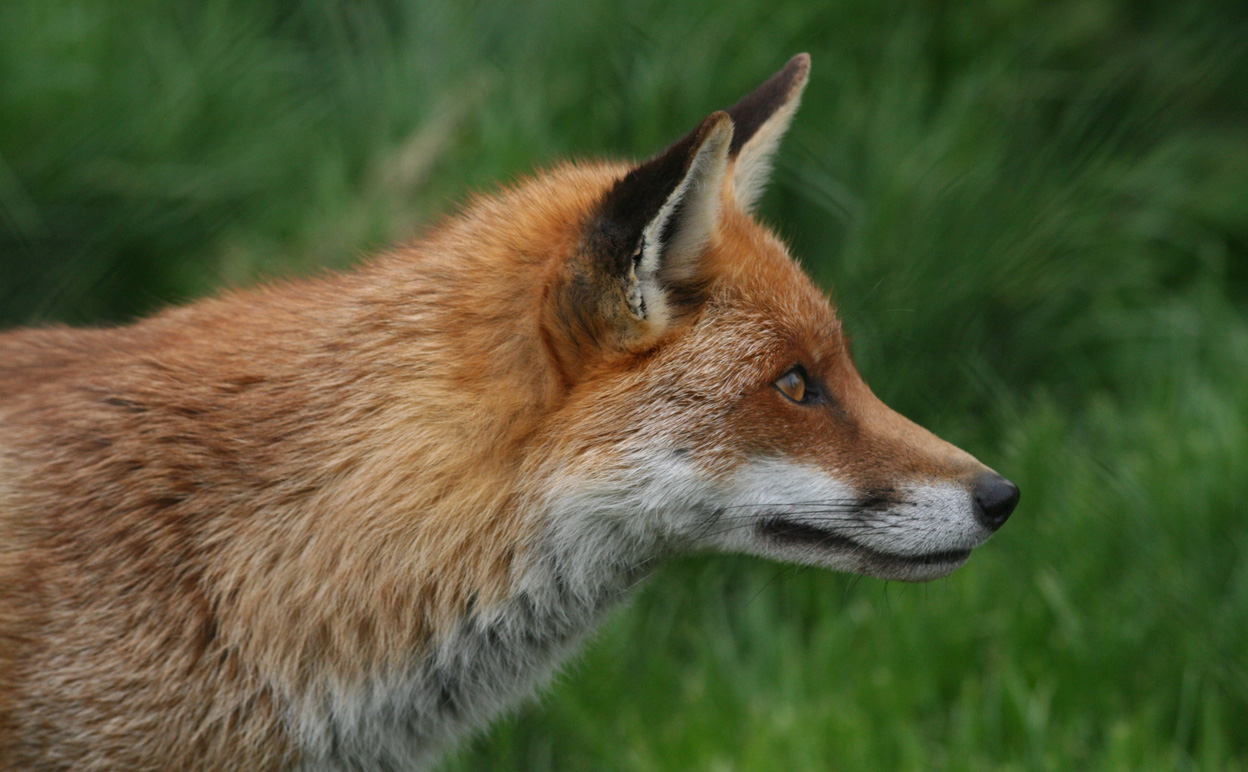
Foxes are invasive predators in the Grampians. Image credit: Dan Derrett via Flickr
This project, a research partnership between Parks Victoria and Deakin University, will examine fox and cat distribution across the Grampians National Park. Specifically, it will aim to examine:
The effect of fire on fox and cat habitat use.
Fox diet.
Experience with using R and/or ArcGIS will be advantageous but is not essential. A manual driver’s licence is essential for this project.
The ecological role of eastern barred bandicoots in a newly established island population
Principal Supervisor: Dr Euan Ritchie
External and co-supervisors: Dr Duncan Sutherland (Phillip Island Nature Parks) and Dr Amy Coetsee (Zoos Victoria)
Start date: February or July 2018
Eastern barred bandicoots persist only in captivity or within fox-free nature reserves. Image credit JJ Harrison via Wikimedia Commons
Mainland eastern barred bandicoots (EBBs) are listed as extinct in the wild, persisting only in captivity or within fox-free fenced reserves.
Phillip Island Nature Parks, together with Zoos Victoria and the Eastern Barred Bandicoot Recovery Team, have established an EBB population on fox-free Churchill Island, adjacent to Phillip Island.
This project forms part of a broader effort to bring EBBs back from the brink of extinction and off the threatened species list. We seek an honours student for a project to experimentally determine the role of EBBs as ecological engineers, in particular their effect on invertebrate communities.
Experience with using R and/or ArcGIS will be advantageous but is not essential. Field accommodation on Phillip Island is available.
Large herbivore impacts on alpine ecosystems
Principal Supervisor: Dr Euan Ritchie
External and co-supervisors: Professor Don Driscoll and Dr Tim Doherty (Deakin University)
Start date: July 2018
Large, introduced herbivores, such as deer, threaten alpine ecosystems. Image credit: Rexness via Flickr
Large feral herbivores, such as horses and deer, threaten alpine ecosystems through overgrazing and trampling of vegetation, spreading weeds, elevated nutrients, and breaking down stream banks and reducing water quality.
This project will examine the impacts of large herbivores on alpine vegetation communities, and in turn on smaller, native vertebrate species.
Experience with using R and/or ArcGIS will be advantageous, but is not essential. A manual driver’s licence is essential for this project.
Authors: Bronwyn A Hradsky, Trent D Penman, Dan Ababei, Anca Hanea, Euan G Ritchie, Alan York, and Julian Di Stefano
Published in:Ecosphere, volume 8, issue 8 (August 2017)
Abstract
Fire is a major driver of community composition and habitat structure and is extensively used as an ecological management tool in flammable landscapes. Interactions between fire and other processes that affect animal distributions, however, cause variation in faunal responses to fire and limit our ability to identify appropriate fire management regimes for biodiversity conservation.
Bayesian networks (BNs) have not previously been used to examine terrestrial faunal distributions in relation to fire, but offer an alternative statistical framework for modeling complex environmental relationships as they explicitly capture interactions between predictor variables.
We developed a conceptual model of the interactions between drivers of faunal distributions in fire-affected landscapes, and then used a non-parametric BN modeling approach to describe and quantify these relationships for a suite of terrestrial native mammal species. We also tested whether BNs could be used to predict these species’ distributions using only remote-sensed or mapped variables.
Data were collected at 113 sites across 47,000 ha of continuous eucalypt forest in the Otway Ranges, southeastern Australia; time-since-fire (TSF) ranged from six months to 74 years.
Habitat complexity increased with TSF and forest wetness. Critical-weight-range (35–5500 g) marsupials and rodents were generally more likely to occur at long unburnt sites with high habitat complexity, and in wetter forest types. In contrast, large grazers and browsers preferred less complex habitats and younger or drier forest. Species occurrences were more strongly affected by habitat complexity than TSF, coarse woody debris cover, or invasive predator (Vulpes vulpes or Felis catus) occurrence.
Bayesian network models effectively discriminated between the presence and absence of most native mammal species, even when only provided with data on remote-sensed or mapped variables (i.e., without field-assessed data such as habitat complexity). Non-parametric BNs are an effective technique for explicitly modeling the complex and context-dependent influence of fire history on faunal distributions, and may reduce the need to collect extensive field data on habitat structure and other proximate drivers.
Hradsky BA, Penman TD, Ababei D, Hanea A, Ritchie EG, York A and Di Stefano J (2017) Bayesian networks elucidate interactions between fire and other drivers of terrestrial fauna distributions. EcospherePDFDOI
Authors: David B Lindenmayer, Emma L Burns, Christopher, Dickman, Peter T Green, Ary A, Hoffmann, David A Keith, John W, Morgan, Jeremy Russell-, Smith, Glenda M, Wardle, Graeme G R, Gillespie, Saul, Cunningham, Charles Krebs, Gene Likens, Johan Pauw, Tiffany G Troxler, William H McDowell, Jane A Catford, Richard Hobbs, Andrew Bennett, Emily Nicholson, Euan Ritchie, Barbara Wilson, Aaron C Greenville, Thomas Newsome, Rick Shine, Alex Kutt, Ayesha Tulloch, Nicole Thurgate, Alaric Fisher, Kate Auty, Becky Smith, Richard Williams, Barry Fox, Graciela Metternicht, Xuemei Bai, Samuel Banks, Rebecca Colvin, Mason Crane, Liz Dovey, Ceridwen Fraser, Claire Foster, Robert Heinsohn, Geoffrey Kay, Katherina Ng, Chris MacGregor, Damian Michael, Luke, O’Loughlin, Thea, O’Loughlin, Luciana Porfirio, Libby Robin, David Salt, Chloe Sato, Ben Scheele, Janet Stein, John Stein, Brian Walker, Martin Westgate, George Wilson, Jeffrey Wood, Susanna Venn, Michael Vardon, Sarah Legge, Robert Costanza, Danny Kenny, Peter Burnett, Alan Welsh, Joslin Moore, Carla Sgrò, and Mark Westoby
Published in:Science, volume 357, issue 6351 (August 2017)
Australia will lose its integrated long-term ecological research (LTER) network at the end of 2017 (1). The network comprises more than 1100 long-term field plots within temperate forests, rainforests, alpine grass- lands, heathlands, deserts, and savannas, with an unparalleled temporal depth in biodiversity data. Its many achievements include Australia’s first published trend data for key ecosystems (2) and a suite of IUCN ecosystem risk assessments (3).
Long-term ecological data are critical for quantifying environmental and biodiversity change and identifying its causes. LTER is especially important in Australia because many of the country’s ecosystems are subject to frequent climatic extremes. Continuity of long-term research and monitoring, and broader use of existing time series data by science and policy communities, are crucial for measuring impacts of current unprecedented global environmental change and reliably predict- ing future impacts.
Long-term research and monitoring is also essential to understanding relation- ships between the economy, ecosystems, and risks to human well-being (4). The loss of Australia’s LTER network will substantially diminish resource managers’ ability to judge the effectiveness of management interventions on which billions of dollars are spent annually (such as vegetation restoration and invasive species control). Ending the network will also jeopardize sustainability assessments of resource-based industries such as agriculture and forestry. Moreover, Australia’s capacity to participate effectively in global initiatives such as the International LTER will be impaired. The LTER network is part of the Terrestrial Ecosystem Research Network (TERN), funded by Australia’s government (5). TERN’s inclusion of existing LTER capability provided a template that others in Europe, China, and South Africa have followed. Discontinuing the LTER net- work within TERN will therefore undermine global cohesion in environmental research and monitoring.
At a time when the United States is increasing funding for its LTERs by US$5.6M annually (6), and other nations are rapidly building substantial LTER capacity, terminating Australia’s LTER network is totally out of step with interna- tional trends and national imperatives. To prevent the collapse of the LTER network and prevent the resulting irreversible impacts of breaking current time-series, urgent and direct investment by the Australian government is crucial.
D. B. Lindenmayer, E. Burns, N. Thurgate, A. Lowe, Eds., Biodiversity and Environmental Change: Monitoring, Challenges and Direction (CSIRO Publishing, Melbourne, Australia, 2014).
D. A. Keith, Austral. Ecol. 40, 337 (2015).
D. B. Lindenmayer et al., Austral. Ecol. 40, 213 (2015).
Long Term Ecological Research Network (www.ltern.org.au).
Nature 543, 469 (2017).
Lindenmayer D, et al. (2017) Save Australia’s ecological research. SciencePDFDOI
From a very young age, we are taught the basics about nature and how ecosystems work. But for many of us, school science class was the last time issues like climate change and extinction were explored in much detail and front of mind. For ecologists like Dr Euan Ritchie from Deakin University’s School of Life and Environmental Sciences, this is troubling.
‘Unfortunately, Australia’s biodiversity crisis isn’t on the wider public’s radar day to day,’ says Dr Ritchie. ‘This is because many people don’t see the problems for themselves, it’s a case of out of sight, out of mind. As a result, the issues are not given the attention they deserve and our natural world declines further and more rapidly as days go by.’
Another blurry photo submitted as ‘evidence’ of the persistence of the Tasmanian tiger. (Can you spot it?)
…“It is remarkable, shall we say, that every single photo of a suspected thylacine is always blurry,” says Dr Euan Ritchie, senior lecturer in ecology at Deakin University in Melbourne.
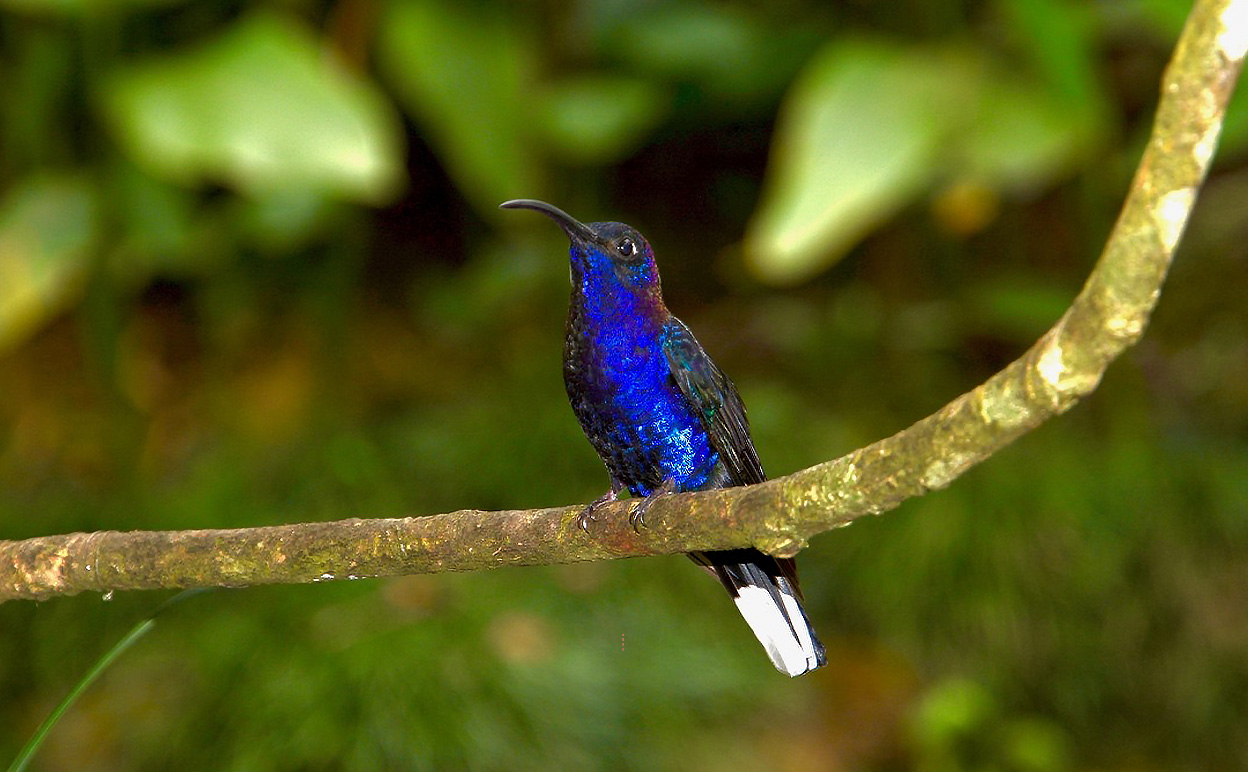
To conserve Earth’s remarkable species, such as the violet sabrewing, we must also defend the importance of science. Image credit: Jeremy Kerr via The Conversation.
Science is the best method we have for determining what is likely to be true. The knowledge gained from this process benefits society in a multitude of ways, including promoting evidence-based decision-making and management. Nowhere is this more important than conservation, as the intensifying impacts of the Anthropocene increasingly threaten the survival of species.
Recent assaults on science and scientists under Donald Trump’s US administration are particularly extreme, but extend far more broadly. Rather than causing scientists to shrink from public discussions, these abuses have spurred them and their professional societies to defend scientific integrity.
Among these efforts was the recent March for Science. The largest pro-science demonstration in history, this event took place in more than 600 locations around the world.
We propose, in a new paper in Conservation Biology, that scientists share their experiences of defending scientific integrity across borders to achieve more lasting success. We summarise eight reforms to protect scientific integrity, drawn from lessons learned in Australia, Canada and the US.
What is scientific integrity?
Scientific integrity is the ability to perform, use and disseminate scientific findings without censorship or political interference. It requires that government scientists can communicate their research to the public and media. Such outbound scientific communication is threatened by policies limiting scientists’ ability to publish, publicise or even mention their research findings.
Public access to websites or other sources of government scientific data have also been curtailed. Limiting access to taxpayer-funded information in this way undermines citizens’ ability to participate in decisions that affect them, or even to know why decisions are being made.
A recent case of scientific information being suppressed concerns the rediscovery, early in 2017, of the plant Hibbertia fumana in New South Wales. Last seen in 1823, 370 plants were found.
Rather than publicly celebrate the news, the NSW Office of Environment and Heritage was reportedly asked to suppress the news until after a rail freight plan that overlapped with the plants’ location had been approved.
Protecting scientists’ right to speak out
Scientists employed by government agencies often cannot discuss research that might relate to their employer’s policies. While it may not be appropriate for scientists to weigh in on policy recommendations – and, of course, constant media commentaries would be chaos – the balance has tipped too far towards restriction. Many scientists cannot publicly refer to their research, or that of others, let alone explain the significance of the findings.
To counter this, we need policies that support scientific integrity, an environment of transparency and the public’s right to access scientific information. Scientists’ right to speak freely should be included in collective bargaining agreements.
Scientific integrity requires transparency and accountability. Information from non-government scientists, through submitted comments or reviews of draft policies, can inform the policy process.
Although science is only one source of influence on policy, democratic processes are undermined when policymakers limit scrutiny of decision-making processes and the role that evidence plays in them.
Let science inform policy
Independent reviews of new policy are a vital part of making evidence-based decisions. There is room to broaden these reviews, inviting external organisations to give expert advice on proposed or existing policies. This also means transparently acknowledging any perceived or actual vested interests.
Australian governments often invite scientists and others to contribute their thoughts on proposed policy. The Finkel Review, for example, received 390 written submissions. Of course, agencies might not have time to respond individually to each submission. But if a policy is eventually made that seems to contradict the best available science, that agency should be required to account for that decision.
Finally, agencies should be proactively engaging with scientific groups at all stages of the process.
Active advocacy
Strengthening scientific integrity policies when many administrations are publicly hostile to science is challenging. Scientists are stuck reactively defending protective policies. Instead, they should be actively advocating for their expansion.
The goal is to institutionalise a culture of scientific integrity in the development and implementation of conservation policies.
A transnational movement to defend science will improve the odds that good practices will be retained and strengthened under more science-friendly administrations.
Many regard science as apolitical. Even the suggestion of publicly advocating for integrity or evidence-based policy and management makes some scientists deeply uncomfortable. It is telling that providing factual information for policy decisions and public information can be labelled as partisan. Nevertheless, recent research suggests that public participation by scientists, if properly framed, does not harm their credibility.
Scientists can operate objectively in conducting research, interpreting discoveries and publicly explaining the significance of the results. Recommendations for how to walk such a tricky, but vital, line are readily available.
Scientists and scientific societies must not shrink from their role, which is more important than ever. They have a responsibility to engage broadly with the public to affirm that science is indispensable for evidence-based policies and regulations. These critical roles for scientists help ensure that policy processes unfold in plain sight, and consequently help sustain functioning, democratic societies.
The authors would like to acknowledge the contribution of Dr Carlos Carroll, a conservation biologist at the Klamath Center for Conservation Research.
Authors: Carlos Carroll, Brett Hartl, Gretchen T Goldman, Daniel J Rohlf, Adrian Treves, Jeremy T Kerr, Euan G Ritchie, Richard T Kingsford, Katherine E Gibbs, Martine Maron, and James E M Watson
Published in:Conservation Biology (early view)
Abstract
Government agencies faced with politically controversial decisions often discount or ignore scientific information, whether from agency staff or nongovernmental scientists. Recent developments in scientific integrity (the ability to perform, use, communicate, and publish science free from censorship or political interference) in Canada, Australia, and the United States demonstrate a similar trajectory.
A perceived increase in scientific integrity abuses provokes concerted pressure by the scientific community, leading to efforts to improve scientific-integrity protections under a new administration. However, protections are often inconsistently applied and are at risk of reversal under administrations publicly hostile to evidence-based policy.
We compared recent challenges to scientific integrity to determine what aspects of scientific input into conservation policy are most at risk of political distortion and what can be done to strengthen safeguards against such abuses.
To ensure the integrity of outbound communications from government scientists to the public, we suggest governments strengthen scientific integrity policies, include scientists’ right to speak freely in collective-bargaining agreements, guarantee public access to scientific information, and strengthen agency culture supporting scientific integrity. To ensure the transparency and integrity with which information from nongovernmental scientists (e.g., submitted comments or formal policy reviews) informs the policy process, we suggest governments broaden the scope of independent reviews, ensure greater diversity of expert input and transparency regarding conflicts of interest, require a substantive response to input from agencies, and engage proactively with scientific societies.
For their part, scientists and scientific societies have a responsibility to engage with the public to affirm that science is a crucial resource for developing evidence-based policy and regulations in the public interest.
Carroll C, Hartl B, Goldman GT, Rohlf DJ, Treves A, Kerr JT, Ritchie EG, Kingsford RT, Gibbs KE, Maron M, Watson JEM (2017) Defending the scientific integrity of conservation-policy processes. Conservation Biology, PDFDOI
Authors:Lily M van Eden, Chris R Dickman, Euan G Ritchie, and Thomas M Newsome
Published in:Biodiversity and Conservation
Abstract
Over the last century, changing public attitudes about the value of wildlife have triggered substantial changes in species management that have both benefited and hindered conservation efforts. Understanding and integrating contemporary public values is therefore critical for effective conservation outcomes.
Using historic and contemporary examples, we highlight how public attitudes—expressed through the media and campaigns—are shaping the management of introduced and native species, as values shift towards animal welfare and mutualism. We focus on the issue of deliberate human-caused killing of wildlife, because protests against such management have disrupted traditional political and management structures that favoured eradication of wildlife across many jurisdictions and ecological contexts. In doing so, we show that it is essential to work with multiple stakeholder interest groups to ensure that wildlife management is informed by science, while also supported by public values. Achieving this hinges on appropriate science communication to build a better-informed public because management decisions are becoming increasingly democratised.
van Eeden LM, Dickman CR, Ritchie EG, Newsome TM (2017) Shifting public values and what they mean for increasing democracy in wildlife management decisions. Biodiversity and Conservation,PDFDOI
Authors: Lily M Van Eeden, Mathew S Crowther, Chris R Dickman, David W Macdonald, William J Ripple, Euan G Ritchie, and Thomas M Newsome
Published in:Conservation Biology (early view)
Abstract
Large carnivores are persecuted globally because they threaten human industries and livelihoods. How this conflict is managed has consequences for the conservation of large carnivores and biodiversity more broadly. Mitigating human-predator conflict should be evidence-based and accommodate people’s values while also protecting carnivores.
Despite much research into human-large carnivore coexistence strategies, there have been limited attempts to document the success of conflict mitigation strategies on a global scale.
We present a meta-analysis of global research on conflict mitigation between large carnivores and humans, focusing on conflicts that arise from the threat that large carnivores pose to livestock industries.
Overall, research effort and focus varied between continents, aligning with the different histories and cultures that shaped livestock production and attitudes towards carnivores.
Of the studies that met our criteria, livestock guardian animals were most effective at reducing livestock losses, followed by lethal control, although the latter exhibited the widest variation in success and the two were not significantly different. Financial incentives have promoted tolerance in some settings, reducing retaliatory killings.
In future, coexistence strategies should be location-specific, incorporating cultural values and environmental conditions, and designed such that return on financial investment can be evaluated. Improved monitoring of mitigation measures is urgently required to promote effective evidence-based policy.
Van Eeden LM, Crowther MS, Dickman CR, Macdonald DW, Ripple WJ, Ritchie EG, Newsome TM (2017) Managing conflict between large carnivores and livestock. Conservation Biology,PDFDOI
Dingoes could be the key to controlling red foxes and other invasive predators, but only if we encourage them in large enough numbers over a wide enough area, our research shows.
Dingoes can help manage devastating red fox and feral cat numbers, but only if we let enough of them live in key areas. Image credit Bobby Tamayo via The Conversation
But researchers have found top predators aren’t always successful in reducing mesopredator numbers. Until now, such variation has been linked to human presence, land-use changes and environmental factors such as landscape productivity.
However, our research, published yesterday in Nature Communications, found that a key factor for success is high numbers of dingoes and wolves across their natural range.
The density effect
If you look at how species are typically distributed across a landscape – their range – ecological theory predicts there’ll be lower numbers at the outer edges of their range.
If you do need large numbers of top predators to effectively suppress mesopredators, the core of their range is potentially the best place to look.
We tested this idea, looking at the dingo in Australia and the grey wolf in North America and Europe. The mesopredators included the red fox in Australia, the coyote in North America and the golden jackal in Europe.
We used information from bounty hunting programs, as these provide data on predator numbers across a wide geographical area. In the case of Australia we used historic data from the 1950s, as this is the most recent reliable information about red fox and dingo distribution. The actual population numbers of red foxes and dingoes have changed substantially since then, but the nature of their interactions – which is what we were investigating – has not.
We determined that top predators exist in higher numbers at the core of their ranges in comparison to the edges. We then looked at mesopredator numbers across the range edges of their respective top predator.
The results, which were consistent across the three continents, suggest that top predators can suppress mesopredators effectively (even completely) but only in the core of their geographic range, where their numbers are highest.
In other words, abundant top predators can exert disproportionate mesopredator control once their numbers increase past a certain point.
The ‘enemy constraint hypothesis’
The relationship we uncovered is now formalised as the “Enemy Constraint Hypothesis”. It could apply to other predator dyads, where two animals compete for similar resources – even relationships involving parasites and pathogens.
Our findings are important for understanding species interactions and niches, as well as the ecological role of top predators. It could explain why other studies have found top predators have little influence on mesopredators: they were looking at the edge, not the core, of the top predators’ range.
How many top predators do we need?
Dingoes can be vital for reducing red fox and possibly feral cat numbers. In our case studies the ranges of each top predator were limited primarily by human use of the land and intensive shooting, trapping and poisoning.
Killing pack animals like dingoes can fracture social groups, potentially altering their natural behaviour and interactions with other species. Future studies on predator interactions therefore need to consider the extent to which the animals are acting in response to human intervention.
If we want to benefit from the presence of top predators, we need to rethink our approach to management – especially where they are subjected to broad-scale control, as the dingo is in some parts of Australia.
Changing our relationship with top predators would not come without its challenges, but high extinction rates around the world (and especially in Australia) clearly indicate that we urgently need to change something. If this includes restoring top predators, then we need to think big.
Authors: Thomas M Newsome, Aaron C Greenville, Duško Ćirović, Christopher R Dickman, Chris N Johnson, Miha Krofel, Mike Letnic, William J Ripple, Euan G Ritchie, Stoyan Stoyanov and Aaron J Wirsing
Published in:Nature Communications, volume 8
Abstract
Top predators can suppress mesopredators by killing them, competing for resources and instilling fear, but it is unclear how suppression of mesopredators varies with the distribution and abundance of top predators at large spatial scales and among different ecological contexts.
We suggest that suppression of mesopredators will be strongest where top predators occur at high densities over large areas. These conditions are more likely to occur in the core than on the margins of top predator ranges.
We propose the Enemy Constraint Hypothesis, which predicts weakened top-down effects on mesopredators towards the edge of top predators’ ranges.
Using bounty data from North America, Europe and Australia we show that the effects of top predators on mesopredators increase from the margin towards the core of their ranges, as predicted.
Continuing global contraction of top predator ranges could promote further release of mesopredator populations, altering ecosystem structure and contributing to biodiversity loss.
Newsome TM, Greenville AC, Ćirović D, Dickman CR, Johnson CN, Krofel M, Letnic M, Ripple WJ, Ritchie EG, Stoyanov S, Wirsing AJ (2017) Top predators constrain mesopredator distributions. Nature Communications, PDFDOI
Australia has a complex relationship with the dingo. Image credit: Angus Emmott, via The Conversation
Vast, ancient, nutrient-poor, with wild swings between droughts, floods and fires: this describes much of the Australian continent. Livestock grazing and farming in such a land is certainly not without its challenges.
Where we’ve failed to work with the local conditions, we see barren plains, dust storms, the extinction of native species, and the repossession of properties by banks, among many ills.
One of the most contentious examples involves encouraging dingoes. Many pastoral areas require land managers to take “all reasonable and practical steps” to manage the risk of dingoes, which are classed as pest animals.
A Western Australian couple, David Pollock and Frances Jones, were recently featured on Australian Story for their decision to regenerate their property, Wooleen, by de-stocking, encouraging local flora and fauna, and investing in ecotourism.
Their neighbours, including sheep graziers whose stock are vulnerable to dingoes, feel this is an irresponsible decision. Graziers have a mandate to control dingoes (“wild dogs”, to many) and dingo-domestic dog hybrids — which can’t be easily and reliably distinguished in the wild.
While the impacts and merits of encouraging dingoes in sheep country are hotly debated, their role in the management of cattle stations is much better understood. But restrictive legislation and the stigma attached to dingoes are frustrating for those who see them as having a vital ecological and economic role for their properties.
Queensland grazier Angus Emmott writes that his beef cattle enterprise, Noonbah station, has benefited from leaving dingoes and kangaroos alone:
We run a beef cattle enterprise in the top end of the Queensland channel country, southwest of Longreach. As a part of our management plan, we leave the dingoes and the ’roos alone. We see a range of benefits to our operation.
When the dingoes don’t have their social structure disrupted by poison baiting, trapping and shooting, only the apex bitch breeds, once a year at most. These family groups have strictly defined ranges, and they kill or chase off other wild dogs or dingoes that intrude. They also keep kangaroos down to very low numbers, which is a huge benefit in regards to pasture growth and being able to rest our paddocks. The dingoes also keep down feral pig, cat and fox numbers.
Yes, dingoes do take some of our calves, but the benefits of pasture growth and feral animal control result in a net benefit of better land condition and a greater dollar return. Dingoes also benefit biodiversity conservation and soil condition. We acknowledge this management model does not work in sheep country, including for some of our nearby neighbours, and in these cases we need to look at different forms of management, such as fencing and/or companion and guardian animals.
Solutions for protecting livestock against attack, such as guardian dogs, are also at hand and may be considerably cheaper than constructing and maintaining extensive predator-proof fences. Livestock guardian dogs have been shown to be effective in numerous locations across Australia, on large and small grazing properties. But investment from state and federal government (and related agencies) aimed at encouraging such innovation has been lacking.
Working with the land
Regardless of whether graziers take the drastic steps seen at Wooleen, now is the time to reflect on the direction of Australia’s land management.
If we’re to overcome the many challenges we face, including the impacts of climate change on food production, then we need to support the bold new thinking emerging from rural and regional Australia, and our scientific institutions.
Seeing some of the worst land degradation first hand it’s easy to think that it’s all too hard and that environmental repair will take decades, if not centuries. This can invite inertia and apathy, the enemies of positive change.
But the stories of Wooleen, Noonbah and other innovators show us what is possible. Science has helped demonstrate ecological repair can happen faster and to a greater extent than many might appreciate.
Big changes certainly carry risks, and these must be managed carefully, but new and sometimes brave ideas will always improve our understanding of the land. Whatever the outcome, such knowledge helps guide better decisions for more sustainable grazing, farming and bio-diverse conservation.
I would like to acknowledge the contribution of Angus Emmott to this article.








 Applied ecology and conservation research group
