Categories
Science communication The Conversation

The Conversation: From fossicking for fossils to a champion for life on Earth: Sir David Attenborough at 100

BBCCC BY-NC-ND

Euan Ritchie, Professor in Wildlife Ecology and Conservation, School of Life & Environmental Sciences, Deakin University

This article is republished from The Conversation under a Creative Commons license. Read the original article.

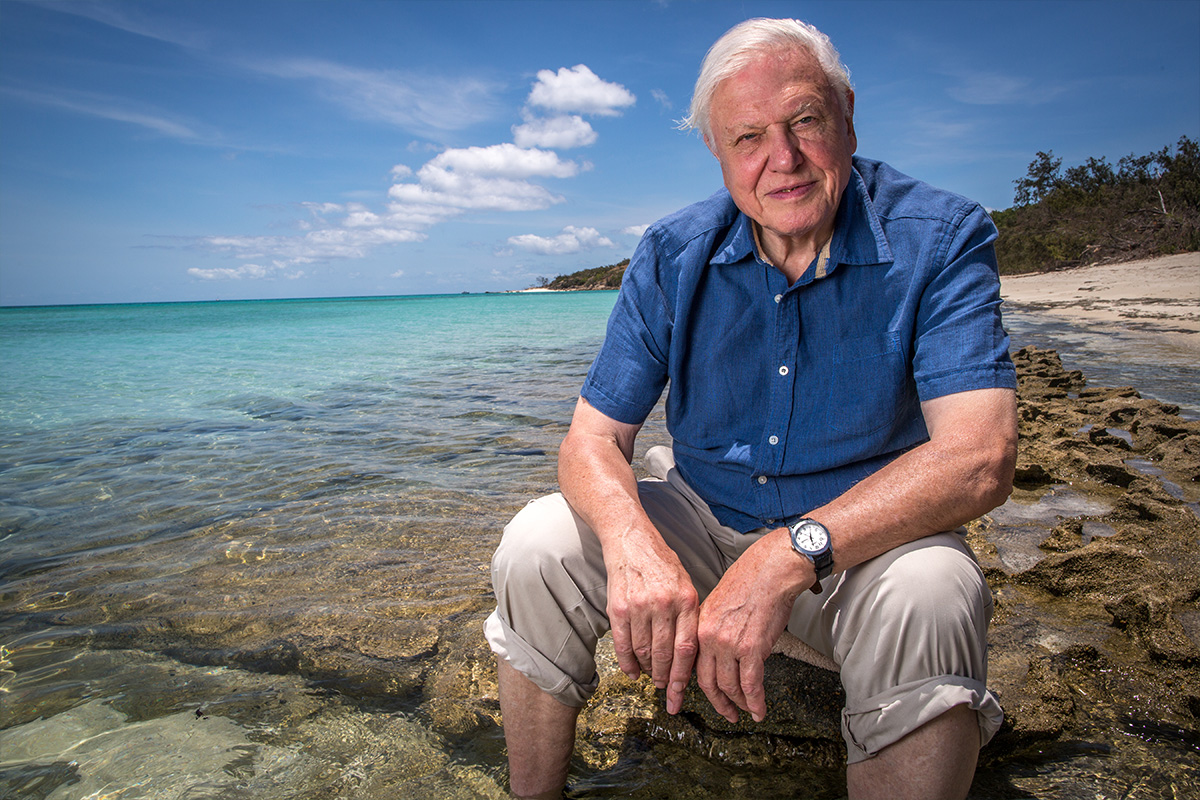
Sir David Attenborough turns 100 this week.

Very few people have the good fortune to live for a century. Fewer still achieve so much and touch so many lives.

Across his seven decade career with the BBC, Attenborough ushered in the transition from black and white to colour television. He gave the now legendary comedy troupe Monty Python their lucky break, greenlighting their Flying Circus. His keen eye and care for viewers is in part why tennis balls are yellow, not white – they’re much easier to see on screen.

But Attenborough is, of course, most famous for his nature documentaries. For decades, he has fronted the camera to educate, entertain and inspire billions of people about the complexity, wonder and majesty of the natural world, and the many threats it faces. It wasn’t a given – Attenborough was told early in his career his teeth were too big for television!

For ecologists like myself, Attenborough’s work has been a source of deep inspiration. It was instrumental in my decision to pursue a life and a career dedicated to understanding, caring and fighting for the protection of nature. For this gift, I am eternally grateful.

A career driven by curiosity

Attenborough’s connection with nature came early, forged in no small part through an insatiable fascination with fossils – including his childhood joy at discovering an ammonite in the Leicestershire countryside.

He went on to study geology and zoology at Cambridge University, graduating in 1947. He served in the navy and worked in an educational publishing house. Notably, the BBC rejected his first job application as a radio producer in 1950. But he tried again, and joined the BBC as a trainee producer in 1952.

Early in his career, Attenborough (right) interviewed Edmund Hillary. Wikimedia, CC BY-NC-ND

His career in nature documentaries began to bud almost immediately, with his Zoo Quest series beginning in 1954. But it burst into full bloom with the landmark Life on Earth series in 1979, which brought distant locations, extraordinary wildlife and evolution and ecology to TV. It instilled a sense of wonder and awe in audiences, while maintaining and respecting scientific accuracy.

The master storyteller

One reason Attenborough has had such success as a communicator is his understated, calm but authoritative demeanour. When you sit down to watch an Attenborough documentary, you feel in safe hands.

His approach isn’t the norm. In other nature documentaries, wildlife can often seem secondary, as props for the presenter.

Some of Sir David’s documentaries didn’t always go to script.

In series such as The Living Planet, The Trials of Life, The Blue Planet, The Planet Earth, and scores of others, Attenborough took us across the globe, revealing nature’s beauty, oddities and extraordinary complexity, as well as its macabre and brutal aspects. The habitats home to the world’s species are brought to life in extraordinary detail. We watch with laughter, trepidation, sadness, anger, excitement and awe, ebbing and flowing as nature’s stories unfold.

Who can forget the first time they saw and heard the extraordinary vocal repertoire and mimicry of a lyrebird, or a curious mountain gorilla’s desire to connect with a fellow great ape? The epic battle for survival between a hatchling iguana and hungry hordes of racer snakes? Or the breathtaking explosion of colour and complexity of a coral reef? Each of these was captured by master cinematographers and the story told to us by Attenborough.

A truly epic chase and battle for survival between iguanas and snakes.

Over his long career, Attenborough has become an icon. He was voted the UK’s best TV presenter of all time. But his prodigious output has come at a personal cost too. One of his regrets is how much time he has spent away from his family.

He is also not off limits to criticism. For a long time, Attenborough focused on the glory of nature, largely omitting the damage humans do through overfishing, deforestation, pollution, spreading exotic species, and other threats. He has also shied away from assigning blame to those most responsible for the harms inflicted on nature.

In 2018, he said too much focus on why so much wildlife is threatened was a “turn-off” for some viewers. Ecologists and conservation scientists can sympathise. We know bombarding people with doom and gloom invites apathy and despair, not a desire to act. It’s a hard line to walk between harsh realities and hope.

To his credit, Attenborough has belatedly focused on these issues in recent years. Footage of plastic pollution in Blue Planet II and the ravages of industrial fishing in Ocean have brought a sharp focus on these issues.

In 2020, he released A Life On Our Planet, which he describes as a “witness statement” to the startling losses of biodiversity he has seen over his lifetime. Rather than just spell out the problems, Attenborough laid out how to solve them – and the role we can all play in fixing the two biggest and deeply interwoven problems nature faces: climate change and biodiversity declines and extinctions.

While Attenborough’s earlier work largely avoided these difficult conversations, they succeeded in bringing nature’s wonder to millions of people. This shouldn’t be overlooked. At a time when more and more of us are cut off from nature, Attenborough’s documentaries forged a new connection. For people to care about losing nature, they first have to know and love it.

Conservation relies on stories

Scientific research rarely leads to the behavioural changes we might hope for. Accumulating facts and evidence is vital. But it’s not enough. What humans respond to is stories.

Alongside other globally renowned voices such as the late, great Jane Goodall, Attenborough’s work telling the stories of nature has shaped public opinion. In turn, it has galvanised conservation efforts such as the push to protect 30% of the world’s oceans by 2030.

As he celebrates his centenary, it’s encouraging to see a new generation and diversity of voices in the media and science communication, advocacy, and scientific community. They speak and share their messages with great clarity, confidence, and passion.

Attenborough is just one person. He can’t replace the vital role of scientists, community leaders, conservationists and policymakers in conserving nature. But no one will ever replace David’s distinctive voice. As he has said:

it seems to me that the natural world is the greatest source of excitement; the greatest source of visual beauty; the greatest source of intellectual interest. It is the greatest source of so much in life that makes life worth living

Hear, hear. Happy birthday for May 8th, David Attenborough.

The Conversation
Categories
Science communication The Conversation

The Conversation: When feral cats are away, potoroos and bandicoots are more likely to play


Fidel Fernando/Unsplash

Euan Ritchie, Professor in Wildlife Ecology and Conservation, School of Life & Environmental Sciences, Deakin University; Amy Coetsee, Threatened Species Biologist, The University of Melbourne; Anthony Rendall, Lecturer in Conservation Biology, School of Life and Environmental Sciences, Deakin University, and Duncan Sutherland, Deputy Director of Research, Phillip Island Nature Parks; Research Fellow, The University of Melbourne

This article is republished from The Conversation under a Creative Commons license. Read the original article.

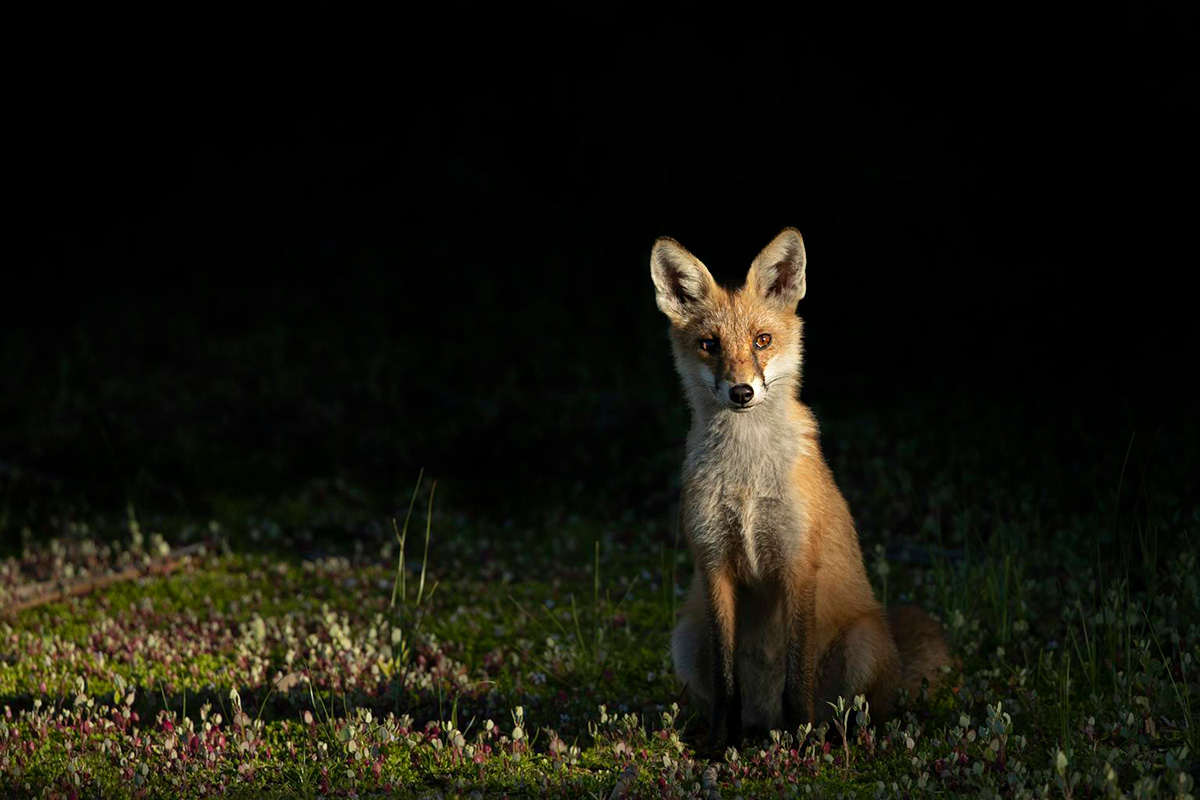
All animals need to eat to survive, grow and reproduce. To do so, they also need to avoid being eaten. This is a big challenge for many of Australia’s native mammals, because when they search for food, they must also escape the attention of introduced predators, namely, feral cats and red foxes.

Tragically, many have been unable to overcome this test of survival, becoming one of the 40 native mammal species driven to extinction since European colonisation.

But what happens if we reduce the numbers of introduced predators? Do our surviving native species think there is less risk of being the next meal for a cat or fox? How do they respond? And how might we tell? With peanut butter balls, of course!

A deadly game of hide and seek


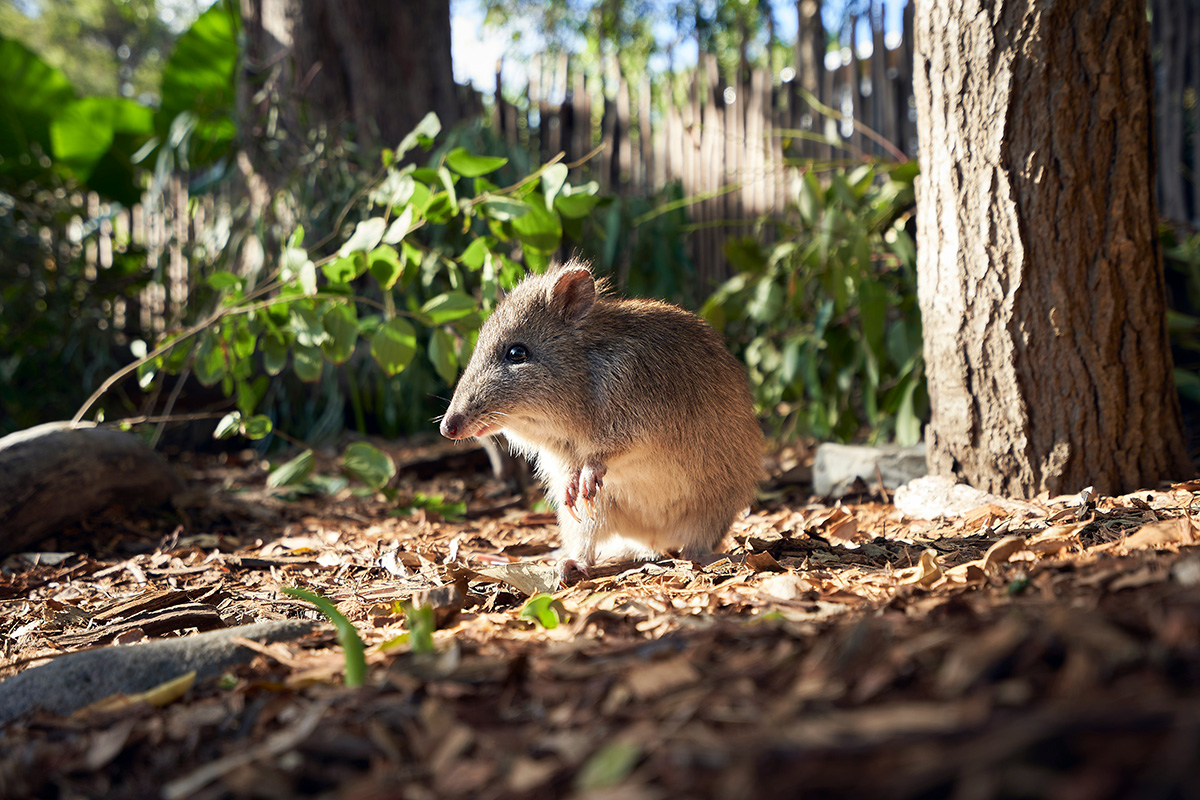
Long-nosed potoroos are vulnerable to predation by non-native feral cats and red foxes.
Leo Berzins/flickr, CC BY-ND

But avoiding being eaten comes at an energetic cost. It may mean preferred areas or times to feed are reduced, which in turn limits rates of growth, reproduction and survival of prey species. Prey animals are constantly weighing up this tradeoff of risk vs reward as they go about their lives.

Tasty treats can assess risk appetite

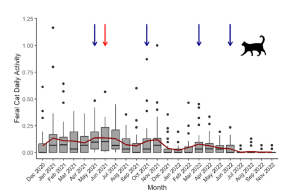
French Island has long been fox free, but had thousands of feral cats. In 2010, authorities began a feral cat eradication, which made it a perfect place for our research.


Feral cat activity per month at one site on French Island, south-eastern Australia, across a 2-year period during a cat eradication program. The red arrow indicates when the cat eradication program began and the blue arrows indicate when we undertook our GUD experiments.
CC BY-NC-ND

Importantly, we were able to start our experiment prior to an eradication program of feral cats, which began in 2010 on French Island, Victoria. This means we were able to measure changes in long-nosed potoroos and eastern barred bandicoots habitat use and foraging as cat numbers and activity fell.

So, on fox-free French Island, we placed balls of peanut butter, rolled oats and golden syrup into trays with soil and dug them into the ground, ensuring they were below the soil surface. We did this in more open grassland areas (likely riskier habitat, with less cover and protection from feral cats) and more densely vegetated areas (less risky habitat, due to increased cover).

We used camera traps to measure how often potoroos and bandicoots visited these feeding trays to dig up the tasty treats, and how much of the peanut butter balls they left behind in different habitats and at different periods throughout the ongoing feral cat eradication program.

When feral cats are away, native animals play (more)

A deadly game of feral cat and long-nosed potoroo, as revealed by our camera trap. We can confirm that this potoroo survived, this time. Te Ao Marama Eketone (Deakin University), CC BY-NC-ND

As the number of feral cats on French Island was reduced, potoroos and bandicoots used both open and closed habitat types more frequently, and they increased their activity, giving up less food over time. This suggests bandicoots and potoroos do recognise feral cats as a threat, and are able to fairly rapidly change their habitat use and foraging accordingly.

Aside from the obvious benefits of fewer feral cats killing and eating potoroos and bandicoots on French Island, our study suggests there may be substantial benefits for native wildlife — namely increased access to habitats and foraging opportunities — even before the ultimate longer-term goal of cat eradication can be achieved.

Our study’s results are encouraging. Outside the safe havens of invasive predator-free islands and fenced sanctuaries, feral cats are notoriously hard to eradicate from large areas, and there is a constant threat of their return.

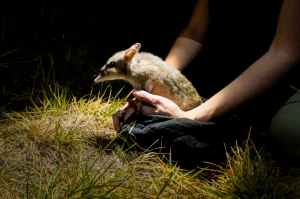
We need to do all that we can to give Australia’s native mammals, including eastern barred bandicoots, a helping hand. Zoos Victoria, CC BY-NC-ND

We would like to acknowledge that this work was led by former Deakin University Honours student, Te Ao Marama Eketone, and it occurred on the unceded Country of the Bunurong/Boonwurrung peoples.

The Conversation
Categories
Science communication The Conversation

The Conversation: Yes, feral cats and foxes really have driven many Australian mammals to extinction

Lea Scannan/Getty

John Woinarski, Professor of Conservation Biology, Charles Darwin University; Euan Ritchie, Professor in Wildlife Ecology and Conservation, School of Life & Environmental Sciences, Deakin University; Katherine Moseby, Professor of Conservation Biology, UNSW, and Sarah Legge, Professor of Wildlife Conservation, Australian National University

This article is republished from The Conversation under a Creative Commons license. Read the original article.

Millions of years of isolation have shaped Australia’s extraordinary mammal fauna into species unlike anywhere else in the world, from platypus to koalas and wombats.

Tragically, Australia is the world leader in mammal extinctions. About 40 species have gone extinct in the 238 years since European colonisation began, and nearly 80 species are now imperilled. It’s essential we understand what factors caused these extinctions and ongoing decline.

The main lines of evidence implicating introduced predators in Australian native mammal declines and extinctions. Author provided, CC BY-NC-ND

Controversy in conservation

Their research drew on three premises relating to extinct and surviving mammals. If cats and foxes caused these extinctions, they argued that these should follow:

  1. The last recorded sighting of a now extinct mammal from an area must come after the arrival of one or both of these predator species

  2. Lethal management programs aimed at reducing fox and cat numbers should result in an increase in native mammal numbers in an area

  3. Where cats and foxes are abundant, there should be fewer native mammals.

After testing these three ideas, the authors conclude the hypothesis foxes and cats cause extinctions “has come to be accepted with little evidence.”

The research caused a major stir among the conservation community, as it took aim at longstanding accumulated knowledge and questioned whether the evidence base was strong enough to justify efforts to control feral cats and foxes.

As experts with many decades experience working to protect threatened Australian mammals and other wildlife, we had a duty to evaluate their evidence.

Claim and counterclaim is essential to test, shape and hone science, and to provide a robust foundation for conservation management. It may seem like an academic argument, but it has clear real-world implications.

The survival and recovery of much of Australia’s native mammal fauna depends on controlling cats and foxes. Many recent success stories in bringing native animals back from the brink are due to removing foxes and cats.

If this objective is abandoned because of arguments feral cats and foxes are simply innocent bystanders, we risk rapidly losing many of these imperilled species.

An introduced eastern barred bandicoot population has thrived after foxes were eradicated on Phillip Island. Neil Bowman/Getty

What did we do?

A provocative claim in last year’s research was that some Australian mammal species may have gone extinct before foxes and cats ever got to the area. If this was true, cats and foxes couldn’t be held responsible.

Cats came with the First Fleet in 1788, augmented with many subsequent introductions. By the 1890s, feral populations had spread across the entire continent. Foxes came later, first introduced to southeastern Australia in the 1830s. They, too, spread out across most of the continent over decades.

We re-ran analysis of the historic data and found the last record of a now-extinct native mammal in an area was always dated after the arrival of cats. The picture is less clear for foxes, though this is understandable given the earlier arrival of cats would already have caused losses.

Further, the actual date of extinction may occur long after the last documented record, especially in remote, sparsely populated areas of Australia.

Fate provides further evidence. Many mammals were wiped out from their entire mainland ranges but survived on islands that cats and foxes never colonised. For instance, all mainland populations of the greater stick-nest rat have disappeared. But the species survives because it also had an island population. By contrast, the lesser stick-nest rat had no island population. It is now extinct.

After cats arrived in an area, historic data shows regional losses of mammals went up sharply, with the exception of two arbitrarily dated bones. Author provided, CC BY-NC-ND

Does fox and cat control work?

The authors argue fox and cat control doesn’t result in increases of threatened mammals. But this conclusion may stem from misreading data from feral cat and fox control programs. Not all control programs work to reduce cat numbers over long periods or even at all.

Eastern barred bandicoots now roam Victoria’s fox-free Phillip Island, while hare-wallaby numbers are rebounding on Western Australia’s Dirk Hartog Island following the eradication of feral cats.


This trail camera image captures a feral cat with two native hopping mice in its mouth.
Katherine Moseby, CC BY-NC-ND

Difficult truths

The original analysis and our new research have a broader context. Some have argued the impact of introduced species has been overstated, and that introduced species should be seen as a legitimate part of Australia’s ecosystems. Scientific evidence and conservation outcomes do not support this.

Australia supports about 8% of the world’s biodiversity as one of just 17 megadiverse nations. Protecting our unique species is not easy. But the task for conservationists and policymakers will be even harder if feral cats and foxes are given a free pass to keep killing.

The Conversation