Authors: Euan G Ritchie, Corey JA Bradshaw, Chris R Dickman, Richard Hobbs, Christopher N Johnson, Emma L Johnston, William F Laurence, David Lindenmayer, Michael A McCarthy, Dale G Nimmo, Hugh H Possingham, Robert L Pressey, David M Watson and John Woinarski
Abstract
Conserving biodiversity against a global backdrop of rapid environmental change poses one of the biggest and most important challenges to society. For this reason, systems of nature reserves have never been more important.
Protected areas are under threat in many parts of the world (Mascia and Pailler 2011), but the weakening of protected areas in a rich, developed country with a global reputation for conservation leadership (Harrison 2006) is particularly alarming (Ritchie 2013). Consequently, we are concerned about the recent spate of substantial policy, legislative and management changes being made by three of six Australian state governments for exploitative uses of national parks — actions that could affect much of Australia and have significant negative effects on biodiversity.
In recent decades, the Australian state and federal governments have collectively built a system of terrestrial and marine conservation reserves that aspires to be comprehensive and adequate, and to form the cornerstone of biodiversity conservation. The resulting national reserve system is imperfect, but goes some way toward protecting Australia’s unique species and ecosystems (Taylor et al. 2011). That system is now being systematically undermined, even while continental-scale biodiversity losses are underway.
Ritchie EG, Bradshaw CJA, Dickman CR, Hobbs R, Johnson CN, Johnston EL, Laurence WF, Lindenmayer D, McCarthy MA, Nimmo DG, Possingham HH, Pressey RL, Watson DM, Woinarski J (2013) Continental-scale governance failure will hasten loss of Australia’s biodiversity, Conservation Biology, 27(6) 1133–1135PDFDOI
Few would argue the world isn’t facing enormous challenges: human population growth and the associated demand for resources, mass extinctions or – perhaps the biggest of all – global climate change.
We often look to science to help provide solutions. But if science is to succeed in doing so, society may need scientists to take more risks, think outside the box and, dare we say it, think “dangerously”.
Without taking risks, science won’t solve big problems. Image by Andrew “FastLizard4” Adams via [CC BY-SA 2.0] via FlickrWe live in a world that is increasingly risk averse, obsessed with risk management and harm minimisation. This results in bizarre decisions such as children not being able to play tag for fear of injuries. Some think that such risk management creates conservatism in funding bodies that are more likely to fund safe research with assured outcomes rather than high-risk projects.
But what exactly do we mean by thinking dangerously? In short, scientists need room to propose ideas that could seem too far-fetched or controversial at first glance, such as introducing elephants to Australia to manage weeds.
What use are such dangerous ideas?
Oscar Wilde perhaps put it best: An idea that is not dangerous is unworthy of being called an idea at all.
Dangerous ideas always stimulate fresh thinking, sometimes with profound outcomes.
To illustrate we only need look at perhaps the most dangerous idea of all time, evolution via natural selection, simultaneously proposed by Charles Darwin and the oft forgotten and desperately unfortunate Alfred Russel Wallace. Their idea changed the very course of human history, in how we view the relationships between Earth’s many millions of different inhabitants, and our own place within it.
The most famous example of dangerous science being punished could be heliocentrism, originally proposed by Galileo. Galileo paid a high price for his theory about how Earth and other planets move in relation to a largely stationary sun. Tried by the Inquisition, he was found guilty of being suspected of heresy and spent his remaining days under arrest.
Fortunately we’ve moved on from then but dangerous thinking in science is still attacked. One must only look at the way the science of climate change, and indeed climate change scientists, are often attacked.
Or consider the response to Mark Davis’ recent dangerous idea that species should be judged more by their function than their origin because some alien species have positive ecosystem impacts. More than 140 scientists replied in outrage at the suggestion that we should in any way relax efforts to control alien species, which have been devastating to so much wildlife around the world.
Not dead yet
Thankfully, despite the rise of occupational health and safety, the dangerous idea is not quite dead yet. A recent symposium run by the Royal Zoological Society of NSW set out to propose dangerous zoological ideas. They wanted ideas that could turn out to be right, wrong or irreverent, but most certainly not boring, safe and uninventive.
A full list of the ideas proposed is here and a flavour of the meeting and discussion here. But some of the most stirring presentations were as follows:
Corey Bradshaw and Barry Brook suggested if we want to maintain our energy demands and lifestyles, but still also conserve biodiversity, we must have nuclear power in Australia’s energy mix. Did you know that a person’s entire lifetime’s worth of energy consumption is contained in one golf ball-sized piece of uranium and this has zero emissions? The same amount of energy in coal would be equivalent to the weight of 800 elephants worth and 3,000 elephants worth of emissions! That’s some telling maths, even for the most ardent critic of nuclear power.
Ian Wallis told everyone, most notably Mike Archer, that vegetarians certainly do not have more blood on their hands than omnivores. Why? Because two of the main and increasing sources of protein consumed by humans, pork and chicken, require crops to be produced for their production. So even before you’ve tucked into a drumstick or piece of bacon, you’ve indirectly consumed significant amounts of vegetable matter. Vegetarians by comparison just go straight to the source.
Euan Ritchie (along with Corey Bradshaw again, clearly a very “dangerous” man) proposed we tear down the dingo barrier fence and implement different approaches for predator management and pest control, including the use of guardian animals. Fences, poison and bullets will not solve our pest management issues and conserve biodiversity long-term; in fact it could make things worse. What many people still fail to realise or acknowledge is that species don’t operate in isolation from others within ecosystems. So why do we continue to manage species as if they do? We need to try other approaches, such as rewilding and reintroductions to restore broken ecosystems.
Peter Banks critiqued de-extinction and argued that without extinction there’s no basis to conservation. In another presentation on the same theme, Thom van Dooren discussed how humans mourn the extinct, and that this mourning is vital to conservation action. If humans think endangered species can be brought back by science and a techno-fix approach, what motivation is there to conserve anything? Banks’ dangerous idea is that iconic extinct species such as Thylacines must remain extinct. They do more for conservation dead than they would if they lived again.
Desperate times need bold ideas and bold measures, even potentially “dangerous” ones. There are risks involved, but there are risks also in not being bold and willing to try different things too, especially when the payoffs may be huge. Science is about discovery. If we want to realise its full potential we must start being more adventurous.
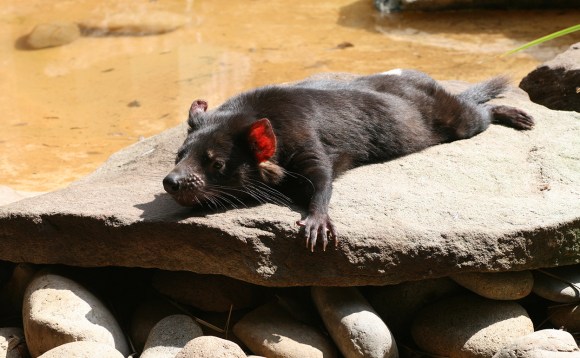
This Tasmanian Devil needs a holiday. How about the mainland? Image by sillypucci [CC BY-NC 3.0] via FlickrIn almost all parts of the world our environment is under siege and we are losing the battle to save many species from extinction. The most common threats behind this unfolding catastrophe are habitat loss and modification, invasive species, and climate change. What can we do?
Usually we focus on treating the symptoms — planting trees or shooting pest animals — but these treatments often fail. Perhaps we need radical new solutions for fixing broken ecosystems.
One such solution could be introducing (or reintroducing) species to ecosystems. There is now a serious and broad-based proposal to release Tasmanian Devils into the wild at Wilsons Promontory in Victoria, saving devils from extinction in Tasmania, and restoring damaged ecosystems on the mainland.
What is rewilding?
We can look at the Tasmanian Devil proposal in terms of an ecological concept known as rewilding. In essence, rewilding seeks to restore ecological function to habitats by introducing or reintroducing species that could perform vital roles.
Perhaps the best example comes from Yellowstone National Park in the US, where wolves were returned after a 70-year absence. Wolves are crucial to Yellowstone’s ecosystems. Without them herbivores like deer and moose flourish, and prevent trees from producing saplings (see video below).
In Australia, the Tasmanian Devil is an ideal candidate for reintroduction to the mainland.
Saving devils
Tasmanian Devils used to inhabit mainland Australia. When exactly they went extinct on the mainland is uncertain, with dates ranging from 5,000 to as recent as 500 years ago. But in 1881 Frederick McCoy, the first director of the National Museum, noted that Tasmanian Devils (or perhaps that should be “mainland” devils) are very common in the most recent cave deposits in Victoria. These fossils are identical to living devils in Tasmania.
Why they became extinct is more mysterious. Various theories have attributed blame to climate change, over-hunting by Aboriginal Australians, and dingoes.
But whatever the cause, current conditions at Wilson’s Promontory closely resemble those in Tasmania, and have likely remained unchanged for thousands of years, with no dingoes and plenty of prey. So we can be sure that the devils would fit in.
But why move them now?
One excellent reason is that there is a genuine risk that devils could become extinct in the wild by 2025, as a result of devil facial tumour disease (DFTD). A mainland population would act as a large, wild insurance population, outside of Tasmania where DFTD is present.
How would the mainland benefit?
So we know Tasmanian Devils have been on the mainland before, and that moving them might help save the species from extinction. But what could devils offer the mainland?
One of the biggest benefits devils could offer is in the control of the red foxes, feral cats and overabundant herbivores (such as wombats, rabbits and wallabies). Evidence for this comes from Tasmania. Following the decline of devils due to DFTD, species such as the feral cat have been increasing. This in turn is associated with a halving in population size of a smaller, native predator, the Eastern Quoll (once present, but now extinct in Victoria).
Some have also suggested that the reason foxes have only recently established themselves in Tasmania is not solely due to humans introducing them, but because devils declined around the same time. Prior to DFTD, devils may have been acting as a first line of defence against foxes by killing their cubs.
Currently we spend a lot of money managing foxes on mainland Australia through baiting programs. But are we going to do this forever? Devils may provide a 24-7 predator control service, free of charge.
Focusing on foxes also ignores the fact that there is no effective control of probably Australia’s most damaging feral animal, cats. As noted above, devils are capable of limiting cats too.
Another issue at Wilson’s promontory is an over-abundance of herbivores including wombats, swamp wallabies, rabbits, kangaroos and hog deer. All of these increased rapidly following the removal of dingoes in the 1940s.
In high numbers these herbivores can radically alter habitats, making them unsuitable for other species. We can shoot herbivores to keep them down, or we could introduce a natural predator such as Tasmanian Devils.
What’s next?
Parks Victoria and an ambitious multi-institutional research hub, the Wildlife Biodiversity Co-operative Research Centre are behind the new proposal to move devils to Wilson’s Promontory. Planning is underway for a comprehensive proposal to the Victorian and Tasmanian governments, and thorough consultation with the public.
With this in mind I urge our leaders to be bold and act now. There are always risks with moving species, but not taking calculated risks to conserve our wildlife is perhaps even worse. A devil reintroduction should be viewed as a positive and strategic national decision, and one for which future generations will thank us.
It is not often we can achieve win-wins in conservation, but helping prevent the extinction of the Tasmanian devil by re-establishing a mainland population, and restoring desperately needed ecosystem function to habitats, may just be the best conservation win-win waiting to happen.
Several authors have recently argued that dingoes could be used to help conserve biodiversity in Australia. Fleming et al. (2012) [Australian Mammalogy 34, 119–131] offer the alternative view that restoration of dingo predation is unlikely to help native species, and is more likely to do harm. We think many of the arguments used by Fleming et al. to reach that conclusion are either unsound or beside the point, and we explain why.
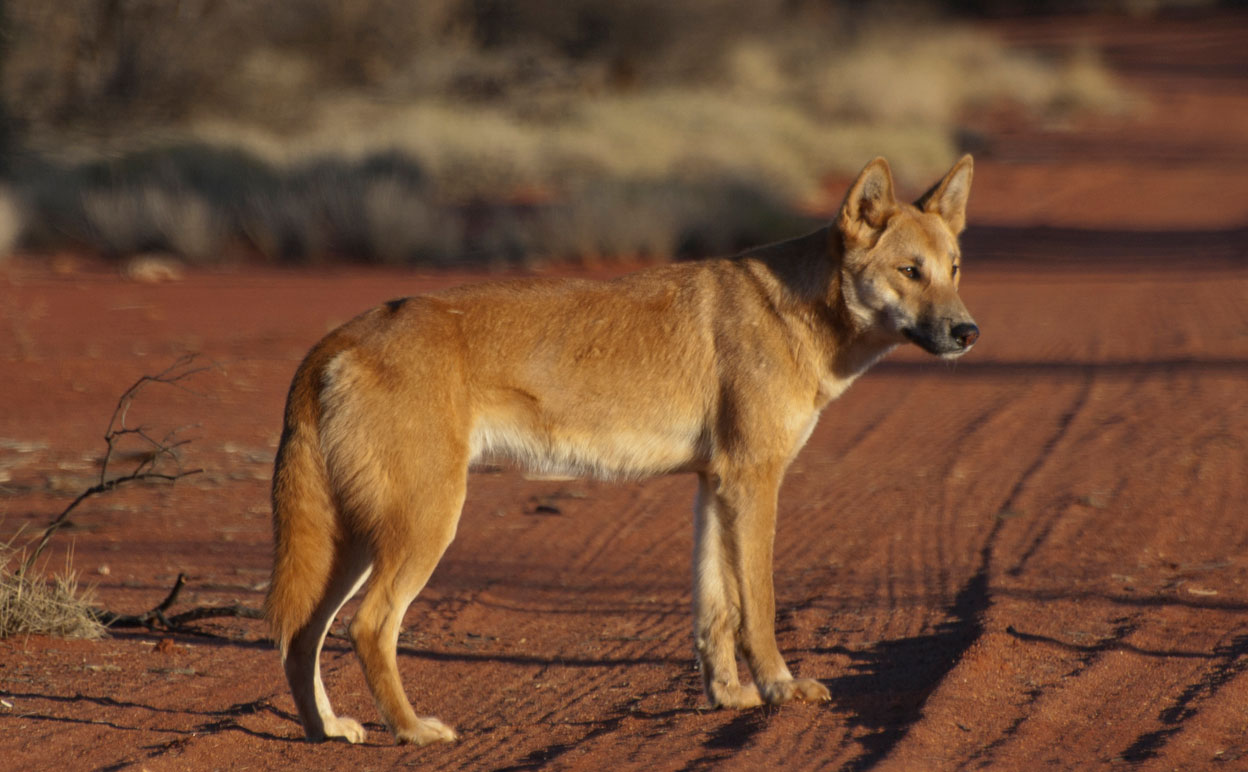
The dingo is Australia’s largest terrestrial predator. But what does that mean for smaller predators, prey and the interactions between them? Image by By Christopher Watson [CC-BY-SA-3.0] via Wikimedia Commons. Johnson CN, Ritchie EG (2013) The dingo and biodiversity conservation: response to Fleming et al.Australian Mammalogy, 2013, 35, 8–14DOIPDF
Authors: Blake M Allan, John PY Arnould, Jennifer K Martin and Euan G Ritchie
Abstract
In wildlife research, our ability to GPS track sufficient numbers of individuals is always limited by cost, which restricts inference of species–habitat relationships.
Here, we describe the modification and use of a relatively new and inexpensive off-the-shelf GPS device, to provide detailed and accurate information on the movement patterns of individuals (mountain brushtail possums, Trichosurus cunninghami), including how movement varies through time, and how individuals interact with each other.
Our results demonstrated that this technology has enormous potential to contribute to an improved understanding of the movement patterns and habitat preferences of wildlife at a fraction of the cost of traditional GPS technology.
Allan BM, Arnould JPY, Martin JK, Ritchie EG (2013) A cost-effective and informative method of GPS tracking wildlife, Wildlife Research, 40, 345–348DOIPDF
Authors: Robinson NM, Leonard SWJ, Ritchie EG, Bassett M, Chia EK, Buckingham S, Gibb H, Bennett AF and Clarke MF
Summary
Rapid environmental change is placing increasing pressure on the survival of many species globally. Ecological refuges can mitigate the impacts of change by facilitating the survival or persistence of organisms in the face of disturbance events that would otherwise lead to their mortality, displacement or extinction. Refuges may have a critical influence on the succes- sional trajectory and resilience of ecosystems, yet their function remains poorly understood.
We review and describe the role of refuges in faunal conservation in the context of fire, a globally important disturbance process.
Refuges have three main functions in relation to fire: they enhance immediate survival during a fire event, facilitate the persistence of individuals and populations after fire and assist in the re-establishment of populations in the longer term. Refuges may be of natural or anthropogenic origin, and in each case, their creation can arise from deterministic or stochas- tic processes. The specific attributes of refuges that determine their value are poorly known, but include within-patch attributes relating to vegetation composition and structure; patch- scale attributes associated with their size and shape; and the landscape context and spatial arrangement of the refuge in relation to fire patterns and land uses.
Synthesis and applications: Refuges are potentially of great importance in buffering the effects of wildfire on fauna. There is an urgent need for empirical data from a range of eco- systems to better understand what constitutes a refuge for different taxa, the spatial and tem- poral dynamics of species’ use of refuges and the attributes that most influence their value to fauna. Complementary research is also required to evaluate threats to naturally occurring ref- uges and the potential for management actions to protect, create and enhance refuges. Knowledge of the spatial arrangement of refuges that enhance the persistence of fire-sensitive species will aid in making decisions concerning land and fire management in conservation reserves and large natural areas. Global change in the magnitude and extent of fire regimes means that refuges are likely to be increasingly important for the conservation of biodiversity in fire-prone environments.
Robinson NM, Leonard SWJ, Ritchie EG, Bassett M, Chia EK, Buckingham S, Gibb H, Bennett AF, Clarke MF (2013) Refuges for fauna in fire-prone landscapes: their ecological function and importance. Journal of Applied EcologyDOIPDF
This letter was originally published in Nature on behalf of 21 co-signatories.DOI
Policy and legislative changes by Australia’s state governments are eroding the vital protection of the country’s unique biodiversity.
Reserves are being opened up to ecologically disruptive activities, such as grazing by domestic livestock, logging, mining, recreational hunting and fishing, and commercial development. Protected habitats on private and leasehold land are imperilled too. Queensland and Victoria, for example, are relaxing hard-won laws that limit vegetation clearance on private land, further accelerating the loss of regional biodiversity.
Collectively, these actions increase the pressure on biodiversity conservation in protected areas, many of which are already showing biodiversity loss (for example, the Kakadu National Park in northern Australia). Ecological connectivity is being lost, which will hamper the dispersal of species and their ability to respond to climate-change effects.
Species extinctions are primed to increase. Too many of the country’s unique fauna and flora have been wiped out over the past two centuries (see, for example, C. Johnson Australia’s Mammal Extinctions; Cambridge Univ. Press, 2006), including the Christmas Island pipistrelle bat (Pipistrellus murrayi) in 2009.
There could be no worse time to weaken reserve protection and relax laws designed to reduce habitat loss.
Authors: Leila A Brook, Christopher N Johnson and Euan G Ritchie
Abstract
Apex predators can benefit ecosystems through top–down control of mesopredators and herbivores. However, apex predators are often subject to lethal control aimed at minimizing attacks on livestock. Lethal control can affect both the abundance and behaviour of apex predators. These changes could in turn influence the abundance and behaviour of mesopredators.
The Australian dingo, Canis lupus dingo. Image: Angus McNab.
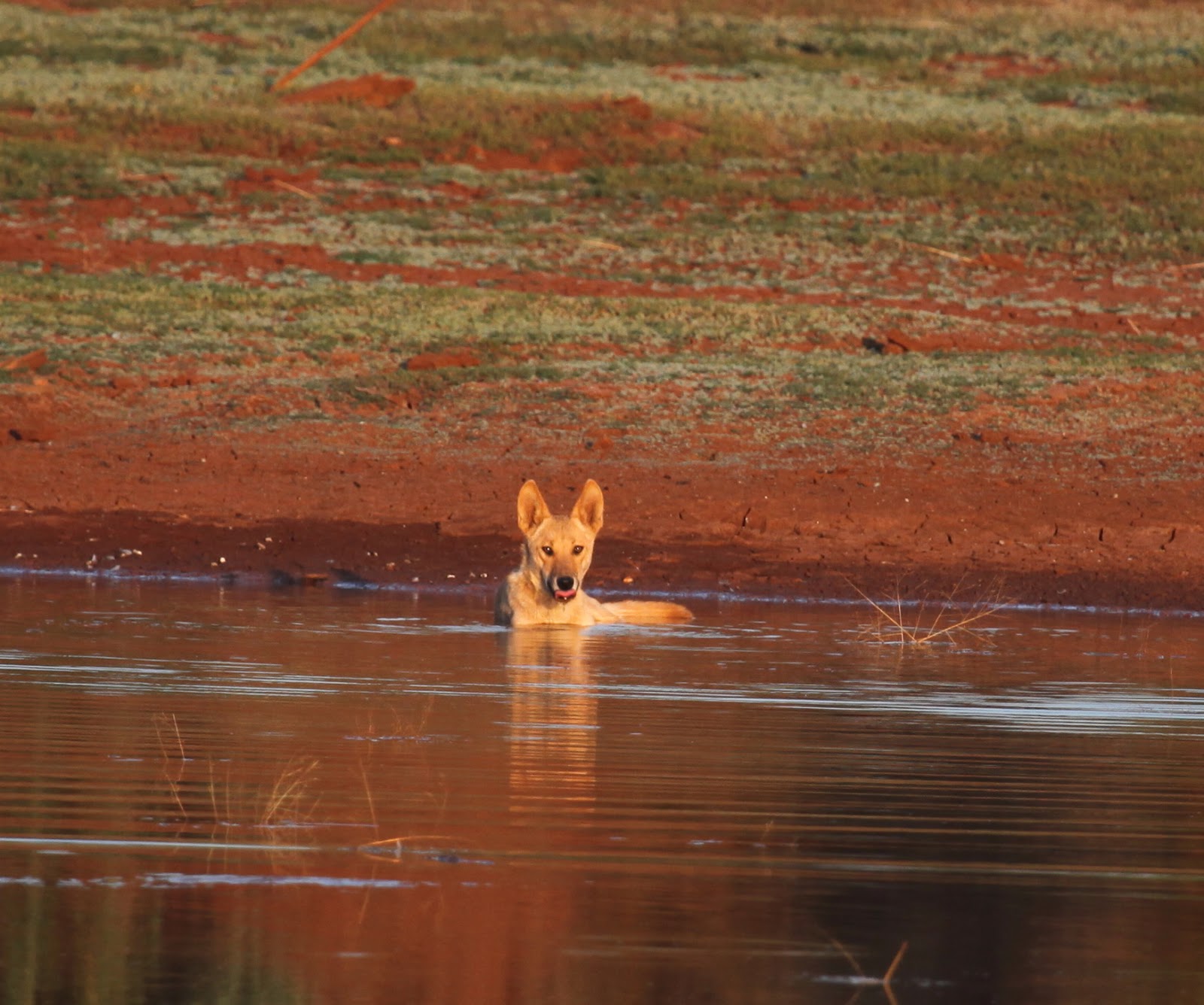
We used remote camera surveys at nine pairs of large Australian rangeland properties, comparing properties that controlled dingoes Canis lupus dingo with properties that did not, to test the effects of predator control on dingo activity and to evaluate the responses of a mesopredator, the feral cat Felis catus.
Indices of dingo abundance were generally reduced on properties that practiced dingo control, in comparison with paired properties that did not, although the effect size of control was variable. Dingoes in uncontrolled populations were crepuscular, similar to major prey. In populations subject to control, dingoes became less active around dusk, and activity was concentrated in the period shortly before dawn.
Shifts in feral cat abundance indices between properties with and without dingo control were inversely related to corresponding shifts in indices of dingo abundance. There was also a negative relationship between predator visitation rates at individual camera stations, suggesting cats avoided areas where dingoes were locally common. Reduced activity by dingoes at dusk was associated with higher activity of cats at dusk.
Our results suggest that effective dingo control not only leads to higher abundance of feral cats, but allows them to optimize hunting behaviour when dingoes are less active. This double effect could amplify the impacts of dingo control on prey species selected by cats. In areas managed for conservation, stable dingo populations may thus contribute to management objectives by restricting feral cat access to prey populations.
Brook L A, Johnson C N, Ritchie E G (2012) Effects of predator control on behaviour of an apex predator and indirect consequences for mesopredator suppression. Journal of Applied Ecology, 49: 1278–1286. doi: 10.1111/j.1365-2664.2012.02207.x

![Without taking risks, science won’t solve big problems. Image by Andrew "FastLizard4" Adams via [CC BY-SA 2.0]Flickr](https://euanritchie.org/wp-content/uploads/2013/11/dangerousscienceflickr.jpg?w=580)
 This article was originally published at
 Applied ecology and conservation research group