Categories
Media

The Conversation: Rockin’ the suburbs – bandicoots live among us in Melbourne

Young southern brown bandicoots (Isoodon obesulus obesulus), an endangered marsupial species living in outer Melbourne. Image credit: Sarah Maclagan.

By Euan Ritchie and Sarah Maclagan, Deakin University.

This article was originally published on The Conversation. Read the original article, including reader comments.

There are more and more of us on Earth, and increasingly we’re choosing to live in cities. This is a problem for wildlife: urbanisation is one of the greatest threats to biodiversity. Sprawling construction to accommodate people completely removes or modifies the homes of many other species.

But although we need to do all we can to mitigate these effects and their causes, cities are far from biodiversity wastelands. In fact, cities are home to large numbers of species, many of which are threatened.

One such example is the iconic but endangered southern brown bandicoot. New research has found these shy animals thriving in peri-urban areas (the interface between cities and more rural areas) on the outskirts of Melbourne.

Novel ecosystems

Through our effects on the environment, humans are increasingly creating “novel ecosystems”: areas composed of new combinations of species and/or new and modified environmental conditions. In these areas there are winners and losers. How we perceive and manage such ecosystems could have a big influence on conserving species more broadly, and helping to address Earth’s extinction crisis.

We studied these issues by examining the ecology of the endangered southern brown bandicoot in southeast Melbourne. Specifically, we compared bandicoot abundance and body condition between novel sites, made up of peri-urban areas, and more natural remnant sites at the Royal Botanic Gardens at Cranbourne and Quail Island Nature Conservation Reserve, which more closely resemble original bandicoot habitat.

Our goal was to see whether novel sites could support resident bandicoots. Crucially, could peri-urban areas allow bandicoots to breed, recruit (attract new migrating individuals) and survive well enough for populations to persist?

Don’t judge habitats by their appearance

Contrary to what the Human Threat Hypothesis (and logic) might predict, we found more bandicoots at novel sites (66 individuals recorded over 1722 trap-nights) than remnant sites (26 individuals recorded over 1384 trap-nights). And bandicoots were most abundant at the novel site with the most urbanised surroundings. The condition of females was similar between novel and remnant sites.

Most bandicoots at novel sites were resident (meaning they were observed at the same location multiple times thoughout the study). At these same sites we recorded successful breeding, recruitment of young adults, and survival of mature adults.

Our results challenge conventional conservation thinking. Where bandicoots did best is also where known predators such as foxes and feral cats are present and abundant, as opposed to the nature reserves from which they are largely absent. Remnant areas also have more intact native vegetation, whereas bandicoots in urban areas nested in roadsides full of invasive blackberry, a weed often targeted for removal.

Bandicoots like thick vegetation, but they appear not to care which plant species they use – as long as cover is sufficient. Blackberry bushes may protect bandicoots from predators, and also be a source of food through the insects they attract.

On the topic of food and just how adaptable bandicoots are, locals within our study region reported them dining on pet and domestic animal food from backyards.

Conservation opportunities in cities

A growing body of evidence suggests that even heavily modified environments can support viable populations of native plants and animals, and we should endeavour to manage these areas more sympathetically for the benefit of more species. This does not mean that all species will thrive in cities and heavily modified environments – there will always be a need for conservation reserves – but it throws the wilderness-versus-city dichotomy into question.

We need greater awareness of the nature we already share our cities with. Deliberate encouragement such as greener building and urban design that encourages wildlife to return and flourish would substantially benefit humans and other species alike. We are a part of and dependent upon nature, and as such should celebrate and seek to re-establish these vital connections.
The Conversation

Categories
Media

Ecological Society of Australia: The demise of the dingo

The native dingo Canis dingo — the only remaining terrestrial, large-bodied, top predator in mainland Australia — is classified as a pest species because it threatens livestock.

Barrier fencing, and lethal methods — such as 1080 poisoning, trapping and shooting — are used as control methods, in a management practice that parallels the persecution of the Tasmanian tiger.

Continue reading on the Ecological Society of Australia website.

Categories
Media

ABC: Population, corruption must be addressed to halt biodiversity loss, scientists say

We need to focus on limiting human population growth, reducing resource consumption, and cracking down on government corruption, if we’re going to stop the global loss of species known as the sixth great extinction…

Continue reading on the ABC website

Categories
Media

Video: Biodiversity crisis hierarchy

Three-quarters of species on earth were wiped out in the fifth mass extinction, including the dinosaurs. 66 million years later, scientists are now warning that we are entering the sixth mass extinction, and it’s caused by people…

By Don Driscol, via YouTube.

Categories
Media

The Conversation: Australia’s draft ‘Strategy for nature’ doesn’t cut it. Here are nine ways to fix it

By Euan Ritchie (Deakin University), Bek Christensen (Queensland University of Technology), Bill Bateman (Curtin University), Dale Nimmo (Charles Sturt University), Don Driscoll (Deakin University), Grant Wardell-Johnson (Curtin University) Noel D Preece (James Cook University) and Sarah Luxton (Curtin University).

This article was originally published on The Conversation. Read the original article, including reader comments.

The thorny devil, one of Australia’s many remarkable and unique animals.

Australia arguably has the worst conservation record of any wealthy and politically stable nation. Since European arrival roughly 230 years ago, 50 animal and 60 plant species have gone extinct, including the loss of some 30 native mammals – roughly 35% of global mammal extinctions since 1500.

These are not just tragedies of the distant past – the Christmas Island pipistrelle, the forest skink and the Bramble Cay melomys have all died out within the past two decades.

More than 1,800 plant, animal and ecological communities are listed as being at risk of extinction, ranging from individual species such as the orange-bellied parrot and Gilbert’s potoroo, all the way up to entire ecosystems such as the Great Barrier Reef. This number rises every year, in the face of threats such as climate change, rampant land clearing, mining and invasive species.

This bleak situation has been recognised by successive governments, but never successfully tackled.

In the midst of such a tremendous environmental challenge, the federal government has released a draft document, Australia’s strategy for nature 2018–2030, for public comment. This is a welcome step, but regrettably the strategy falls a long way short of what’s required and contains significant flaws. It contains no firm commitments or measurable targets, and overlooks a substantial amount of relevant scientific evidence.

As representatives of Australia’s peak professional ecological body, the Ecological Society of Australia (ESA), we are deeply concerned that the strategy is not fit for its purpose of protecting Australia’s biodiversity.

A bolder, science-based vision

As part of ESA’s formal submission to the public consultation, we provide an alternative, evidence-based vision. This includes nine key recommendations for nature conservation in Australia.

1. Set measurable targets. Any project needs a set of quantifiable targets, otherwise we won’t know whether it has been successful or not. Some suggestions:

  • establish a comprehensive national network of ecosystem monitoring sites by 2025
  • reverse the declines of all species that are threatened by human-caused factors by 2025.

2. Commit to preventing human-caused species extinctions. The strategy should state explicitly that human-driven species extinctions are not acceptable, and establish and maintain clear paths of accountability.

3. Adequately fund the strategy’s implementation. Australia should show international leadership in conservation by investing at the upper end of OECD and G20 averages. At present Australia allocates less than 0.8% of GDP to conservation. We suggest 2% as an urgent minimum investment, with scope to expand funding to ensure that targets can be met.

4. Focus on the intrinsic value of biodiversity. The draft strategy is supposed to represent “Australia’s biodiversity conservation strategy and action inventory”, but it does not define biodiversity, choosing instead to focus on the vague notion of “nature”. We recommend the document return its focus to biodiversity, defined in the Convention on Biodiversity as “the variability among living organisms from all sources including, inter alia, terrestrial, marine and other aquatic ecosystems and the ecological complexes of which they are a part; this includes diversity within species, between species and of ecosystems”.

5. Make specific legislative recommendations. The strategy should specify the legislative revisions that will be needed to improve conservation, with particular focus on the flagship Environment Protection and Biodiversity Conservation (EPBC) Act 1999. This should include:

  • requiring recovery plans for all threatened species
  • requiring threat-abatement plans to efficiently manage major threats to many species, such as impacts of feral predators and herbivores, invasive plants and new diseases
  • specifically protecting high-value ecosystems, including those of economic value such as the Great Barrier Reef, and those that are critical for species survival, and rare ecosystems.

6. Commit to establishing a comprehensive system of protected areas, including marine parks. Despite longstanding commitments to developing a fully representative network of protected areas in Australia, many bioregions remain poorly represented in the National Reserve System and the national marine protected area system.

7. Include all 20 Aichi biodiversity targets and affirm Australia’s commitment to the Convention on Biodiversity. Australia has a proud bipartisan history of national and international engagement with conservation. But the new draft strategy is poor in comparison with other countries’ equivalent documents, such as Germany’s National Strategy on Biological Diversity and New Zealands’s Biodiversity Action Plan.

8. Base the strategy on Australia’s international conservation commitments. Australia has signed more than 30 international conservation agreements, including the Convention on Biodiversity, the Apia Convention, and the Convention on International Trade in Endangered Species. The domestic EPBC Act requires Australia not to defy these agreements, yet with the exception of the Convention on Biodiversity, none of them rates a mention in the new draft strategy.

9. Recognise key issues that affect Australian biodiversity conservation. Any successful strategy should specifically address new and emerging issues that can harm our environment, such as Australia’s increasing use of natural resources, environmental water flows in rivers, and overfishing.

We cannot ignore human population growth, increasing per capita consumption and subsequent resource demand as drivers of threats to healthy and resilient ecosystems.

Our unique plants, animals and other organisms shape our national identity. They have wide-ranging benefits to our society, as well as being inherently valuable in their own right. They need a much stronger commitment to their ongoing protection.
The Conversation


Categories
Media

ABC Central Victoria: Dingoes, foxes, and fire

I recently spoke with Jo Printz, from Mornings on ABC Central Victoria about our recently published paper examining the relationships between fire, dingoes and foxes, in Victoria’s Big Desert-Wyperfeld region.

Categories
Media Science communication

Radio National: Australia’s new extinction crisis

Over the past few years, Australia has lost the Christmas Island pipistrelle, the Christmas Island skink and the Bramble Cay melomys – the first mammal in the world to have been wiped out by human-caused climate change.

Has the creation of the government’s threatened species strategy and a Threatened Species Commissioner helped? Or is red tape actually hindering conservation efforts?

I spoke to Phillip Adams on Radio National about the extinction crisis facing Australian fauna.

Radio National

Categories
Media Science communication

The Guardian: ‘A national disgrace’ — Australia’s extinction crisis is unfolding in plain sight

The plight of Australia’s threatened species is an environmental crisis, with more and more species edging closer to extinction despite our capacity to prevent such a tragedy from occurring.

It’s akin to allowing the art of Namitjira, Olley, Preston, Nolan, Whiteley and others to disappear from our most treasured museums, through neglect, and much of society being unaware or responding with a collective shrug of shoulders.

Read more on The Guardian website

Categories
Media Publications

The Conversation: Australia’s species need an independent champion

By Euan Ritchie (Deakin University), Dale Nimmo (Charles Sturt University), Don Driscoll (Deakin University), Geoffrey Heard (Charles Sturt University), James Watson (The University of Queensland), Megan C Evans (The University of Queensland) and Tim Doherty (Deakin University).

This article was originally published on The Conversation. Read the original article, including reader comments.

Furore erupted last week among many Australians who care for our native species.

First we heard that land clearing in Queensland soared to a staggering 400,000 or so hectares in 2015-16, a near 30% increase from the previous year. Second, the federal government’s outgoing Threatened Species Commissioner, Gregory Andrews, implied on national radio that land clearing was not a pressing issue for Australia’s threatened species.

This is a troubling public message, particularly as the government’s own State of the Environment Report 2016 lists “clearing, fragmentation and declining quality of habitat” as a primary driver of biodiversity decline across the continent.

What’s more, loss of vegetation cover can exacerbate threats to wildlife, by making it easier for cats and other invasive predators to kill native animals.

These comments highlight key issues with the Threatened Species Commissioner’s current remit, made more pressing due to timing: the federal government will soon appoint a new commissioner, a “TSC 2.0”, if you will.

Threatened Species Commissioner 1.0

The commissioner’s role was established in 2014 to address the dire state of threatened species; a key initiative of the then environment minister, Greg Hunt. The remit was sixfold, including bringing a new national focus to conservation efforts; raising awareness and support for threatened species in the community; and taking an evidence-based approach to ensure conservation efforts are better targeted and co-ordinated and more effective.

Did TSC 1.0 meet the objectives?

We can confidently say “yes” in relation to the objectives of collaboration, public awareness and promotion of threatened species conservation. Andrews travelled widely and engaged directly with stakeholders, maintained active social media feeds, developed a YouTube channel, and had numerous media engagements.

Also laudable was the 2015 Threatened Species Summit, attended by some 250 delegates from a diverse set of stakeholders, which garnered significant media coverage.

But elsewhere progress has been mixed. The development of the Threatened Species Strategy is welcome, but the plan does not go nearly far enough. Key targets by 2020 are improvements in the population trajectories of 20 mammals, 20 birds and 30 plants. But this represents a mere 4% of Australia’s threatened species, excluding all threatened reptiles, amphibians, fishes and invertebrates, and most of our threatened flora.

The focus on threatening processes is equally narrow. The science tells us that habitat loss is a top threat to Australia’s biodiversity. Land clearing has been listed as a key threatening process under federal legislation since 2001.

Yet the Threatened Species Strategy mentions land clearing zero times and habitat loss just twice. Feral cats, on the other hand, are mentioned 78 times, with the plan overwhelmingly focused on culling this one invasive species. Other major introduced pests – foxes, rabbits, feral pigs and goats – are mentioned 10 times between them.

An on-ground focus and mobilising of financial and logistical resources to support threatened species recovery was a welcome development during Andrews’s tenure. His second progress report cites AU$131 million in funding for projects in support of threatened species since 2014.

This is a significant sum. But it is just 0.017% of the government’s AU$416.9 billion annual revenue – well short of what’s needed to reverse species declines.

Likewise, funding for threatened species must be better targeted. Of the 499 projects cited in the TSC second progress report, 361 were those of the Green Army and 20 Million Trees programs (costing AU$78 million, 60% of total funding). Neither program is specifically devoted to threatened species, and their benefit in this regard is doubtful.

The next commissioner’s checklist

Australians and democratic societies should have access to reliable, independent and objective information about the current state of our natural heritage, and how government decisions influence its trajectory. That’s a critical role that TSC 2.0 should play.

Expertise will be crucial for the new appointee. Given the complex science of species conservation, a background in environmental science is a clear requirement, just as a background in economics would be expected for the chair of the Productivity Commission, or a grounding in law for a human rights commissioner.

For a commissioner to work effectively, they must also be willing to comment on politically sensitive issues and put themselves at odds with the government when necessary. Commissioners typically work as the head of an independent statutory body, such as the Productivity Commission, the Australian Securities and Investments Commission, and the Australian Electoral Commission.

However, the TSC position sits within the Department of Environment and Energy and so, like any public servant, the commissioner is restricted in what they can say in public forums. A more accurate name for the current position would be Threatened Species Ambassador.

But if the TSC 2.0 is to be a truly informed and independent voice for Australia’s threatened species, the role must sit within a statutory authority, at arm’s length from government. This is the case in New Zealand, where an independent environment commission has operated since 1986. It’s time for Australia to follow suit.
The Conversation

Categories
Media Science communication

Remember The Wild: To improve nature conservation we must better embrace complexity

The natural world is truly glorious in its diversity, and in the complexity of relationships between its many millions of species, and the environments in which they live. I was lucky enough to immerse myself in this wonder recently, while snorkelling on Heron Island with my family. The kaleidoscope of colours and chaos of movement I saw as I drifted over countless different fishes and corals was truly breathtaking. But they also inspired reflection.

Continue reading at Remember The Wild.

Remember The Wild is a nature engagement charity, connecting people with the natural world.

Categories
Media

this. Shining a light on Australia’s biodiversity crisis

From a very young age, we are taught the basics about nature and how ecosystems work. But for many of us, school science class was the last time issues like climate change and extinction were explored in much detail and front of mind. For ecologists like Dr Euan Ritchie from Deakin University’s School of Life and Environmental Sciences, this is troubling.

‘Unfortunately, Australia’s biodiversity crisis isn’t on the wider public’s radar day to day,’ says Dr Ritchie. ‘This is because many people don’t see the problems for themselves, it’s a case of out of sight, out of mind. As a result, the issues are not given the attention they deserve and our natural world declines further and more rapidly as days go by.’

Continue reading on this.

Categories
Media

The Monthly: Not-so-Tasmanian tiger

Another blurry photo submitted as ‘evidence’ of the persistence of the Tasmanian tiger. (Can you spot it?)

…“It is remarkable, shall we say, that every single photo of a suspected thylacine is always blurry,” says Dr Euan Ritchie, senior lecturer in ecology at Deakin University in Melbourne.

Read the full article on The Monthly

Categories
Media

The Conversation: Why do some graziers want to retain, not kill, dingoes?

Australia has a complex relationship with the dingo. Image credit: Angus Emmott, via The Conversation

Vast, ancient, nutrient-poor, with wild swings between droughts, floods and fires: this describes much of the Australian continent. Livestock grazing and farming in such a land is certainly not without its challenges. The Conversation

Where we’ve failed to work with the local conditions, we see barren plains, dust storms, the extinction of native species, and the repossession of properties by banks, among many ills.

But such a dire picture is far from universal, and belies the fact that many who live on the land are also among our most innovative land managers. Many projects offer potential benefits for livestock production and the environment alike, but without support progress may be hindered.

Putting dingoes to work

One of the most contentious examples involves encouraging dingoes. Many pastoral areas require land managers to take “all reasonable and practical steps” to manage the risk of dingoes, which are classed as pest animals.

But a growing body of research argues that dingoes can be effective at controlling kangaroo and feral goat populations, especially on cattle stations.

A Western Australian couple, David Pollock and Frances Jones, were recently featured on Australian Story for their decision to regenerate their property, Wooleen, by de-stocking, encouraging local flora and fauna, and investing in ecotourism.

Their neighbours, including sheep graziers whose stock are vulnerable to dingoes, feel this is an irresponsible decision. Graziers have a mandate to control dingoes (“wild dogs”, to many) and dingo-domestic dog hybrids — which can’t be easily and reliably distinguished in the wild.

While the impacts and merits of encouraging dingoes in sheep country are hotly debated, their role in the management of cattle stations is much better understood. But restrictive legislation and the stigma attached to dingoes are frustrating for those who see them as having a vital ecological and economic role for their properties.

Queensland grazier Angus Emmott writes that his beef cattle enterprise, Noonbah station, has benefited from leaving dingoes and kangaroos alone:

We run a beef cattle enterprise in the top end of the Queensland channel country, southwest of Longreach. As a part of our management plan, we leave the dingoes and the ’roos alone. We see a range of benefits to our operation.

When the dingoes don’t have their social structure disrupted by poison baiting, trapping and shooting, only the apex bitch breeds, once a year at most. These family groups have strictly defined ranges, and they kill or chase off other wild dogs or dingoes that intrude. They also keep kangaroos down to very low numbers, which is a huge benefit in regards to pasture growth and being able to rest our paddocks. The dingoes also keep down feral pig, cat and fox numbers.

Yes, dingoes do take some of our calves, but the benefits of pasture growth and feral animal control result in a net benefit of better land condition and a greater dollar return. Dingoes also benefit biodiversity conservation and soil condition. We acknowledge this management model does not work in sheep country, including for some of our nearby neighbours, and in these cases we need to look at different forms of management, such as fencing and/or companion and guardian animals.

Research supports the financial benefits of this approach in certain circumstances. Some studies have found that, perversely, taking lethal action against dingoes can increase the incidence of attacks on stock and boost the population of herbivores that compete with cattle for pasture.

Solutions for protecting livestock against attack, such as guardian dogs, are also at hand and may be considerably cheaper than constructing and maintaining extensive predator-proof fences. Livestock guardian dogs have been shown to be effective in numerous locations across Australia, on large and small grazing properties. But investment from state and federal government (and related agencies) aimed at encouraging such innovation has been lacking.

Working with the land

Regardless of whether graziers take the drastic steps seen at Wooleen, now is the time to reflect on the direction of Australia’s land management.

If we’re to overcome the many challenges we face, including the impacts of climate change on food production, then we need to support the bold new thinking emerging from rural and regional Australia, and our scientific institutions.

Such ideas could include making better use of native animals – better suited to Australian conditions – as sources of meat, and reforming land use legislation to allow new industries.

Seeing some of the worst land degradation first hand it’s easy to think that it’s all too hard and that environmental repair will take decades, if not centuries. This can invite inertia and apathy, the enemies of positive change.

But the stories of Wooleen, Noonbah and other innovators show us what is possible. Science has helped demonstrate ecological repair can happen faster and to a greater extent than many might appreciate.

Big changes certainly carry risks, and these must be managed carefully, but new and sometimes brave ideas will always improve our understanding of the land. Whatever the outcome, such knowledge helps guide better decisions for more sustainable grazing, farming and bio-diverse conservation.

I would like to acknowledge the contribution of Angus Emmott to this article.

This article was originally published on The Conversation. Read the original article, including reader comments.

The Conversation

The Conversation

Categories
Media

The Conversation: The bark side – domestic dogs threaten endangered species worldwide

By Tim Doherty (Deakin University), Aaron J Wirsing (University of Washington), Chris Dickman (University of Sydney), Dale Nimmo (Charles Sturt University), Euan Ritchie (Deakin University), and Thomas Newsome (Deakin University)

A domestic dog chasing a wild boar in Banni, India. Image credit: Chetan Misher via Facebook

Humans and their canine companions share many close bonds. Wolves (Canis lupus) were the first animal domesticated by people, some time between 15,000 and 50,000 years ago.

There are now an estimated 1 billion domestic dogs across their near-global distribution.

Domestic dogs include feral and free-ranging animals (such as village and camp dogs), as well as those that are owned by and completely dependent on humans (pet dogs).

Our latest research reveals that the ecological “pawprint” of domestic dogs is much greater than previously realised.

Using the IUCN Red List of Threatened Species, we counted how many species are negatively affected by dogs, assessed the prevalence of different types of impacts, and identified regions with the greatest number of affected species.

Dogs are third-most-damaging mammal

We found that dogs are implicated in the extinction of at least 11 species, including the Hawaiian Rail and the Tonga Ground Skink. Dogs are also a known or potential threat to 188 threatened species worldwide: 96 mammal, 78 bird, 22 reptile and three amphibian species. This includes 30 critically endangered species, two of which are classed as “possibly extinct”.

These numbers place dogs in the number three spot after cats and rodents as the world’s most damaging invasive mammalian predators.

Even though dogs have an almost global distribution, the threatened species they are known to affect are concentrated in certain parts of the globe. South-East Asia, South America, Central America and the Caribbean each contain 28 to 30 threatened species impacted by dogs. Other hotspots include Australia, Micro/Mela/Polynesia and the remainder of Asia.

Lethal and non-lethal impacts

Predation was the most commonly reported impact of dogs on wildlife. The typically omnivorous diet of dogs means they have strong potential to affect a diversity of species. For instance, dogs killed at least 19 endangered Kagu (a ground-dwelling bird) in New Caledonia in 14 weeks. Threatened species with small population sizes are particularly vulnerable to such intense bouts of predation.

Aside from simply killing animals, dogs can harm wildlife in other ways, such as by spreading disease, interbreeding with other canids, competing for resources such as food or shelter, and causing disturbances by chasing or harassment. For example, contact with domestic dogs increases disease risk for endangered African Wild Dogs in Kenya.

Part of the problem is that when wild animals perceive dogs as a threat, they may change their behaviour to avoid them. One study near Sydney found that dog walking in parklands and national parks reduced the abundance and species richness of birds, even when dogs were restrained on leads.

None of the Red List assessments mentioned such indirect risk effects, which suggests that their frequency is likely to be much higher than reported.

Friend and foe

Despite their widespread and sometimes severe impacts on biodiversity, dogs can also benefit some species and ecosystems.

For example, in Australia, the closely related dingo (Canis dingo) can suppress populations of introduced predators such as red foxes (Vulpes vulpes), and in doing so can benefit smaller native prey. It is possible that domestic dogs could perform similar ecological roles in some situations.

In some regions, dogs and their keen noses have been trained to help scientists find threatened species such as Tiger Quolls. Elsewhere they are helping to flush out and control feral cats.

An emerging and exciting conservation role for dogs is their growing use as “guardian animals” for wildlife, with the remarkable story of Oddball being the most well known.

Managing the problem

Dogs not only interact with wildlife, but can also attack and spread disease to humans, livestock and other domestic animals. As such, managing the problem requires looking at ecological, cultural and social perspectives.

Some of the regions with high numbers of species threatened by dogs are also hotspots for urbanisation and road building, which make it easier for dogs to access the habitats of threatened species. Urban development increases food waste, which feeds higher numbers of dogs. As dogs expand into new areas, the number of species they impact is likely to grow.

We can protect wildlife by integrating human health and animal welfare objectives into dog management. Vaccination and desexing campaigns can reduce disease risk and overpopulation problems. We should also focus on responsible dog ownership, removing dogs without owners, and reducing access to food waste.

Given the close relationship between humans and dogs, community engagement should form the basis of any management program. More research is needed to get a better picture of the scale of the problem, and of how dogs interact with other threats such as habitat loss. Such actions are critically important for ensuring the conservation of wildlife threatened by dogs around the world.

This article was originally published on The Conversation. Read the original article, including reader comments.

The Conversation

The Conversation

Categories
Media Science communication

The Conversation: Bigfoot, the Kraken and night parrots – searching for the mythical or mysterious

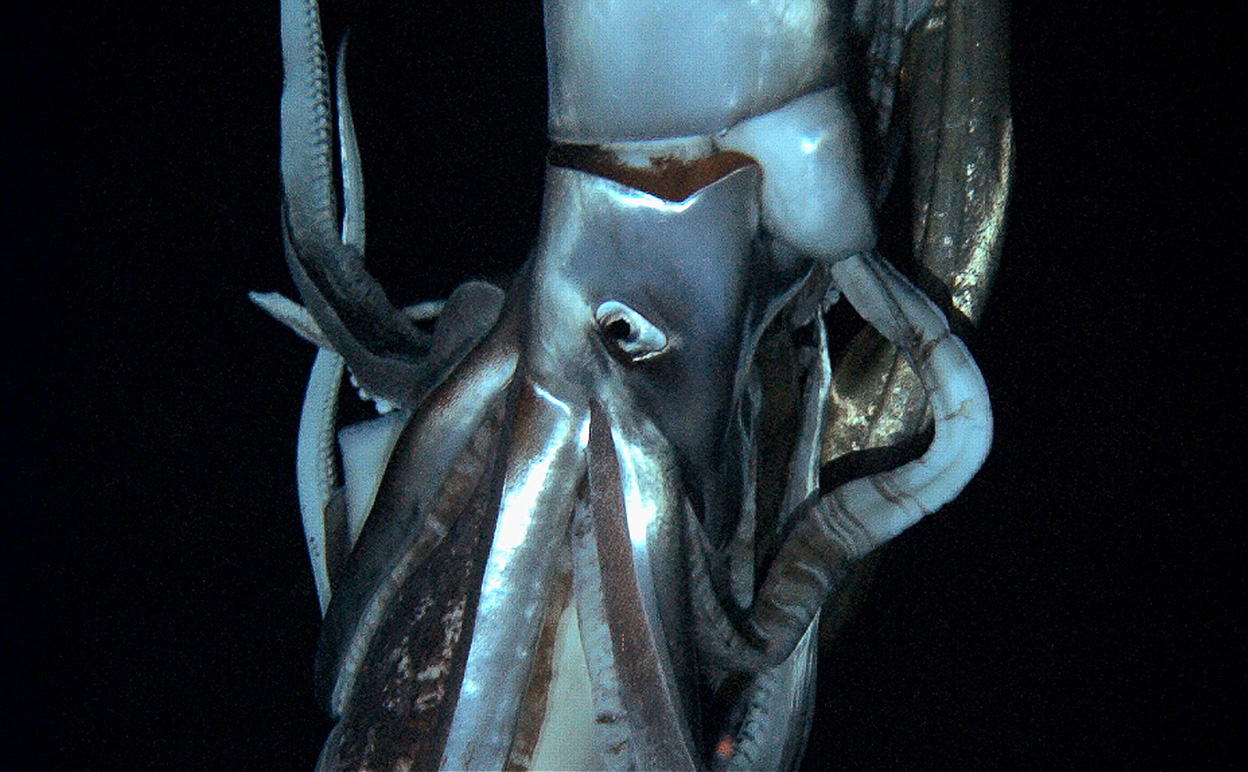
In 2012 scientists succeeded in filming for the first time ever a giant squid in its natural habitat. Image credit: EPA / NHK / NEP / Discovery Channel / AAP

It’s remarkable how little we know about Earth. How many species do we share this planet with? We don’t know, but estimates vary from millions to a trillion. In some respects we know more about the Moon, Mars and Venus than we do about the ocean’s depths and the vast sea floors.

But humans are inquisitive creatures, and we’re driven to explore. Chasing mythical or mysterious animals grabs media headlines and spurs debates, but it can also lead to remarkable discoveries.

The recent photographing of a live night parrot in Western Australia brought much joy. These enigmatic nocturnal birds have been only sporadically sighted over decades.

Another Australian species that inspires dedicated searchers is the Tasmanian tiger, or thylacine. A new hunt is under way, not in Tasmania but in Queensland’s vast wilderness region of Cape York.

Other plans are afoot to search for the long-beaked echidna in Western Australia’s Kimberley region.

In the case of the thylacine, old accounts from the region that sound very much like descriptions of the species raise the prospect that perhaps Cape York isn’t such a bad place to look after all.

But in reality, and tragically, it’s very unlikely that either of these species still survives in Australia. For some species there is scientific research that estimates just how improbable such an event would be; in the case of thylacines, one model suggests the odds are 1 in 1.6 trillion.

Chasing myths

The study and pursuit of “hidden” animals, thought to be extinct or fictitious, is often called cryptozoology. The word itself invites scorn – notorious examples include the search for Bigfoot, the Loch Ness Monster or Victoria’s legendary black panthers.

Granted, it’s probably apt to describe those searches as wild goose chases, but we must also acknowledge that genuine species – often quite sizeable ones – have been discovered.

Remarkable discoveries of animals thought to be fantasies or long extinct include giant squid, mountain gorillas, okapi, Komodo dragons and coelacanths.

In some cases, like the giant squid, these animals have been dismissed as legends. The reclusive oarfish, for example, are thought to be the inspiration for centuries of stories about sea serpents.

Technology to the rescue

Finding rare and cryptic species is self-evidently challenging, but rapid advances in technology open up amazing possibilities. Camera traps now provide us with regular selfies of once highly elusive snow leopards, and could equally be used with other difficult-to-find animals.

Environmental DNA is allowing us to detect species otherwise difficult to observe. Animal DNA found in the blood of leeches has uncovered rare and endangered mammals, meaning these and other much maligned blood-sucking parasites could be powerful biodiversity survey tools.

Acoustic recording devices can be left in areas for extended time periods, allowing us to eavesdrop on ecosystems and look out for sounds that might indicate otherwise hidden biological treasures. And coupling drones with thermal sensors and high resolution cameras means we can now take an eagle eye to remote and challenging environments.

The benefits of exploration and lessons learned

It’s easy to criticise the pursuit of the unlikely, but “miracles” can and do occur, sometimes on our doorstep. The discovery of the ancient Wollemi pine is a case in point. Even if we don’t find what we’re after, we may still benefit from what we learn along the way.

I’ve often wondered how many more species might be revealed to us if scientists invested more time in carefully listening to, recording and following up on the knowledge of Indigenous, farming, and other communities who have long and intimate associations with the land and sea.

Such an approach, combined with the deployment of new technologies, could create a boom of biological discovery.

This article was originally published on The Conversation. Read the original article, including reader comments.

The Conversation

The Conversation

Categories
Media Science communication

Radio National: My Feed

It’s all birds, tigers and octopi on social media this week!

Today I spoke to Radio National’s Jonathan Green about what’s been happening in my social media feeds.

Streaming audio via Radio National website

Categories
Media Science communication

ABC Radio: Has roo meat made it to your dinner table?

Roo meat. Image credit Wikimedia Commons
Kangaroo meat. Image credit Wikimedia Commons

What are you throwing into the trolley as you wander through the meat section at the supermarket? Beef? Lamb? Chicken?

I spoke to ABC’s Gillian O’Shaughnessy about why we should consider eating kangaroo meat.

via 720 ABC Perth

Categories
Media Science communication

3BA Ballarat Today: Would you eat kangaroo on Australia Day?

Roo meat has less fat and cholesterol than beef and is quicker to cook. Would you try roo this Australia day?

via 3BA FM

Categories
Media Science communication

Raising the Bar: How making peace with predators could transform our world

Why are some feral animals running rampant? Should we reintroduce dingoes and Tasmanian devils to parts of Australia? Why doesn’t shark culling work? How can predators help us to fight climate change? Recorded live at Belleville, Melbourne.

via SoundCloud

Categories
Media

The Conversation: Why Victoria’s dingo and ‘wild dog’ bounty is doomed to miss its target

By Euan Ritchie (Deakin University) and Arian Wallach (University of Technology Sydney)

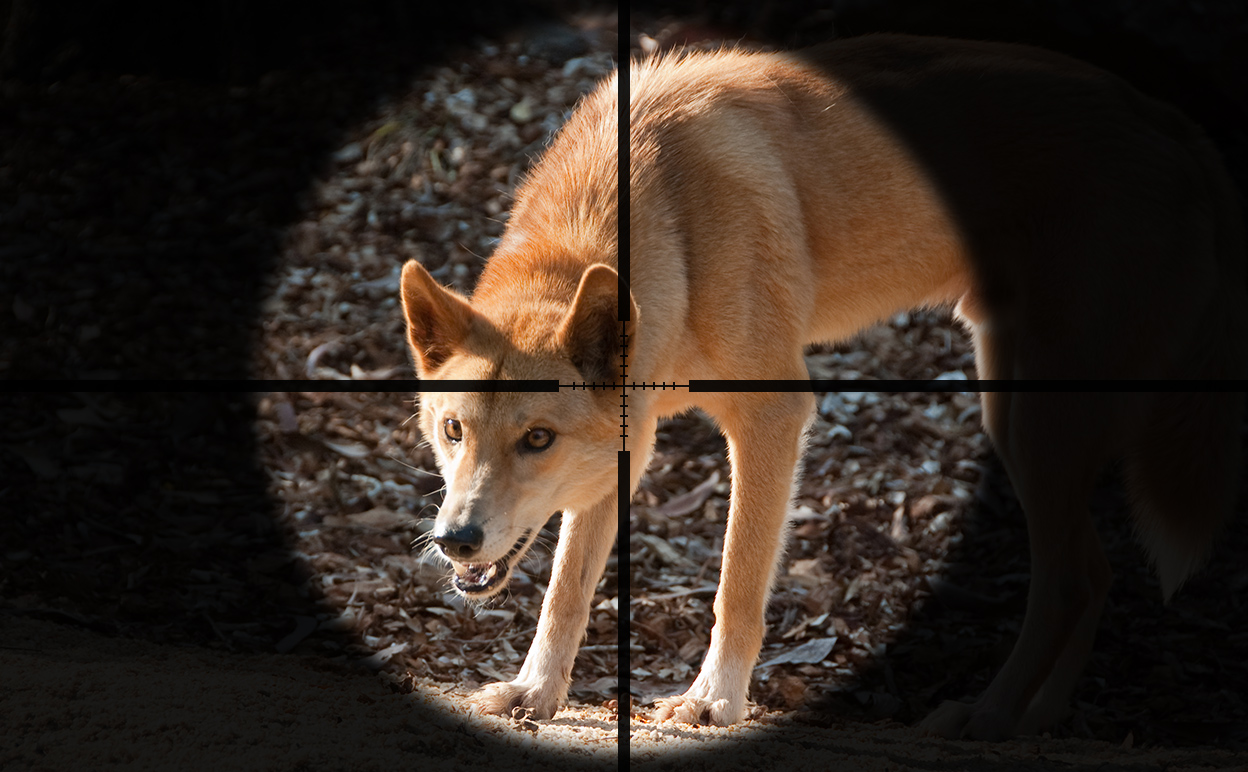
Dingo-crosshairs
Dingo bounties are a really, really bad idea.

On any given night, many farmers go to sleep worrying about what they might wake up to in the morning. Few things are more stressful than seeing your livestock, such as sheep, lying dead or seriously injured in the paddock. Sometimes dingoes, free roaming and unowned (“feral”) dogs, and domestic dogs, or their hybrids, are responsible for such a scene. But what’s the best way to deal with this situation?

The Victorian government is set to reinstate a dingo and wild dog bounty scheme as a way to reduce livestock, especially sheep, being attacked and killed, in response to calls from farming and shooting groups.

Just what is a dingo?

One of the problems with managing dingoes is that the boundary between them and “wild dogs” is contentious. Some have even claimed that there are no pure dingoes in Victoria.

Defining what dingoes are is harder than you might think. There is considerable variation in how dingoes look, for example, in terms of their overall size and colour, as is common with many other members of the dog family (canids).

And if a dingo isn’t considered 100% “pure”, containing genes from domestic dogs, should hybrids be managed differently to dingoes?

Research suggests “pure” dingoes do exist in Victoria, albeit in smaller numbers than other regions.

Notably though, genetic samples in Victoria have been collected largely from areas close to towns, where there are likely more hybrid dogs, and less so from deep within Victoria’s more remote natural regions (the mallee, alpine, and Gippsland forests), where dingoes are often sighted.

Two other recent studies are important in the Victorian context. One suggests dingo characteristics prevail even within hybrids and another has found there are two distinct dingo populations. Importantly, the south east dingo population is at increased risk of extinction.

Many ecologists would argue that splitting hairs about dingo genetic “purity” is a moot point, because what really matters is what dingoes and dingo-dog hybrids are doing in the environment. This is because dingoes are known to have important ecological roles, including the suppression of feral species (such as cats, pigs, and goats), red foxes, and kangaroos.

How are wild dogs and dingoes managed in Victoria?

The decision to reinstate a dingo and wild dog bounty in Victoria is vexed. In 2007 the Victorian government established protection of dingoes, due to conservation concerns about the species, with hybridisation between dingoes and domestic dogs identified as a threatening process.

As a result, dingoes in Victoria are listed as a threatened species under the Flora and Fauna Guarantee Act 1988 and protected under the Wildlife Act 1975.

In Victoria wild dogs are classed as pest animals and can be legally controlled. However, the Victorian Department of Environment states that “dingoes are visually indistinguishable from wild dogs, making it impossible to ensure they are not inadvertently destroyed in wild dog control programs in any given area where both exist” and “dingoes are protected wildlife and it is an offence under the Wildlife Act 1975 to take or kill protected wildlife without an authorisation to do so”.

Management misfire

Legal and species identification issues aside, do bounties and lethal control of predators actually work?

In short, scientific evidence suggests the answer is largely no (see for instance here, here, here, here, and here).

There are a range of reasons cited for why bounties fail. These include:

  • an inability to sufficiently reduce numbers of the the target species and hence their impact, due to rapid breeding and/or immigration from other areas
  • corruption by those claiming bounties, whereby animals claimed for bounty payments have not actually been killed in the area where the bounty is intended to benefit
  • an inability to access some animals over large and/or remote areas
  • a disincentive to completely eradicate animals as this removes the source of income
  • disruption of predator social structures causing higher livestock predation.

Investing in predator-friendly farming

So what solutions do we have that might allow productive farms without the need to kill predators? A range of nonlethal solutions exist for protecting livestock, including improved husbandry techniques (such as corralling and herding), and in particular, a growing body of research suggests guardian animals provide a great step forward.

Nonlethal methods to protect livestock are also consistent with a growing social demand that both domestic and wild animals are treated humanely and ethically on farms.

Predator-friendly farming is growing across Australia, as you can see in the image above. Large livestock on large landholdings, such as beef cattle on thousands of square kilometre stations, are reducing conflict by enabling dingo packs to stabilize and by supporting healthier cows that are better able to defend their calves (top left).

Smaller farms are also employing protective strategies, including guardian dogs, even if the livestock species is large, such as dairy cows and buffalo, because lethal control on neighboring farms continues to disrupt the dingo’s social structure (bottom left).

Technological innovations in nonlethal methods for protecting livestock from predators have been developed in Australia and used worldwide, such as “Foxlights” (top right). And vulnerable stock, such as chickens, are being successfully protected with guardian dogs and enclosures (bottom right).

There are substantial gains to be made for agriculture, people, wild animals and the environment if decision-makers use scientific evidence and ethical analysis, rather than responding to lobby groups, as the basis for taxpayer-sponsored actions.

Education is also a key aspect of any change, and scientists are being proactive here too, providing guidance on new approaches to rangeland livestock management that are supported by research.

The fact is, bounty schemes don’t work. If instead the substantial funds currently being invested in bounties were invested in supporting farmers to move to more long-term, cost-effective, and more environmentally-friendly solutions, we may all be able to sleep better at night.

This article was originally published on The Conversation. Read the original article, including reader comments.

The Conversation
The Conversation