Categories
Publications Research Science communication

Nature under fire in Australia’s tropical savannas

Authors: Brett Murphy, John Woinarsk and Euan G Ritchie

Published in: Landscape Architecture Australia

The tropical savannas of northern Australia are highly vulnerable to changes in climate as well as to more direct human impacts.

Addressing these challenges will require urgent, coordinated action at all levels.

Murphy B, Woinarsk J, Ritchie EG (2025) Nature under fire in Australia’s tropical savannas. Landscape Architecture Australia PDF LINK

Categories
Publications Research

Feral horses and their environmental impacts in the Australian Alps: policy and management priorities

Authors: Ayesha IT Tulloch, Euan G Ritchie, and Don Driscoll

Published in: Austral Ecology

Summary

Feral horses cause extensive ecological harm, including damage to soil, waterways, vegetation, and the carbon cycle, leading to declines in threatened species.

While most Australian states pursue population reduction or removal, NSW’s Kosciuszko Wild Horse Heritage Act mandates retention of horses in parts of Kosciuszko National Park, contradicting scientific consensus and national conservation policies.

Scientific evidence strongly supports complete removal of feral horses from sensitive alpine and subalpine ecosystems, as fencing and local exclusion are insufficient.

Effective protection and restoration of damaged alpine ecosystems requires coordinated management of all invasive species, evidence-based public communication, and legislative support.

Tulloch AIT, Ritchie EG, Driscoll DA (2025) Feral horses and their environmental impacts in the Australian Alps: policy and management priorities. Austral Ecology PDF DOI

Categories
Science communication The Conversation

The Conversation: Dingoes are not domestic dogs – new evidence shows these native canines are on their own evolutionary path

By Kylie M Cairns (UNSW Sydney), Bradley Smith, (CQUniversity Australia), Euan Ritchie (Deakin University) and Thomas Newsome (University of Sydney).

This article is republished from The Conversation under a Creative Commons license. Read the original article.

For decades, scientists, policymakers, graziers and land managers have been locked in a surprisingly high-stakes debate over what defines a dingo. Are these wild canids their own species? Or are they simply feral dogs?

The intensity of the debate can seem baffling. But the naming of animals influences how they are perceived and managed. The dingo debate has very real consequences for conservation laws, cultural recognition and respect, and the future of one of Australia’s iconic animals.

Australia’s wild canines have been on their own evolutionary path for thousands of years. As a distinct lineage, they should be recognised in their own right as a species or subspecies. They are not Canis familiaris, the domestic dog. They should be named either Canis dingo or Canis lupus dingo.

Species aren’t always in neat boxes

A typical ginger dingo in the Strzelecki desert, South Australia.
Matthew Brun, CC BY-ND

In evolutionary terms, what matters is the trajectory. Did human contact fundamentally alter the appearance, biology and behaviour of the species, locking it into a domestic lifestyle? Or did human influence have little effect, meaning the species has been shaped primarily by natural selection in the wild?

Do dingoes meet the criteria to be considered taxonomically distinct?

Many modern dog breeds such as pugs have been bred for specific body shapes and traits rendering them less likely to survive in the wild by themselves.
Abuk Sabuk/Wikimedia, CC BY

Our research shows how the four conditions have been met to consider dingoes separate:

1. Reproductive isolation

Dingoes have been separated from other Canis lineages for 8,000-11,000 years. Genetic studies show dingoes have little contemporary interbreeding with domestic dogs, even when they live in the same areas. While all Canis species can interbreed and produce fertile offspring, differences in breeding seasons and behaviour act as natural barriers. Unlike dingoes, domestic dogs rarely establish wild, self-sustaining populations.

2. Genetic distinctiveness

3. An independent evolutionary lineage

Dingoes have carved out their own ecological niche in Australia’s unique environments, from deserts to snowy mountains. They have developed separate traits such as hyperflexible joints and a single breeding season over autumn and winter. By contrast, humans have heavily shaped the evolutionary path of domestic dogs, making them reliant on us.

4. Clear up whether dogs found in South-East Asia are dingoes

What’s in a name?

The question over how dogs evolved is not yet resolved. Some taxonomists believe dogs are a subspecies of wolf, while others disagree. Given this uncertainty, giving dingoes a unique scientific name can be done in two ways.

But if dingoes are not distinct from wolves, the correct name would be Canis lupus dingo. This would treat it as a subspecies of wolf, while still acknowledging its wild lineage separate to domestic dogs.

The name of the dingo matters

There is real power in the name of a species.

Under some state laws, dingoes are defined as “wild dogs”. This means dingoes are targeted for lethal control – even in many national parks. If treated as a domestic dog, dingoes can be ineligible for official threatened species lists.

As a result, the species is often overlooked for targeted conservation, while its culturally significant role for many First Nations peoples is often not recognised nor respected.

Defining dingoes as a distinct species or subspecies would allow governments to differentiate them from domestic dogs in laws, policies and conservation programs, and align western science with First Nations knowledge holders who have long distinguished between dingoes and dogs.

Ending decades of confusion will take work

Dingoes are culturally important for many First Nations peoples. This is a black and tan Wilkerr (the name used by Wotjobaluk peoples in northwestern Victoria) in Wyperfeld National Park.
Big Desert Dingo Research, CC BY-NC-ND

To clear up long-running disagreement over the dingo, we believe the time has come for an independent, evidence-based review by a national scientific body. This would bring together geneticists, ecologists, taxonomists and First Nations representatives.

This approach helped untangle similarly knotty problems overseas, such as the United States National Academies’ review to settle the taxonomy of red and Mexican wolves.

An Australian review could finally end decades of confusion for the dingo and ensure our laws reflect the most up-to-date scientific evidence.

Taxonomic debates might sound obscure. But this naming question will shape the future of one of Australia’s ecologically and culturally significant animals.

We believe the evidence shows the dingo is not a domestic dog – it’s on its own path. The question is whether Australia can accept this evidence.

The Conversation
Categories
Science communication The Conversation

The Conversation: Want to see Australia’s rare and remarkable species for yourself? Here are 10 standout spots

Brolgas (Antigone rubicunda) Uwe-Bergwitz/Getty

By Patrick Finnerty (Postdoctoral Research Fellow in Conservation and Wildlife Management, University of Sydney), Euan Ritchie (Professor in Wildlife Ecology and Conservation, School of Life & Environmental Sciences, Deakin University) and Rhys Cairncross (Ecologist and PhD Researcher, University of Sydney).

This article is republished from The Conversation under a Creative Commons license. Read the original article.

Australia is home to an extraordinary variety of wildlife, ranging from striking palm cockatoos to elusive mountain pygmy-possums and remarkable rat-kangaroos.

Most of us never get to see these creatures in real life – and that’s a real shame. Spending time in nature looking for wildlife is more than just a hobby – it’s a way to reconnect with the natural world and remember why it matters.

But how do you actually see these creatures for yourself? It’s often easier than you think.

As wildlife researchers, we’ve spent a long time in the field looking for wildlife. Here are ten standout locations where you have a good chance of seeing some genuinely remarkable Australian creatures – and tips on doing so without causing them stress or harming the environment.

1. Kutini-Payamu / Iron Range National Park, Queensland

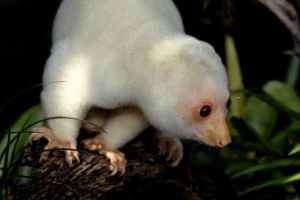
Located in far north Queensland, Iron Range is renowned for lush rainforests and rich wildlife. Here, you can spot majestic palm cockatoos, secretive green pythons, the striking green, red and blue hues of eclectus parrots and the adorable common spotted cuscus, a species of possum. These species also occur in Papua New Guinea, but the Cape York region is the only place to spot them in Australia.

Spotting tips: Walk the trails with binoculars during peak times for bird activity, early morning or late afternoon. At night, use a head torch to spot pythons, frogs, death adders, geckoes, rufous owls, cuscus and other nocturnal fauna.

2. Atherton Tablelands, Queensland

The shy spotted cuscus (Spilocuscus maculatus) lives in Australia’s far north. John Giustina/Getty

Inland from Cairns lies the Atherton Tablelands, an elevated region with a cooler climate and abundant and diverse wildlife. Here, you can spot vibrant Ulysses butterflies, shy platypuses and rare marsupials. Australia’s largest snake, the scrub python, can block entire roads as it warms itself up before the night’s hunt. Rare waterfall frogs can be spotted in fast-flowing falls.

Lumholtz’s tree kangaroos can be spotted hopping along limbs at Curtain Fig National Park and Mount Hypipamee National Park, alongside green ringtail possums and striped possums with elongated fingers to ferret out grubs.

Meanwhile, musky rat-kangaroos can be seen “gardening” on the forest floor at Lake Eacham and Lake Barrine. These are the smallest kangaroos and the only non-hopping species. Your best chance of sighting an elusive northern quoll or northern bettong is at Davies Creek National Park.

Spotting tips: Take guided night walks to glimpse nocturnal wildlife. Use a head torch with a red filter. Move quietly and regularly stop to listen for movement and animal calls. Binoculars are a must for spotting creatures high in the canopy.

3. Western Treatment Plant, Victoria

Surprisingly, Melbourne’s Western Treatment Plant is a mecca for birdwatchers. The huge wastewater facility is recognised as a wetland of international importance. Migratory birds such as sharp-tailed sandpipers and red-necked stints can be seen, while well-hidden bitterns, rare orange-bellied parrots and Australia’s dancing crane, the brolga, can be glimpsed feeding in dense heath during cooler months. Almost 300 species have been recorded here.

Spotting tips: Visit during migration seasons (spring and autumn) for the best birdwatching opportunities. Use binoculars, telescopes, or telephoto lenses for close-up views without disturbance. Visitors need a permit.

4. Lunawanna-allonah / Bruny Island and Wukaluwikiwayna / Maria Island, Tasmania

South of Hobart lies Bruny Island, a sanctuary for endangered species such as eastern and spotted-tailed quolls. Most of Tasmania’s endemic bird species are found here, such as green rosellas and forty-spotted pardalotes. Rare swift parrots can also be seen.

North of Hobart is Maria Island, an island national park where no cars are allowed – and where Tasmanian devils, bandicoots and wombats can readily be seen.

Spotting tips: Join guided tours to see nocturnal wildlife or birds in Bruny Island’s tall forests. Eastern quolls can often be seen at night on the main road when heading north from the island’s isthmus. Tasmanian devils and bandicoots can be seen around campsites at Maria Island at night.

5. Flinders, Portsea and Blairgowrie piers, Victoria

Snorkelling the cool waters beneath Flinders, Portsea and Blairgowrie piers is a revelation. Here live spectacular weedy sea dragons, sand octopuses, big-belly seahorses, ornate cowfish, smooth and eagle rays, Port Jackson and banjo sharks and vividly coloured nudibranchs.

Spotting tips: Snorkel or dive during calm weather for best visibility. Keep your distance from marine life for their safety (and yours).

6. Sydney Harbour and cliff tops, New South Wales

Sydney’s iconic harbour and surrounding cliffs are well suited for marine life enthusiasts. Every winter, humpback and southern right whales migrate past the headlands, while pods of bottlenose dolphins can be seen year-round. White-bellied sea eagles, Australasian gannets and short-tailed shearwaters add to the spectacle in the skies.

Spotting tips: Join whale-watching cruises between May and November for the best chance. Clifftop spotting is best done with binoculars from Royal National Park, North Head, Clovelly and The Gap.

7. Binybara / Lee Point, Northern Territory

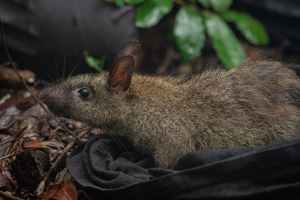
The black-footed tree-rat (Mesembriomys gouldii) is a clever native rodent with a knack for life in the trees. François Brassard, CC BY-NC-ND

Around 200 bird species have also been recorded here. Flocks of great knots, eastern curlews and grey-tailed tattlers feed on the mudflats, while the woodlands are home to the dazzling colour of Gouldian finches and the charismatic blue-winged kookaburra.

Spotting tips: Visit at night to see the tree-rat moving between trees, or come at low tide to watch thousands of shorebirds feeding. Binoculars will be invaluable.

8. Wadjemup / Rottnest Island, Western Australia

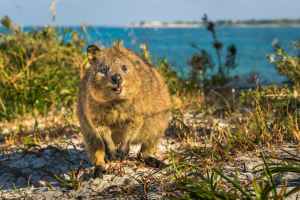
The ‘smiling’ quokkas (Setonix brachyurus) on Rottnest Island have become globally famous. Posnov/Getty

Offshore from Perth, Rottnest Island is rightly famous for its smiling quokkas. But other unique species such as King’s skink and venomous dugites can be seen here too, while osprey nests occupied for decades can be seen on rock stacks. The reefs around the island have WA’s southernmost coral.

Spotting tips: Cycling is the best way to explore different habitats on the largely car-free island. Keep your distance from quokkas and other wildlife to ensure they stay wild.

9. Kunama Namadgi / Kosciuszko National Park, New South Wales

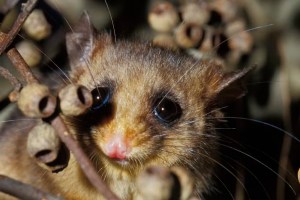
Mountain pygmy possums (Burramys parvus) are hard to spot – but the thrill of seeing these tiny, secretive marsupials is hard to beat. Jason Edwards/Getty

Australia’s highest peaks are home to the nation’s most remarkable alpine wildlife. Birdwatchers can spot gang-gang cockatoos feeding in eucalypts, while lucky hikers might glimpse an alpine dingo crossing a snow-dusted plain, or see a strikingly coloured Corroborree frog in a bog or fen.

This is the only place in the world where you can encounter a critically endangered mountain pygmy-possum. These tiny marsupials hibernate under winter snow and emerge to feed on bogong moths in spring.

Kosciuszko is also home to the native smoky mouse and – remarkably – to Leadbeater’s possum, long thought to be confined to Victoria’s Central Highlands.

Spotting tips: For the best chance of spotting a mountain pygmy-possum, visit between late spring and early summer when the snow has melted. Stick to alpine boulder fields such as those around Charlotte Pass and Mount Kosciuszko. You may need to camp overnight to see nocturnal possums and the smoky mouse. Binoculars and patience are essential to glimpse these shy species.

10. Karta Pintingga/Kangaroo Island, South Australia

Southwest of Adelaide lies the large Kangaroo Island, home to echidnas, tammar wallabies, a rare subspecies of the glossy black-cockatoo and Kangaroo Island dunnarts. Koalas are common. While the island’s isolation has protected these species, the 2020 megafires caused much damage. Wildlife is now bouncing back.

Spotting tips: Explore national parks and conservation areas with a local guide. Observe from a distance.

Take care of wildlife

Wildlife spotting has to be done with care. Think of yourself as a guest in someone else’s home.

Keep a respectful distance, don’t touch wildlife, move quietly and use binoculars or a zoom lens for a closer look rather than creeping closer.

If you’re out after dark, make sure your head torch has a red light option. This light is vastly less damaging to animal eyes optimised for the dark.

When snorkelling or diving, avoid hitting corals and sponges with your fins.

It can be tempting to use playback of calls to attract birds such as owls. But this is very disruptive and can do real damage.

Avoid moving logs, bark, stones and other habitat in your effort to see animals. This is disruptive and risks bites from venomous creatures.

Clean and disinfect your boots before moving between areas to avoid spreading soil-borne pathogens such as cinnamon fungus and chytrid fungus.

Whatever you do, don’t feed wildlife. It might seem harmless, but it can change their natural behaviour, make them ill and even make them dependent on people.

Posting sightings on citizen science apps such as iNaturalist and FrogID can help scientists learn more about these species and aid their conservation.

Enjoy the journey

As wildlife researchers, we often seek out species in their natural habitat. These moments never lose their impact.

It’s a remarkable thing to see a creature in its natural habitat. A successful sighting gives a sense of awe and joy. At a time when many people are cut off from nature, deliberately seeking out these species is a powerful and rewarding act.

The Conversation
Categories
Publications Research

Habitat selection and movement behaviour of long-nosed potoroo in the presence of feral cats

Authors: Meg Farmer, Anthony R Rendall, Amy Coetsee, and Euan G Ritchie

Published in: Austral Ecology

Abstract

The global biodiversity extinction crisis is attributed to a series of key threats, with the introduction and impacts of invasive predators considered among the most damaging. Given that effective large-scale lethal control is often not logistically or financially feasible, alternative solutions to promote the persistence of native wildlife most at risk of predation—critical weight range mammals—must be sought. Understanding habitat use and selection of native prey under predation pressure with widespread and common invasive predators, such as feral cats, can quantify habitat elements that may promote survival.

We aimed to determine the movement behaviour of a population of critical weight range mammals persisting in the presence of feral cats. We established a trapping grid across ‘Bluegums’, French Island, in south-eastern Australia to collect morphometric, demographic and movement data by deploying GPS tracking devices on Long-nosed Potoroo (Potorous tridactylus trisulcatus). We used spatially explicit capture–recapture models to generate a potoroo density estimate, and autocorrelated kernel density estimators and dynamic Brownian Bridge Movement Models to examine home range and habitat use. Spatial overlap and habitat selection analyses were used to draw inferences about habitat selection and territoriality.

Potoroos persisted at low densities and had large home ranges (7.3–12.5 ha). Individuals selected for structurally complex habitat and appeared reluctant to move across open areas, potentially in response to greater perceived predation risk. The fine-scale movement data in our study elucidate the extent to which potoroos rely on vegetation structure, suggesting that maintaining habitat cover and connectivity is likely to build resilience and aid potoroos and similar species to co-exist with feral cats.

Given the ongoing threat feral cats pose to biodiversity, our results support the need for maintaining diverse, structurally complex vegetation to build ecosystem resilience to support improved conservation outcomes in the presence of invasive species.

Farmer M, Rendall AR, Coetsee A, Ritchie EG (2025) Habitat selection and movement behaviour of long‐nosed potoroo in the presence of feral cats. Austral Ecology PDF DOI

Categories
Publications Research

Lethal control of semi-arid, red fox populations fails to reduce their abundance but may create increased fox activity

Authors: Lorenzo Galletta, Anthony R Rendall, Matthew Lefoe, Mary Thorpe, Brit Hides, Ben Holmes, and Euan G Ritchie

Published in: Biological Invasions

Abstract

Biological invasions threaten biodiversity globally. In Australia, introduced and invasive European red foxes (Vulpes vulpes) are a major predator of native wildlife, and are implicated in numerous species extinctions, prompting large-scale fox population control programs. Lethal control—typically via poison (1080) baiting—is common, but the consistency of its efficacy has been questioned, and the desired outcomes are frequently not measured or evaluated.

We aimed to assess the success and impacts of lethal fox control on fox activity, and subsequent effects on a co-occurring, invasive mesopredator (feral cat, Felis catus), and native and invasive prey species. We surveyed three locations in the Wimmera region of Victoria, each experienced a different baiting regime (no baiting, standard systematic baiting, intensified baiting). Camera traps were deployed from April 2021 to August 2023 to determine predator activity alongside non-target herbivores.

Baiting treatment was not associated with differences in fox or cat activity. Nurcoung (no baiting) had the lowest activity of both cats and foxes across the study. Fox activity patterns under standard baiting were higher than intensified baiting.

Our results suggest that fox control might destabilise population dynamics of foxes, potentially facilitating increased activity levels through higher emigration rates from the surrounding agricultural environments.

Our study highlights the critical importance of appropriately monitoring the outcomes of invasive species control programs to ensure the a priori strategic objectives are achieved. To achieve more effective fox population suppression broader, landscape-scale approaches that take a nil-tenure approach are essential.

Galletta L, Rendall AR, Lefoe M, Thorpe M, Hides B, Holmes B, Ritchie EG (2025) Lethal control of semi-arid, red fox populations fails to reduce their abundance but may create increased fox activity. Biological Invasions PDF DOI

Categories
Science communication The Conversation

The Conversation: Farmers fear dingoes are eating their livestock – but predator poo tells an unexpected story

Dingo (Canis dingo) Kristian Bell/Shutterstock

By Rachel Mason (PhD candidate in Conservation Biology, Deakin University) and Euan Ritchie (Professor in Wildlife Ecology and Conservation, School of Life & Environmental Sciences, Deakin University).

This article is republished from The Conversation under a Creative Commons license. Read the original article.

In Australia, predators such as dingoes and foxes are often shot or poisoned with baits to prevent them from killing sheep and cattle. Feral cats and foxes are also killed to protect native wildlife.

But research elsewhere suggests public perceptions of how predators affect ecosystems and livestock are not always accurate.

A contentious issue

Our study took place in the Big Desert-Wyperfeld-Ngarkat reserve complex in the semi-arid mallee region of Victoria and South Australia. This continuous ecosystem comprises about 10,000 km² of protected native mallee bushland, and is entirely surrounded by crop and livestock farming areas.

Fox-baiting is conducted along the boundaries of Victorian-managed reserve areas. Dingo baiting occurs in the South Australian-managed section of the park.

Since March 2024, the small dingo population has been protected in Victorian-managed areas due to their critically low numbers in the region.

Prior to the change, Victorian farmers and authorised trappers could control dingoes on private land and within public land up to 3km from farms. Farmers say they have lost livestock since dingoes were protected.

What are predators eating in the mallee region?

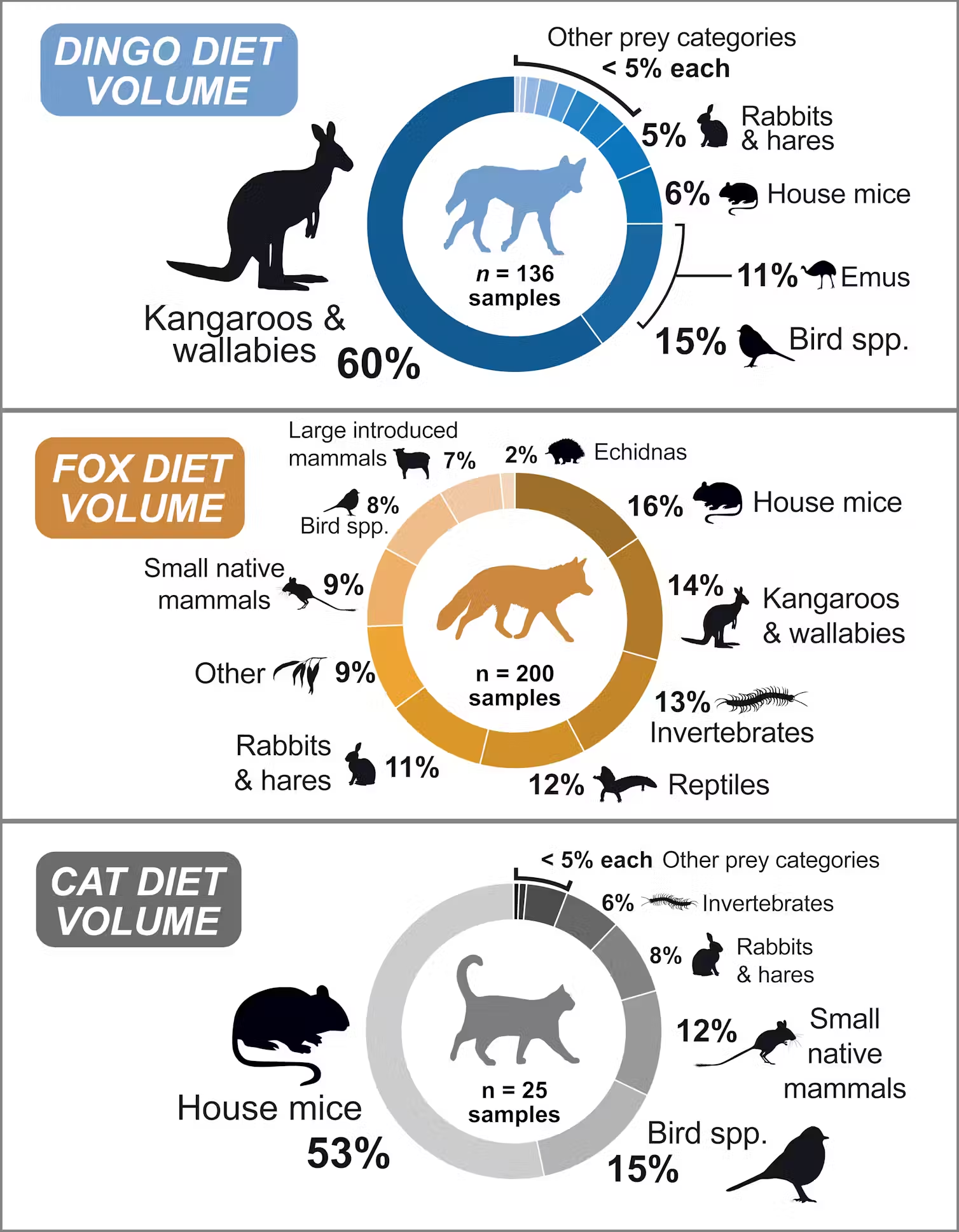
We collected and analysed 136 dingo, 200 fox and 25 cat scats to determine what each predator in the area was eating and how their diets differed.

Livestock was not a major part of the diet of dingoes, foxes or cats. Some 7% of fox scats contained sheep or cattle remains. This was more than that of dingoes, at 2% of scats. No feral cat scats contained livestock remains.

The dingo diet was dominated by kangaroos, wallabies and emus, which comprised more than 70% of their diet volume.

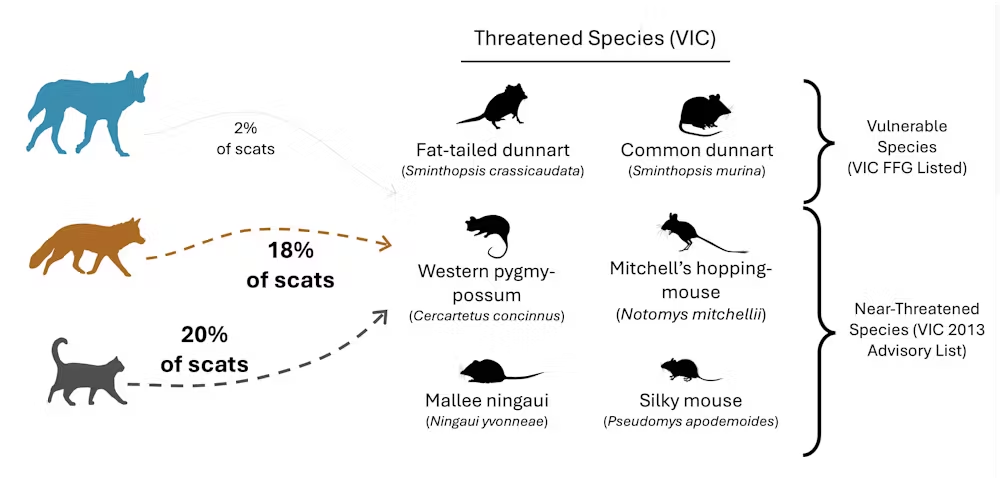
Cats and foxes consumed more than 15 times the volume of small native mammals compared with dingoes, including threatened species such as fat-tailed dunnarts.

Frequency of occurrence of threatened and near-threatened species in the diet of dingoes, foxes and cats in the Big Desert-Wyperfeld-Ngarkat park complex. Rachel Mason

Our data must be interpreted with caution. Scat analysis cannot differentiate between livestock killed by predators and those that are scavenged. It also can’t tell us about animals that a predator killed but did not eat.

In 2022–23, when we collected the scats, rainfall in the area was high and prey was abundant. So, while we found livestock were not likely to be a substantial part of these predators’ diets at the time of our research, this can change depending on environmental conditions.

For example, fire and extended drought may force predators to move further to find food and water. They may move from conservation areas to private land, where they could prey on livestock.

Volume of prey categories in the diet of dingoes, foxes and cats in the Big Desert-Wyperfeld-Ngarkat complex. Rachel Mason

A taste for certain prey

A predator’s poo doesn’t tell the full story of how it affects prey populations.

To understand this further, we used motion-sensing wildlife cameras to assess which prey were available in the ecosystem. We compared it to the frequency they occurred in predator’s diets. This allowed us to determine if dingoes, foxes or cats target specific prey.

We found foxes and cats both consumed small mammals proportionally more than we expected, given the prey’s availability in the study area. Cats consumed birds at a higher rate than expected, and dingoes consumed echidnas more than expected.

Further intensive monitoring work is needed to determine how these dietary preferences affect the populations of prey species.

Embracing the evidence

The findings build on a substantial previous research suggesting foxes and cats pose a significant threat to native mammals, birds, reptiles and other wildlife, including many threatened species. Our results suggest foxes may cause more harm to sheep than dingoes overall – a finding consistent with research elsewhere in Victoria.

Dingoes were the only predator species that regularly preyed on kangaroos and wallabies. These species are abundant in the region. They can also compete with livestock for grazing pastures, consume crops and degrade native vegetation.

Currently, dingoes are killed on, or fenced out of, large parts of Australia due to their perceived threat to livestock.

Lethal control of invasive species remains important to protect native wildlife and agriculture. But such decisions should be based on evidence, to avoid unforeseen and undesirable results.

Non-lethal and effective alternatives exist to indiscriminately killing predators to protect livestock, such as protection dogs and donkeys. These measures are being embraced by farmers and graziers globally, often with high and sustained success.

In Australia, governments should better embrace and support evidence-based and effective approaches that allow farming, native carnivores and other wildlife to coexist.

The Conversation
Categories
Publications Research

Megafire severity, fire frequency and their interactions with habitat affect post-fire responses of small mammal and reptile species

Authors: Don A Driscoll, Zac Walker, Desley A Whisson, Euan G Ritchie, Chloe Sato, and Kristina J Macdonald

Published in: Biological Conservation

Abstract

Climate change is driving extreme fires in many ecosystems around the world. There is an urgent need to understand how co-occurring and interacting threats compound megafire impacts on habitats and wildlife.

Using repeated surveys after the 2019–20 Australian megafires, we investigated how the abundance and occupancy of five small mammal and reptile species were influenced by fire severity, fire frequency, feral herbivore impacts, three key habitat components (logs, moss, and weeds), and their interactions.

We found that fire severity, fire frequency, weeds and logs were the most important factors affecting species abundance and occupancy. Increasing fire severity caused precipitous declines of the threatened broad-toothed rat Mastacomys fuscus and glossy grass skink Pseudemoia rawlinsoni. The impact of fire frequency depended on environmental covariates. High fire frequency led to low abundance of the water skink Eulamprus tympanum and M. fuscus if there were no logs. However, both species increased with fire frequency if logs were abundant, implying that logs can ameliorate negative impacts of frequent fire. The threatened Eulamprus kosciuskoi needed fewer than two fires in the past 80 years as well as high moss cover to achieve high abundance. Two threatened alpine skinks, E. kosciuskoi and P. cryodroma, declined with increasing weed cover.

Our study highlights that elucidating interactions between fire and habitat attributes helps to characterise wildfire refuges. Countering the expected impacts of repeated megafires globally will likely require increased protection of refuges from frequent burning, supplementing shelter such as logs where scarce, and mitigating co-occurring and compounding threats.

Driscoll DA, Walker Z, Whisson DA, Ritchie EG, Sato C, Macdonald KJ (2025) Megafire severity, fire frequency and their interactions with habitat affect post-fire responses of small mammal and reptile species. Biological Conservation PDF DOI

Categories
Publications Research

What’s on the menu? Examining native apex- and invasive meso-predator diets to understand impacts on ecosystems

Authors: Rachel T Mason, Anthony R Rendall, Robin D Sinclair, Angela JL Pestell, and Euan G Ritchie

Published in: Ecological Solutions and Evidence

Abstract

Understanding how carnivores impact ecological communities is essential for guiding effective management actions and conserving biodiversity. Quantifying predators’ diets, including prey selectivity, allows for the assessment of the relative effects native and invasive predators may have on prey populations.

In Australia, populations of a native, terrestrial apex predator, the dingo Canis dingo/C. familiaris, and introduced and invasive subordinate mesopredators, the European red fox Vulpes vulpes and feral cat Felis catus, co-occur, but there is limited understanding of their relative impacts on native and invasive prey in different ecosystems. To assess the possible effects of dingoes, foxes and cats on prey, we examined their diet and prey selectivity across a ~10,000 km² semi-arid mallee ecosystem.

Using macroscopic scat analysis, we identified strong dietary niche separation. Larger-bodied dingoes primarily consumed large marsupial herbivores, whereas foxes and cats primarily consumed smaller prey, including introduced and native rodents and birds. Foxes had the broadest diet, and the greatest dietary overlap with cats (Ojk = 0.81), compared with dingoes (Ojk = 0.50) or between dingoes and cats (Ojk = 0.36).

Livestock were identified in 2% of dingo and 7% of fox scats. Cats and foxes consumed more than 15 times the volume of small native mammals compared with dingoes, including threatened species such as fat-tailed dunnarts Sminthopsis crassicaudata. Cats and foxes also selectively consumed small mammals relative to their estimated availability and consumed fewer large mammals. In contrast, dingoes consumed fewer birds and more echidnas relative to their availability.

Our results suggest limited intraguild competition within this semi-arid ecosystem, as dingoes are primarily exerting top-down pressure on large herbivores, whereas invasive mesopredators are disproportionately impacting smaller prey, including threatened native mammals.

Our findings suggest that ongoing conservation management of dingoes, red foxes and feral cats must consider the variation in diets, impacts on prey and ecological roles of these different predator species, and avoid indiscriminate lethal control methods. Quantifying actual, rather than assumed, impacts of predators on threatened native species, large herbivores and livestock is essential to achieve effective and integrated ecosystem management.

Mason RT, Rendall AR, Sinclair RD, Pestell AJL, Ritchie EG (2025) What’s on the menu? Examining native apex‐ and invasive meso‐predator diets to understand impacts on ecosystems. Ecological Solutions and Evidence PDF DOI


Categories
Publications Research

Remotely sensed fire heterogeneity and biomass recovery predicts empirical biodiversity responses

Authors: Rebecca K Gibson, Don A Driscoll, Kristina J Macdonald, Grant J Williamson, Rachael H Nolan, Tim S Doherty, Dale G Nimmo, Euan G Ritchie, Mark Tozer, Liz Tasker, Aaron Greenville, Adam Roff, Alex Callen, Alex Maisey, Alexandria Thomsen, Alfonsina Arriaga-Jimenez, Alison Foster, Alison Hewitt, Amy-Marie Gilpin, Andrew Denham, Andrew Stauber, Berin Mackenzie, Brad Law, Brad Murray, Brian Hawkins, Bridget Roberts, Chad T Beranek, Chris Dickman, Chris J Jolly, Chris McLean, Chris Reid, Craig Dunne, David Hancock, David Keith, Elise Pendall, Elise Verhoeven, Emma Cook, Emma Spencer, Felicity Grant, Frank Koehler, George Madani, Glenda Wardle, Grant Linley, James M Cook, Jedda Lemmon, John Gould, Jonathan K Webb, Joshua Lee, Julia Rayment, Karen Marsh, Kaya Klop-Toker, Laura Schweickle, Mark Ooi, Matthew Beitzel, Matthias Boer, Michael Hewins, Michael Mahony, Mikayla Green, Mike Letnic, Murraya Lane, Oliver W Kelly, Owen Price, Renee Brawata, Rohan Bilney, Ross Crates, Ryan R Witt, Ryan Shofner, Sally A Power, Samantha L Wallace, Sarah E Stock, Shelby A Ryan, Stephanie Pulsford, Thomas Newsome, Tom Le Breton, Vanessa Allen, Vivianna Miritis, and Zac Walker

Published in: Global Ecology and Biogeography

Abstract

Aim: To compare field-based evidence of plant and animal responses to fire with remotely sensed signals of fire heterogeneity and post-fire biomass recovery.

Location: South-eastern Australia; New South Wales.

Time period: 2019–2022.

Major taxa studied: A total of 982 species of plants and animals, in eight taxonomic groups: amphibians, birds, fish, insects, mammals, molluscs, plants and reptiles.

Methods: We collated 545,223 plant and animal response records from 47 field surveys of 4613 sites that focussed on areas burnt in 2019–2020. For each site, we calculated remotely sensed signals of fire heterogeneity and post-fire biomass recovery, including the delayed recovery index. Meta-regression analyses were conducted separately for species that declined after fire (negative effect sizes) and species that increased after fire (positive effect sizes) for each buffer size (250 m, 500 m, 1 km, 1.5 km, 2 km and 2.5 km radius).

Results: We found that species exposed to homogenous high-severity fire (i.e., low fire heterogeneity) were more likely to exhibit decreased abundance/occurrence or inhibited recovery. Areas with delayed recovery of biomass also had significant negative on-ground responses, with lower abundance or occurrence in areas where biomass recovery was slower.

Main conclusions: The fire heterogeneity index and the delayed recovery index are suitable for inclusion in monitoring and reporting systems for tracking relative measures over time, particularly when field survey data is not available at the landscape scales required to support reporting and management decisions. Locations with remotely sensed signals of delayed recovery should be prioritised for protection against further disturbances that may interfere with the recovery process. Research attention must next focus on how cumulative fire heterogeneity patterns of successive fires affect the post-fire recovery dynamics to further inform the application of remote sensing indicators as management tools for biodiversity conservation.

Gibson RK, Driscoll DA, Macdonald KJ, Williamson GJ, Nolan RH, Doherty TS, Nimmo DG, Ritchie EG, Tozer M, Tasker L, Greenville A, Roff A, Callen A, Maisey A, Thomsen A, Arriaga‐Jimenez A, Foster A, Hewitt A, Gilpin A, Denham A, Stauber A, Mackenzie B, Law B, Murray B, Hawkins B, Roberts B, Beranek CT, Dickman C, Jolly CJ, McLean C, Reid C, Dunne C, Hancock D, Keith D, Pendall E, Verhoeven E, Cook E, Spencer E, Grant F, Koehler F, Madani G, Wardle G, Linley G, Cook JM, Lemmon J, Gould J, Webb JK, Lee J, Rayment J, Marsh K, Klop‐Toker K, Schweickle L, Ooi M, Beitzel M, Boer M, Hewins M, Mahony M, Green M, Letnic M, Lane M, Kelly OW, Price O, Brawata R, Bilney R, Crates R, Witt RR, Shofner R, Power SA, Wallace SL, Stock SE, Ryan SA, Pulsford S, Newsome T, Le Breton T, Allen V, Miritis V, Walker Z (2025) Remotely sensed fire heterogeneity and biomass recovery predicts empirical biodiversity responses. Global Ecology and Biogeography PDF DOI

Categories
Publications Research

‘Megafire’ — you may not like it, but you cannot avoid it

Authors: Grant D Linley, Chris J Jolly, Tim S Doherty, William L Geary, Dolors Armenteras, Claire M Belcher, Rebecca Bliege Bird, Andrea Duane, Michael-Shawn Fletcher, Melisa A Giorgis, Angie Haslem, Gavin M Jones, Luke T Kelly, Calvin K F Lee, Rachael H Nolan, Catherine L Parr, Juli G Pausas, Jodi N Price, Adrián Regos, Euan G Ritchie, Julien Ruffault, Grant J Williamson, Qianhan Wu, and Dale G Nimmo

Published in: Global Ecology and Biogeography

Abstract

Aim: The term ‘megafire’ is increasingly used to describe large fires worldwide. We proposed a size-based definition of megafire—fires exceeding 10,000 ha arising from single or multiple related ignition events. A recent perspective in Global Ecology and Biogeography argues against a size-based definition of megafire and suggest that the term is too emotive for scientific use. We highlight that many scientific terms originate from common terms. These terms are often defined once they enter the scientific lexicon, enhancing both scientific understanding and public communication. We argue that standardised definitions facilitate better prediction, preparation, and management of fire events.

Location: Worldwide.

Time period: 2022–2023.

Methods: We conducted an updated structured review of the term ‘megafire’ and its use and definition in the peer-reviewed scientific literature, collating definitions and descriptions and identifying the criteria frequently invoked to define the term.

Results: We demonstrate an increase in the use of ‘megafire’ in the scientific literature since our original definition in 2022, with many studies adopting the > 10,000 ha size-based criterion.

Main conclusions: We contend that abandoning the term is neither practical, possible, nor beneficial. Instead, consistent usage underpinned by clear definitions is essential. Adopting a clear, size-based definition of megafire strengthens clarity and comparability across research and management practices globally. Precision in terminology is crucial for advancing research, improving communication, and informing effective fire management and policy.

Linley GD, Jolly CJ, Doherty TS, Geary WL, Armenteras D, Belcher CM, Bliege Bird R, Duane A, Fletcher M, Giorgis MA, Haslem A, Jones GM, Kelly LT, Lee CKF, Nolan RH, Parr CL, Pausas JG, Price JN, Regos A, Ritchie EG, Ruffault J, Williamson GJ, Wu Q, Nimmo DG (2025) ‘Megafire’ — you may not like it, but you cannot avoid it. Global Ecology and Biogeography PDF DOI

Categories
Science communication The Conversation

The Conversation: Australians want nature protected. These three environmental problems should be top of the next government’s to-do list

The striking Palm Cockatoo, (Probosciger aterrimus) is only found at the northern tip of the Cape York Peninsula, as well as parts of Papua New Guinea and the Aru Islands, Indonesia. Christina Zdenek

By Euan Ritchie (Professor in Wildlife Ecology and Conservation, School of Life & Environmental Sciences, Deakin University), John Woinarski (Professor of Conservation Biology, Charles Darwin University) and Martine Maron (Professor of Environmental Management, The University of Queensland).

This article is republished from The Conversation under a Creative Commons license. Read the original article.

Australia is a place of great natural beauty, home to many species found nowhere else on Earth. But it’s also particularly vulnerable to introduced animals, diseases and weeds. Habitat destruction, pollution and climate change make matters worse. To conserve what’s special, we need far greater care.

Unfortunately, successive federal governments have failed to protect nature. Australia now has more than 2,000 threatened species and “ecological communities” – groups of native species that live together and interact. This threatened list is growing at an alarming rate.

If re-elected, Labor has vowed to complete its reforms and introduce a federal Environment Protection Agency, in some other form.

The Coalition has not made such a commitment. Instead, it refers to “genuine conservation”, balancing the environment and the economy. They’ve also promised to cut “green tape” for industry.

But scientific evidence suggests much more is required to protect Australia’s natural wonders.

Fighting invaders

Labor has made a welcome commitment of more than A$100 million to counter “highly pathogenic avian influenza”. This virulent strain of bird flu is likely to kill millions of native birds and other wildlife.

The government also provided much-needed funding for a network of safe havens for threatened mammals. These safe-havens exclude cats, foxes and other invasive species.

But much more needs to be done. Funding is urgently needed to eradicate red imported fire ants, before eradication becomes impossible. Other election commitments to look for include:

Stopping land clearing and habitat destruction

Such proposals are supposed to be referred to the federal environment minister for assessment under the Environment Protection and Biodiversity Conservation (EPBC) Act.

But most habitat destruction is never referred. And if it is, it’s mostly deemed “not a controlled action”. That means no further consideration is required and the development can proceed.

Only about 1.5% of the hundreds of thousands of hectares of land cleared in Australia every year is fully assessed under the EPBC Act.

This means our threatened species and ecological communities are suffering a “death by a thousand cuts”.

How do we fix this? A starting point is to introduce “national environmental standards” of the kind envisaged in the 2020 review of the EPBC Act by Professor Graeme Samuel.

A strong Environment Protection Agency could ensure impacts on biodiversity are appropriately assessed and accounted for.

Protecting threatened species

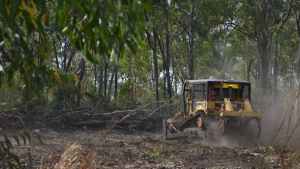
Habitat destruction at Lee Point, Darwin. Martine Maron

For Australia to turn around its extinction crisis, prospective elected representatives and governments must firmly commit to the following actions.

Stronger environmental law and enforcement is essential for tackling biodiveristy decline and extinction. This should include what’s known as a “climate trigger”, which means any proposal likely to produce a significant amount of greenhouse gases would have to be assessed under the EPBC Act.

This is necessary because climate change is among the greatest threats to biodiversity. But the federal environment minister is currently not legally bound to consider – or authorised to refuse – project proposals based on their greenhouse gas emissions. In an attempt to pass the EPBC reforms in the Senate last year, the Greens agreed to postpone their demand for a climate trigger.

Key threats to species, including habitat destruction, invasive species, climate change, and pollution, must be prevented or reduced. Aligning government policies and priorities to ensure environmental goals aren’t undermined by economic and development interests is essential.

Show nature the money!

Neither major party has committed to substantial increases in environmental spending in line with what experts suggest is urgently needed.

Without such increased investment Australia’s conservation record will almost certainly continue to deteriorate. The loss of nature hurts us all. For example, most invasive species not only affect biodiversity; they have major economic costs to productivity.

Whoever forms Australia’s next government, we urge elected leaders to act on the wishes of 96% of surveyed Australians calling for more action to conserve nature.

The Conversation
Categories
Publications Research

Smart camera traps and computer vision improve detections of small fauna

Authors: Angela JL Pestell, Anthony R Rendall, Robin D Sinclair, Euan G Ritchie, Duc T Nguyen, Dean M Corva, Anne C Eichholtzer, Abbas Z Kouzani, and Don A Driscoll

Published in: Ecosphere

Abstract

Limited data on species’ distributions are common for small animals, impeding conservation and management. Small animals, especially ectothermic taxa, are often difficult to detect, and therefore require increased time and resources to survey effectively. The rise of conservation technology has enabled researchers to monitor animals in a range of ecosystems and for longer periods than traditional methods (e.g., live trapping), increasing the quality of data and the cost-effectiveness of wildlife monitoring practices.

We used DeakinCams, custom-built smart camera traps, to address three aims:

  1. To survey small animals, including ectotherms, and evaluate the performance of a customized computer vision object detector trained on the SAWIT dataset for automating object classification.
  2. At the same field sites and using commercially available camera traps, we evaluated how well MegaDetector—a freely available object detection model—detected images containing animals.
  3. We evaluated the complementarity of these two different approaches to wildlife monitoring.

We collected 85,870 videos from the DeakinCams and 50,888 images from the commercial cameras. For object detection with DeakinCams data, SAWIT yielded 98% precision but 47% recall, and for species classification, SAWIT performance varied by taxa, with 0% precision and recall for birds and 26% precision and 14% recall for spiders. For object detections with camera trap images, MegaDetector returned 99% precision and 98% recall. We found that only the DeakinCams detected nocturnal ectotherms and invertebrates.

Making use of more diverse datasets for training models as well as advances in machine learning will likely improve the performance of models like YOLO in novel environments.

Our results support the need for continued cross-disciplinary collaboration to ensure that large environmental datasets are available to train and test existing and emerging machine learning algorithms.

Pestell AJL, Rendall AR, Sinclair RD, Ritchie EG, Nguyen DT, Corva DM, Eichholtzer AC, Kouzani AZ, Driscoll DA (2025) Smart camera traps and computer vision improve detections of small fauna. Ecosphere PDF DOI

Categories
Publications Research

Quantifying taxon-specific habitat connectivity requirements of urban wildlife using structured expert judgement

Authors: Stephanie K Courtney Jones, Luke S O’Loughlin, Danswell Starrs, Jacinta E Humphrey, Stephanie A Pulsford, Hugh Allan, Matt Beitzel, Kym Birgen, Suzi Bond, Jenny Bounds, Deborah Bower, Renee Brawata, Ben Broadhurst, Emma Carlson, Simon Clulow, Saul Cunningham, Luke Dunn, Lisa Evans, Bruno Ferronato, Donald B Fletcher, Arthur Georges, Amy-Marie Gilpin, Mark A Hall, Brian Hawkins, Anke Maria Hoeffer, Brett Howland, Damian C Lettoof, Mark Lintermans, Michelle Littlefair, Tanya Latty, Tyrone H Lavery, Zohara Lucas, George Madani, Kim Maute, Richard NC Milner, Eric J Nordberg, Thea O’Loughlin, Woo O’Reilly, Megan O’Shea, Laura Rayner, Euan G Ritchie, Natasha M Robinson, Stephan D Sarre, Manu E Saunders, Ben C Scheele, Julian Seddon, Rob Speirs, Ricky Spencer, Ingrid Stirnemann, David M Watson, Belinda A Wilson, Peter J Unmack, Yuying Zhao, and Melissa A Snape

Published in: Biological Conservation

Abstract

Urban planning which enhances native biodiversity in and around cities is needed to address the impacts of urbanisation and conserve urban biodiversity. The “Biodiversity Sensitive Urban Design” (BSUD) framework incorporates ecological knowledge into urban planning to achieve positive biodiversity outcomes through improved urban design and infrastructure development. BSUD includes principles to direct strategic design and placement of connected wildlife habitat. However, effective BSUD implementation requires defining and quantifying the landscape-scale habitat connectivity needs of a range of taxon groups within urban contexts.

The aim of our study was to use expert elicitation to address these gaps in landscape-scale habitat connectivity currently limiting the capacity of urban planning. We estimated habitat connectivity needs for seven representative taxon groups in urban environments, including ideal habitat, habitat constraints, barriers to movement, and movement thresholds that determine habitat connectivity.

In using expert elicitation to quantify habitat connectivity requirements for urban biodiversity, our study provides insights on both the usefulness of expert elicitation to inform urban habitat connectivity planning generally, and the functional habitat connectivity requirements of our focal taxon groups specifically. Overall, we consider our expert-derived estimates of connected habitat to be a highly useful set of baseline data for habitat and connectivity modelling and urban planning for a range of taxon groups.

Courtney Jones SK, O’Loughlin LS, Starrs D, Humphrey JE, Pulsford SA, Allan H, Beitzel M, Birgen K, Bond S, Bounds J, Bower D, Brawata R, Broadhurst B, Carlson E, Clulow S, Cunningham S, Dunn L, Evans L, Ferronato B, Fletcher DB, Georges A, Gilpin A-M, Hall MA, Hawkins B, Hoeffer AM, Howland B, Lettoof DC, Lintermans M, Littlefair M, Latty T, Lavery TH, Lucas Z, Madani G, Maute K, Milner RNC, Nordberg EJ, O’Loughlin T, O’Reilly W, O’Shea M, Rayner L, Ritchie EG, Robinson NM, Sarre SD, Saunders ME, Scheele BC, Seddon J, Speirs R, Spencer R, Stirnemann I, Watson DM, Wilson BA, Unmack PJ, Zhao Y, Snape MA (2025) Quantifying taxon-specific habitat connectivity requirements of urban wildlife using structured expert judgement. Biological Conservation PDF DOI

Categories
Science communication The Conversation

The Conversation: Environment Minister Tanya Plibersek has been taken to court over 11 threatened species. Here’s why

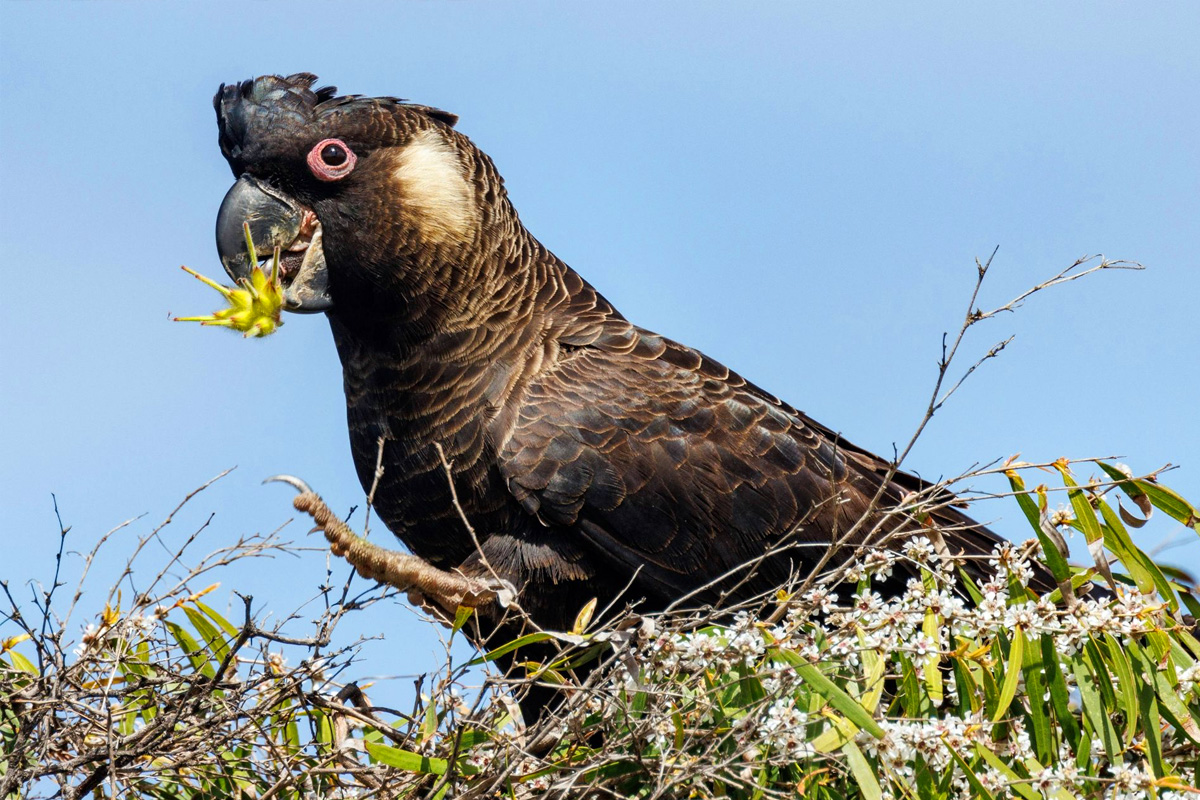
Carnaby’s Black Cockatoo. Imogen Warren/Shutterstock

By Euan Ritchie, Professor in Wildlife Ecology and Conservation, School of Life & Environmental Sciences, Deakin University.

This article is republished from The Conversation under a Creative Commons license. Read the original article.

What do the Australian lungfish, ghost bat, sandhill dunnart and southern and central greater gliders have in common? They’re all threatened species that need a formal “recovery plan” – but do not have one.

Today, environmental group the Wilderness Society launched a case in the Federal Court against Environment Minister Tanya Plibersek, arguing she and successive environment ministers have failed to meet their legal obligations to create threatened species recovery plans.

Other species forming the basis of the case are Baudin’s cockatoo, the Australian grayling, Carnaby’s black cockatoo, red goshawk, forest red-tailed black cockatoo and the Tasmanian wedge-tailed eagle.

Many other species and ecological communities also don’t have recovery plans. If successful, the case would set a precedent compelling future environment ministers to meet their legal obligations and improve Australia’s dire conservation record. This is a significant moment for conservation in Australia – testing how accountable environment ministers are in preventing species extinctions.

Why do recovery plans matter?

Threatened species recovery plans lay out very clearly why species or ecological communities are in trouble and the actions necessary to save them. Once a plan is in place, it can directly benefit the species by tackling threats and safeguarding habitat.

Proposals such as a new farm, suburb or mining project can be assessed by the environment minister and rejected if they are inconsistent with recovery plans and place threatened species at increased risk of extinction. Recovery plans have helped dozens of species come back from the brink.

Under Australia’s national environmental laws, the environment minister must decide whether a recovery plan is required for a species or ecological community listed as threatened.

Recovery is possible, but plans are vital

Successive governments have failed to keep up with creating and implementing recovery plans in a timely manner. The perennial and chronic lack of funding for conservation means there’s little capacity to do the vital but time-consuming work of planning and recovery.

As a result, the federal government has increasingly shifted to offering conservation advices in place of recovery plans. Conservation advices can be produced and updated faster than recovery plans. This is useful if, say, a new threat emerges and needs a rapid response.

But there’s a key legal difference. When the environment minister is considering a project such as land clearing for new farmland or a mine, they need only consider any conservation advice in place. When a recovery plan is in place, the minister is legally obliged not to approve actions which are contrary to its objectives and would make the plight of a species or ecological community worse.

A conservation advice can be thought of more like a fact sheet without the same legal weight or accountability that recovery plans have.

In March 2022, the Morrison government scrapped recovery plans for 176 threatened species and habitats, despite thousands of submissions arguing against this.

After the Albanese government took power in May 2022, it pledged to end “wilful neglect” of the environment and to introduce stronger environmental laws. Sadly, this commitment has not been honoured.

Why do we need recovery plans?

The range of northern Australia’s ghost bats has shrunk significantly. Ken Griffiths/Shutterstock

Australia’s species protection record is unenviable. Since European colonisation, more than 100 species have been driven to extinction and more than 2,000 species and ecological communities are listed at risk of suffering the same fate.

For a species to be considered threatened, its population has to have shrunk or meet other criteria putting it at risk of extinction. The severity of the decline and hence its extinction risk will determine how it’s categorised, from vulnerable through to critically endangered. Recovery plans lay out the research required to actually recover these species, meaning helping their populations to grow out of the danger zone.

A key role for these plans is to coordinate planning and action between relevant interest groups and agencies. This is especially important for species found across state and territory borders, such as the southern greater glider and the migratory swift parrot. The greater glider should have had a recovery plan in place since 2016, but does not.

Are individual plans still worthwhile?

Faced with so many species in need of protection and limited funding, prominent figures including former Environment Minister Peter Garrett have argued we should focus our efforts on protecting ecosystems rather than single species to make the best use of scarce funds.

But there is a deeper issue. Australia is one of the wealthiest nations in the world. It has the capacity to greatly increase conservation spending without impoverishing humans, and should do so for the benefit of the economy, culture and our health and wellbeing.

That’s not to say ecosystem protection isn’t worthwhile. After all, ecosystems are made up of species and their interactions with each other and their environment. You cannot have healthy species without healthy ecosystems and vice versa.

But if we focus only on protecting large expanses of wetland, forest and grasslands, we risk overlooking a key issue. Two species in the same ecosystem can be very differently affected by a specific threat (predation by foxes, for instance). Some species can even have conflicting management needs. For some species, invasive species are the biggest threat, while climate change and intensified fire regimes threaten others the most.

Extinction is a choice

The sandhill dunnart is one of 11 species listed in the court case. Kristian Bell/Shutterstock

As Australia’s natural world continues to deteriorate, climate change deepens and worsening wildlife woes abound, these issues will no doubt be front of mind for many in the upcoming federal election.

It can be easy to see these trends as inevitable. But they are not – the collapse of nature is a choice. We have what we need for success, including traditional, ecological and conservation knowledge. What’s sorely needed is political will.

There were once fewer than 50 northern hairy-nosed wombats alive. Today, that number exceeds 400. When supported, conservation can succeed.

Almost all Australians want their government to do more to save our species. Let us hope whoever forms the next government takes up that challenge – even if it takes court cases to prompt action.

The Conversation
Categories
Publications

Addressing Australia’s biodiversity crisis

Authors: Euan G Ritchie and Dale Nimmo

Published in: Science

As Australia’s 2025 federal election approaches, political parties and candidates must demonstrate increased commitment to addressing climate change and biodiversity loss. Without urgent action, species and ecosystems already under severe pressure will continue to decline and collapse, and global biodiversity targets, such as establishing a trend of recovery by 2030, will be nearly impossible to achieve. Australia must become a conservation leader by protecting and repairing its extraordinary and largely endemic biodiversity.

More than 2000 species and over 100 ecological communities are threatened with extinction in Australia, and the list continues to grow rapidly. Koalas were listed as endangered in 2022 under national environmental law, and the Great Barrier Reef is deteriorating through repeated bleaching events. Yet funding for conservation in Australia is insufficient and well below levels of other nations with similar socioeconomic characteristics and capacity, such as the United States.

Australia’s primary environmental law, the Environment Protection and Biodiversity Conservation Act, has failed to enable the federal government to effectively protect the environment and cannot adequately address current and future environmental challenges. The current federal government promised to reform the law to remedy these shortfalls, but the process has stalled.

In the meantime, Australia’s government is hoping to greatly improve conservation outcomes by creating a “nature repair market”. This initiative would reward individuals and corporations for investing in nature restoration projects. Conservation investment from industry is welcome, but this market may not fill the void in government funding. Moreover, a market mechanism may be less efficient than direct investment from government. Either way, the market’s credibility will be undermined if the downward trend of Australia’s biodiversity continues due to ineffective environmental laws.

The next Australian government must prioritize conservation by fast-tracking environmental law reform and strengthening enforcement. Development proposal assessments should explicitly consider emissions as “climate triggers” and either rule out proposals deemed too severe or require developers to meaningfully mitigate the impacts of projects. Only urgent action to address climate change can prevent long-term and widespread environmental damage. An annual investment of $7.3 billion AUD, about 0.3% of gross national product, for 30 years would support substantial progress toward protecting and recovering Australia’s environments and species. Australia’s next administration must commit to this investment to help meet national and global environmental and conservation goals.

Ritchie EG, Nimmo DG (2025) Addressing Australia’s biodiversity crisis. Science PDF DOI

Categories
Media Science communication The Conversation

The Conversation: Labor’s dumping of Australia’s new nature laws means the environment is shaping as a key 2025 election issue

Controversy over land clearing at the Lee Point (Binybara) housing development site, near Darwin, highlights the urgent need for environmental law reform. Image credit: Euan Ritchie

By Peter Burnett (Australian National University), Euan Ritchie, (Deakin University), and Jaana Dielenberg (Charles Darwin University).

This article is republished from The Conversation under a Creative Commons license. Read the original article.

Prime Minister Anthony Albanese has shelved the proposed reforms to Australia’s 25-year-old environment laws, citing a lack of parliamentary support for the changes.

The decision breaks Labor’s 2022 election commitment to overhaul the protections. The Albanese government is now the latest in a string of governments that have tried and failed to reform the law known formally as the Environmental Protection and Biodiversity Conservation (EPBC) Act.

This is despite two major independent reviews calling for wholesale change.

Labor’s capitulation does not, however, change the facts. Australia’s natural environment is deteriorating rapidly. Laws are urgently needed to protect our nation’s valuable natural assets.

Establishing effective laws is an investment that will benefit Australia’s biodiversity, economy, cultural values, health and wellbeing. Nature is now a key 2025 election issue.

How did we get here?

An independent review of the EPBC Act, known as the Samuel Review, was completed in 2020 under the former Coalition government. It found that without urgent changes, most of Australia’s threatened plants, animals and ecosystems will become extinct.

The centrepiece of reform is to set national environmental standards that would be overseen by an independent regulator and watchdog called Environmental Protection Australia (EPA). But reform was split into three stages.

Stage one legislated for national markets in nature repair and expanded the requirement to assess potential impacts on water resources under the EPBC Act. The so-called “water trigger” now captures “unconventional gas” projects such as shale gas recovery in the Northern Territory’s Beetaloo Basin. The law passed in December 2023, but the markets are not yet functioning.

Stage two of the reforms, including establishing a federal EPA, came before the Senate in late 2024. Plibersek had reportedly made a deal with the crossbench to secure passage. But this deal was scuttled by Albanese at the eleventh hour.

Stage two was relisted for discussion in the upcoming first parliamentary sitting week of 2025, this week. But on Saturday, Albanese told The Conversation the government would, again, not be proceeding with the reform this term.

The reforms have been delayed for so long that we are now closer to the next statutory review of the laws, due in 2029, than to the last one.

Stage three, which covers the bulk of substantive reform recommended in the Samuel Review, is yet to be seen publicly.

What will happen after the next election?

Albanese must go to the polls by May 17, but there is speculation the election may be as early as March. So what is the likely fate of these environmental reforms in the next term?

A Roy Morgan poll on Monday found if a federal election were held now, the result would be a hung parliament. So the result is looking tight.

Government control of the Senate is rare. So whoever is in power after the election is very likely to rely on crossbench support for any reforms.

Albanese has ruled out forming a coalition with the Greens or crossbenchers in the event of a hung parliament. However, Opposition Leader Peter Dutton says he would negotiate with independents to form government.

A returned Albanese majority government would probably revisit the scuttled deal on stage two. With elections in the rear-view mirror, Albanese may be prepared to wear some political pain early in the next term to secure a deal. He would also still need to roll out the bulk of the Nature Positive reforms, the detail of which remains hidden behind a vague “stage three” banner.

A minority Albanese government may face a tougher ask: demands from an environmentally progressive crossbench for major commitments to environmental reform in return for promises of support on budget and confidence.

A Coalition government would be coming from a very different angle. Dutton has painted Nature Positive as a “disaster” for the economy, expressing particular concern about impacts on the mining sector.

The Coalition’s environmental agenda is increasingly focused on “cutting green tape” – in other words, reducing bureaucratic hurdles for developers – and repealing bans on nuclear power stations. Finding crossbench support in the Senate for this agenda could be challenging.

The Greens have vowed to make environmental protection a key election issue, urging voters to cast their ballot for nature this election.

A recent poll published by the Biodiversity Council shows 75% of Australians support strengthening national environmental law to protect nature. Only 4% are opposed and the rest are undecided.

But converting a high level of broad support into votes is another thing altogether – especially during a cost-of-living crisis.

Crystal clear consequences

The political crystal ball remains cloudy. But when it comes to the state of Australia’s environment, the picture is clear.

The environment continues to decline and the consequences are increasingly serious. These consequences extend beyond further irreversible loss and the increasing cost of environmental repair, to include the economic and social consequences of losing more of the natural assets on which our quality of life depends.

The building blocks of successful reform are all on the table, where the Samuel Review put them in 2020.

When will governments accept that kicking the can down the road is selling us all down the drain?

Logging is leaving koalas homeless. Image credit: AAP, supplied by WWF Australia
The Conversation
Categories
Media Research The Conversation

The Conversation: 1080 baits are used to kill foxes, cats and dingoes – but other animals can be more likely to eat them

1080 poison is regularly used to kill introduced foxes (Vulpe vulpes) but many native animals, such as kangaroos, echidnas and quokkas also dig up and eat the bait. Image credit: Milosz Maslanka/Shutterstock

By Rachel Mason, Anthony Rendall, and Euan Ritchie, Deakin University.

This article is republished from The Conversation under a Creative Commons license. Read the original article.

Around the world, humans routinely kill carnivores to protect livestock and game, increase human safety and conserve native wildlife. Unfortunately, killing carnivores often creates new problems including population booms of native and invasive prey species such as rabbits, kangaroos, goats and deer. More herbivores can mean more damage to crops and native vegetation.

1080 is lethal to introduced animals such as dogs – but it can also harm some native animals. Image credit: Todd Powell/Shutterstock

Despite widespread use, predator baiting with 1080 is controversial for social, cultural, environmental and economic reasons. Recent opponents include farmers whose livestock protection dogs died in agony after eating 1080 baits.

In southeastern states, land managers may use techniques such as burying the poisoned baits to ensure carnivores are most likely to dig up and eat them. But our new research shows these techniques may not be working as intended.

Why do we use 1080 bait?

Invasive predators such as foxes and cats have driven many native species to the edge. Their silent, stealthy hunting is implicated in dozens of extinctions of small animals.

That means poison baits can be an important conservation tool to control numbers of foxes and feral cats and give native species a better chance of survival. But baiting comes with the risk that other animals will eat it.

In Australia, 1080 has long been seen as a kind of “wonder poison” – a chemical deadly to introduced species that many native animals are highly resistant to. The toxin is derived from “poison pea” plants of the Gastrolobium genus, mostly found in regions of Western Australia. Many native animals in these regions have evolved a high tolerance to the poison.

Quokkas have been recorded eating up to 95% of baited meat deployed to control foxes, while goannas are adept at finding and eating poisoned baits. These species are resistant to the poison, and aren’t normally harmed by consuming baits.

But southeastern Australia has no species of poison pea, meaning native animals in this region may be more susceptible to 1080 than elsewhere.

Which animals actually eat the bait?

Our research suggests a huge number of poison baits buried according to best practice methods are potentially being dug up and eaten by other animals.

To find out which animals might be doing this, we buried non-toxic liver baits in dirt mounds, a method currently considered to be best practice. Then we set up remote motion-sensing cameras at our sites in the semi-arid Wyperfeld National Park in northwestern Victoria and recorded what happened for 70 days.

Our footage captured native mice such as this Mitchell’s hopping mouse digging up the mounds and eating many of the baits. Image credit: Rachel Mason/Deakin University

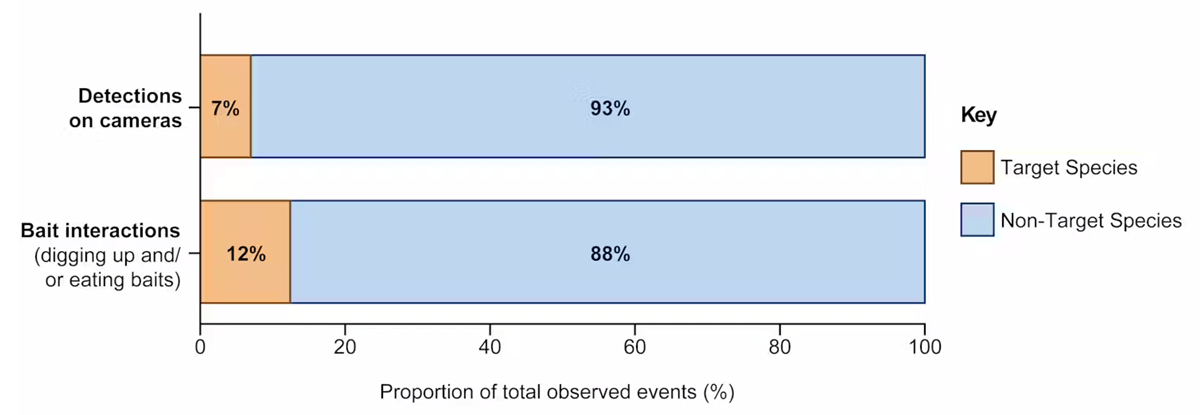
What did we find? Foxes and dingoes accounted for just 12% of the baits dug up or eaten. Of the 146 interactions with baits, 88% were non-target species – primarily, native mice species such as Mitchell’s hopping mouse (Notomys mitchellii) and silky mice (Pseudomys apodemoides).

The single dingo which took the bait dug it up only after 60 days. Foxes took the bait 17 times, but they were typically slow to do so too, averaging 41 days. By contrast, native mice dug up baits after an average of 13 days.

We also saw western grey kangaroos dig up and eat baits. Echidnas, rabbits and house mice often unearthed baits and left them uneaten on the surface, making them available to be found and consumed by other animals.

In sites with denser vegetation, we found native mice were more likely to dig up and eat the baits. But they were less likely to do so in open areas.

Dingoes and foxes (target species, in orange) did not dig up many baits relative to non-target species (in blue). Image credit: Rachel Mason/Deakin University

What about dingoes?

Baiting for dingoes and “wild dogs” is still done routinely, even though DNA testing shows the canids roaming Australia are mostly pure dingo. Recent research has shown that dingoes are largely avoiding breeding with domestic dogs. The “wild dogs” being poisoned to protect lambs and other livestock are almost all dingoes.

Shepherd dog breeds such as Maremma dogs have been bred to guard sheep from wild predators. Image credit: Marco Branchi/Shutterstock

This poses a major problem for baiting programs. While dingoes are susceptible to 1080 poison, they have lived in Australia for thousands of years. Aside from humans, dingoes are the top terrestrial predator everywhere outside Tasmania. To many First Nations people, these canids are culturally important and are often considered kin.

Graziers have long seen dingoes as a threat, given these predators can take sheep, goats, cattle and other livestock. But there are now non-lethal and highly effective predator-smart methods to safeguard livestock, such as predator-proof fencing and guardian animals such as Maremma dogs. These methods reduce livestock losses without the need to kill dingoes.

Keeping dingoes alive can often actually benefit graziers, as dingoes scare off or eat competing herbivores such as kangaroos and feral goats.

What does this mean for baiting?

Our research shows predator baiting has the potential to harm more native species than previously realised. That means baiting programs must be conducted carefully according to local conditions and the wildlife present.

More targeted methods for controlling predator species are being developed. Feral cats are now being targeted with machines which spray poisonous gel on their fur which cats will groom off, leaving other animals unharmed.

Using 1080 to control invasive predators has undoubtedly helped to save many native species. Even so, we must continue to evaluate the best approaches for predator control and wildlife conservation in Australia.

As the biodiversity crisis deepens and more species march towards extinction, we must find ways of better targeting our methods of control to protect livestock and safeguard native species – including the dingo.

The Conversation
Categories
Research

Assessing target and non-target species interactions with buried non-toxic meat baits across fire mosaics

Authors: Rachel T Mason, Anthony R Rendall, Robin D Sinclair, and Euan G Ritchie
Published in: Wildlife Research

Abstract

Context: Lethal 1080 baiting to control invasive predators, or to reduce livestock predation by canids, is a widespread management tool used throughout Australia and New Zealand. Techniques to reduce the impact of 1080 baiting on non-target species exist, but their efficacy, including effects of environmental variation and disturbance on baiting outcomes, remains poorly understood.
Aims: We aimed to experimentally quantify the extent to which target and non-target species dig up and consume buried baits, and to examine how habitat variation and fire affect such interactions.
Methods: Remote cameras were deployed for 70 days to monitor the fate of non-toxic baits in the semi-arid Big Desert-Wyperfeld region of southeastern Australia. Species digging up or eating baits (collectively ‘bait interactions’) were identified, and the effects of environmental factors on bait interaction rates were assessed.
Key results: Non-target species accounted for 128 (88%) of 146 total bait interactions, primarily native mice species. Target species interacted with fewer baits and took longer to record bait interactions, with foxes (Vulpes vulpes) averaging 41 days for 17 bait interactions and one dingo (Canis familiaris/Canis dingo) taking 60 days, whereas native mice interactions occurred after ~13 days. At sites where foxes and dingoes were detected, both target species almost always interacted with baits (83%), whereas non-target species interacted with baits at less than half of the sites they were detected (42%). Areas with greater variation in fire frequency (pyrodiversity) and mid-successional vegetation were associated with more native mice-bait interactions.
Conclusions: Non-target species interacted with baits more often and sooner than target species, suggesting efforts to reduce predator populations could have inadvertent effects on other species. The influence of fire and vegetation variables on bait interaction rates also highlights the importance of accounting for landscape features when designing lethal control programs.
Implications: Predator control can benefit native wildlife, and help to reduce livestock loss; however, managers must account for environmental factors that may influence which species are most likely to be affected by toxic baits, and by extension possible broader impacts on ecosystems. Monitoring to assess baiting outcomes and limit the negative consequences for non-target species constitutes best practice.
Mason RT, Rendall AR, Sinclair RD, Ritchie EG (2025) Assessing target and non-target species interactions with buried non-toxic meat baits across fire mosaics. Wildlife Research PDF DOI 
Categories
Publications

Large-scale and long-term wildlife research and monitoring using camera traps: a continental synthesis

Authors: Tom Bruce, Zachary Amir, Benjamin L Allen, Brendan F Alting, Matt Amos, John Augusteyn, Guy-Anthony Ballard, Linda M Behrendorff, Kristian Bell, Andrew J Bengsen, Ami Bennett, Joe S Benshemesh, Joss Bentley, Caroline J Blackmore, Remo Boscarino-Gaetano, Lachlan A Bourke, Rob Brewster, Barry W Brook, Colin Broughton, Jessie C Buettel, Andrew Carter, Antje Chiu-Werner, Andrew W Claridge, Sarah Comer, Sebastien Comte, Rod M Connolly, Mitchell A Cowan, Sophie L Cross, Calum X Cunningham, Anastasia H Dalziell, Hugh F Davies, Jenny Davis, Stuart J Dawson, Julian Di Stefano, Christopher R Dickman, Martin L Dillon, Tim S Doherty, Michael M Driessen, Don A Driscoll, Shannon J Dundas, Anne C Eichholtzer, Todd F Elliott, Peter Elsworth, Bronwyn A Fancourt, Loren L Fardell, James Faris, Adam Fawcett, Diana O Fisher, Peter J S Fleming, David M Forsyth, Alejandro D Garza-Garcia, William L Geary, Graeme Gillespie, Patrick J Giumelli, Ana Gracanin, Hedley S Grantham, Aaron C Greenville, Stephen R Griffiths, Heidi Groffen, David G Hamilton, Lana Harriott, Matthew W Hayward, Geoffrey Heard, Jaime Heiniger, Kristofer M Helgen, Tim J Henderson, Lorna Hernandez-Santin, Cesar Herrera, Ben T Hirsch, Rosemary Hohnen, Tracey A Hollings, Conrad J Hoskin, Bronwyn A Hradsky, Jacinta E Humphrey, Paul R Jennings, Menna E Jones, Neil R Jordan, Catherine L Kelly, Malcolm S Kennedy, Monica L Knipler, Tracey L Kreplins, Kiara L L’Herpiniere, William F Laurance, Tyrone H Lavery, Mark Le Pla, Lily Leahy, Ashley Leedman, Sarah Legge, Ana V Leitão, Mike Letnic, Michael J Liddell, Zoë E Lieb, Grant D Linley, Allan T Lisle, Cheryl A Lohr, Natalya Maitz, Kieran D Marshall, Rachel T Mason, Daniela F Matheus-Holland, Leo B McComb, Peter J McDonald, Hugh McGregor, Donald T McKnight, Paul D Meek, Vishnu Menon, Damian R Michael, Charlotte H Mills, Vivianna Miritis, Harry A Moore, Helen R Morgan, Brett P Murphy, Andrew J Murray, Daniel J D Natusch, Heather Neilly, Paul Nevill, Peggy Newman, Thomas M Newsome, Dale G Nimmo, Eric J Nordberg, Terence W O’Dwyer, Sally O’Neill, Julie M Old, Katherine Oxenham, Matthew D Pauza, Ange J L Pestell, Benjamin J Pitcher, Christopher A Pocknee, Hugh P Possingham, Keren G Raiter, Jacquie S Rand, Matthew W Rees, Anthony R Rendall, Juanita Renwick, April Reside, Miranda Rew-Duffy, Euan G Ritchie, Chris P Roach, Alan Robley, Stefanie M Rog, Tracy M Rout, Thomas A Schlacher, Cyril R Scomparin, Holly Sitters, Deane A Smith, Ruchira Somaweera, Emma E Spencer, Rebecca E Spindler, Alyson M Stobo-Wilson, Danielle Stokeld, Louise M Streeting, Duncan R Sutherland, Patrick L Taggart, Daniella Teixeira, Graham G Thompson, Scott A Thompson, Mary O Thorpe, Stephanie J Todd, Alison L Towerton, Karl Vernes, Grace Waller, Glenda M Wardle, Darcy J Watchorn, Alexander W T Watson, Justin A Welbergen, Michael A Weston, Baptiste J Wijas, Stephen E Williams, Luke P Woodford, Eamonn I F Wooster, Elizabeth Znidersic, and Matthew S Luskin

Published in: Biological Reviews

Abstract

Camera traps are widely used in wildlife research and monitoring, so it is imperative to understand their strengths, limitations, and potential for increasing impact.

We investigated a decade of use of wildlife cameras (2012–2022) with a case study on Australian terrestrial vertebrates using a multifaceted approach. We:

  • synthesised information from a literature review
  • conducted an online questionnaire of 132 professionals
  • hosted an in-person workshop of 28 leading experts representing academia, non-governmental organisations (NGOs) and government, and
  • mapped camera trap usage based on all sources.

We predicted that the last decade would have shown:

  • exponentially increasing sampling effort, a continuation of camera usage trends up to 2012
  • analytics to have shifted from naive presence/absence and capture rates towards hierarchical modelling that accounts for imperfect detection, thereby improving the quality of outputs and inferences on occupancy, abundance and density, and
  • broader research scales in terms of multi-species, multi-site and multi-year studies.

However, the results showed that the sampling effort has reached a plateau, with publication rates increasing only modestly. Users reported reaching a saturation point in terms of images that could be processed by humans and time for complex analyses and academic writing.

There were strong taxonomic and geographic biases towards medium–large mammals (>500 g) in forests along Australia’s southeastern coastlines, reflecting proximity to major cities. Regarding analytical choices, bias-prone indices still accounted for ~50% of outputs and this was consistent across user groups. Multi-species, multi-site and multiple-year studies were rare, largely driven by hesitancy around collaboration and data sharing.

There is no widely used repository for wildlife camera images and the Atlas of Living Australia (ALA) is the dominant repository for sharing tabular occurrence records. However, the ALA is presence-only and thus is unsuitable for creating detection histories with absences, inhibiting hierarchical modelling.

Workshop discussions identified a pressing need for collaboration to enhance the efficiency, quality and scale of research and management outcomes, leading to the proposal of a Wildlife Observatory of Australia (WildObs). To encourage data standards and sharing, WildObs should:

  • promote a metadata collection app
  • create a tagged image repository to facilitate artificial intelligence/machine learning (AI/ML) computer vision research in this space
  • address the image identification bottleneck via the use of AI/ML-powered image-processing platforms
  • create data commons for detection histories that are suitable for hierarchical modelling, and
  • provide capacity building and tools for hierarchical modelling.

Our review highlights that while Australia’s investments in monitoring biodiversity with cameras position it to be a global leader in this context, realising that potential requires a paradigm shift towards best practices for collecting, curating, sharing and analysing ‘Big Data’.

Our findings and framework have broad applicability outside Australia to enhance camera usage to meet conservation and management objectives ranging from local to global scales. This review articulates a country/continental observatory approach that is also suitable for international collaborative wildlife research networks.

Bruce T, Amir Z, Allen BL, Alting BF, Amos M, Augusteyn J, Ballard G, Behrendorff LM, Bell K, Bengsen AJ, Bennett A, Benshemesh JS, Bentley J, Blackmore CJ, Boscarino‐Gaetano R, Bourke LA, Brewster R, Brook BW, Broughton C, Buettel JC, Carter A, Chiu‐Werner A, Claridge AW, Comer S, Comte S, Connolly RM, Cowan MA, Cross SL, Cunningham CX, Dalziell AH, Davies HF, Davis J, Dawson SJ, Di Stefano J, Dickman CR, Dillon ML, Doherty TS, Driessen MM, Driscoll DA, Dundas SJ, Eichholtzer AC, Elliott TF, Elsworth P, Fancourt BA, Fardell LL, Faris J, Fawcett A, Fisher DO, Fleming PJS, Forsyth DM, Garza‐Garcia AD, Geary WL, Gillespie G, Giumelli PJ, Gracanin A, Grantham HS, Greenville AC, Griffiths SR, Groffen H, Hamilton DG, Harriott L, Hayward MW, Heard G, Heiniger J, Helgen KM, Henderson TJ, Hernandez‐Santin L, Herrera C, Hirsch BT, Hohnen R, Hollings TA, Hoskin CJ, Hradsky BA, Humphrey JE, Jennings PR, Jones ME, Jordan NR, Kelly CL, Kennedy MS, Knipler ML, Kreplins TL, L’Herpiniere KL, Laurance WF, Lavery TH, Le Pla M, Leahy L, Leedman A, Legge S, Leitão AV, Letnic M, Liddell MJ, Lieb ZE, Linley GD, Lisle AT, Lohr CA, Maitz N, Marshall KD, Mason RT, Matheus‐Holland DF, McComb LB, McDonald PJ, McGregor H, McKnight DT, Meek PD, Menon V, Michael DR, Mills CH, Miritis V, Moore HA, Morgan HR, Murphy BP, Murray AJ, Natusch DJD, Neilly H, Nevill P, Newman P, Newsome TM, Nimmo DG, Nordberg EJ, O’Dwyer TW, O’Neill S, Old JM, Oxenham K, Pauza MD, Pestell AJL, Pitcher BJ, Pocknee CA, Possingham HP, Raiter KG, Rand JS, Rees MW, Rendall AR, Renwick J, Reside A, Rew‐Duffy M, Ritchie EG, Roach CP, Robley A, Rog SM, Rout TM, Schlacher TA, Scomparin CR, Sitters H, Smith DA, Somaweera R, Spencer EE, Spindler RE, Stobo‐Wilson AM, Stokeld D, Streeting LM, Sutherland DR, Taggart PL, Teixeira D, Thompson GG, Thompson SA, Thorpe MO, Todd SJ, Towerton AL, Vernes K, Waller G, Wardle GM, Watchorn DJ, Watson AWT, Welbergen JA, Weston MA, Wijas BJ, Williams SE, Woodford LP, Wooster EIF, Znidersic E, Luskin MS (2025) Large‐scale and long‐term wildlife research and monitoring using camera traps: a continental synthesis. Biological Reviews PDF DOI